TL;DR

Get workout gear delivered free — and shop member deals
- Fast, free delivery on millions of items
- Access to Prime Big Deal Days deals on October 6–7
- Prime Video, Amazon Music and more included
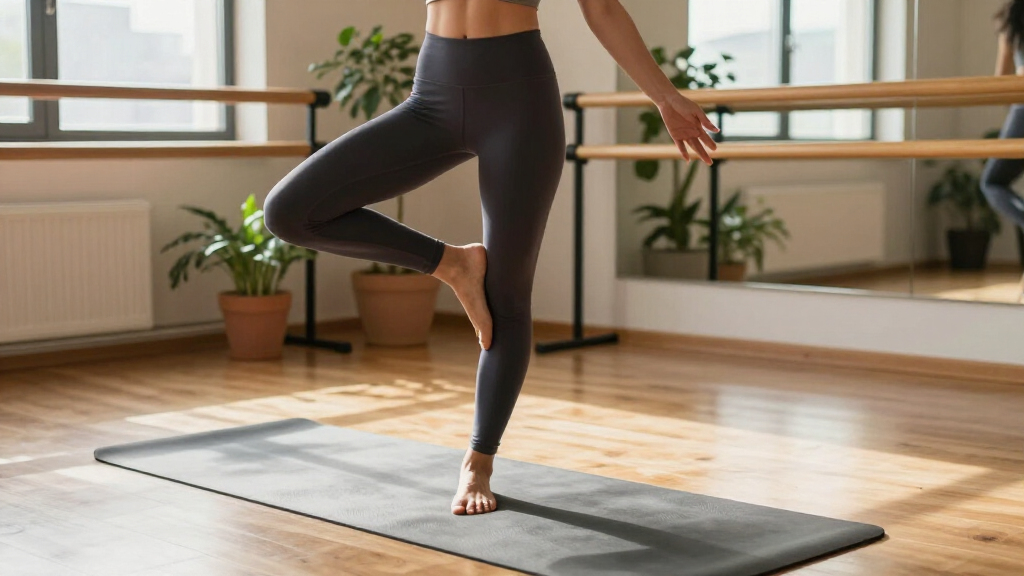
Yoga teacher Cheryl McColgan recommends tree pose, eagle pose and warrior three as single-leg exercises that can train balance and stability. She advises beginners to progress from tree pose, use a fixed point to focus on and hold a wall or chair if needed.
A Fit&Well report identifies tree pose, eagle pose and warrior three as three yoga positions for practicing balance and stability, based on recommendations from yoga teacher Cheryl McColgan. The poses involve balancing on one leg, and McColgan advises beginners to start with tree pose and add the more challenging positions over time.
McColgan, founder of Heal, Nourish, Grow, says yoga trains proprioception: the body’s ability to sense its position and movement. She says poses that involve balancing on one leg can also work muscular strength and endurance. These are her explanations for why the practice may support balance; the report does not present findings from a clinical study or compare yoga with other exercise programs.
For tree pose, stand with weight on one foot and place the other foot against the ankle, calf or inner thigh, avoiding direct pressure on the knee. Hands can rest at the chest or reach overhead; a wall or chair can provide support. The report suggests holding for three to 10 breaths before changing sides.
In eagle pose, bend both knees slightly, cross one thigh over the other and, if possible, wrap the lifted foot behind the standing calf. Cross the arms in front and bring the palms together if comfortable. For warrior three, hinge forward from the hips while extending the other leg behind, keeping the standing knee slightly bent. Arms can be held near the torso or extended forward. The suggested hold for both poses is three to 10 breaths on each side.
How Single-Leg Poses Train Balance
The recommendations offer readers a stepwise way to practice balance: tree pose can be adjusted to suit a range of abilities, while eagle and warrior three ask for more coordination and control. Practicing on both sides, as described in the report, gives each leg a turn supporting the body.
McColgan links these positions to muscles around the ankles, knees and hips, as well as proprioception. That makes the advice relevant to people looking to include balance work in a movement routine. The report does not establish how much improvement a person should expect, how quickly it might occur, or whether these poses prevent falls or other health problems.
yoga balance stability support props
As an affiliate, we earn on qualifying purchases.
As an affiliate, we earn on qualifying purchases.
A Gradual Route Through Three Poses
The report frames balance exercise as one way to support physical capability with age, and presents yoga as one option. Its specific advice is a progression from tree pose to eagle pose, then warrior three, rather than attempting all three at full difficulty from the outset.
For all three positions, McColgan recommends choosing a fixed point for the eyes to help maintain stability. Beginners or anyone who feels unsteady can keep a hand on a wall or chair. She also suggests a simpler starting activity: standing on one leg while brushing the teeth. These are practical suggestions from the instructor, not a tailored assessment of an individual’s balance or health.
“One of my favorite things about yoga is that it trains proprioception—your body’s ability to sense its own movements and position—so it can definitely help with balance and stability.”
— Cheryl McColgan, yoga teacher and founder of Heal, Nourish, Grow
Limits of the Available Evidence
The supplied report does not cite a trial, quantify the effects of these poses, or say how often or for how long someone should practice to see a change. It also does not establish that these three poses are better than other balance exercises. The recommendation is attributed to one yoga teacher, and individual ability, health and balance needs may differ.
Readers who feel pain, have a condition affecting mobility or balance, or are unsure whether a pose is suitable can seek guidance from a qualified health professional or yoga instructor. The report’s wall-or-chair modification can offer support, but it does not replace individualized advice.
Starting With Supported Practice
The report gives no follow-up study or scheduled next development. For readers who want to try the sequence, its immediate guidance is to begin with tree pose, use a steady focal point and hold a wall or chair as needed before attempting eagle or warrior three. Start within a comfortable range, keep the standing knee slightly bent where instructed, and switch sides after each hold.
Whether a person progresses to the next pose depends on comfort and stability; the report sets no deadline or performance target. Anyone experiencing persistent unsteadiness or pain should pause and seek appropriate professional guidance rather than treating the poses as a substitute for an assessment.
Key Questions
Which three yoga poses does the report recommend for balance?
Yoga teacher Cheryl McColgan recommends tree pose, eagle pose and warrior three. Each involves balancing primarily on one leg.
Which pose should a beginner try first?
McColgan recommends beginning with tree pose, then progressing to eagle pose and warrior three. Beginners can hold a wall or chair for support.
How long should each pose be held?
The report suggests holding each pose for three to 10 breaths, then switching sides. It does not specify how many rounds or how often to practice.
How can someone make the poses easier?
Use a wall or chair, keep the gaze fixed on one point and choose an accessible variation. For tree pose, place the raised foot at the ankle or calf rather than the inner thigh; in eagle pose, the lifted toes can stay on the floor if wrapping the foot is difficult.
Does the report prove these poses prevent falls?
No. It reports McColgan’s view that yoga may support balance and stability, but provides no study results or evidence that these poses prevent falls.
Source: rss
Halloween Picks
halloween
As an affiliate, we earn on qualifying purchases.