
TL;DR

Get workout gear delivered free with Prime
- Fast, free delivery on millions of items
- Prime Video, Amazon Music and more included
- Member-only deals all year
Trainer and liftCLINIC CEO Amanda Lim shared a sample week combining strength training, cardio, walking, yoga and postpartum core rehabilitation. She advises people not to treat scale weight as a stand-alone measure of health and suggests tracking other forms of progress, including strength and muscle mass.
Trainer Amanda Lim, chief executive of the metabolic health center liftCLINIC, has shared a sample of her weekly exercise routine and advised people to separate scale weight from their overall assessment of health. Her schedule combines strength work, running, walking, yoga and postpartum core rehabilitation, offering a personal example rather than a prescribed plan for everyone.
Lim, who has worked as a trainer for more than 20 years, described her approach to Fit&Well as a mix of functional strength training, zone two cardio and daily steps. The published schedule includes a leg-focused strength session on Monday, an upper-body session on Tuesday and postpartum core rehabilitation on Wednesday. She walks for active recovery on Thursday, then does running intervals and yoga on Friday, a power-focused workout on Saturday and a zone two run on Sunday.
The routine spans different forms of activity, but Lim presents it as what works for her, not a universal weekly target. She is 43 and a mother of three; the article says her youngest child is two and a half. She told Fit&Well that she continues to include pelvic-floor, deep-core and postpartum rehabilitation work in her fitness routine.
Lim’s five recommendations are to use measures of progress beyond body weight, recognize the potential benefits of starting as a beginner, learn new physical skills, begin with walking and practise self-compassion. She says she tracks her own progress through the weights she can lift and her muscle mass. Those are examples of metrics she uses; the article does not present them as medical assessments or substitutes for individualized health advice.
A Broader View of Fitness Progress
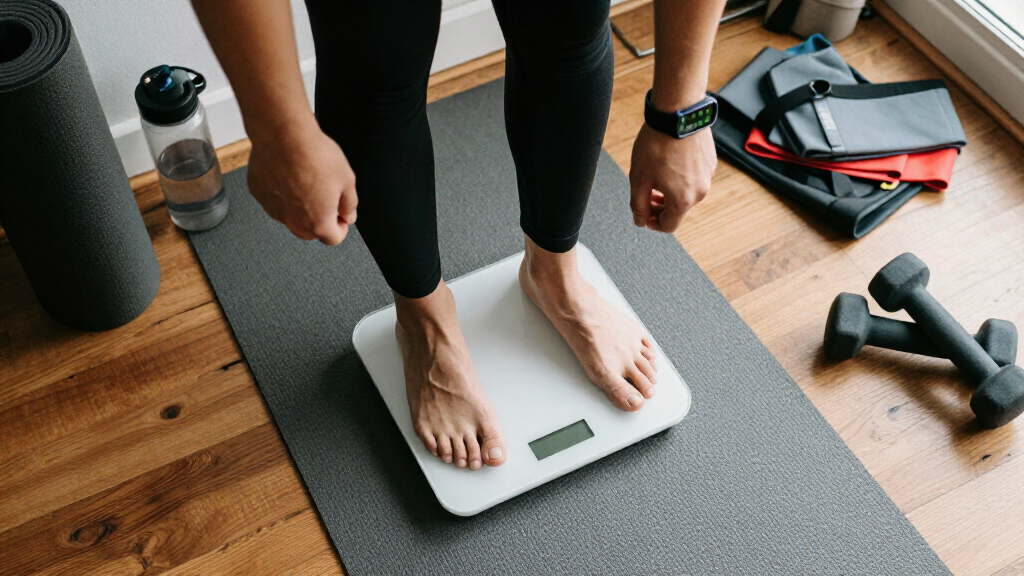
Lim’s message addresses a common source of confusion in fitness: body weight and health are not interchangeable measures. A scale records weight, but it does not by itself describe strength, fitness, body composition or a person’s broader health. Her advice is to avoid judging progress solely by that single number and to consider other indicators relevant to one’s goals.
Her recommendations also emphasize making activity manageable. Lim suggests that a person who is not currently exercising could begin with a five-minute walk, rather than setting an ambitious routine from the outset. That is her advice, not a guarantee of success for every person. People’s abilities, health conditions and circumstances differ, and anyone with medical concerns may want guidance from a qualified professional before changing their exercise routine.
The routine’s inclusion of recovery, skill practice and core rehabilitation also shows how Lim balances different activities in her own week. It does not establish that every reader should follow the same schedule, intensity or postpartum exercises.
adjustable dumbbells for home workouts
As an affiliate, we earn on qualifying purchases.
As an affiliate, we earn on qualifying purchases.
Lim’s Routine and Training Background
Fit&Well identifies Lim as a trainer with more than two decades of experience and the CEO of liftCLINIC, a metabolic health center focused on longevity. The publication reports that she is also raising three children. These details provide context for her schedule, which includes both conventional workouts and postpartum rehabilitation.
Lim told Fit&Well that postpartum-related concerns can remain relevant beyond the period immediately after childbirth and may return during perimenopause. That is her account of her own perspective and experience; the article does not supply clinical evidence or make a broader finding about all mothers or people entering perimenopause.
The publication also describes lifestyle medicine as involving nutrition, sleep, physical activity, stress management, social connection and minimizing exposure to harmful substances. Lim argues that self-compassion should be an additional pillar, saying people need to continue after falling short of their goals. This is her framing, rather than a formal change to an established list reported in the article.
“We have to separate the number on the scale—the weight of our bodies—from the assessment of our health, because those two things don’t typically track beautifully together.”
— Amanda Lim, speaking to Fit&Well
Limits of the Published Advice
The Fit&Well article presents Lim’s personal routine and recommendations; it does not report a clinical study testing the schedule or compare its outcomes with other exercise plans. It also does not establish that her routine is suitable for readers with different fitness levels, injuries, health conditions or postpartum needs.
The source does not provide a publication date, explain how Lim’s muscle mass is measured, or define the intensity and duration of most sessions. It gives no detailed exercise prescriptions for the rehabilitation work. The reported schedule should not be read as a medically assessed program, and the article does not show that any one progress measure is appropriate for everyone.
Readers Choose Their Own Starting Point
The report does not announce a follow-up study, policy change or scheduled next development. Its immediate takeaway is practical: readers can consider Lim’s suggestions, including walking and tracking a measure of progress that matches their goals, while treating her schedule as an individual example.
Anyone planning to adopt strength training, running intervals or postpartum rehabilitation should account for their own circumstances. People with existing health conditions, persistent pain or questions about recovery can seek advice from a qualified health professional. Further details about the routine’s duration, progression and individual outcomes are not provided in the source report.
Key Questions
Who is Amanda Lim?
Amanda Lim is a trainer with more than 20 years of experience and CEO of liftCLINIC, which Fit&Well describes as a metabolic health center focused on longevity.
What does Lim’s weekly workout schedule include?
Her reported week includes two strength sessions, postpartum core rehabilitation, active-recovery walking, running intervals, yoga, a power-focused workout and a zone two run. It is her personal example, not a universal exercise prescription.
Why does Lim advise looking beyond scale weight?
Lim says body weight and an overall assessment of health do not necessarily track closely. She says she monitors her own progress through lifting performance and muscle mass; the article does not present these as measures that suit everyone.
What does Lim recommend for someone starting to exercise?
She recommends beginning with walking and suggests starting with a five-minute walk. That is her advice, not a guaranteed result or a substitute for professional guidance when someone has health concerns.
Source: rss
Fall Picks
fall essentials
As an affiliate, we earn on qualifying purchases.