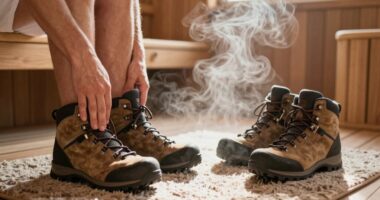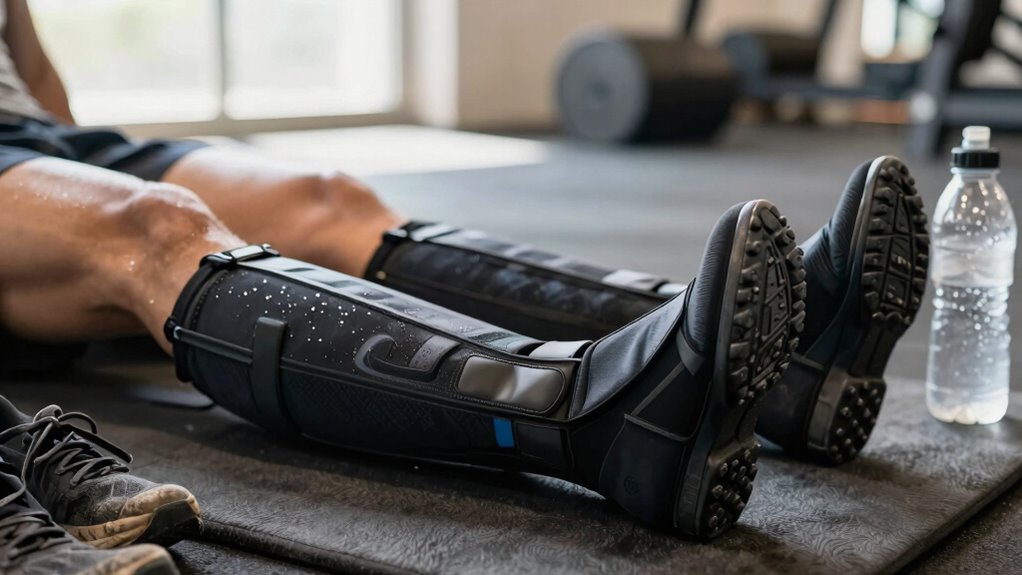

Compression boots feel different after long runs versus hard workouts because each activity stresses your muscles in unique ways. After long runs, you may feel immediate relief from tightness as the boots enhance blood flow and flush out metabolic waste. In contrast, hard workouts often leave your muscles with micro-tears, so the targeted pressure helps reduce swelling and stabilize them. Regular use boosts your body’s healing and performance—keep exploring to discover even more benefits.
Listen free for 30 days with Audible
Thousands of audiobooks and originals — cancel anytime.
As an affiliate, we earn on qualifying purchases.
Key Takeaways
- After long runs, compression boots provide immediate muscle relaxation, easing heavy and tight legs from extended cardio efforts.
- High-intensity workouts result in micro-tears, leading to deeper pressure needs for targeted relief from inflammation and muscle stabilization.
- The sensations differ due to varying muscle demands; long runs focus on endurance, while intense workouts emphasize recovery from muscle damage.
- Consistent boot use enhances awareness of benefits, making the relief from both activities feel distinct over time.
- Improved blood circulation from regular use supports muscle resilience, aiding recovery differently based on the stress type experienced.
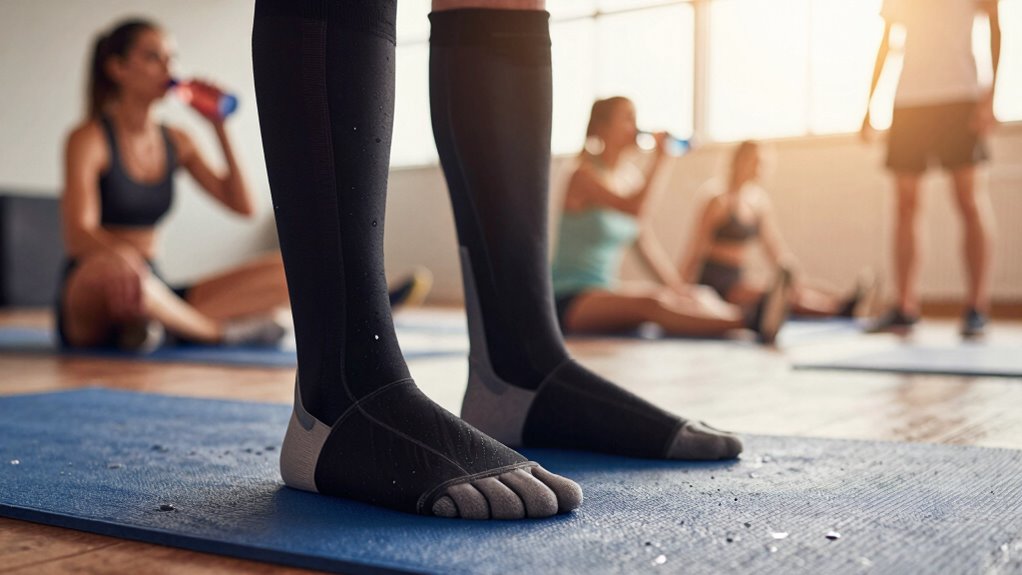
After an intense workout, you might find that your muscles feel fatigued and sore. Whether you’ve just completed a long run or a hard strength training session, your body craves relief. This is where compression boots into play, offering unique recovery benefits tailored to the type of workout you’ve just completed.
When you’ve pounded the pavement for miles, your legs can feel heavy and tight. The compression boots apply pressure to your limbs, enhancing blood circulation. This increased flow helps deliver oxygen and nutrients to your muscles, promoting faster recovery. You’ll notice that wearing the boots after a long run can lead to significant muscle relaxation, alleviating the tightness that often follows extensive cardio. The gentle squeeze encourages your body to flush out metabolic waste, which can reduce soreness and improve overall recovery times. Improved blood circulation is a key factor in supporting muscle health and recovery. Regular use can also help prevent the buildup of metabolic waste that contributes to muscle fatigue. Additionally, the rhythmic compression can improve your muscle elasticity, making your muscles more resilient over time.
Compression boots enhance blood circulation, delivering oxygen and nutrients to sore muscles for faster recovery and relief after a long run.
On the flip side, after a hard workout that involves lifting weights or intense interval training, your muscles may feel differently. The stress from these activities can lead to micro-tears in muscle fibers, causing inflammation. Compression boots still play an essential role here, focusing on injury prevention. By applying targeted pressure, they can minimize swelling and help stabilize your muscles, reducing the risk of potential injuries. The restorative effects can help you bounce back quicker, allowing you to hit the gym again sooner. Incorporating compression therapy into your routine can further enhance these benefits by supporting your body’s natural healing processes.
Using compression boots after either type of workout can feel different, largely due to the varying demands placed on your body. After a long run, the relief might feel more immediate as you experience the soothing sensation of muscle relaxation. However, after a high-intensity workout, you might feel a deeper, more targeted relief, as the boots work to address inflammation and promote recovery. Additionally, consistent use of compression therapy can improve your blood circulation, which is crucial for sustained muscle health.
In both cases, you’re tapping into the incredible benefits of improved blood circulation. This not only helps with immediate recovery but also enhances your overall performance in future workouts. The more regularly you use compression boots, the more attuned you’ll become to the different sensations they provide, ultimately aiding in your fitness journey. Embracing their use will help you stay on track, no matter what kind of workout you tackle next.
compression boots for muscle recovery
As an affiliate, we earn on qualifying purchases.
As an affiliate, we earn on qualifying purchases.
Frequently Asked Questions
How Do Compression Boots Improve Recovery for Long-Distance Runners?
Compression boots improve recovery for long-distance runners by enhancing blood circulation and reducing muscle fatigue. As you relax in the boots, the gentle pressure helps push blood back to your heart, delivering oxygen and nutrients to fatigued muscles. This process accelerates the removal of metabolic waste, easing soreness and promoting faster recovery. You’ll feel rejuvenated and ready to tackle your next run sooner than you think.
Can Compression Boots Help With Injury Prevention During Workouts?
Think of compression boots as your workout’s trusty sidekick. They can definitely help with injury prevention during workouts by improving circulation and reducing muscle soreness. When you slip them on post-session, you’re not just relaxing; you’re boosting recovery and enhancing muscle support. This combo of workout benefits makes a real difference, helping you stay in the game longer and reducing the risk of those pesky injuries that can sideline your progress.
Are There Any Side Effects of Using Compression Boots?
Yes, there are some side effects of using compression boots. You might experience potential discomfort during or after use, especially if the pressure is too high for your comfort level. Additionally, while compression boots can improve circulation effects, they may not be suitable for everyone. If you have certain medical conditions, it’s best to consult a doctor before using them. Pay attention to how your body reacts to guarantee safe usage.
How Long Should I Wear Compression Boots After Exercise?
Studies suggest that wearing compression boots for about 30 to 60 minutes post-exercise can enhance recovery. For ideal usage, aim for this recovery duration to improve circulation and reduce muscle soreness. You’ll often feel the benefits more after intense workouts, but consistency is key. Make it a part of your routine, and you’ll likely notice quicker recovery and better performance in your next session. So, give it a try!
Do Compression Boots Work for All Types of Workouts?
Compression boots can benefit various workout types, but their effectiveness may vary. If you’re focusing on endurance activities like running, they help reduce muscle fatigue, enhancing recovery. For strength training, they may not provide the same level of relief, but you can still experience compression benefits. Ultimately, you should experiment with them after different workouts to see how your body responds and optimize your recovery strategy.
Conclusion
So, after a long run, those compression boots might feel like a warm hug from a gentle cloud, while post-hard workout, they’re more like a high-five from an overzealous gym buddy. It’s all about how your muscles are crying for mercy or celebrating their triumph. Embrace the contradictions—after all, who doesn’t love a little drama in their recovery routine? Whether it’s a cozy embrace or a firm handshake, your legs will thank you for the attention!
Fall yard work Picks
leaf blowers
As an affiliate, we earn on qualifying purchases.