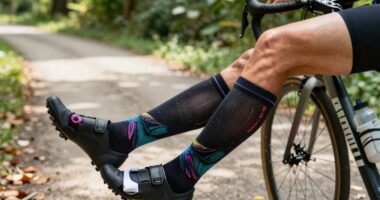

To use easy cycling as recovery without sabotaging your runs, ride at a relaxed pace where you can comfortably hold a conversation and avoid high resistance. Keep effort light and focus on good hydration, supplementing with electrolytes if needed. Incorporate stretching or foam rolling afterward to boost flexibility. Schedule these sessions within 24-48 hours of intense workouts and stay mindful of your body’s signals. If you want to access more tips, keep exploring how to balance cycling with your running goals.

Get workout gear delivered free with Prime
- Fast, free delivery on millions of items
- Prime Video, Amazon Music and more included
- Member-only deals all year
Key Takeaways
- Keep cycling effort light and steady, avoiding high resistance to prevent fatigue that could affect runs.
- Schedule recovery rides within 24-48 hours after intense workouts to enhance recovery without overtaxing muscles.
- Incorporate proper hydration and electrolyte intake during and after cycling to support muscle recovery and prevent cramping.
- Use cycling as active recovery, focusing on relaxed cadence and stretching to promote flexibility and blood flow.
- Prioritize rest if feeling overly tired or sore, and avoid cycling if it might compromise upcoming runs.

After pushing your body hard, you lose fluids through sweat, which, if not replenished, can slow recovery and lead to fatigue or cramping. During your easy cycling sessions, make sure to sip water regularly, aiming to replace fluids lost during your workout. Consider adding electrolytes to your drinks, especially if you’ve sweated heavily, as they help maintain the balance of minerals crucial for muscle function and recovery. Staying hydrated also supports your immune system, preventing setbacks caused by dehydration. Using smart appliances like water purifiers can ensure your hydration is both clean and effective. While cycling for recovery, keep your effort light and steady—think of it as active recovery rather than training. Your goal is to facilitate blood flow without stressing your muscles further. Pedal at a pace where you can hold a conversation comfortably, avoiding high resistance or intense effort. This approach prevents overexertion, which could interfere with your upcoming runs. Maintaining a relaxed cadence helps your muscles stay loose, and if you experience any discomfort or tightness, it’s best to stop and stretch instead of pushing through pain. Timing your easy cycling sessions is crucial. Usually, it’s most effective within 24 to 48 hours after intense activity. This window allows your body to recover while still benefiting from increased circulation. Incorporating hydration strategies like monitoring your fluid intake can optimize your recovery process. Additionally, paying attention to your electrolyte balance can significantly enhance your recovery and prevent cramping. Don’t neglect your core recovery routines, such as stretching and foam rolling, which complement cycling and promote flexibility. Finally, listen to your body. If you feel unusually tired, sore, or fatigued, scale back or skip cycling for a day. Recovery isn’t just about activity; it’s about giving your muscles the rest they need to come back stronger. By combining proper cycling gear, effective hydration strategies, and mindful effort, you can use easy cycling as a powerful tool to recover without sabotaging your runs or risking injury.
hydration water bottles with electrolytes
As an affiliate, we earn on qualifying purchases.
As an affiliate, we earn on qualifying purchases.
Frequently Asked Questions
Can Cycling Prevent Muscle Stiffness After Running?
Yes, cycling can help prevent muscle stiffness after running. It promotes muscle flexibility by gently moving your leg muscles without high-impact stress. As a form of cross-training benefits, cycling enhances blood flow, which speeds recovery and reduces soreness. Incorporating easy cycling into your recovery routine can keep your muscles loose and flexible, helping you bounce back faster for your next run without risking overuse or stiffness.
What’s the Ideal Cycling Duration for Recovery?
Research shows that moderate cycling sessions, around 30 to 45 minutes, optimize recovery without risking overexertion. Cross training benefits include improved circulation and reduced muscle stiffness, aiding your recovery. Keep cycling intensity light to moderate—think easy pedaling—so you don’t fatigue muscles needed for running. By sticking to this duration and intensity, you support healing and maintain fitness, ensuring your runs stay strong and injury-free.
Should I Avoid Hills During Recovery Rides?
Yes, you should avoid high hill intensity during recovery rides. Hills can add unnecessary strain, which can hinder your recovery process. Stick to flat terrain or gentle inclines to keep your cycling gear light and manageable, allowing your muscles to recover without overexertion. This way, you maintain the benefits of easy cycling while giving your body a true rest, ensuring you’re ready for your next challenging run.
How Does Cycling Impact Running Injury Risk?
Cycling can be a game-changer for your running, but if you’re not careful, it might turn into a risk factor for injuries. Moderate cycling offers fantastic cross-training benefits, strengthening muscles without overloading joints. However, high cycling intensity can increase injury risk if you push too hard. To stay safe, keep your efforts moderate, listen to your body, and use cycling as a recovery tool, not a replacement for rest.
Can Cycling Replace Rest Days Entirely?
You shouldn’t replace rest days entirely with cycling, even considering cross-training benefits. Cycling at a low to moderate intensity can aid recovery and improve endurance, but without rest, your body misses critical recovery time. Overdoing cycling, especially at higher intensities, risks injury and burnout. Balance cycling with true rest days to maximize recovery, prevent fatigue, and ensure ideal performance on your runs.
Conclusion
Incorporating easy cycling into your recovery routine can be a game-changer, helping your muscles heal without risking burnout. Just remember, you don’t want to bite off more than you can chew—keep the intensity low and enjoy the ride. Think of cycling as your secret weapon, a gentle way to stay active while giving your body the rest it needs. Stick with it, and you’ll come back stronger than ever, ready to hit the ground running.
Fall Picks
fall essentials
As an affiliate, we earn on qualifying purchases.