
TL;DR

Get workout gear delivered free with Prime
- Fast, free delivery on millions of items
- Prime Video, Amazon Music and more included
- Member-only deals all year
In 2026, AI is enabling retailers to expand physical stores by transforming them into sophisticated fulfillment centers and engagement hubs. Companies investing in AI-driven infrastructure are seeing significant sales growth, signaling a shift in retail strategy.
Retailers are expanding their physical store footprints in 2026, driven by the integration of artificial intelligence that enhances logistics and customer engagement, according to a report from Colliers.
The report highlights that despite the growth of digital commerce, 85.1% of U.S. retail sales still flow through physical stores. Retailers increasingly view stores as critical fulfillment centers and omnichannel support hubs, with one in four online orders now fulfilled directly through brick-and-mortar locations. This figure is projected to rise above 35% by 2030. Companies that prioritize AI investments—such as real-time inventory tracking and personalized shopping assistants—are experiencing faster profit growth, with those increasing IT budgets by 52% over five years seeing nearly three times higher profits in 2026. Consumer behavior reflects this shift, as nearly half of shoppers use AI for product recommendations, and 75% report these tools influence their purchases. Early adopters like Macy’s report that AI-assisted shoppers spend approximately 400% more than average. Stores that have implemented AI see 79% higher sales growth compared to delayed adopters. The report emphasizes that modern stores must support three functions: browsing, AI-driven personal shopping, and local fulfillment, requiring store redesigns to optimize both shopping experience and logistics efficiency. Additionally, only 18% of retailers have fully optimized Buy Online Pickup In Store (BOPIS), which now accounts for nearly 9% of retail revenue, presenting a significant growth opportunity. Retailers utilizing AI to streamline last-mile delivery and enhance in-store data capture are seeing improved margins and customer satisfaction, making physical retail a high-yield component of omnichannel strategies.
Why It Matters
This development signals a fundamental shift in retail strategy, where physical stores are no longer just points of sale but integral parts of a high-tech logistics and customer engagement network. The integration of AI transforms store operations, making them more efficient and personalized, which directly impacts profitability and competitiveness. For consumers, this means more seamless shopping experiences, personalized recommendations, and faster fulfillment. For retailers, the emphasis on AI-driven infrastructure underscores the importance of technological readiness to remain relevant and profitable in a rapidly evolving retail landscape.
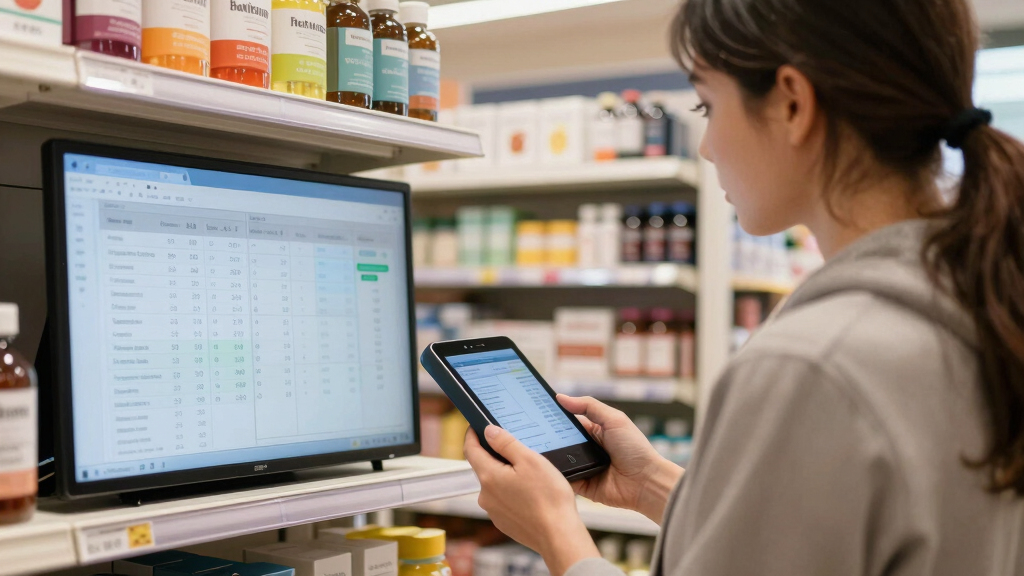
AI inventory management system for retail stores
As an affiliate, we earn on qualifying purchases.
As an affiliate, we earn on qualifying purchases.
Background
Historically, the retail industry faced predictions of decline due to digital commerce growth. However, recent data from Colliers indicates a renaissance driven by technological innovation. The report notes that while digital sales continue to grow, physical stores still dominate retail sales in the U.S. and are now evolving into fulfillment hubs supported by AI. This trend aligns with earlier shifts toward omnichannel retailing, but now accelerates as AI tools become central to store operations and customer engagement. Major brands like Macy’s have demonstrated the financial benefits of early AI adoption, and industry analysts emphasize that infrastructure upgrades are now urgent to capitalize on these opportunities.
“The infrastructure required for modern AI, such as real-time inventory tracking and integrated data systems, cannot be easily retrofitted. Brands must invest in fulfillment-grade real estate that supports complex logistics and high-speed data processing.”
— Anjee Solanki, Colliers national director
“Retailers who prioritize AI and IT investments are experiencing significantly faster profit growth, with some seeing nearly three times higher profits in 2026.”
— Research author from Colliers report
What Remains Unclear
It is still unclear how quickly the majority of retailers will fully upgrade their physical stores to support AI infrastructure, or how widespread the adoption of advanced AI tools will become across different retail sectors. The long-term impact on store closures or consolidations remains to be seen, as does the evolution of consumer preferences in response to these technological changes.
What’s Next
Next steps include retailers continuing to invest in AI-enabled infrastructure, with a focus on integrating real-time data systems and fulfillment capabilities. Industry analysts anticipate a surge in store redesigns optimized for omnichannel efficiency, and further data will reveal how these investments translate into sales and customer loyalty over the coming year.
Key Questions
How is AI improving in-store shopping experiences?
AI enhances shopping by providing personalized product recommendations, enabling faster checkout, and supporting in-store fulfillment through real-time inventory updates and AI assistants.
What percentage of retailers are fully optimizing BOPIS in 2026?
Approximately 18% of retailers have fully optimized Buy Online Pickup In Store (BOPIS), which is a significant opportunity for growth.
Will physical stores replace online shopping?
No, the trend indicates a shift toward integrated omnichannel retailing, where physical stores complement online shopping through enhanced logistics and customer engagement powered by AI.
What are the main infrastructure challenges for retailers adopting AI?
Key challenges include upgrading physical spaces for real-time inventory tracking, integrating complex data systems, and redesigning store layouts to support both shopping and fulfillment functions.
Columbus Day / Indigenous Peoples' Day Picks
long weekend sales
As an affiliate, we earn on qualifying purchases.