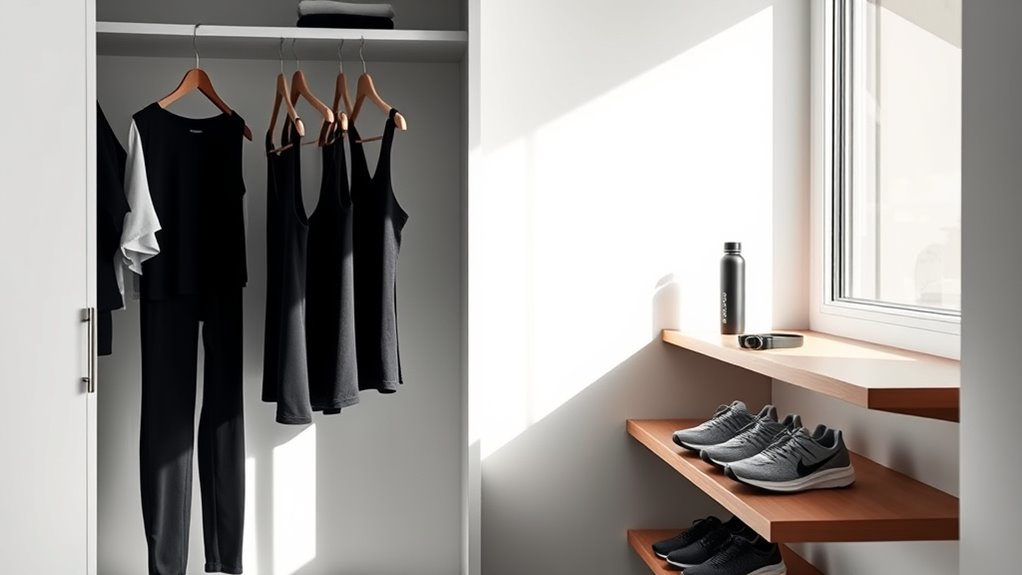

A minimalist runner’s wardrobe and kit focus on essential, high-quality gear that simplifies your choices and boosts performance. You’ll want versatile, durable pieces like moisture-wicking shirts, a reliable pair of shoes, and a packable jacket for changing weather. Keeping your gear streamlined helps you stay focused and reduces clutter, making every run more enjoyable. To learn how to build your perfect setup, stick around for more tips on thoughtful gear selection and sustainability.
Key Takeaways
- Prioritize versatile, high-quality clothing made from sustainable, technical fabrics that wick moisture and regulate temperature.
- Limit gear to essential, durable footwear suitable for various terrains, reducing decision fatigue and clutter.
- Use a few adaptable layering pieces like lightweight shirts and packable jackets for different weather conditions.
- Streamline routine and gear choices to save time, enhance mental focus, and avoid unnecessary purchases.
- Emphasize simplicity and functionality in a clutter-free wardrobe to support consistent, mindful running habits.

A minimalist runner’s wardrobe and kit focus on simplicity and efficiency, helping you streamline your gear without sacrificing performance. When you choose your clothing and equipment thoughtfully, you minimize clutter and make your runs more enjoyable. Central to this approach is selecting sustainable fabric choices, which not only reduce your environmental impact but also ensure you’re wearing high-quality, durable pieces. Opt for technical fabrics made from recycled materials or organic fibers that wick moisture, regulate temperature, and stand up to frequent use. These fabrics tend to last longer and maintain their shape, making them a smart investment for your minimalist setup.
Versatile layering options are equally important in a minimalist runner’s wardrobe. Instead of a cluttered collection of specialized gear, focus on a few well-chosen pieces that can adapt to different weather conditions. For instance, a lightweight, moisture-wicking long-sleeve shirt can serve as a base layer in cooler weather or stand alone during milder days. Pair it with a packable jacket that’s easy to carry and provides wind or rain protection when needed. By assembling a small selection of adaptable layers, you can easily modify your outfit for temperature changes without carrying excess gear. This flexibility allows you to focus on your run rather than managing a bulky wardrobe.
When it comes to running shoes, choose a single pair that suits most of your needs, rather than multiple specialized models. Look for versatile designs that work well on various terrains and distances. Supporting your minimalist philosophy, keep your gear simple by sticking to essential items—don’t get caught up in buying every new trend or gadget. Instead, invest in quality that lasts, and keep your kit streamlined. An efficient wardrobe reduces decision fatigue and saves you time both pre- and post-run. It also encourages you to stick to your routine because getting ready feels less chaotic. Incorporating sound healing science principles such as mindful breathing and focus can further enhance your running experience and mental clarity.
Frequently Asked Questions
How Often Should I Replace My Running Gear?
You should replace your running gear every 300 to 500 miles or roughly every 6 to 12 months, depending on wear and tear. Regular gear maintenance helps extend its life, but don’t ignore signs of deterioration like worn-out soles or damaged fabric. When upgrading, opt for sustainable choices to reduce waste. Prioritize quality over quantity, and replace gear when it no longer provides proper support or comfort.
What Are the Best Fabrics for Minimalist Running Apparel?
You’ll love performance fabrics like moisture-wicking polyester and nylon, which keep you dry and comfortable mile after mile. Pair them with sustainable materials such as recycled polyester or organic cotton to feel good about your impact on the planet. These fabrics offer durability, breathability, and flexibility, making them perfect for minimalist running apparel. They blend function with eco-friendliness, so you can focus on your run without distractions or guilt.
Can Minimalist Gear Accommodate Different Weather Conditions?
Yes, minimalist gear can handle different weather conditions thanks to layering flexibility and weather adaptability. You can easily add or remove lightweight, breathable layers for warmth or moisture control as needed. Choose versatile pieces like a packable jacket or moisture-wicking base layers that work across seasons. This approach keeps your wardrobe simple while ensuring you’re prepared for varying weather, making your running experience comfortable and efficient year-round.
How Do I Choose the Right Running Shoes for My Gait?
You might think choosing running shoes is simple, but it’s like picking a soulmate based on a quick glance. Do a biomechanical analysis first—your gait reveals if you need stability or flexibility. Pay attention to footwear cushioning; it’s your shock absorber on every stride. Test different models, and trust your body’s signals. Remember, the perfect shoe supports your natural gait without forcing it—irony’s in the comfort!
Is a Minimalist Wardrobe Suitable for Long-Distance Running?
A minimalist wardrobe can work for long-distance running if you prioritize comfort and essentials. You’ll want lightweight, versatile pieces that dry quickly and don’t weigh you down. Include compression gear to support your muscles and hydration essentials like a small water bottle or vest. Focus on quality over quantity, ensuring your gear is reliable for extended runs. With the right balance, minimalist attire can keep you feeling free and focused during long-distance runs.
Conclusion
A minimalist runner’s wardrobe keeps things simple, letting you focus on your run instead of clutter. You might think fewer options mean sacrificing comfort or style, but with the right quality gear, you’ll find everything you need to perform your best. Embrace the fewer, better approach—less mess, less stress, more miles. After all, sometimes less truly is more, helping you stay light, focused, and ready for whatever your run throws at you.