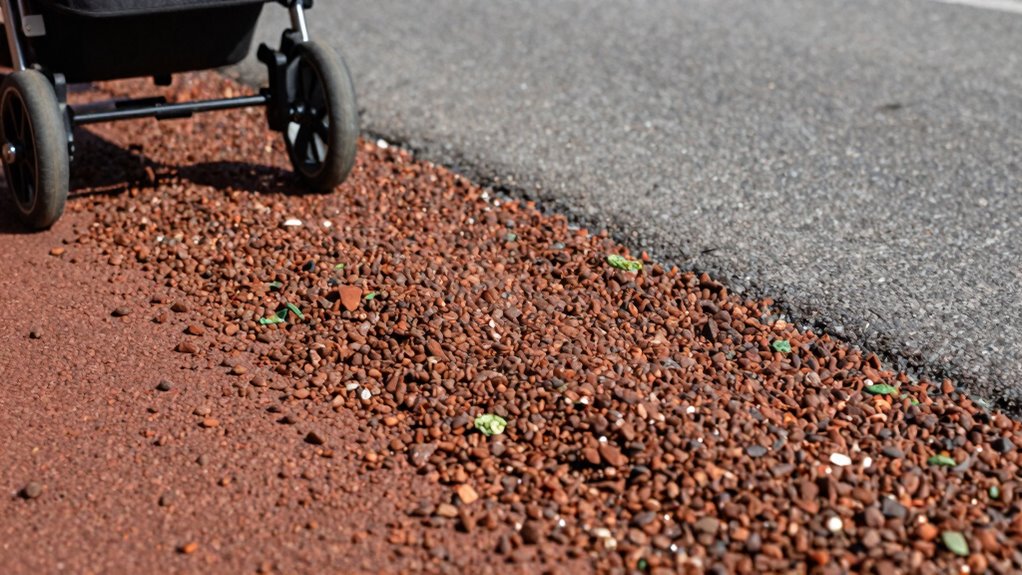

Running on gravel with a stroller feels different than pavement mainly because of the surface’s uneven texture. Larger wheels help absorb shocks and improve glide, while a well-designed suspension minimizes jarring effects. You might instinctively shorten your stride and adjust your posture for stability. Under-inflated tires can also make the ride rougher. Understanding these factors helps you adapt your technique for a smoother experience. Stick around to discover more tips for a better run with your stroller.

Get workout gear delivered free — and shop member deals
- Fast, free delivery on millions of items
- Access to Prime Big Deal Days deals on October 6–7
- Prime Video, Amazon Music and more included
Key Takeaways
- Gravel surfaces are uneven, requiring larger stroller wheels for better shock absorption and smoother rides compared to pavement.
- The suspension system in strollers helps minimize jarring effects, which is more pronounced on gravel than on flat surfaces.
- Tire pressure significantly affects handling; under-inflated tires create drag and a rougher experience on gravel compared to well-maintained pavement.
- Running techniques adapt instinctively on gravel; shorter strides and altered posture enhance stability and balance compared to running on pavement.
- Awareness of terrain impacts overall stability and control, making preparation essential for safe running with a stroller on gravel.

When you walk or drive on gravel, you might notice a distinct sensation compared to smooth pavement. The crunch of gravel underfoot or beneath your tires creates a different experience, especially when you’re pushing a running stroller. The terrain impacts how you navigate, and recognizing this can make your outing more enjoyable and efficient.
One of the first things to reflect on is the stroller design. A running stroller typically features larger wheels to tackle uneven surfaces like gravel. The wheel size plays a vital role in how easily you can maneuver through the rocks and bumps. Smaller wheels might struggle, making the ride bumpy and challenging. Larger wheels provide better shock absorption, allowing you to glide over the terrain with greater ease.
Speaking of shock absorption, it’s essential to take into account the stroller’s suspension system. A well-designed suspension system can help minimize the jarring effects of uneven surfaces. If your stroller lacks this feature, you might feel every bump, which can be uncomfortable for both you and your little one. This is especially true if you’re trying to maintain a steady running technique while pushing the stroller. You want to keep a smooth rhythm, and a poor suspension can disrupt that flow. Additionally, terrain adaptability is crucial for a comfortable and safe outing.
Tire pressure also plays a significant role. If your stroller’s tires are under-inflated, you’ll experience more drag and a rougher ride. Keeping an eye on tire pressure can enhance your experience on gravel, giving you the freedom to navigate more smoothly. Properly inflated tires will not only improve your handling but also provide better traction, which is essential on loose surfaces.
As you push your stroller over gravel, you might find that your running technique adjusts. You may instinctively shorten your stride or alter your posture to maintain balance. This change can enhance your workout, engaging different muscle groups than when you run on smooth pavement. It’s a great way to add variety to your routine while enjoying the outdoors with your child. Additionally, understanding how different terrains impact your stability and control can help you better prepare for varied outdoor conditions.
running stroller with large wheels
As an affiliate, we earn on qualifying purchases.
As an affiliate, we earn on qualifying purchases.
Frequently Asked Questions
Can I Use Any Stroller on Gravel Surfaces?
You can’t use just any stroller on gravel surfaces. Standard strollers often struggle with uneven terrain, while jogging strollers or all-terrain models handle gravel better. The larger wheels and suspension systems found in these stroller types offer more stability and comfort. Plus, using the right stroller on gravel provides benefits like improved control and a smoother ride for your child. So, choose wisely to enjoy your outdoor adventures!
How Do I Maintain My Stroller for Gravel Running?
To keep your stroller in top shape for gravel running, focus on regular cleaning and tire maintenance. Did you know that 70% of stroller issues come from neglecting upkeep? After each run, wipe down the frame and clean the wheels to remove dirt and debris. Check tire pressure before each outing and inspect for wear. Keeping everything in good condition guarantees a smoother ride and extends your stroller’s lifespan.
What Is the Best Stroller for Uneven Terrains?
The best stroller for uneven terrains has features like large, air-filled tires and a sturdy frame for stability. Look for terrain adaptability, so it can handle gravel, dirt, and grass with ease. A swivel front wheel helps with maneuverability, while a locking option provides better control on rough paths. Additionally, a good suspension system absorbs bumps, ensuring a smooth ride for both you and your little one.
Are There Specific Tires for Gravel Running Strollers?
Yes, there are specific tire types designed for gravel running strollers. Look for tires that have wider profiles and deeper treads, which provide better traction features on uneven surfaces. These tires help absorb shock and maintain stability, making your run smoother. Some models even come with puncture-resistant technology to prevent flats. When choosing a stroller, guarantee it’s equipped with the right tires to tackle gravel effectively while keeping you and your child comfortable.
How Do I Safely Navigate Gravel Hills With a Stroller?
Maneuvering gravel hills with a stroller feels like climbing a mountain with a trusty companion. To guarantee gravel safety, lean slightly back while pushing uphill, keeping your weight balanced. Use a firm grip on the handlebar, and engage your core for stability. When going downhill, gently pull back on the stroller to prevent it from rolling away. Master these stroller techniques, and you’ll conquer those hills with confidence, enjoying the adventure.
Conclusion
Running on gravel with a stroller is like traversing life’s uneven paths. Just as the gravel’s texture challenges your stride, it teaches you resilience and adaptability. Each bump reminds you that not every journey is smooth, but that’s where growth happens. Embrace the rough patches; they shape your experience and build strength. So, whether it’s gravel or pavement, remember that every surface offers lessons that propel you forward on your unique adventure.
Halloween Picks
halloween
As an affiliate, we earn on qualifying purchases.