To eliminate bounce, start by loosening all straps, then put on your vest and tighten the shoulder straps for support. Secure the sternum/chest strap snugly enough to stay in place but still breathe easily. Tighten the waist or hip straps to prevent shifting without restricting movement. Make gradual adjustments while moving to find a firm yet comfortable fit. Proper strap tension keeps the vest stable and reduces bounce—continue to explore these adjustment tips for best results.
Key Takeaways
- Loosen all straps before donning the vest for proper initial fit.
- Tighten shoulder straps first to secure main weight support without causing discomfort.
- Use quick-release buckles or slide adjusters to fine-tune strap tension and prevent bounce.
- Secure waist/hip straps snugly to stabilize the vest without restricting movement.
- Test the fit with brisk movements to ensure minimal bounce and re-adjust straps as needed.
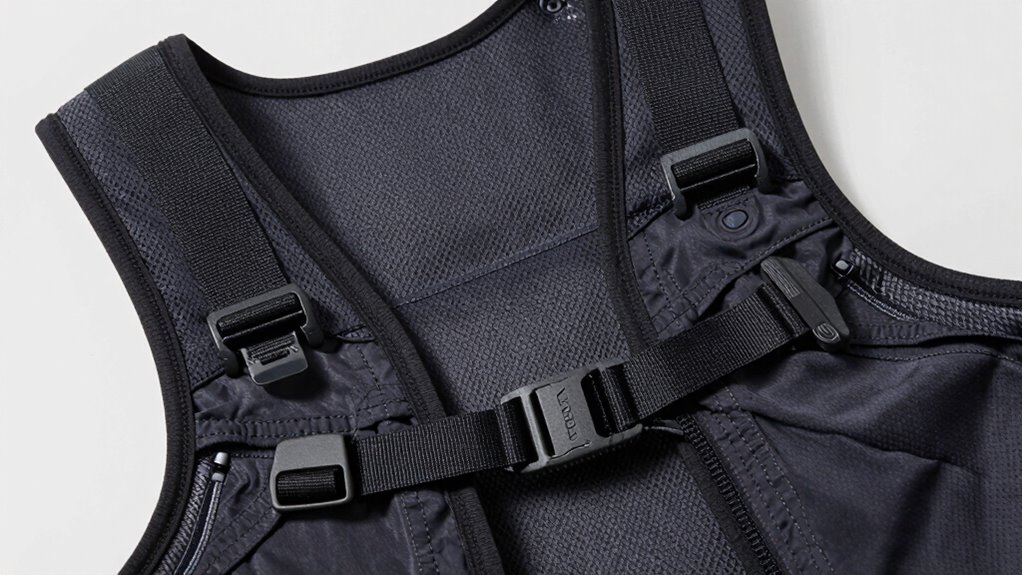
A well-fitting hydration vest is essential for comfort and performance during your runs or outdoor activities. When it fits properly, you can focus on your movement without distraction or discomfort. One of the most critical aspects of achieving that perfect fit involves mastering adjustment techniques, especially those related to the straps. Properly adjusted straps prevent bounce, chafing, and shifting, which can all derail your focus and slow you down. To start, examine the strap materials of your vest. Many are made from elasticized nylon, mesh, or other lightweight, durable fabrics designed to stretch and conform to your body. Knowing the material helps you understand how much tension to apply. For instance, elastic straps can be tightened more snugly without cutting off circulation, whereas non-elastic straps require a more delicate touch to avoid discomfort.
Proper strap materials and adjustment techniques ensure a comfortable, bounce-free fit during outdoor activities.
Next, focus on the adjustment techniques. Begin by loosening all straps so the vest sits comfortably on your shoulders and hips. Put on the vest, then tighten the shoulder straps first, ensuring they sit evenly without digging into your collarbone or slipping off. These straps are crucial because they hold the main weight of the vest close to your body, reducing bounce. Afterward, adjust the sternum or chest strap, which helps lock the shoulder straps in place. Pull the strap until it’s snug but not restrictive—your breathing should remain easy, and there should be no pinching or pressure points. Many vests feature quick-release buckles or slide adjusters, making these modifications quick and straightforward. Being aware of strap materials can help you better gauge how to tighten or loosen them safely and effectively.
Then, move on to the waist or hip straps. These are vital for stabilizing the vest and preventing shifting during movement. Tighten them until they feel secure, but avoid over-tightening, which can restrict movement or cause discomfort. Remember, strap materials influence how you adjust these; stretchy straps will give you more flexibility, while non-elastic straps require precise tightening. Keep checking yourself during your activity—what feels perfect at the start might loosen or shift over time. Periodically re-adjust to maintain that ideal fit.
Finally, test your vest’s stability by briskly moving around or jogging in place. If it bounces excessively or shifts, tighten the straps slightly. A properly adjusted hydration vest should feel like an extension of your body—firm yet comfortable—allowing you to focus solely on your activity. With the right adjustment techniques and an understanding of strap materials, you can eliminate bounce and enjoy a more comfortable, efficient outdoor experience.

Fyntave 4 Pcs Hydration Tube Clips Black Water Bladder for Hydration Pack Bladder Drinking Tube Trap Strap Clip Pack Tubes Outdoor Backpack Clamp Hose Clip Camping and Hiking Accessories
Universal Fit: The backpack water bottle clip features a universal design that securely holds most hydration bag tubes…
As an affiliate, we earn on qualifying purchases.
As an affiliate, we earn on qualifying purchases.
Frequently Asked Questions
Can Hydration Vest Straps Be Customized for Different Body Types?
Yes, hydration vest straps can be customized for different body types through strap customization options. You can adjust the straps to achieve a custom fit, ensuring they sit snugly without bouncing. Many vests feature adjustable shoulder and chest straps, allowing you to tailor the fit to your body shape. Proper strap customization not only enhances comfort but also reduces bounce, making your hydration experience more secure and enjoyable during your activities.
How Often Should I Readjust My Hydration Vest Straps During a Run?
During a long run, you should readjust your hydration vest straps as needed to maintain ideal strap tension and stay within your comfort zones. For example, if you notice bouncing or discomfort around mile 5, tighten or loosen the straps slightly. Check your straps every 30-45 minutes to prevent chafing or bouncing, ensuring a secure, comfortable fit that adapts to your changing body and activity level.
Do Different Brands Offer Adjustable Straps for Better Fit?
Yes, different brands offer adjustable straps for a better fit. When comparing brands, look at strap materials like nylon or elastic, which affect comfort and durability. Some brands, like Salomon or CamelBak, provide easy-to-adjust straps with quick-release buckles, making it simple to customize fit and prevent bounce. A good comparison helps you choose a hydration vest that stays secure on your run, no matter your activity level.
What Materials Are Best for Preventing Strap Irritation?
Did you know that 75% of athletes experience strap irritation? To prevent this, choose hydration vests with straps made from soft, breathable materials like mesh or padded neoprene. These materials reduce skin chafing and irritation, ensuring comfort during long runs. Look for adjustable straps with smooth, moisture-wicking fabrics that prevent rubbing and allow airflow. Proper strap material is key to keeping you comfortable and focused on your performance.
Are There Specific Techniques for Adjusting Straps for Women?
You should focus on women’s strap ergonomics by adjusting the straps to fit a female-specific design. Start by loosening or tightening the shoulder straps to ensure they sit snugly without digging in. Use the sternum strap to stabilize the vest and prevent bounce. Remember, proper fit involves fine-tuning each strap for comfort and security, accommodating curves and differences in female anatomy for a more effective, bounce-free experience.

Semsty Running Hydration Vest 5L, Running Backpack with 2x500ml Soft Flask, Lightweight Water Backpack Reflective Trail Running Vest for Running Hiking Cycling
Hydration Flasks Included: Semsty running hydration vest equipped with two 500ml soft flasks for convenient on-the-go hydration. Tiered…
As an affiliate, we earn on qualifying purchases.
As an affiliate, we earn on qualifying purchases.
Conclusion
Now that you know how to adjust your hydration vest for a perfect fit, you’re ready to run free without bounce or distraction. Imagine the freedom of miles ahead, your gear secure and comfortable—no matter how tough the terrain. It’s a simple tweak that transforms your experience, turning discomfort into confidence. So, tighten those straps, find your rhythm, and embrace every stride—because a well-fitted vest isn’t just gear, it’s your secret weapon for every adventure.
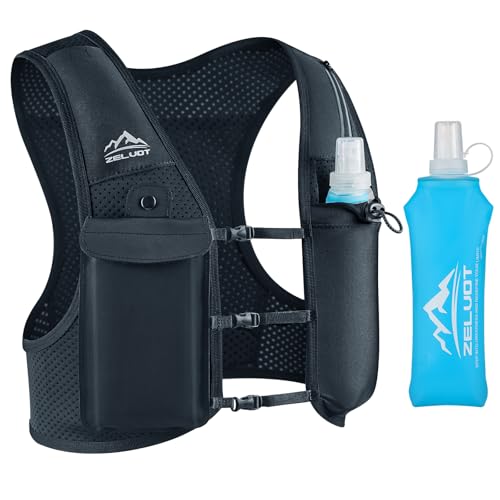
Zelvot Running Vest for Women Men, USA Original Patent, Adjustable Chest Straps Running Hydration Vest with 500ml Soft Flask, Lightweight Breathable Reflective Running Vest for Marathon (Black, M/L)
Hydrate on the Run – The running hydration vest comes with a 500ml soft flask that's 100% free…
As an affiliate, we earn on qualifying purchases.
As an affiliate, we earn on qualifying purchases.

SWIFTVEST Running Vest for Women & Men with Water Bottle | Lightweight Hydration Vest | Reflective Running Gear | Adjustable Fit | 6 Pockets | Phone Holder for Runners (Grey, Large – X Large)
SECURE STORAGE WITH 6 POCKETS | Designed for runners, this vest features 6 easy-access pockets to carry your…
As an affiliate, we earn on qualifying purchases.
As an affiliate, we earn on qualifying purchases.