To get a secure, chafe-free fit with a big watch on a small wrist, measure your wrist accurately and choose watches with 28-34mm diameters. Opt for leather straps, as they’re more adjustable and comfortable, and use multiple holes or add extra ones for a snug fit. Make sure the watch sits just above the wrist bone without feeling tight. Keep these tips in mind, and you’ll find a perfect balance of comfort and style. If you want more advice, stay tuned.
Key Takeaways
- Measure your wrist accurately and choose watches with a case diameter between 28mm and 34mm for a better fit.
- Opt for leather straps with multiple holes or custom adjustments for a snug, comfortable fit on small wrists.
- Use a leather punch to add extra holes if the strap lacks sufficient sizing options.
- Ensure the watch sits just above the wrist bone without being too tight to prevent chafing and discomfort.
- Avoid thick or stiff straps; select soft, flexible materials that mold well to your wrist for secure, irritation-free wear.

Small Wrists, Big Watches
If you have small wrists, finding a watch that fits comfortably and looks stylish can be challenging. Many watches are designed with larger wrists in mind, making them feel bulky or loose on your arm. One of the best ways to guarantee a perfect fit is to pay close attention to watch sizing. The right size prevents the watch from slipping around or feeling heavy, giving you a more polished and comfortable look. When selecting a watch, start by measuring your wrist accurately. Use a soft measuring tape or a piece of string, then compare it to a ruler. Most brands specify their watch case diameters in millimeters, so look for models that fall within the 28mm to 34mm range, which is generally ideal for smaller wrists.
Measure your wrist accurately and choose watches with 28mm to 34mm case diameters for a perfect fit.
Leather straps are a popular choice for smaller wrists because they’re adjustable and tend to be more flexible than metal bands. With leather, you can find multiple holes or even have it custom adjusted at a watch repair shop. This flexibility allows you to tighten or loosen the strap as needed, guaranteeing that the watch stays secure without chafing or pinching. When selecting a leather strap, opt for thinner, softer leather, which molds more easily to your wrist, providing a snug yet comfortable fit. Avoid overly thick or stiff straps, as they can cause discomfort or restrict circulation after prolonged wear.
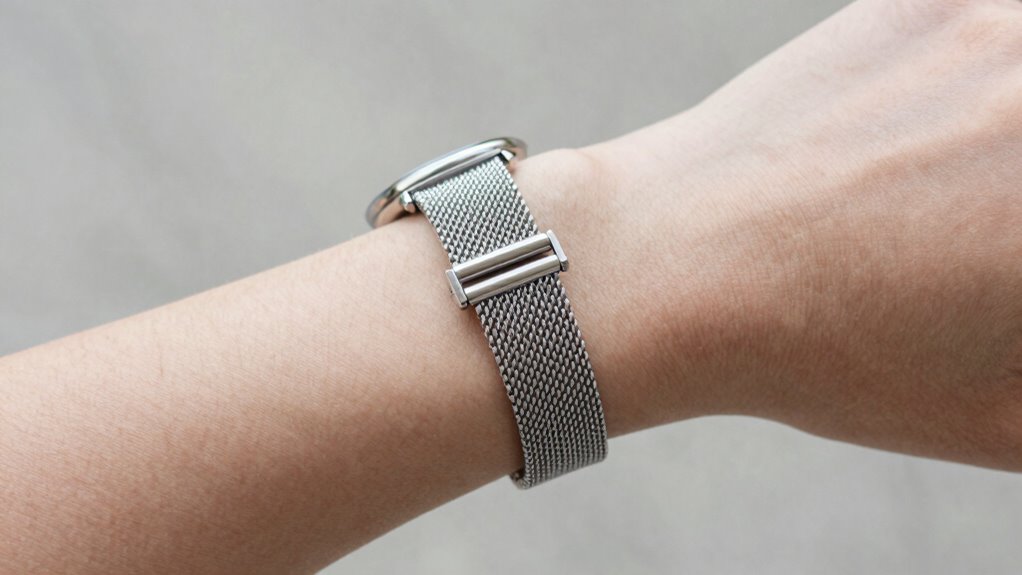
Adjusting your watch’s band is vital. Many watches come with multiple holes on leather straps, so choose the one that sits snugly just above your wrist bone without feeling tight. If the strap has too few holes or feels too loose, consider adding extra holes with a leather punch or replacing the strap altogether. For metal bands, look for micro-adjustments or removable links that allow you to fine-tune the size. Proper watch sizing isn’t just about comfort; it also impacts how well your watch functions and how stylish it looks. A watch that’s too loose might shift around and catch on clothing, while one that’s too tight can cause discomfort or skin irritation over time.
Additionally, choosing body jewelry measurements that fit well can help ensure your accessories are comfortable and secure. Ultimately, finding a well-fitting watch involves considering both the size and the material of the strap. Leather straps, with their adjustability and comfort, are often the best choice for small wrists. Take the time to measure your wrist accurately, select a watch within the appropriate size range, and adjust the strap to fit perfectly. When you do, you’ll enjoy a secure, comfortable fit that doesn’t chafe and looks effortlessly stylish.
Frequently Asked Questions
Can I Customize Watch Bands for a Better Fit?
Yes, you can customize watch bands for a better fit. Start by adjusting the band sizing, removing or adding links if possible. If that doesn’t work, explore alternative strap options like silicone, leather, or fabric straps designed for small wrists. These options often come with adjustable features, ensuring a snug, comfortable fit without chafing. Customizing your band helps you find the perfect balance between secure and comfortable wear.
What Materials Are Best for Small Wrist Watches?
For small wrist watches, you’ll want to choose materials that offer comfort and durability. Luxury materials like genuine leather, fine stainless steel, or high-quality silicone provide a sleek look and secure fit. Hypoallergenic options such as titanium, ceramic, or silicone are ideal if you have sensitive skin. These materials help prevent chafing and guarantee your watch stays comfortable, stylish, and secure all day long.
How Do I Measure My Wrist Accurately?
Ever wondered how to get accurate wrist sizing? Start by using a flexible measuring tape or a strip of paper. Wrap it snugly around your wrist, just below the wrist bone, making certain it’s not too tight. Mark or note the measurement, then compare it to watch sizing charts. Using proper measurement techniques guarantees your watch fits comfortably without chafing, giving you the perfect balance of style and security.
Are There Specific Brands Catering to Small Wrists?
Yes, there are brands that cater to small wrists, offering luxury watches and affordable options. Brands like Citizen, Seiko, and Tissot often provide models with smaller case sizes perfect for your wrist. You can also explore boutique brands like Daniel Wellington or MVMT, which often feature stylish watches with adjustable straps. Always check the case diameter and strap options to guarantee a comfortable, secure fit that complements your wrist size.
How Often Should I Adjust My Watch Band?
Think of your watch band as a loyal friend; it needs regular check-ins to stay comfortable. You should adjust it whenever it feels too tight or loose, ideally every few weeks. Use proper adjustment techniques based on your watch band materials—leather, metal, or silicone—to guarantee a snug fit without chafing. Regular tweaks keep your watch secure and comfortable, preventing discomfort and ensuring it remains a reliable, stylish companion.
Conclusion
Did you know that nearly 60% of women wear watches that are too large for their wrists? Don’t let an ill-fitting watch cause discomfort or chafing. With the right adjustments, you can find a secure, comfortable fit that feels just right. Remember, a properly fitted watch not only looks better but also keeps you from constant readjustments. Take the time to size your watch properly—you’ll enjoy wearing it more every day.