Running power metrics in watts measure the actual effort you put into each stride, giving you a clear picture of your true exertion. Unlike pace or heart rate, watts provide instant, precise feedback about your efforts, helping you train smarter and avoid overtraining or injuries. This data can improve your performance by showing your strengths and weaknesses more accurately. Keep exploring to discover how understanding these numbers can help optimize your runs even further.
Key Takeaways
- Watts measure the actual power output generated during each stride, reflecting effort more accurately than pace or heart rate.
- Running power metrics provide real-time data, helping runners gauge effort levels and stay within targeted zones.
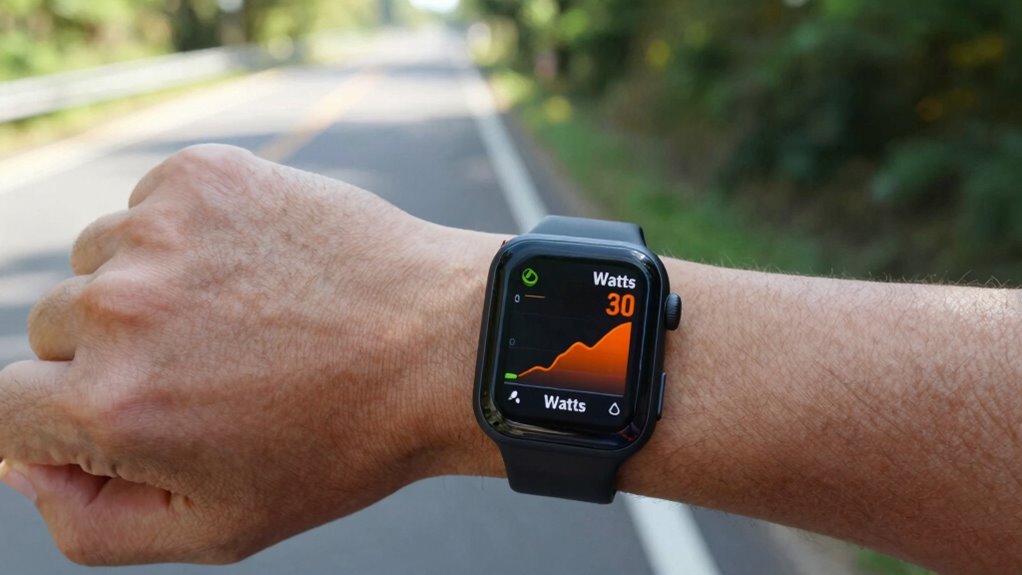
- The ‘Watts’ displayed on devices translate complex biomechanical data into understandable, actionable insights for training.
- Monitoring watts assists in optimizing pacing, improving efficiency, and avoiding overexertion during runs.
- Advanced devices integrate watt measurements seamlessly, empowering runners with precise, data-driven performance feedback.
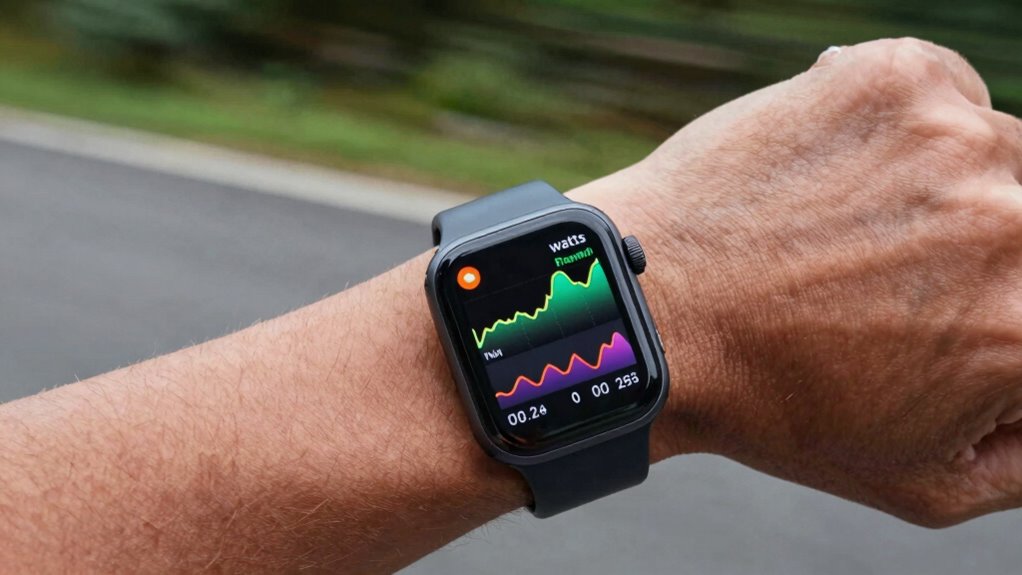
Running power metrics have transformed how athletes monitor and improve their performance. Instead of relying solely on pace or heart rate, you now have access to real-time data that measures the actual power you generate with each stride. This shift offers a more direct insight into your effort, allowing you to tailor your training with greater precision. As a result, you can identify your strengths and weaknesses more effectively, optimizing your workouts for better endurance, speed, and efficiency. The integration of technology into running gear makes it possible to track your watts seamlessly during your runs, providing immediate feedback that helps you stay within targeted effort zones. This immediate data fosters smarter decision-making, whether you’re pushing through intervals or maintaining a steady pace on long runs. Additionally, understanding how power metrics relate to running economy can help you optimize your form and reduce fatigue over time.
The use of running power metrics brings significant training benefits that go beyond traditional metrics. You can quantify your effort more accurately than with heart rate alone, which can be influenced by external factors like heat, fatigue, or hydration levels. Watts provide a direct measure of your mechanical work, giving you consistent and comparable data across different sessions. This consistency enables you to set more precise training targets, prevent overtraining, and avoid injury by recognizing when you’re pushing too hard or not hard enough. Over time, these insights help you build a more structured training plan, track your progress objectively, and adjust your intensity to match your evolving fitness level. This data-driven approach makes your workouts more effective and saves you from guesswork, ensuring every run contributes to your overall goals.
The technology integration in running power devices is user-friendly and highly portable, fitting comfortably into your existing gear. Many modern watches and foot pods sync effortlessly with smartphone apps, translating complex metrics into easy-to-understand visuals. This seamless integration means you can focus more on your run and less on deciphering data, confidently making adjustments on the fly. As the technology advances, features like personalized training plans, real-time coaching, and detailed analytics further enhance your ability to train smarter. By incorporating these tools into your routine, you’re not just running; you’re actively engaging with cutting-edge technology that helps you reach your potential faster. With continuous improvements in device accuracy and usability, running power metrics are quickly becoming an essential part of serious training, empowering you to run more efficiently, improve performance, and stay motivated on every step of your journey.
Frequently Asked Questions
How Accurate Are Wrist-Based Running Power Meters?
Wrist-based running power meters can be fairly accurate, but their precision depends on calibration techniques and device compatibility. You should regularly calibrate your device to verify accurate readings, especially when conditions change. Keep in mind that some devices work better with specific smartwatches or fitness trackers. While they offer a convenient way to monitor your effort, don’t rely solely on them—use them alongside other metrics for best results.
Can Running Power Metrics Predict Injury Risk?
Running power metrics are like a weather forecast—you can’t predict injuries with absolute certainty, but they give valuable clues. They help you monitor muscle fatigue and refine pacing strategies, reducing strain that could lead to injury. While not foolproof, paying attention to power data can alert you to overexertion and help you adjust your training, ultimately lowering your injury risk and keeping you on track for your running goals.
How Do Different Terrains Affect Power Readings?
Different terrains cause power fluctuations because terrain variability impacts how much effort you need. On uneven or hilly surfaces, your power readings may spike as you push harder uphill or slow down on rough terrain. Conversely, smooth, flat surfaces lead to more consistent readings. So, always consider terrain when analyzing your power data, as it directly influences your metrics and helps you better understand your effort and performance.
Is Running Power Useful for Beginner Runners?
Running power can be useful for beginners because it helps you track training adaptation and refine pacing strategies. By monitoring watts, you gain real-time feedback on effort, making it easier to avoid overexertion and build endurance gradually. As you become more experienced, power metrics support smarter training decisions, ensuring consistent progress. Even at the start, understanding your power helps you develop better pacing and prevents burnout.
How Often Should I Calibrate My Running Power Device?
A stitch in time saves nine, so you should calibrate your running power device regularly to guarantee device consistency. Aim for calibration every few weeks or after significant changes in your running routine or terrain. This keeps your data accurate and reliable, helping you make better training decisions. Regular calibration helps your device stay true to your effort, much like tuning a fine instrument for ideal performance.
Conclusion
Understanding running power metrics is like deciphering a secret code in your stride. Those watts aren’t just numbers—they’re your personal compass, guiding you through every hill and valley. When you grasp what they mean, your runs become a symphony of efficiency and strength. Embrace this new language, and watch your performance soar like a bird breaking free from the wind. With power in your pocket, the road ahead is yours to conquer.