A cross-training week combining swimming, biking, and strength exercises helps you boost overall performance, reduce injury risk, and stay motivated. Swimming offers low-impact cardiovascular benefits, while biking builds leg strength and stamina. Strength training enhances muscle power and stability, complementing your cardio. Mixing these activities prevents boredom and overuse injuries, promoting better recovery and balanced development. Keep exploring how to optimize your cross-training routine for maximum benefits and sustained progress.
Key Takeaways
- Incorporate swimming, biking, and strength training to target different muscle groups and improve overall fitness.
- Cross-training prevents monotony, enhances motivation, and keeps workouts engaging throughout the week.
- Alternating activities reduces overuse injuries and supports joint stability through varied movement patterns.
- Combining cardio and strength exercises optimizes endurance, power, and muscular balance.
- Use outdoor biking for environmental exploration, adding variety and mental refreshment to your routine.
Ever wondered how to boost your fitness and prevent burnout? Cross-training week is a perfect way to do just that. By incorporating activities like swimming, biking, and strength training into your routine, you give your body a well-rounded workout that offers numerous training benefits. Engaging in different types of exercise not only keeps your workouts fresh and exciting but also helps improve overall performance by targeting various muscle groups. This variety allows you to develop endurance, strength, and flexibility, all of which contribute to better athletic results. Plus, cross-training minimizes the risk of overuse injuries that often come from repetitive motions, making it an effective strategy for injury prevention. When you switch between activities, you give certain muscles a break while still maintaining your fitness level, reducing the strain on joints and tendons that can lead to overuse injuries.
During cross-training week, you’ll notice that your body adapts and strengthens more efficiently. Swimming, for example, is a low-impact exercise that enhances cardiovascular health and builds muscular endurance without putting stress on your joints. Biking offers a weight-bearing activity that boosts leg strength and stamina, while also giving you the chance to explore new environments. Strength training complements these cardio activities by building muscle mass, which improves your overall power and stability. The combination of these activities means you’re not just working on one aspect of fitness but developing a balanced physique that can handle various physical demands. This balance is key for injury prevention because stronger, more flexible muscles can better support your joints, decreasing the likelihood of strains and sprains.
Moreover, cross-training week encourages mental freshness. When you rotate through different workouts, you avoid the mental fatigue that can come from doing the same routine day after day. This mental boost keeps you motivated and committed to your fitness journey. It’s also a great way to discover new activities you might enjoy, making it easier to stick with your fitness goals long-term. As you cycle through swimming, biking, and strength exercises, pay attention to your body’s signals. Properly balancing these activities can optimize your training benefits and help you recover faster, thereby preventing injuries before they happen. Additionally, understanding the importance of muscle support can help you tailor your training to improve overall resilience and injury prevention.

Aquapella Swimming Kickboard – One Size Fits All – A Great Training Aid for Children and Adults (Black)
Aquapella by VIAHART ! We are currently rebranding our kickboards ! The logo on your kickboard can be…
As an affiliate, we earn on qualifying purchases.
As an affiliate, we earn on qualifying purchases.
Frequently Asked Questions
How Should I Modify Workouts for Injury Prevention?
To prevent injuries, you should focus on proper warm-up routines that prepare your muscles and joints for activity. Always wear correct footwear suited to your workout to provide adequate support and reduce strain. Incorporate gradual intensity increases and listen to your body, stopping if you feel pain. Cross-training helps balance muscle use, but these key steps make certain you stay safe and avoid overuse injuries during your workouts.
What Is the Ideal Duration for Each Cross-Training Session?
You might think longer sessions are better, but duration guidelines suggest 30-60 minutes for each activity to maximize benefits without risking overuse injuries. To prevent burnout and promote activity variation, switch between swim, bike, and strength workouts regularly. This balance keeps your muscles engaged without overloading any one group, helping you stay injury-free while improving overall fitness. Focus on consistent, moderate sessions for the best results.
How Do I Balance Training Intensity Across All Activities?
You should balance training intensity across all activities by monitoring your training load and adjusting efforts accordingly. Incorporate recovery strategies like rest days and easy sessions to prevent overtraining. Vary the intensity within each activity—alternate between high and low effort days—and listen to your body. This approach helps you optimize performance while minimizing injury risk, ensuring a well-rounded, sustainable cross-training routine.
Can Cross-Training Help Improve Mental Well-Being?
Cross-training can boost your mental well-being more than you’d believe. It’s like revealing a hidden superpower within you. By incorporating mindfulness practices and stress reduction techniques into your routine, you’ll find your mind clearer and more resilient. Swimming, biking, and strength training offer not just physical benefits but also mental clarity, helping you combat stress and boost mood. Embrace cross-training and watch your mental health soar to new heights.
What Equipment Is Essential for an Effective Cross-Training Week?
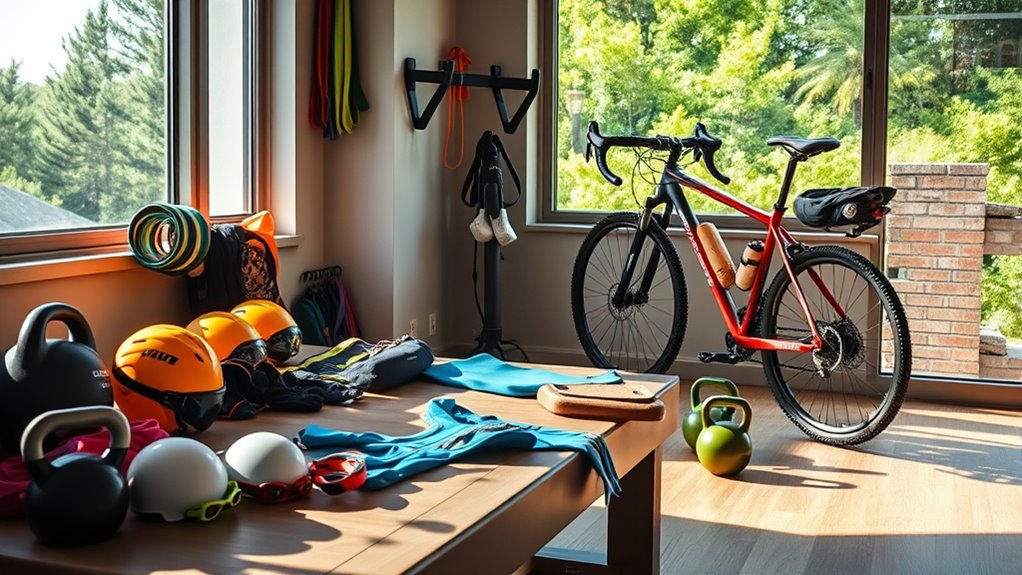
For an effective cross-training week, you’ll need essential gear like a good pair of running shoes, a bike, swimwear, and resistance bands. Your gear selection should match your workout planning to optimize performance and prevent injury. Consider investing in a heart rate monitor or fitness tracker to track progress. Having the right equipment keeps your routines efficient and enjoyable, making it easier to stay consistent and achieve your fitness goals.

Sportneer Bike Trainer – Magnetic Stationary Bike Stand for 26-28" & 700C Wheels – Adjustable 6 Level Resistance Bike Trainer Stand for Indoor Riding with Quick Release Lever & Front Wheel Riser Block
Wide Compatibility for Most Bikes: The Sportneer indoor bike trainer fits most road and mountain bikes with 26–28"…
As an affiliate, we earn on qualifying purchases.
As an affiliate, we earn on qualifying purchases.
Conclusion
As you wrap up your cross-training week, it’s funny how the different workouts seem to mirror life’s surprises—sometimes challenging, sometimes invigorating. Just like switching between swim, bike, and strength, life’s twists keep you balanced and resilient. Remember, the key isn’t in sticking to one path but embracing the variety. Coincidentally, by diversifying your routine, you’re preparing yourself for whatever comes next—both in fitness and life’s unpredictable journey.

TYZDMY Adjustable Dumbbells Set of 2,Free Weights Dumbbells Set,Adjustable Dumbbell Set,52.5 lbs pair 105 lbs,15 in 1,for Men/Women Gym Equipment for Home Strength Training Equipment
【15 in1 Adjustable Dumbbells】You will receive a pair of 52.5 lb dumbbells, each adjustable in 15 different weights:…
As an affiliate, we earn on qualifying purchases.
As an affiliate, we earn on qualifying purchases.

Enfit Fitness Trackers,Smart Watch with 1.47" Color Screen,100+Sport Modes Fitness Watch with Heart Rate Sleep Monitor, Pedometer Step Counter Watch, 3TAM Waterproof Activity Trackers for Women Men,BK
100+ Exercise Modes & 3ATM Waterproof: The Enfit Fitness Trackers offers 100+ workout modes, including running, swimming, and…
As an affiliate, we earn on qualifying purchases.
As an affiliate, we earn on qualifying purchases.