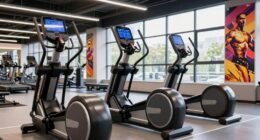
To build a simple home gym for runners, set up a dedicated space with organized, versatile equipment like resistance bands, stability balls, and foam rollers. Include a yoga mat for stretching routines focused on flexibility and recovery. Incorporate core exercises such as planks and bridges to boost stability. Keep your area inviting and accessible to encourage consistent workouts. Stay tuned for tips on optimizing your space for maximum results.
Key Takeaways
- Designate a dedicated, clutter-free space for running-specific training and recovery routines.
- Include essential equipment like resistance bands, stability balls, and foam rollers to enhance strength and flexibility.
- Incorporate core exercises such as planks and bridges to improve stability and running performance.
- Add stretching tools and yoga mats for daily flexibility routines targeting hips, hamstrings, and calves.
- Organize the area for easy access and motivation, supporting consistent training and injury prevention.

Creating a simple home gym tailored for runners is a practical way to stay consistent with your training without the hassle of commuting to a gym. When you set up a dedicated space, you’re more likely to stick to your routine and make progress. One of the most important aspects of effective running is building core strength, which improves stability and reduces injury risk. Incorporate core strengthening exercises like planks, bridges, and leg raises into your routine. These moves don’t require a lot of space or equipment but have a big impact on your overall performance. Focus on maintaining proper form and gradually increasing your hold times or repetitions to see steady gains.
Flexibility exercises are equally essential. Runners often deal with tight muscles, especially in the hips, hamstrings, and calves, which can lead to discomfort or injury. Dedicate a corner of your home gym to stretching routines. Simple stretches like hamstring toe touches, hip openers, and calf stretches can be done daily. Incorporate yoga poses such as downward dog or pigeon pose to improve flexibility and promote relaxation. These exercises help maintain the range of motion necessary for efficient running and recovery. Setting aside even 10 minutes for stretching after your runs or workouts can be profoundly beneficial for your mobility and decrease soreness. Enhancing muscle recovery strategies, like foam rolling, can further improve your results and prevent injuries.
To create an effective setup, consider adding a yoga mat or foam roller for easy stretching and muscle recovery. A stability ball can also be a great tool for core strengthening and flexibility exercises. It helps engage your core muscles more deeply and adds variety to your routine. Resistance bands are versatile and inexpensive, perfect for enhancing both strength and flexibility. Use them for assisted stretches or resistance exercises that target your core, hips, and legs. Keep your space organized and accessible so you’re motivated to work out regularly.
Frequently Asked Questions
What Is the Ideal Size for a Home Running Gym?
You should aim for at least 50 to 100 square feet for your home running gym. This size allows for space optimization and enough room to move comfortably. Focus on equipment versatility—consider a treadmill, jump rope, or resistance bands—so you can perform a variety of workouts without clutter. Keep the area organized, and you’ll create an efficient, functional space that supports your running goals without feeling cramped.
How Much Does Setting up a Home Gym Cost?
Setting up a home gym costs around $300 to $1,000, depending on your equipment investment. A recent cost analysis shows that you can start with essentials like a treadmill, resistance bands, and foam rollers for about $500. Keep in mind, a well-equipped gym can save you time and money long-term, and 65% of runners say having a dedicated space boosts their motivation and consistency.
Can I Use Household Items Instead of Equipment?
Yes, you can definitely use household alternatives for your workout. DIY solutions like water bottles or canned goods make good weights, while a sturdy chair can serve as support for step-ups or tricep dips. Use a towel for resistance stretches or a backpack filled with books for added weight. These household items are versatile, cost-effective, and perfect for creating a simple home gym tailored to runners’ needs.
How Often Should I Update My Gym Equipment?
Think of your gym as a garden that blooms with care. You should update your gym equipment when it shows signs of wear, usually every 3-5 years, to guarantee safety and effectiveness. Regular gym maintenance extends equipment lifespan, but neglect can lead to breakdowns. Stay attentive to changes and invest in updates to keep your fitness garden thriving. This way, your workouts remain safe, fresh, and motivating.
What Are Safety Tips for Home Gym Workouts?
When working out at home, prioritize safety by wearing proper footwear to prevent injuries. Always make sure your workout space is clear of clutter to avoid trips and falls. Warm up before exercising and listen to your body to avoid overexertion. Keep equipment well-maintained and use it correctly. Stay hydrated, and if you’re unsure about a move, seek guidance. These tips help you enjoy safe, effective home workouts.
Conclusion
Creating a home gym tailored for runners makes consistent training easier and more enjoyable. Did you know that runners who incorporate strength training see a 20% reduction in injury risk? By setting up a simple space with essentials like resistance bands and a jump rope, you’ll stay motivated and improve your performance. Remember, a dedicated workout area can boost your commitment and help you reach your running goals faster. Get started today—you’ll love the results!