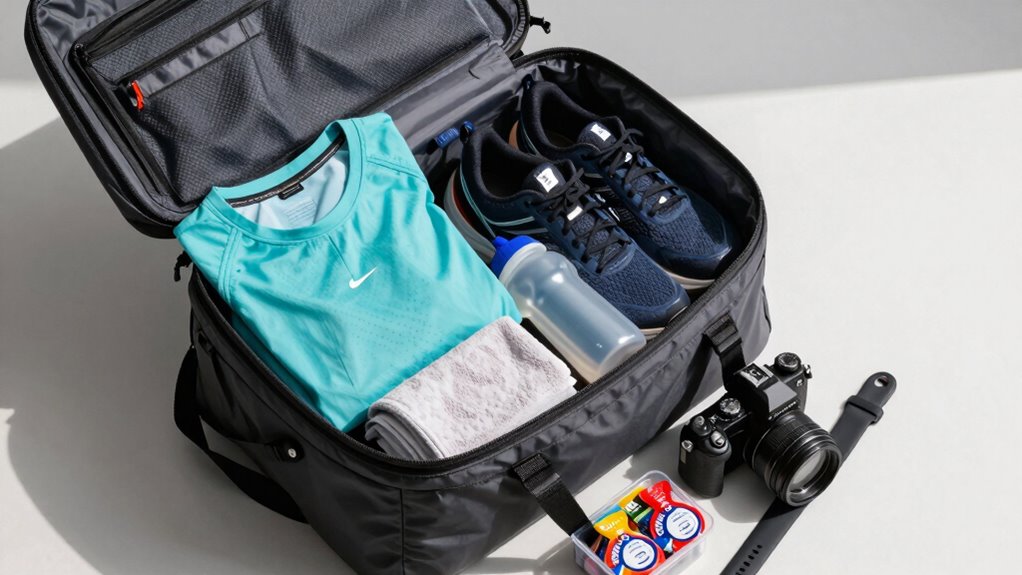

To build a minimal race-day bag, focus on packing only essentials that support hydration, injury prevention, and quick access. Choose eco-friendly gear like lightweight bottles, electrolyte tablets, blister pads, and compression sleeves. Organize your items efficiently to keep everything accessible without overloading. Focus on sustainability and simplicity to reduce bulk while covering all your needs. If you keep these tips in mind, you’ll be ready for race day with less stress and more confidence.

Get workout gear delivered free with Prime
- Fast, free delivery on millions of items
- Prime Video, Amazon Music and more included
- Member-only deals all year
Key Takeaways
- Prioritize multifunctional, eco-friendly gear that addresses hydration, injury prevention, and performance needs simultaneously.
- Use compact, organized packing methods to keep essentials accessible and reduce bulk.
- Select lightweight hydration options like small bottles or electrolyte tablets for quick, efficient intake.
- Include only vital injury prevention items such as blister pads, balm, and compression gear.
- Focus on minimalism by eliminating non-essential items, ensuring quick access and reducing race-day weight.
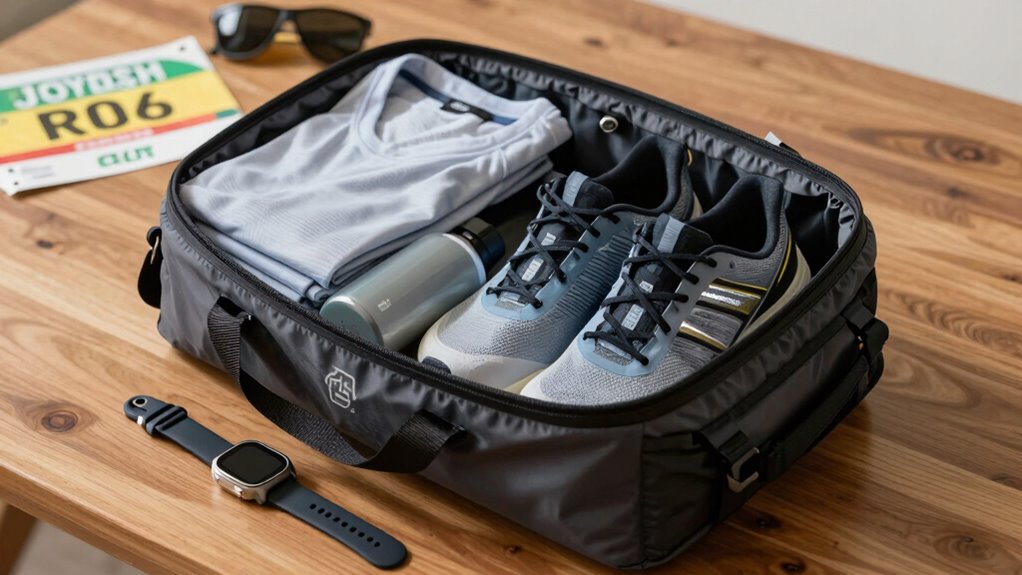
Packing a race-day bag doesn’t have to be complicated. You want to keep it minimal but also guarantee it covers everything you need for a smooth race experience. The key is focusing on essentials that support your performance without overloading yourself. Start by considering hydration strategies; you’ll need a way to stay properly fueled and hydrated throughout the race. If you’re running a shorter race, a small handheld water bottle or a hydration belt with bottles can suffice. For longer events, plan to carry a hydration pack or make sure access points along the route are noted so you can refuel without carrying too much. Remember, hydration isn’t just about water—consider electrolyte tablets or drinks to replace salts lost through sweat, which helps prevent cramping and supports injury prevention by maintaining muscle function. Incorporating biodiversity and sustainable practices into your training routine can also promote overall well-being and resilience. When choosing your gear, opting for eco-friendly materials can further support sustainable practices. Additionally, selecting gear with sustainable materials can contribute to reducing environmental impact during your training and race.
Next, think about injury prevention. Packing a few simple items can make a significant difference if you feel any discomfort during the race. Include a small first aid kit with blister pads, pain relievers, and antiseptic wipes. Blister prevention is vital, so don’t forget to bring some anti-chafing balm or petroleum jelly to protect sensitive areas. Compression socks or sleeves can also help with circulation and reduce fatigue, especially if you’re prone to muscle tightness. Additionally, consider bringing a foam roller or massage stick if you’re able to use them pre- or post-race for quick muscle relief, aiding injury prevention and recovery. Proper packing techniques can ensure your essentials stay organized and accessible during your run. Being aware of proper packing techniques can also help you avoid unnecessary bulk and ensure quick access to your items when needed.
eco-friendly hydration belt for runners
As an affiliate, we earn on qualifying purchases.
As an affiliate, we earn on qualifying purchases.
Frequently Asked Questions
How Do I Prioritize Essentials for Different Race Distances?
You prioritize essentials for different race distances by tailoring your race nutrition and hydration strategies. For shorter races, focus on lightweight snacks and quick hydration options, like gels and water. For longer events, include more substantial nutrition, electrolyte drinks, and extra hydration supplies. Adjust based on the race’s duration, temperature, and your personal needs. Always pack energy sources that you know work well for you, ensuring you stay fueled and hydrated throughout.
What Lightweight Items Are Must-Haves for Race-Day?
On race day, you need lightweight hydration strategies like a small water bottle or electrolyte tabs, plus easy-to-carry nutrition for ideal timing. Pack energy gels or chews that you can access quickly, ensuring you stay fueled without extra weight. Focus on essentials that support your hydration and nutrition plan, helping you maintain energy levels and avoid fatigue, all while keeping your race-day bag minimal and manageable.
How Can I Organize My Bag Efficiently?
To organize your bag efficiently, start with personalized packing by placing your essentials in specific compartments. Use bag compartmentalization to keep items like gels, keys, and a phone separate, making them easy to find. Prioritize accessible pockets for frequently used items and pack less-used gear toward the bottom. This approach guarantees quick access during the race and keeps your bag tidy, so you stay focused on your performance.
Do I Need Backup Gear or Just the Basics?
You probably don’t need backup gear if your accessory selection is thoughtful and you avoid gear duplication. Rely on your essentials—like a spare pair of socks or a backup fuel source—just in case. Investigate whether your primary gear is reliable, then pack only what’s necessary. This approach guarantees you’re prepared without overloading your bag, keeping your focus on race day performance instead of clutter.
How Should I Prepare for Unexpected Weather?
To prepare for unexpected weather, prioritize weather adaptability by packing lightweight, versatile items like a compact rain jacket or windbreaker. Include emergency supplies such as a small emergency blanket, extra socks, and a hat. Stay flexible with your gear, and check the forecast beforehand. Being ready for sudden weather changes guarantees comfort and safety, so pack smartly and keep your emergency supplies accessible.
Conclusion
Packing light means less stress, but forgetting essentials can turn a smooth race into chaos. Your minimal bag, curated with just the basics, keeps you agile and focused. It’s the contrast between chaos and calm—where simplicity becomes your greatest strength. In the end, a well-packed bag isn’t just about convenience; it’s about empowering you to race with confidence, leaving behind worries and embracing every moment on the course.
Halloween Picks
halloween
As an affiliate, we earn on qualifying purchases.