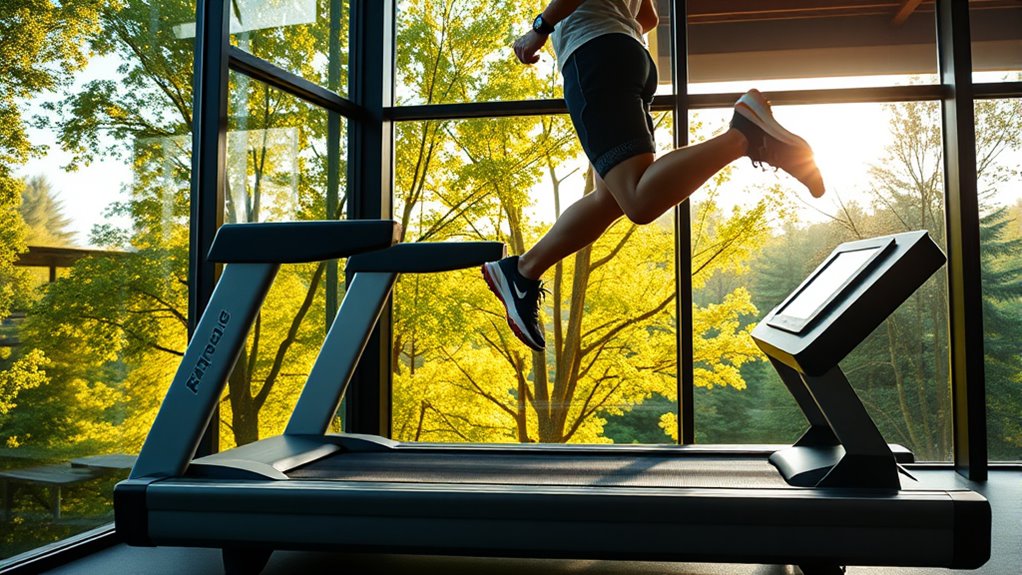

To prepare for outdoor running, use treadmill workouts that combine interval training and hill simulations. Alternating high-intensity efforts with recovery boosts endurance, while programmable inclines mimic outdoor hills and improve strength. These workouts help you develop pacing, breathing, and muscle adaptability in a controlled setting, making outdoor routes feel easier. For even better results, incorporating varied terrains and gradual intensity increases can simulate real outdoor conditions—continue exploring to learn how to maximize your treadmill sessions.
Key Takeaways
- Incorporate interval training with varied speeds to mimic outdoor race pace and recovery.
- Use hill simulation features to replicate outdoor incline running for strength and stamina.
- Combine flat and inclined segments to simulate outdoor terrain changes during your treadmill workouts.
- Gradually increase intensity and incline to build endurance transferable to outdoor conditions.
- Practice pacing and breathing strategies on the treadmill to improve outdoor running efficiency.

Treadmill workouts are a versatile and effective way to improve your fitness, whether you’re a beginner or an experienced runner. One of the biggest advantages is the ability to incorporate interval training, which involves alternating bursts of high-intensity effort with recovery periods. This approach pushes your cardiovascular system and builds endurance more efficiently than steady-state running. For example, you might run at a fast pace for 30 seconds, then slow down for a minute, repeating this cycle for 15 to 20 minutes. It’s a great way to simulate race conditions or prepare for outdoor runs, all within the controlled environment of your treadmill. Additionally, many treadmills offer hill simulation features, allowing you to mimic outdoor inclines without leaving your home or gym. Hill simulation enhances leg strength, improves your running economy, and adds variety to your workouts. You can program your treadmill to gradually increase the incline over several minutes, replicating the sensation of running uphill, then decrease it for recovery. Such sessions help you develop power and stamina, making outdoor hills feel less intimidating.
When you combine interval training with hill simulation, your treadmill workouts become even more effective for outdoor running. For instance, you could set your treadmill to simulate a series of hills, alternating between flat and inclined segments, with faster paces during the inclines to challenge your muscles. This trains your body to handle elevation changes seamlessly, making outdoor routes feel easier. You also get to practice pacing and breathing strategies, which are vital when running on uneven terrain. Since you control the pace and resistance, you can tailor workouts to match the demands of your upcoming outdoor race or long run. Engaging in proper training techniques like these helps maximize your performance and reduces the risk of injury.
Another benefit of using interval training and hill simulation on the treadmill is that it allows you to train at specific intensities regardless of weather or time constraints. This consistency guarantees steady progress and minimizes setbacks caused by bad weather or unsafe conditions outside. Plus, by adjusting the incline and speed, you can target different muscle groups and energy systems, making your workouts more complete. The key is to start gradually, especially if you’re new to these techniques. Increase the intensity or incline slowly over time to avoid injury and ensure your body adapts effectively. With dedication, these treadmill strategies translate perfectly to outdoor performance, helping you run faster, stronger, and more efficiently on any terrain.

FOUSAE Walking Pad with 10% Incline Treadmills for Home, 4 in 1 6.2MPH Walking Pad Under Desk Treadmill with Full Screen LED Display, 2.75HP Brushless Drive, 12 HIIT Programs, 350 LBS Weight Capacity
FOUSAE: Built to Perform. Driven to Last. Constantly optimizing and improving. FOUSAE is making a strong comeback with…
As an affiliate, we earn on qualifying purchases.
As an affiliate, we earn on qualifying purchases.
Frequently Asked Questions
How Can I Replicate Outdoor Terrain on a Treadmill?
To replicate outdoor terrain on a treadmill, start with hill simulation by adjusting the incline. Set the incline to mimic hills you encounter outside, gradually increasing it during your workout. Use interval training to switch between flat and steep sections, making it more realistic. Consistently vary the incline adjustments to challenge yourself, just like you would on outdoor terrain, helping improve strength and endurance effectively indoors.
What Are the Best Treadmill Settings for Outdoor Simulation?
Think of your treadmill as a mirror reflecting outdoor terrain. To get the most realistic simulation, set the incline between 1-3% to mimic uphill climbs. Adjust the pace calibration to match your outdoor speed, ensuring consistency. Keep these settings steady to replicate varied terrains, making your workout feel like an outdoor run. This way, you’ll stay prepared and motivated, no matter where you hit the pavement or treadmill.
How Do Treadmill Workouts Improve Outdoor Running Performance?
Treadmill workouts boost your outdoor running performance by enhancing your interval training and pace consistency. When you push through structured interval sessions, you build endurance and speed, which translate well outside. Maintaining a steady pace on the treadmill helps you develop rhythm and control, making your outdoor runs smoother. These workouts condition your body to adapt to different terrains and intensities, ultimately making you a stronger, more confident outdoor runner.
Can Treadmill Workouts Help Prevent Outdoor Running Injuries?
Imagine you’re training on a treadmill, focusing on injury prevention and muscle strengthening. This consistent, controlled environment helps you build strong muscles and improve form, reducing the risk of outdoor injuries. For example, incorporating incline walks targets your stabilizing muscles, making your joints more resilient. By strengthening your muscles and practicing proper biomechanics, treadmill workouts effectively help prevent outdoor running injuries and keep you on your feet longer.
How Should I Adjust My Pace When Transitioning From Treadmill to Outdoor Running?
When shifting from treadmill to outdoor running, you should adjust your pace gradually, focusing on maintaining your running cadence. Expect to slow down slightly due to wind resistance and uneven terrain. Pay attention to your breathing and rhythm, and increase your pace incrementally to avoid overexertion. This helps your body adapt smoothly, ensuring your outdoor runs feel natural and comfortable while preventing injury.
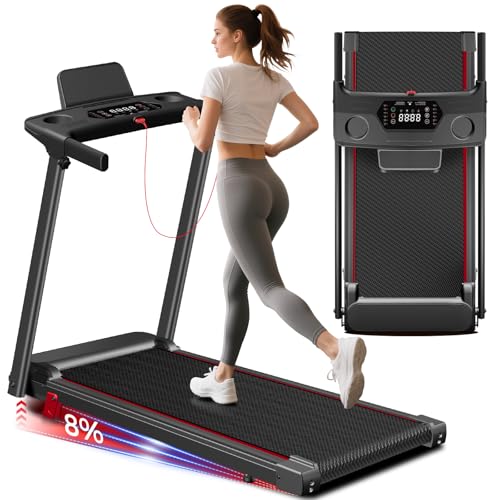
Treadmill with Incline 3-in-1 Portable Treadmills for Home Small, Incline Walking Pad Treadmill with Handle Bar, Walking Pad Foldable with 3.0HP Quiet Brushless, LED Dispay, 300LBS Capacity Black
【12% Manual Incline Treadmill】Reach new fitness heights with this treadmill with incline! Our incline treadmill features a steep…
As an affiliate, we earn on qualifying purchases.
As an affiliate, we earn on qualifying purchases.
Conclusion
Now that you’ve unlocked these treadmill workouts that effortlessly translate outdoors, there’s no limit to what you can achieve. Imagine conquering mountains, outrunning storms, and feeling unstoppable— all from the comfort of your home gym. These routines will transform your running game so drastically, you’ll wonder if you’ve gained superpowers. So lace up, push yourself, and prepare to leave ordinary in the dust—because with these workouts, the outdoors is yours for the taking!

Treadmill Workout for Weight Loss: The Ultimate Guide to Burn Calories and Slim your Waist with Quick and Fun Exercises | 12-3-30 Routine Included
As an affiliate, we earn on qualifying purchases.
As an affiliate, we earn on qualifying purchases.
Treadmill with Incline 3-in-1 Portable Treadmills for Home Small, Incline Walking Pad Treadmill with Handle Bar, Walking Pad Foldable with 3.0HP Quiet Brushless, LED Dispay, 300LBS Capacity Black
【12% Manual Incline Treadmill】Reach new fitness heights with this treadmill with incline! Our incline treadmill features a steep…
As an affiliate, we earn on qualifying purchases.
As an affiliate, we earn on qualifying purchases.