Runners put repetitive strain through the calves, IT bands, quads, and glutes, so the right foam roller is the one you’ll actually use after hard miles — not the one with the most gimmicks. The TriggerPoint Grid 1.0 earns my best overall pick for runners because its multi-density surface mimics a massage therapist’s hands, hitting tight calves and iliotibial bands with more precision than any smooth roller here. For tighter budgets, the 321 STRONG 3-Zone roller offers surprising muscle-targeting ability at a fraction of the cost, while the Amazon Basics 36-inch roller is the pick for full-body work like thoracic openers and back recovery. The core tradeoff in this category is firmness versus comfort: high-density rollers deliver deeper release but punish beginners, while softer and multi-zone options trade intensity for consistency. Read on for the full breakdown, including which sets are worth the money and which ones just add clutter.

Get workout gear delivered free — and shop member deals
- Fast, free delivery on millions of items
- Access to Prime Big Deal Days deals on October 6–7
- Prime Video, Amazon Music and more included
Complete the kit

Key Takeaways
- The amazon.com/dp/B00XM2MRGI?tag=thegirlthatruns-20&ascsubtag=dc-1102040″ target=”_blank” rel=”nofollow sponsored noopener”>amazon.com/dp/B00XM2MXK8?tag=thegirlthatruns-20&ascsubtag=dc-1102040″ target=”_blank” rel=”nofollow sponsored noopener”>amazon.com/dp/B0040EGNIU?tag=thegirlthatruns-20&ascsubtag=dc-1102040″ target=”_blank” rel=”nofollow sponsored noopener”>TriggerPoint Grid 1.0 wins best overall because its hollow-core build and varied-density zones outlast molded foam and target runners’ hot spots (calves, IT band, glutes) better than any single-density roller in the lineup.
- Three near-identical 321 STRONG 3-zone models appear in this comparison; the differences come down to length and color, so picking the cheapest variant of the three makes more sense than paying for a specific listing.
- The 5-in-1 sets from SUBCULTUREPICK and Krightlink bundle extras like massage sticks and peanut rollers — useful for travel, but the included roller quality trails the standalone TriggerPoint Grid, so they suit space-limited runners rather than daily users.
- Length matters more than most runners realize: the 36-inch Amazon Basics roller enables spine-neutral back work, while 12–13 inch rollers force segment-by-segment rolling — fine for legs, awkward for lats and back.
- High-density molded rollers (Amazon Basics, ProsourceFit, Original Body Roller) feel nearly identical in use; the real differentiators were price-per-inch, resistance to flattening, and whether the surface texture grips or slides on carpet.
| TriggerPoint Grid 1.0 Foam Roller, 13-Inch |  | Best Overall | Length: 13 inches | Diameter: 5 inches | Surface: Multi-density 3D GRID with Distrodensity Zones | VIEW LATEST PRICE | See Our Full Breakdown |
| 321 STRONG 3-Zone Medium-Density Massage Foam Roller |  | Best Value | Density: Medium | Massage Zones: 3 (fingers, thumbs, palms texture pattern) | Material: BPA-free closed-cell EVA foam | VIEW LATEST PRICE | See Our Full Breakdown |
| Amazon Basics High-Density Foam Roller, 18 Inches |  | Best Value for Deep Pressure | Length: 18 inches | Diameter: 6 inches | Firmness: Firm / high density | VIEW LATEST PRICE | See Our Full Breakdown |
| Original Body Roller High Density Foam Massage Roller |  | Best Dual-Texture Design | Dimensions: 12.5 x 5.5 inches (standard size) | Available Lengths: 13-inch and 17-inch versions | Material: High-density EPP foam | VIEW LATEST PRICE | See Our Full Breakdown |
| SUBCULTUREPICK 5-in-1 Foam Roller Set |  | Best Complete Recovery Kit | Included Items: Hollow foam roller, massage stick, massage ball, stretching band, storage bag | Roller Size: 13 x 5 inches | Massage Stick Length: 15 inches | VIEW LATEST PRICE | See Our Full Breakdown |
| Krightlink High-Density Foam Roller, 13-Inch, Orange |  | Best Budget Textured Roller | Length: 13 inches | Diameter: 5.1 inches | Material: PVC and EVA | VIEW LATEST PRICE | See Our Full Breakdown |
| Krightlink 5-in-1 Foam Roller and Massage Set |  | Best Starter Recovery Kit | Material: PVC and EVA | Foam roller size: 13 x 5 inches | Muscle roller stick length: 15 inches | VIEW LATEST PRICE | See Our Full Breakdown |
| 321 STRONG Patented 3-Zone Massage Roller, Medium Density for Exercise |  | Best for Deep-Tissue Recovery | Density: Medium | Surface: Patented 3-zone projections (fingertip, thumb, palm) | Outer material: BPA-free closed-cell EVA foam | VIEW LATEST PRICE | See Our Full Breakdown |
| High-Density Foam Roller and Massage Tool Set |  | Best Full Recovery Bundle | Foam roller length: 12 inches | Massage stick length: 15 inches | Weight capacity: 300 lbs | VIEW LATEST PRICE | See Our Full Breakdown |
| 321 STRONG 3-Zone Medium-Density Massage Roller |  | Best Mid-Intensity Textured Pick | Brand: 321 STRONG | Type: 3-zone massage roller | Density: Medium | VIEW LATEST PRICE | See Our Full Breakdown |
| Amazon Basics High-Density Foam Roller, 36 Inches, Black |  | Best Full-Body Coverage | Color: Black | Length: 36 inches | Dimensions: 36 x 6 x 6 inches | VIEW LATEST PRICE | See Our Full Breakdown |
| Amazon Basics High-Density Foam Roller, 12 Inches, Black |  | Best Budget Travel Pick | Color: Black | Material: Polypropylene | Dimensions: 12 x 6 x 6 inches (L x W x H) | VIEW LATEST PRICE | See Our Full Breakdown |
| ProsourceFit High-Density Foam Roller, 12 x 6 Inches, Black |  | Best Compact Deep-Pressure Option | Brand: ProsourceFit | Material: High-density expanded polypropylene (EPP) | Size: 12 x 6 inches | VIEW LATEST PRICE | See Our Full Breakdown |
| foam rollers for runner | Material | Color |
|---|---|---|
| TriggerPoint Grid 1.0 Foam Rol | — | — |
| 321 STRONG 3-Zone Medium-Densi | BPA-free closed-cell EVA foam | Bubble Gum |
| Amazon Basics High-Density Foa | Molded polypropylene, chemical-free | Black |
| Original Body Roller High Dens | High-density EPP foam | Turquoise |
| SUBCULTUREPICK 5-in-1 Foam Rol | — | — |
| Krightlink High-Density Foam R | PVC and EVA | Orange |
| Krightlink 5-in-1 Foam Roller | PVC and EVA | — |
| 321 STRONG Patented 3-Zone Mas | — | — |
| High-Density Foam Roller and M | High-density foam | — |
| 321 STRONG 3-Zone Medium-Densi | BPA-free closed-cell EVA foam | — |
| Amazon Basics High-Density Foa | Polypropylene | Black |
| Amazon Basics High-Density Foa | Polypropylene | Black |
| ProsourceFit High-Density Foam | High-density expanded polypropylene (EPP) | Black |
More Details on Our Top Picks
TriggerPoint Grid 1.0 Foam Roller, 13-Inch
The TriggerPoint Grid 1.0 earns the top spot because it solves the problem most foam rollers create: choosing between a firm roller that stays effective and one that doesn’t feel like torture. Its multi-density Distrodensity Zones mean a single roller delivers flat, moderate, and intense pressure depending on which zone you roll over — a flexibility the one-density Amazon Basics High-Density Roller simply can’t match. The EVA-wrapped hollow core holds its shape through years of daily use, where solid EPP rollers like the Original Body Roller can begin to flatten under consistent pressure. For runners, the payoff is targeted work on calves, IT bands, and quads without needing multiple tools. The tradeoff is real, though: the textured surface is aggressive on sore muscles, and the smaller 13-inch footprint makes full-back rolling awkward.
Pros:- Multi-density zones let you vary pressure without switching rollers
- Hollow core resists breaking down after years of heavy use
- Compact 13-inch length travels easily in a gym bag
- Supports up to 500 pounds for core work and targeted compression
Cons:- Textured nodule surface can feel too aggressive on already-sore muscles
- 13-inch length is too short for comfortable full-back or symmetric rolling
Best for: Runners who roll daily and want one durable, versatile roller that replaces several single-density tools
Not ideal for: Runners with very sensitive muscles or those who want a smooth, uniform surface for relaxed full-back rolling
- Length:13 inches
- Diameter:5 inches
- Surface:Multi-density 3D GRID with Distrodensity Zones
- Core:Hollow EVA-wrapped construction
- Weight Capacity:Up to 500 lbs
- Best For:Calves, quads, IT bands, lats, glutes
- Warranty:Limited 1-year manufacturer warranty
Our verdict“The most versatile and durable pick here — ideal for committed runners who want one roller that does everything for years.”
321 STRONG 3-Zone Medium-Density Massage Foam Roller
This option stands out for delivering the zoned-texture concept at a friendlier price than the TriggerPoint Grid 1.0. Its three zones model fingers, thumbs, and palms, so a runner can shift from broad calf work to pinpoint quad pressure just by rotating the roller. The medium density is the real differentiator: compared with the rock-solid Amazon Basics High-Density Roller, it’s far more forgiving on post-long-run legs, which matters if you roll when muscles are already tender. The BPA-free closed-cell EPA surface wipes clean of sweat easily. What you give up is the hollow-core durability of the Grid 1.0 — a solid-foam build like this can develop flat spots over months of daily use, and the firm projections still catch some users off guard despite the softer overall density.
Pros:- Three distinct texture zones mimic a therapist’s hands for varied pressure
- Medium density is gentler on sore post-run muscles than high-density rollers
- Lightweight and easy to toss in a car or gym bag
- Closed-cell EVA surface resists sweat and wipes clean
Cons:- Solid foam construction can flatten or degrade faster than hollow-core rollers
- Raised projections can dig in uncomfortably despite the medium density
Best for: Budget-minded runners who want varied texture and moderate pressure without the premium price of a Grid
Not ideal for: Heavier daily users who need a roller that won’t degrade — the solid foam core is less durable than hollow-core designs
- Density:Medium
- Massage Zones:3 (fingers, thumbs, palms texture pattern)
- Material:BPA-free closed-cell EVA foam
- Core:Lightweight solid core
- Color:Bubble Gum
- Model Number:NMBR-1-ROLR
- Intended Use:Massage, stretching, workout recovery
Our verdict“The smart pick if you want zoned massage texture on a budget, provided you don’t need decade-level durability.”
Amazon Basics High-Density Foam Roller, 18 Inches
Compared with the textured 321 STRONG 3-Zone roller, the Amazon Basics High-Density model takes the opposite approach: a completely smooth, uniformly firm surface that rewards runners who already know they like heavy pressure. The 18-inch length is the quiet advantage here — long enough to lay across for thoracic work or roll both quads at once, something the 13-inch TriggerPoint Grid 1.0 struggles with. The molded polypropylene build won’t absorb sweat or odors, and the chemical-free material is easy to keep clean. The tradeoff is one-dimensional: there’s no texture variation, so if you want trigger-point intensity you’ll have to lean harder with your body weight, and the unforgiving firmness can be too much for tight, freshly worked calves. It’s a specialist tool that assumes you like it firm.
Pros:- 18-inch length supports full-back rolling and both legs simultaneously
- Molded polypropylene resists sweat, odor, and breakdown
- Smooth surface is easy to control and simple to clean
- Lightweight at under 0.6 kg despite the firm build
Cons:- No texture zones, so pressure intensity can only be changed by body positioning
- Very firm surface can be painful on tender or freshly fatigued muscles
Best for: Runners who prefer very firm, smooth-surface pressure and want a longer roller for back and dual-leg work
Not ideal for: Beginners or runners with sensitive muscles — the uniform high density offers no gentler option
- Length:18 inches
- Diameter:6 inches
- Firmness:Firm / high density
- Material:Molded polypropylene, chemical-free
- Surface:Smooth, untextured
- Weight:0.27 kg (approx. 0.6 lbs)
- Color:Black
Our verdict“A durable, no-frills workhorse for runners who already know they want maximum firmness in a longer format.”
Original Body Roller High Density Foam Massage Roller
The Original Body Roller splits the difference between the TriggerPoint Grid 1.0 and single-surface rollers by putting two distinct grid zones on one tool — ridges on one side for broad sweeping passes, spiked bumps on the other for pinpoint trigger-point work on stubborn knots. For runners, that spiked side is the draw: it targets the exact calf and IT band adhesions that a smooth roller like the Amazon Basics High-Density model can only press generically. The high-density EPP foam keeps it light enough for travel, and the choice of 13-inch or 17-inch lengths lets you match the roller to your frame. Be honest with yourself before buying, though — the spiked surface is genuinely intense, and runners new to foam rolling will likely find it closer to a deep-tissue massage than they bargained for.
Pros:- Dual-grid design covers both broad rolling and pinpoint trigger-point work
- Spiked zone rivals targeted massage-ball pressure for knots
- Lightweight EPP construction travels well for race-day bags
- Available in 13-inch and 17-inch lengths for different body sizes
Cons:- Firm spiked surface can be too painful for sensitive or beginner users
- High-density EPP foam is less durable than hollow-core builds over years of use
Best for: Experienced runners who chase stubborn knots and want two levels of texture in a single lightweight roller
Not ideal for: Newcomers to foam rolling or anyone with low pain tolerance — the spiked bump zone is intensely aggressive
- Dimensions:12.5 x 5.5 inches (standard size)
- Available Lengths:13-inch and 17-inch versions
- Material:High-density EPP foam
- Surface:Dual grid: ridged zone and spiked bump zone
- Weight:Lightweight, portable design
- Color:Turquoise
- Intended Use:Pre/post-run massage, yoga, Pilates, myofascial release
Our verdict“A strong choice for knot-prone runners who want deep, targeted texture — as long as they can handle the intensity.”
SUBCULTUREPICK 5-in-1 Foam Roller Set
Rather than competing on the roller alone, this set makes its case as a full recovery system: a 13-inch hollow roller, a handheld massage stick, a 2.5-inch massage ball, a stretching band, and a mesh carry bag. The stick is the standout piece for runners — rolling out calves mid-run or on travel days is something no full-size roller, including the TriggerPoint Grid 1.0, does conveniently. The ball handles the small stuff (feet, hip pointers) that even the textured Original Body Roller can’t isolate precisely. The tradeoff is depth: the roller itself is a competent but unexceptional PVC-and-EVA build that doesn’t match the Grid’s zone sophistication or durability, and the accessories are serviceable rather than premium. If you already own a quality roller, the overlap makes this redundant; if you’re starting from zero, it covers nearly every recovery scenario at once.
Pros:- Five complementary tools cover large muscles, calves, feet, and stretching
- Massage stick enables mid-run and travel-day leg work a full roller can’t
- Hollow roller with EVA surface is waterproof, sweat-proof, and easy to clean
- Mesh carry bag makes the whole kit gym- and race-portable
Cons:- The included roller is basic compared to premium single rollers like the Grid 1.0
- Accessory quality is adequate rather than exceptional — the band and ball are starter-grade
Best for: Runners building a recovery toolkit from scratch who want roller, stick, ball, and band in one purchase
Not ideal for: Runners who already own a quality roller and a massage ball — the core roller alone doesn’t justify the set
- Included Items:Hollow foam roller, massage stick, massage ball, stretching band, storage bag
- Roller Size:13 x 5 inches
- Massage Stick Length:15 inches
- Massage Ball Diameter:2.5 inches
- Stretching Band Size:24 x 2 inches
- Materials:PVC and EVA foam
- Portability:Nylon mesh carry bag included
- Best For:Legs, back, shoulders, feet, and post-run stretching
Our verdict“Buy it as a starter recovery kit, not as a single standout roller — the value is in the combination, not any one piece.”
Krightlink High-Density Foam Roller, 13-Inch, Orange
Runners who want the trigger-point texture of a premium roller without the premium outlay will find this Krightlink a sensible entry point. Its triple-grid surface mimics finger, palm, and thumb pressure — the same concept the TriggerPoint Grid 1.0 pioneered — so calves, IT bands, and quads get a similar kneading effect for less money. Compared with the 321 STRONG 3-Zone roller, the Krightlink feels firmer and less forgiving, which is great for stubborn knots but punishing on sore post-marathon legs. The included nylon mesh carry bag is a nice touch the Amazon Basics rollers don’t offer, making it easy to toss in a gym bag. The tradeoff is size: at 13 inches, it suits single-limb work far better than full-back rolling, where the 36-inch Amazon Basics model is the better tool.
Pros:- Triple-grid texture delivers targeted deep-tissue pressure on calves and IT bands
- Lightweight and water- and sweat-resistant, so it survives gym and outdoor use
- Includes a nylon mesh carrying bag for transport
- Easy to wipe clean after sweaty sessions
Cons:- At 13 inches it’s too short for full-back or bilateral rolling
- The firm high-density surface can be too aggressive for tender or recovering muscles
Best for: Runners on a budget who mainly target calves, IT bands, and quads and want textured deep-tissue pressure
Not ideal for: Runners with sensitive muscles or those recovering immediately after hard races — the high-density surface is unyielding
- Length:13 inches
- Diameter:5.1 inches
- Material:PVC and EVA
- Surface:Triple-grid massage zones
- Included accessory:Nylon mesh carrying bag
- Color:Orange
Our verdict“A solid low-cost textured roller for limb-focused recovery, as long as you don’t need full-back coverage or a gentler touch.”
Krightlink 5-in-1 Foam Roller and Massage Set
This set makes the most sense for a runner building a recovery routine from scratch. Instead of buying piecemeal, you get a hollow foam roller, a 15-inch massage stick for pre-run leg sweeps, a 2.5-inch ball for pinpoint knots, and a stretching band — everything a beginner needs to learn what their body responds to. Compared with the Krightlink single roller, you give up nothing on the roller itself (same 13-inch PVC/EVA build) but gain tools the standalone option lacks. The High-Density Foam Roller and Massage Tool Set (B085ZS4G55) offers a similar bundle, though this Krightlink kit’s waterproof, easy-clean materials give it an edge for sweaty post-run use. The catch: none of the pieces is best-in-class. The roller is short, the stick is basic, and experienced runners will likely outgrow the kit’s gentle overall intensity.
Pros:- Five recovery tools in one package cover rolling, pinpoint massage, and stretching
- Storage bag makes it genuinely travel-friendly for race weekends
- PVC and EVA construction is pressure-resistant and easy to clean
- Massage stick allows seated pre-run work the roller alone can’t provide
Cons:- 13-inch roller limits coverage for back and bilateral exercises
- Individual tools are entry-level and may be outgrown as recovery needs advance
Best for: New runners assembling their first recovery setup who want multiple tools in one purchase
Not ideal for: Experienced runners who already own a premium roller and only need one specialized tool
- Material:PVC and EVA
- Foam roller size:13 x 5 inches
- Muscle roller stick length:15 inches
- Massage ball diameter:2.5 inches
- Stretching band size:24 x 2 inches
- Included items:Hollow foam roller, muscle roller stick, massage ball, stretching band, storage bag
- Features:Lightweight, pressure-resistant, waterproof, sweat-proof, easy to clean
Our verdict“A smart all-in-one starting kit for runners new to foam rolling, not for those upgrading from gear they already own.”
321 STRONG Patented 3-Zone Massage Roller, Medium Density for Exercise
This is the pick for runners chasing serious knot work. The patented projection system is the standout: three distinct zones sized like fingertips, thumbs, and palms let you shift from broad warm-up strokes to aggressive adhesion-breaking pressure on a single tool — something neither the Krightlink’s uniform grid nor the smooth Amazon Basics rollers can match. The medium-density EVA over a solid core hits a middle ground the TriggerPoint Grid 1.0 sometimes misses: firm enough to work the muscles flanking the spine, yet cushioned enough that rolling directly over bone isn’t painful. There’s no hard plastic to crack, and the core resists deformation under heavy loads. The tradeoffs are real, though — the heavily textured surface is overkill on easy recovery days, and it costs more than plain high-density cylinders that handle basic rolling fine.
Pros:- Three graduated projection zones let you dial massage intensity up or down
- Medium density balances deep-tissue effectiveness with comfort over the spine
- No hard plastic shell to crack, and the core won’t deform under heavy weight
- Projections reach soft tissue and fascia more effectively than smooth rollers
Cons:- Heavily textured surface can be too intense for daily light recovery
- More expensive than basic smooth high-density rollers that cover simple needs
Best for: Runners with chronic tight spots in their back, glutes, and IT bands who want variable-intensity deep-tissue work
Not ideal for: Runners who just want a simple smooth roller for light post-run flushing — the aggressive texture will feel like too much
- Density:Medium
- Surface:Patented 3-zone projections (fingertip, thumb, palm)
- Outer material:BPA-free closed-cell EVA foam
- Core:Super-strong lightweight core, no hard plastic
- Intended use:Deep tissue massage, acupressure, back pain relief, recovery
- Patents:Protected by 7 US patents
Our verdict“The best choice when knots and adhesions are your main complaint, provided you’re comfortable with an assertive texture.”
High-Density Foam Roller and Massage Tool Set
Where the Krightlink 5-in-1 kit focuses on the basics, this set goes wider, adding a peanut massage ball and a plantar fasciitis ball — two tools runners specifically benefit from, since plantar issues and hamstring knots come with the mileage. The roller itself carries a 300-lb weight capacity and resists liquids, holding up to daily post-run use, and the included stretching strap and massage guide give structure to runners who don’t know where to start. Compared with the 321 STRONG rollers, the smooth high-density surface here is less specialized — you won’t get the projection-based deep-tissue work — but it’s far more forgiving on tired legs. The main hesitation is credibility: the listing makes rehabilitation claims without clinical backing, so treat this as a recovery aid, not a rehab device.
Pros:- Peanut and plantar fasciitis balls address runner-specific trouble spots most sets skip
- Foam roller supports up to 300 lbs and resists liquids
- Stretching strap and included guide add structure for self-directed recovery
- Nylon bag keeps the seven-piece kit organized for travel
Cons:- Smooth roller offers less deep-tissue capability than textured options like the 321 STRONG
- Unverified rehabilitation claims in the product description
Best for: High-mileage runners who want plantar and hamstring-specific tools bundled with a general-purpose roller
Not ideal for: Runners seeking a medically backed rehab tool — the injury claims lack verified evidence
- Foam roller length:12 inches
- Massage stick length:15 inches
- Weight capacity:300 lbs
- Material:High-density foam
- Included items:Foam roller, massage stick, peanut massage ball, plantar fasciitis ball, stretching strap, massage guide, nylon bag
- Intended use:Stretching, exercise, yoga, and muscle recovery
Our verdict“The most complete runner-focused bundle here, ideal for daily maintenance rather than aggressive knot removal.”
321 STRONG 3-Zone Medium-Density Massage Roller
This version of the 321 STRONG roller lands in a sweet spot for runners who found the Krightlink high-density roller too brutal but still want more than a smooth cylinder offers. The palm, finger, and thumb projection zones deliver graduated pressure, and the medium density over a lightweight core means you can lie on it for hip and glute work without wincing — a balance the Amazon Basics high-density rollers, with their unyielding surfaces, don’t attempt. It’s essentially the same design philosophy as the patented 321 STRONG model above, positioned as the straightforward single-tool option without the extra marketing framing. For post-long-run flushing and regular maintenance, this is arguably the more everyday-usable of the two 321 STRONG entries. Just know that the texture still bites: runners used to plain foam will need an adjustment period, and it won’t replicate a true soft-therapy feel.
Pros:- Three projection zones provide varied intensity for different muscle groups
- Medium density is comfortable enough for daily rolling on hips and glutes
- BPA-free closed-cell EVA over a lightweight, strong core
- Well suited to routine post-run recovery rather than occasional aggressive sessions
Cons:- Textured projections take adjustment for anyone coming from a smooth roller
- Less suited to runners needing maximum-pressure deep-tissue work
Best for: Runners wanting textured massage at a gentler intensity for regular post-run maintenance
Not ideal for: Runners who prefer a completely smooth rolling surface — the projections feel intense at first
- Brand:321 STRONG
- Type:3-zone massage roller
- Density:Medium
- Material:BPA-free closed-cell EVA foam
- Core:Strong, lightweight core
- Zones:Palm, finger, and thumb projections
- Intended use:Stretching, exercise recovery, soft-tissue massage
Our verdict“The best middle-ground textured roller for runners who roll often but don’t want to punish themselves doing it.”
Amazon Basics High-Density Foam Roller, 36 Inches, Black
Most rollers in this roundup force runners to work one muscle group at a time, but this 36-inch length changes the math entirely. The extra real estate means you can roll your entire back in one pass, or position along your spine for thoracic mobility work — something the shorter ProsourceFit 12-inch model simply cannot do. The firm polypropylene core holds its shape under repeated body weight, which matters if you’re a heavier runner who has watched cheaper foam rollers flatten into ovals within a season. Molded edges keep the ends from digging in during broader movements.
The tradeoff is portability and storage. At three feet long, this won’t fit in a gym bag or carry-on, and it’s overkill if you only plan to hit calves and IT bands. Compared with the TriggerPoint Grid 1.0, the smooth surface delivers less targeted deep-tissue work — it’s a broad-pressure tool, not a trigger-point one.
Pros:- 36-inch length covers the full back and both legs at once
- Firm polypropylene core resists flattening under repeated use
- Versatile enough for balance, strength, flexibility, and recovery work
- Lightweight despite its size, so repositioning between exercises is easy
Cons:- Too long for travel or gym-bag storage
- Smooth surface provides less targeted deep-tissue pressure than textured rollers like the TriggerPoint Grid
Best for: Runners who want full-back and full-body coverage from a single roller and have space to store it at home
Not ideal for: Travel-focused athletes or anyone limited to a gym bag — the 36-inch length is genuinely awkward to transport
- Color:Black
- Length:36 inches
- Dimensions:36 x 6 x 6 inches
- Material:Polypropylene
- Construction:High-density foam
- Care:Wipes clean
Our verdict“This pick makes the most sense for runners who want one do-everything roller for home recovery sessions covering back, glutes, and legs in single passes.”
Amazon Basics High-Density Foam Roller, 12 Inches, Black
When the goal is a cheap, no-frills roller that lives in a suitcase or gym bag, this 12-inch version is the pragmatic choice. It shares the same firm polypropylene build as its 36-inch Amazon Basics sibling, so nothing is sacrificed in durability or pressure — only coverage. That makes it well suited to runners who target specific hot spots like calves, hip flexors, or TFL rather than rolling their whole back. Molded edges add a bit of comfort at the ends, and the wipe-clean surface is a small but real benefit after sweaty post-run sessions.
The tradeoffs are obvious: 12 inches limits you to one limb or muscle group at a time, and unlike the ProsourceFit 12-inch, there’s no stated weight capacity, which gives heavier runners less confidence in long-term durability. The smooth, uniform surface also means less muscle-specific work than a multi-zone roller like the 321 STRONG.
Pros:- Compact 12-inch size fits easily in gym bags and luggage
- Firm construction designed to hold its shape over time
- Lightweight enough to reposition mid-workout without interrupting flow
- Easy to wipe clean after sweaty sessions
Cons:- Short length restricts rolling to one muscle group at a time
- No stated weight capacity, unlike the ProsourceFit alternative
- Uniform smooth surface limits targeted deep-tissue pressure
Best for: Runners on a budget who need a compact roller for travel, gym bags, or targeting single muscle groups like calves and hip flexors
Not ideal for: Runners who want full-back rolling or deep-tissue trigger-point work — the short length and smooth surface can’t deliver either
- Color:Black
- Material:Polypropylene
- Dimensions:12 x 6 x 6 inches (L x W x H)
- Construction:High-density foam
- Features:Firm, durable, lightweight, molded edges
- Care:Wipes clean easily
Our verdict“A sensible low-cost buy for runners who mostly roll calves and hips on the road and don’t need full-body coverage.”
ProsourceFit High-Density Foam Roller, 12 x 6 Inches, Black
At first glance this looks identical to the 12-inch Amazon Basics roller, but two details set it apart for serious recovery work. First, the high-density expanded polypropylene (EPP) delivers genuinely firm, deep pressure — the kind runners need for stubborn IT bands and tight hamstrings — where smoother, softer rollers barely register. Second, it carries a 300-lb stated weight capacity, which the Amazon Basics equivalent doesn’t publish, giving heavier runners a concrete durability benchmark. Water resistance and a recyclable material round out a more thoughtful build than most budget rollers.
The flip side of that firmness is honest discomfort: new foam-roller users often find this level of pressure too intense, and runners recovering from injury may prefer the gentler 321 STRONG medium-density 3-zone roller instead. Like any 12-inch roller, it also demands multiple repositioning passes for larger muscle groups.
Pros:- Very firm EPP construction delivers deep, effective muscle pressure
- 300-lb stated weight capacity gives heavier runners durability confidence
- Water-resistant, hygienic surface that’s easy to maintain
- Compact enough for travel and gym-bag storage
Cons:- Deep pressure can be uncomfortable or painful for new users
- 12-inch length means less coverage and more repositioning for large muscle groups
Best for: Experienced runners who want intense, targeted pressure on calves, hamstrings, and IT bands from a travel-friendly roller
Not ideal for: Beginners or runners recovering from injury — the deep pressure can be painful rather than therapeutic
- Brand:ProsourceFit
- Material:High-density expanded polypropylene (EPP)
- Size:12 x 6 inches
- Color:Black
- Maximum Weight Capacity:300 lbs
- Features:Firm, water-resistant, recyclable, easy to maintain
- Best For:Massage, stretching, yoga, Pilates, and balance work
Our verdict“This model is better suited to experienced runners who crave firm, localized pressure and know they can handle it — newcomers should start softer.”
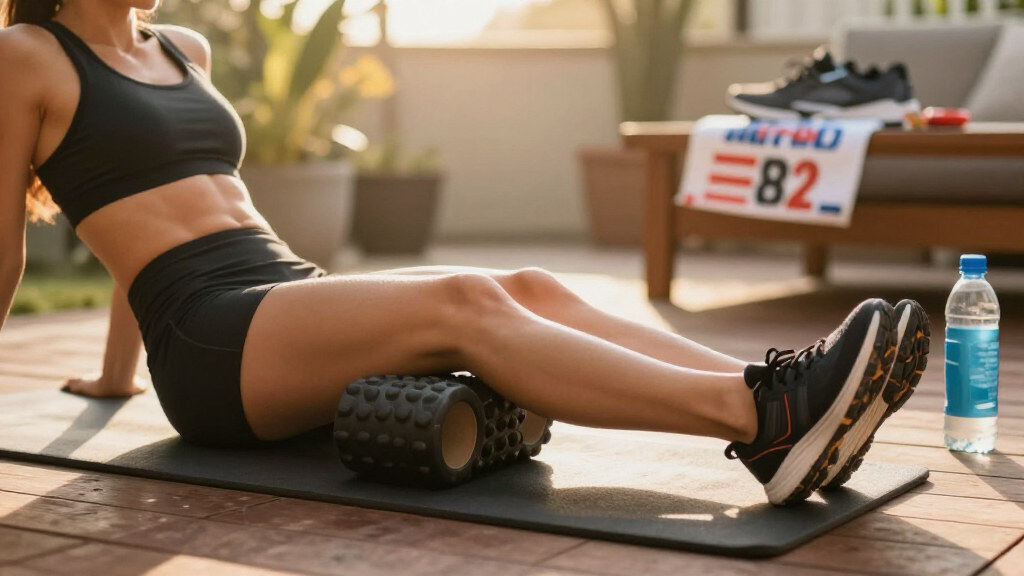
How We Picked
I evaluated every roller through a runner’s recovery routine: rolling calves and Achilles after speed work, addressing IT band tightness post-long-run, quad work after hills, and thoracic mobility on rest days. The criteria that separated the field were surface design and density zoning (how precisely a roller targets trigger points versus broadly pressing tissue), structural durability (whether a hollow core or molded foam resists flattening under daily body weight), size practicality (a 36-inch roller and a 12-inch roller serve genuinely different recovery jobs), and versatility across runner body types — a 120-lb runner and a 200-lb runner experience the same roller very differently.
The ranking logic favors tools that runners will keep using. A brutally firm roller that sits in a closet scores below a medium-density model used daily, so I weighted consistency and ergonomics alongside raw intensity. I also penalized sets whose accessory pieces felt like filler rather than functional additions, and I flagged listings that duplicate near-identical products so you don’t overpay for the same roller under a different label.
Factors to Consider When Choosing Foam Rollers For Runners
A foam roller is one of the cheapest recovery tools a runner can buy, which is exactly why so many end up unused in a closet. These are the factors that actually determine whether your roller becomes part of your post-run routine or garage-sale inventory.Density: The Mistake Most Runners Make
The most common buying error is assuming firmer is better. Extra-firm rollers deliver aggressive pressure that experienced athletes tolerate well, but beginners often find them painful enough to skip sessions entirely — and an unused roller provides zero recovery benefit. Medium-density and multi-zone options let you control intensity by shifting body weight, which is why they dominated the middle of my rankings. A useful rule: if you’re new to rolling or returning from a layoff, start softer and graduate up, because consistency beats brutality. Runners with chronically tight calves may eventually want the firmest option available, but that’s a destination, not a starting point.
Surface Texture and Zone Design
Smooth rollers apply even pressure across a whole muscle group, which is fine for general flush-out but imprecise for knots. Textured and multi-zone rollers — with ridges, knobs, or varying density along the length — approximate the thumbs and elbows of a massage therapist and let you pinpoint a stubborn trigger point in a calf or glute. The tradeoff is that aggressive textures can feel punishing on bony areas like the IT band or shin. Runners who battle specific recurring hot spots benefit most from zoned designs, while those who roll for general relaxation can save money with a smooth surface. This single factor explains most of the price spread between basic rollers and premium models.
Length: Match It to Your Recovery Routine
Length determines what your roller can physically do. A 12–13 inch roller handles one leg, one quad, or one calf at a time — efficient for targeted work, awkward for anything involving your back or both legs simultaneously. An 18-inch roller splits the difference, covering both calves at once and fitting most gym bags. The 36-inch roller is wide enough for spine-supported thoracic extension and side-lying lat work, both valuable for runners with desk-job posture, but it’s a burden to store and transport. If your recovery routine is legs-only, go short; if you treat your back and lats as part of your running machine, go long.
Hollow Core Versus Molded Foam
Construction affects lifespan more than anything else on the spec sheet. Molded one-piece foam rollers are cheaper but gradually develop flat spots and soft patches from repeated compression, especially under heavier runners. Hollow-core rollers with an EVA foam wrap over a rigid tube hold their shape for years and often flex slightly under load, which some runners find more comfortable. If you roll daily, the hollow-core premium pays for itself by avoiding replacement; if you roll once a week, a well-made molded roller is perfectly adequate. Weight matters here too — hollow rollers are lighter for travel, though some flex noticeably under heavier users.
Are Multi-Piece Sets Worth It?
Sets bundling a roller with massage sticks, peanut rollers, and trigger-point balls tempt runners with apparent value, but evaluate each component honestly. A massage stick is genuinely useful for pre-run loosening when a floor roller isn’t practical, and a peanut roller excels at calf and neck work. Balls and spiky spheres, though, are often filler that ends up in a drawer. Sets make sense for runners building a travel kit or sharing tools with a household; they make less sense if you only need one good roller, because the roller inside a budget set rarely matches the quality of a standalone premium model at the same total spend.
When to Pay More — and When Not To
Premium pricing in this category buys durability, zoned density, and better ergonomics, not magic. Pay more if you roll daily, weigh more than about 180 pounds, or need a roller to survive being tossed in a gym bag five days a week. Skip the premium tier if you’re a casual runner rolling a few times weekly, recovering from injury (gentler tools are safer), or simply testing whether self-myofascial release works for you — a basic medium-density roller answers that question without commitment. Another honest point: after about six months, an expensive roller and a cheap one both require the same thing from you, which is actually using them.
Frequently Asked Questions
Is a textured roller like the TriggerPoint Grid better than a smooth high-density roller for running recovery?
It depends on what you’re trying to accomplish. Textured, multi-zone rollers excel at locating and working specific trigger points — the kind that flare up in a calf or glute after hill sessions — because the varying surfaces let you modulate pressure as you roll. Smooth high-density rollers apply uniform pressure that’s better for broad flush-out of an entire muscle group but can’t isolate a knot the same way. Beginners often find smooth rollers more approachable, which improves consistency. If your recovery routine is general full-leg rolling, a smooth roller does the job for less money; if you chase recurring hot spots, the textured designs earn their premium.
What length foam roller should a runner buy — 12, 18, or 36 inches?
For most runners, an 18-inch roller is the sweet spot: long enough for both calves simultaneously and stable for single-leg quad work, yet still stashable behind a door or in a car. A 12–13 inch roller forces segment-by-segment rolling, which is fine for calves and quads but tips side-to-side during balance-heavy moves. The 36-inch roller earns its place only if back and lat work is part of your routine — it’s wide enough to support your spine during thoracic extensions, which shorter rollers cannot safely do. Marathoners with desk jobs benefit most from the long option; trail runners focused purely on legs can stick with the compact sizes.
Why do multiple 321 STRONG 3-Zone rollers appear in this roundup, and which one should I choose?
321 STRONG sells essentially the same patented 3-zone roller across several listings that differ mainly in color and minor length variations. The zone design — a smoother midsection flanked by more aggressive texturing — is identical, so performance between listings is effectively the same. My advice is to pick whichever variant offers the length you need, since the 3-zone surface performs identically across them. This matters because paying more for one listing over a near-identical sibling buys you nothing but packaging. Compare the actual dimensions on each listing before deciding rather than the product names, which are nearly interchangeable.
Are foam roller sets with massage sticks and balls actually useful for runners, or is it better to buy a standalone roller?
Sets earn their keep in two situations: travel and multi-person households. A massage stick is legitimately valuable for pre-run warm-ups when you don’t want to get on the floor, and peanut rollers are excellent for calf and foot work that a full roller handles poorly. The catch is that the main roller inside budget sets typically uses lower-grade foam over a less rigid core, so daily users will notice flattening sooner than with a standalone premium model. If you already own a quality roller, adding a stick or peanut individually beats rebuying a set. If you’re starting from zero and want variety, a set is a reasonable on-ramp.
How firm should a roller be for rolling the IT band as a runner?
Counterintuitively, you don’t need maximum firmness for IT band work — you need control. The IT band sits over bone and connective tissue with little muscle cushioning, so an extremely hard roller can cause bruising and reflexive muscle guarding that defeats the purpose. Medium-density and multi-zone rollers let you ease into the pressure and stop at the edge of discomfort rather than powering through it. Many physical therapists actually recommend rolling the surrounding hip muscles — glutes and TFL — rather than grinding directly on the band itself, which favors rollers with textured surfaces that can address those areas precisely. Save the ultra-firm rollers for meaty quads and calves where tissue can handle them.
Conclusion
Matching the roller to the runner matters more than any single spec. For the best overall pick, the TriggerPoint Grid 1.0 stands alone for daily-use durability and precision targeting of the calves, IT band, and glutes that plague runners most. For the best value, the 321 STRONG 3-Zone roller delivers genuinely useful textured zones at a budget price — just pick whichever listing has your preferred length. For the best premium option, the SUBCULTUREPICK 5-in-1 set justifies its higher price if you want a complete recovery toolkit rather than one tool. For beginners, the Amazon Basics 18-inch high-density roller offers a firm-but-forgiving smooth surface that builds the rolling habit without punishing enthusiasm, and the 36-inch version doubles as the best pick for back and postural work that desk-bound runners need. Finally, the ProsourceFit 12-inch roller earns the compact-travel slot — light, cheap, and small enough to live in a race bag. Whatever you choose, the ranking logic is simple: buy the density you’ll tolerate, the length that matches your routine, and the build quality that survives your training block.
Evergreen bestsellers Picks
bestsellers
As an affiliate, we earn on qualifying purchases.