Running watches with GPS track distance and pace without requiring you to carry a phone, but they differ in training guidance, smartwatch features, and ease of use. I rank the Garmin Forerunner 165 as the best overall pick for runners who want a dedicated training watch with a vivid AMOLED display. The Forerunner 55 is a simpler alternative for runners who value straightforward workout tools, while the Garmin vívoactive 5 suits buyers who want broader wellness and smartwatch features. The main tradeoff is choosing between focused run coaching, everyday versatility, and lower-cost models with less-established feature sets. Continue reading for the full breakdown and a guide to matching a watch to your running habits.

Get workout gear delivered free with Prime
- Fast, free delivery on millions of items
- Prime Video, Amazon Music and more included
- Member-only deals all year
Complete the kit



Key Takeaways
- The Forerunner 165 leads for dedicated training: It combines a running-focused feature set with an AMOLED display, making it a stronger fit for training than the more general-purpose vívoactive 5.
- The Forerunner 55 favors simplicity: Its more focused approach suits runners who want core GPS and workout guidance without paying for a broader smartwatch experience.
- The vívoactive 5 is the versatile Garmin option: Its smartwatch and wellness emphasis makes it a better match for all-day use than a runner who wants the most specialized training interface.
- Several listings are alternate versions, not distinct watch designs: The vívoactive 5 colors, Forerunner 165 colors, and standard versus renewed Forerunner 55 should be compared by fit, condition, and listing details rather than treated as separate feature tiers.
- Non-Garmin models broaden the feature mix: Amazfit, Mibro, HUAKUA, EZON, and generic GPS watches offer different screen and calling priorities, but buyers should check the exact training functions and GPS details before choosing one over the established Garmin running lines.
| Garmin vívoactive 5 GPS Smartwatch, 42 mm, Orchid |  | Best GPS Watch for Everyday Fitness | Display: AMOLED | Case size: 42 mm | GPS: Built-in | VIEW LATEST PRICE | See Our Full Breakdown |
| Garmin vívoactive 5 GPS Smartwatch, 42 mm, Black |  | Best GPS Smartwatch for Phone-Free Music | Display: AMOLED | Case size: 42 mm | GPS: Built-in | VIEW LATEST PRICE | See Our Full Breakdown |
| Garmin Forerunner 165 GPS Running Smartwatch, 43 mm, Black |  | Best for Run Training | Display: AMOLED touchscreen | Case size: 43 mm | GPS: Built-in | VIEW LATEST PRICE | See Our Full Breakdown |
| Mibro GS Active2 GPS Running Smartwatch, 46mm, Dark Gray | 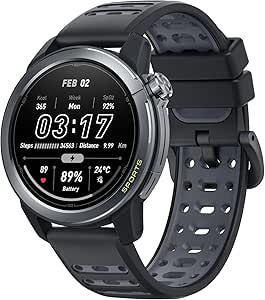 | Best for GPS Navigation and Training Metrics | Case size: 46 mm | Display: 1.32-inch AMOLED touchscreen | GPS: Dual-band, five-satellite positioning | VIEW LATEST PRICE | See Our Full Breakdown |
| EZON T031 GPS Running Watch, Black |  | Best for Basic GPS Run Tracking | Model: T031 | GPS: Built-in | Tracked metrics: Distance, pace, average speed, calories, workout time | VIEW LATEST PRICE | See Our Full Breakdown |
| GPS Running Watch for Men & Women, Distance Tracking with Average Pace, 5ATM Waterproof Watch with Stopwatch, Mileage, Speed, Music Control and Long Battery Life (Blue) |  | Best for Broad Activity Tracking | Display: 2.06-inch AMOLED | GPS: Built-in multi-system GPS | Water resistance: 5ATM / 50 meters | VIEW LATEST PRICE | See Our Full Breakdown |
| GPS Running Watch with AMOLED Display, 5ATM Water Resistance, and Health Tracking |  | Best for Big-Screen Smartwatch Features | Display: 2.06-inch AMOLED, up to 500 cd/m² | GPS: Built-in multi-system GPS; phone not required for outdoor tracking | Sports modes: 170+ | VIEW LATEST PRICE | See Our Full Breakdown |
| Garmin Forerunner 55 GPS Running Smartwatch, Black |  | Best for Guided Run Training | Display: 1.04 inches | Satellite systems: GPS, GLONASS, Galileo | Water resistance: 50 meters | VIEW LATEST PRICE | See Our Full Breakdown |
| Garmin vívoactive 5 GPS Smartwatch, 42 mm, Ivory |  | Best for GPS Running and Everyday Wear | Display: AMOLED touchscreen | Case size and material: 42 mm; fiber-reinforced polymer | GPS: Built-in | VIEW LATEST PRICE | See Our Full Breakdown |
| Amazfit Bip 6 Smartwatch with 1.97-Inch AMOLED Display and GPS |  | Best for Long Battery Life | Display: 1.97-inch AMOLED | GPS: Built-in; supports BeiDou, GLONASS, GPS, Galileo, and two additional satellite systems | Battery life: Up to 14 days | VIEW LATEST PRICE | See Our Full Breakdown |
| HUAKUA Smartwatch with Built-In GPS and Bluetooth Calling |  | Best for Connected Everyday Wear | Display: 1.95-inch HD touchscreen | GPS: Built-in | Sport modes: 100+ | VIEW LATEST PRICE | See Our Full Breakdown |
| Garmin Forerunner 55 GPS Running Watch with Daily Suggested Workouts, Black |  | Best for Guided Run Training | Model: 010-02562-00 | GPS: Built-in | Battery life: Up to 2 weeks in smartwatch mode; up to 20 hours in GPS mode | VIEW LATEST PRICE | See Our Full Breakdown |
| Garmin Forerunner 55 GPS Running Watch, Black (Renewed) |  | Best Lightweight Renewed Pick | Condition: Renewed | Display: 1.04-inch MIP, 208 × 208 pixels | GPS: Built-in | VIEW LATEST PRICE | See Our Full Breakdown |
| GPS Smartwatch with Bluetooth Calling, 2.01-Inch Display, Black |  | Best for Large-Screen Calls and Notifications | Display: 2.01-inch HD touchscreen | GPS: Built-in | Sport modes: More than 110 | VIEW LATEST PRICE | See Our Full Breakdown |
| Garmin Forerunner 165 Running Smartwatch 43mm Whitestone |  | Best Premium Running Upgrade | Display: AMOLED touchscreen with button controls | Case size: 43 mm | GPS: Built-in | VIEW LATEST PRICE | See Our Full Breakdown |
| running watches with GPS | GPS | Battery life | Display | Water resistance |
|---|---|---|---|---|
| Garmin vívoactive 5 GPS Smartw | Built-in | Up to 11 days in smartwatch mode | AMOLED | 50 meters |
| Garmin vívoactive 5 GPS Smartw | Built-in | Up to 11 days in smartwatch mode | AMOLED | — |
| Garmin Forerunner 165 GPS Runn | Built-in | Up to 11 days in smartwatch mode; up to 19 hours in GPS mode | AMOLED touchscreen | 50 meters |
| Mibro GS Active2 GPS Running S | Dual-band, five-satellite positioning | Approximately 15 days in daily mode; around 15 hours in GPS mode | 1.32-inch AMOLED touchscreen | 5 ATM |
| EZON T031 GPS Running Watch | Built-in | 6 hours | — | 5 ATM; 50 meters |
| GPS Running Watch for Men & Wo | Built-in multi-system GPS | Up to 7 days heavy use; 20 days light use; 30 days standby | 2.06-inch AMOLED | 5ATM / 50 meters |
| GPS Running Watch with AMOLED | Built-in multi-system GPS; phone not required for outdoor tracking | Up to 7 days heavy use; 20 days light use; 30 days standby | 2.06-inch AMOLED, up to 500 cd/m² | 5ATM / 50 meters; not for diving or hot showers |
| Garmin Forerunner 55 GPS Runni | — | — | 1.04 inches | 50 meters |
| Garmin vívoactive 5 GPS Smartw | Built-in | Up to 11 days smartwatch mode; up to 5 days with always-on display | AMOLED touchscreen | 50 meters |
| Amazfit Bip 6 Smartwatch with | Built-in; supports BeiDou, GLONASS, GPS, Galileo, and two additional satellite systems | Up to 14 days | 1.97-inch AMOLED | 50 meters |
| HUAKUA Smartwatch with Built-I | Built-in | Up to 7 days typical use; up to 14 hours with GPS | 1.95-inch HD touchscreen | IP68; not intended for hot water, seawater, or diving |
| Garmin Forerunner 55 GPS Runni | Built-in | Up to 2 weeks in smartwatch mode; up to 20 hours in GPS mode | — | 50 meters |
| Garmin Forerunner 55 GPS Runni | Built-in | Up to 2 weeks in smartwatch mode; up to 20 hours in GPS mode | 1.04-inch MIP, 208 × 208 pixels | — |
| GPS Smartwatch with Bluetooth | Built-in | Up to 7 days; approximately 3 days with extended calls and GPS use | 2.01-inch HD touchscreen | 1ATM |
| Garmin Forerunner 165 Running | Built-in | Up to 11 days in smartwatch mode; up to 19 hours in GPS mode | AMOLED touchscreen with button controls | 50 meters |
More Details on Our Top Picks
Garmin vívoactive 5 GPS Smartwatch, 42 mm, Orchid
The Garmin vívoactive 5 suits runners who want GPS workouts as part of a broader daily fitness routine, rather than a watch focused mainly on run coaching. Its AMOLED display is easy to read, while up to 11 days of smartwatch battery life can reduce charging between sessions. More than 30 sports apps, sleep and recovery insights, music storage, and Garmin Pay give it a wider lifestyle scope than the Forerunner 165, which puts more emphasis on running plans and training guidance. That breadth comes with a tradeoff: the vívoactive 5 offers useful fitness context, but its listed features do not include the Forerunner’s adaptive running plans. Built-in GPS supports outdoor runs without relying on a phone. Health metrics are estimates, and smartphone notifications still require a paired phone.
Pros:- Built-in GPS supports outdoor tracking without carrying a phone for location data.
- AMOLED display and up to 11 days of smartwatch battery life suit daily wear.
- More than 30 sports apps include wheelchair activity tracking.
- Music storage and Garmin Pay add phone-free conveniences.
Cons:- Does not list the Forerunner 165’s adaptive running plans.
- Health and recovery metrics are estimates, not medical measurements.
- Smartphone notifications require a paired phone.
Best for: Runners who want built-in GPS alongside sleep, activity, music, and payment features in one everyday smartwatch.
Not ideal for: Runners who want dedicated adaptive training plans or who expect health metrics to provide medical-grade measurements.
- Display:AMOLED
- Case size:42 mm
- GPS:Built-in
- Battery life:Up to 11 days in smartwatch mode
- Water resistance:50 meters
- Sports apps:More than 30
- Band material:Silicone
- Color:Orchid
Our verdict“Choose the vívoactive 5 if you want GPS running in a feature-rich daily fitness watch, but pick the Forerunner 165 for more explicit run-training guidance.”
Garmin vívoactive 5 GPS Smartwatch, 42 mm, Black
This black vívoactive 5 shares the Orchid model’s core strengths, but its appeal is especially clear for runners who want an everyday watch with built-in GPS and music storage. The AMOLED display and up to 11 days of smartwatch battery life make it more versatile for all-day wear than the simpler EZON T031, which concentrates on basic run metrics and workout records. More than 30 sports apps and wheelchair activity tracking also give it a broad activity range. Music listening without a phone takes a separate setup with wireless headphones, though, and notifications still depend on a paired smartphone. Compared with the running-focused Forerunner 165, the vívoactive leans further into general wellness and smartwatch functions than adaptive run coaching. Its health insights are estimates, not clinical readings.
Pros:- Built-in GPS supports outdoor workouts without phone-based location tracking.
- AMOLED display and up to 11 days of smartwatch battery life support everyday wear.
- More than 30 sports apps include wheelchair activities.
- Music storage, notifications, and Garmin Pay extend its use beyond running.
Cons:- Phone-free music requires a separate setup with wireless headphones.
- Smartphone notifications require a paired phone.
- Health metrics are estimates rather than medical measurements.
Best for: Runners who want GPS tracking, on-watch music storage, and broad wellness and smartwatch features for daily use.
Not ideal for: Training-focused runners who prioritize adaptive running plans, or buyers seeking a basic watch with only essential run metrics.
- Display:AMOLED
- Case size:42 mm
- GPS:Built-in
- Battery life:Up to 11 days in smartwatch mode
- Sports apps:More than 30
- Connectivity:Bluetooth, USB, Wi-Fi
- Dimensions:1.7 x 1.7 x 0.43 inches
- Weight:1.31 ounces
Our verdict“Pick this vívoactive 5 for a versatile GPS smartwatch with music storage, while the Forerunner 165 is a better fit when run-plan guidance matters more.”
Garmin Forerunner 165 GPS Running Smartwatch, 43 mm, Black
The Forerunner 165 is the clearest choice here for runners who want GPS tracking paired with structured training support. Its adaptive training plans, wrist-based heart-rate tracking, and recovery insights offer more run-specific direction than the broader vívoactive 5, which has more than 30 sports apps but is positioned as a general fitness smartwatch. Button controls alongside the AMOLED touchscreen make it practical to operate during workouts, while its stated GPS-mode battery life of up to 19 hours gives buyers a useful reference for longer outings. In exchange for that training focus, its 25-plus activity profiles are fewer than the Mibro GS Active2’s 150-plus sports modes. Safety features and contactless payments also have compatibility requirements, and safety features rely on a paired phone. It is a running watch first, not the broadest sports catalog here.
Pros:- Built-in GPS and wrist-based heart-rate tracking support outdoor run monitoring.
- Adaptive plans and recovery insights add structure beyond basic distance and pace tracking.
- AMOLED touchscreen works alongside traditional button controls.
- Lists up to 19 hours of battery life in GPS mode.
Cons:- Safety features require a paired smartphone and network coverage.
- Garmin Pay depends on a supported country and payment network.
- Its 25-plus activity profiles are fewer than the Mibro GS Active2’s 150-plus modes.
Best for: New and intermediate runners who want built-in GPS, wrist heart rate, and adaptive plans to guide regular training.
Not ideal for: Buyers who want the widest selection of sports modes, or runners who expect phone-independent safety features.
- Display:AMOLED touchscreen
- Case size:43 mm
- GPS:Built-in
- Battery life:Up to 11 days in smartwatch mode; up to 19 hours in GPS mode
- Activity profiles:25+
- Water resistance:50 meters
- Storage:4 GB
- Compatibility:Android and iOS devices
Our verdict“Choose the Forerunner 165 if guided running plans matter more than a very large menu of sports modes or broad smartwatch extras.”
Mibro GS Active2 GPS Running Smartwatch, 46mm, Dark Gray
The Mibro GS Active2 stands apart through dual-band GPS with route navigation and a generous set of running metrics, including pace, cadence, stride length, and VO₂ max. That makes it a stronger fit for runners who want route guidance and performance detail than the basic EZON T031, which tracks core workout figures and stores recent records. Eight preset plans cover distances from 5K to marathon, while more than 150 sports modes extend its use beyond running. The large 46 mm case houses a 1.32-inch AMOLED screen, yet the listed weight with woven strap is 39.9 g. Battery life is the main compromise: around 15 hours in GPS mode is much shorter than its 15-day daily-use estimate. Its 5ATM rating does not make it suitable for hot showers or hot spring baths.
Pros:- Dual-band GPS and route navigation support route-focused outdoor runs.
- Running metrics include pace, cadence, stride length, Running Ability Index, and VO₂ max.
- Eight preset plans span 5K through full marathon distances.
- More than 150 sports modes and 5ATM water resistance broaden its activity use.
Cons:- GPS battery life is approximately 15 hours, below its daily-mode estimate.
- The 46 mm case may feel large compared with the 42 mm Garmin vívoactive 5.
- Not suitable for hot showers or hot spring baths.
Best for: Runners who want route navigation, dual-band GPS, detailed running metrics, and preset plans across multiple distances.
Not ideal for: Buyers who need long GPS sessions beyond the listed 15-hour estimate, or who prefer a smaller case or hot-water use.
- Case size:46 mm
- Display:1.32-inch AMOLED touchscreen
- GPS:Dual-band, five-satellite positioning
- Battery life:Approximately 15 days in daily mode; around 15 hours in GPS mode
- Sports modes:150+
- Water resistance:5 ATM
- Running plans:8 preset plans
- Weight:39.9 g with woven strap
Our verdict“Choose the GS Active2 for route navigation and detailed running data, but look to the Forerunner 165 for Garmin’s adaptive plans and a smaller case.”
EZON T031 GPS Running Watch, Black
The EZON T031 keeps its focus on the essentials: built-in GPS, distance, pace, average speed, calories, and workout time. It is a simpler alternative to the Garmin Forerunner 165, whose adaptive plans and recovery insights suit runners seeking more training guidance. The EZON stores up to 10 workout records and 50 lap records, which can be enough for runners who want a straightforward record of recent sessions rather than a wider health-tracking system. Its 5ATM water resistance supports swimming and everyday water exposure, subject to the stated limits on buttons, diving, and sauna use. The listed six-hour battery life is a notable constraint beside the Garmin vívoactive 5’s up to 11 days in smartwatch mode. Its practical timer and alarm features do not make up for that shorter endurance if frequent or extended GPS runs are routine.
Pros:- Built-in GPS tracks distance, pace, average speed, and workout time.
- Stores the last 10 exercise records and up to 50 lap records.
- 5ATM water resistance supports swimming and everyday water exposure.
- Includes a stopwatch, countdown timer, and alarm.
Cons:- Listed battery life is six hours, limiting appeal for frequent or extended GPS use.
- Buttons should not be pressed underwater; diving and sauna use are not recommended.
- Offers fewer training and wellness features than the Garmin Forerunner 165.
Best for: Runners who want straightforward GPS distance, pace, and lap tracking without a large collection of smartwatch features.
Not ideal for: Runners who need long GPS sessions, adaptive coaching, or extensive health and recovery tracking.
- Model:T031
- GPS:Built-in
- Tracked metrics:Distance, pace, average speed, calories, workout time
- Workout record storage:Last 10 exercise records
- Lap storage:Up to 50 laps
- Battery life:6 hours
- Water resistance:5 ATM; 50 meters
- Compatibility:iOS and Android devices
Our verdict“Pick the T031 for basic GPS run records and lap timing, but choose a Garmin model if longer battery life or guided training is a priority.”
GPS Running Watch for Men & Women, Distance Tracking with Average Pace, 5ATM Waterproof Watch with Stopwatch, Mileage, Speed, Music Control and Long Battery Life (Blue)
Built-in multi-system GPS lets this watch record outdoor pace, distance, and routes without carrying a phone, while its 170+ sports modes make it more versatile beyond running than the Garmin Forerunner 55. The large 2.06-inch AMOLED display also gives workout figures and notifications plenty of room, and a stated week of battery life under heavy use suits runners who do not want to charge every day. The tradeoff is that its many health and smart features lean on a paired phone, and GPS is unavailable indoors and during open-water swimming. For a more running-centered training experience, the Forerunner 55 offers tools such as PacePro and recovery time; this watch is a better fit when activity variety and everyday smartwatch features matter more. Its pool-ready rating does not make it suitable for diving or hot showers.
Pros:- Built-in multi-system GPS tracks outdoor routes and pace without a phone.
- More than 170 sports modes cover activities well beyond running.
- 5ATM water resistance supports pool swimming and sweaty workouts.
- Health tracking includes heart rate, SpO₂, sleep, stress, and menstrual cycle features.
Cons:- GPS does not operate indoors or during open-water swimming.
- Bluetooth calls and many smart features require a paired smartphone.
- Not intended for diving or hot showers.
Best for: Runners who also swim, hike, cycle, and want a large display with health tracking and phone-linked smart features.
Not ideal for: Runners focused on structured training guidance, or anyone who needs GPS for indoor workouts or open-water swimming.
- Display:2.06-inch AMOLED
- GPS:Built-in multi-system GPS
- Water resistance:5ATM / 50 meters
- Battery life:Up to 7 days heavy use; 20 days light use; 30 days standby
- Sports modes:170+
- Health sensors:Heart rate, SpO₂, sleep, stress, mood, menstrual cycle
- Connectivity:Bluetooth; Android and iOS
- Storage:4 GB
Our verdict“Choose this watch if you want phone-free outdoor GPS plus broad activity and health tracking, rather than a running-first training toolkit.”
GPS Running Watch with AMOLED Display, 5ATM Water Resistance, and Health Tracking
This model pairs phone-free built-in GPS with a large 2.06-inch AMOLED screen, Bluetooth calling, and more than 170 sports modes. That mix makes it a stronger everyday smartwatch proposition than the Garmin Forerunner 55, whose smaller display and narrower set of daily smart features leave more emphasis on run training. The large screen is useful for viewing workout data and notifications, while a stated 20-day battery life in light use can reduce charging interruptions. The tradeoff is that calls and notifications depend on a smartphone connection, and the watch does not provide GPS indoors or during open-water swimming. Its 5ATM rating supports pool use, rain, and sweat, but not diving or hot showers. Choose it for a broad, display-led feature set; runners prioritizing training-specific tools may prefer the Forerunner 55.
Pros:- Built-in multi-system GPS records outdoor routes without a phone.
- Large 2.06-inch AMOLED display with stated brightness up to 500 cd/m².
- More than 170 sports modes and 5ATM water resistance for pool swimming.
- Bluetooth calling, notifications, and health tracking add everyday utility.
Cons:- GPS is unavailable indoors and during open-water swimming.
- Bluetooth calling and notifications require a paired phone.
- Not intended for diving or hot showers.
Best for: Runners who want a large, easy-to-read display, Bluetooth calling, and many activity modes in a watch they also wear day to day.
Not ideal for: Training-focused runners who want dedicated running guidance, or swimmers who need GPS route tracking in open water.
- Display:2.06-inch AMOLED, up to 500 cd/m²
- GPS:Built-in multi-system GPS; phone not required for outdoor tracking
- Sports modes:170+
- Water resistance:5ATM / 50 meters; not for diving or hot showers
- Battery life:Up to 7 days heavy use; 20 days light use; 30 days standby
- Health tracking:Heart rate, blood oxygen, sleep, stress, mood, breathing, women’s health
- Connectivity:Bluetooth; Android and iOS; calls and notifications
- Band fit:Wrist circumference 5.5–8.5 inches
Our verdict“Pick this for a large-screen GPS smartwatch with broad activity and calling features, but choose the Forerunner 55 for more run-specific training tools.”
Garmin Forerunner 55 GPS Running Smartwatch, Black
The Forerunner 55 puts running guidance ahead of smartwatch extras. Its suggested workouts, free goal-based training plans, PacePro, and recovery-time estimates give runners practical structure that the Amazfit Bip 6 does not emphasize as strongly. Support for GPS, GLONASS, and Galileo offers multiple satellite systems for outdoor tracking, and the light 37 g case is suited to regular training. Its 1.04-inch display is much smaller than the Bip 6’s AMOLED screen, and this Garmin uses button controls rather than a touchscreen. That tradeoff favors straightforward operation during runs but feels less like a feature-rich everyday smartwatch. With 17 activity profiles, it is more focused than the 170-plus-mode options in this roundup. Choose it for its running tools; skip it if a large colorful display and broad activity variety matter more.
Pros:- PacePro and recovery-time tools support more structured running.
- Suggested workouts and free plans cover 5K, 10K, and half-marathon goals.
- GPS, GLONASS, and Galileo satellite support outdoor tracking.
- Light 37 g case and 50-meter water resistance suit regular training.
Cons:- Small 1.04-inch display is less spacious than the AMOLED screens on the Amazfit Bip 6 and other options.
- Button controls may feel less intuitive to buyers who prefer a touchscreen.
- Offers 17 activity profiles, fewer than the 140-plus or 170-plus mode watches in this lineup.
Best for: Newer and goal-oriented runners who want suggested workouts, race-distance training plans, and pace guidance from their watch.
Not ideal for: Buyers who want a large AMOLED touchscreen, Bluetooth calling, or a wide range of non-running sport modes.
- Display:1.04 inches
- Satellite systems:GPS, GLONASS, Galileo
- Water resistance:50 meters
- Activity profiles:17
- Weight:37 g
- Case material:Resin
- Band material and width:Silicone; 20 mm
- Connectivity:Bluetooth
Our verdict“Choose the Forerunner 55 if running plans and pace tools matter more to you than a large screen or broad smartwatch features.”
Garmin vívoactive 5 GPS Smartwatch, 42 mm, Ivory
The vívoactive 5 is the more balanced everyday choice for runners who want built-in GPS without giving up smartwatch conveniences. Its AMOLED touchscreen, music storage, Garmin Pay, and smartphone notifications make it more lifestyle-oriented than the Forerunner 55, which offers a smaller screen and more explicit running guidance. With more than 30 sports apps, it covers running and other activities, including wheelchair activities, while sleep and training insights broaden its appeal beyond workouts. Battery life is rated up to 11 days in smartwatch mode, but drops to up to five days with the always-on display. The tradeoff is that the listed features offer less detail on dedicated pace-planning tools than the Forerunner 55, and health metrics are estimates rather than medical readings. Pick it when daily wear, music, and a vivid screen matter alongside GPS runs.
Pros:- Built-in GPS supports outdoor runs without relying on a phone.
- AMOLED touchscreen, music storage, Garmin Pay, and notifications suit everyday use.
- More than 30 sports apps include wheelchair activities.
- Up to 11 days of battery life in smartwatch mode.
Cons:- Battery life falls to up to 5 days with the always-on display.
- Health metrics are estimates, not medical measurements.
- Compared with the Forerunner 55, the listed features offer less emphasis on running-specific pace and recovery guidance.
Best for: Runners who want an AMOLED GPS watch for daily wear, music, health insights, and a varied selection of sports apps.
Not ideal for: Race-focused runners seeking prominent pace-planning and recovery tools, or buyers who expect the longest battery life with the screen always on.
- Display:AMOLED touchscreen
- Case size and material:42 mm; fiber-reinforced polymer
- GPS:Built-in
- Battery life:Up to 11 days smartwatch mode; up to 5 days with always-on display
- Water resistance:50 meters
- Sports apps:More than 30
- Music:On-watch storage with supported streaming services
- Connectivity:Bluetooth
Our verdict“Choose the vívoactive 5 if you want GPS running alongside a polished everyday smartwatch, rather than a watch centered on structured run coaching.”
Amazfit Bip 6 Smartwatch with 1.97-Inch AMOLED Display and GPS
The Bip 6 pairs built-in multi-satellite GPS with up to 14 days of stated battery life, making it a good match for runners who want fewer charging stops than the Garmin vívoactive 5’s up-to-11-day smartwatch rating. Its 1.97-inch AMOLED screen is also far roomier than the Forerunner 55’s 1.04-inch display, while 140+ workout modes and AI coaching broaden its use beyond running. GPS supports maps and turn-by-turn directions, adding route help that is not listed for the Forerunner 55. The tradeoff is that its feature set is more smartwatch-and-activity oriented than the Forerunner’s explicit running plans, PacePro, and recovery tools. Its 512 MB storage and 64 MB RAM are modest, and compatibility requires Android 7.0+ or iOS 14.0+. It suits runners who value battery life and navigation over dedicated training guidance.
Pros:- Built-in GPS supports six satellite systems, including GPS, Galileo, GLONASS, and BeiDou.
- Maps and turn-by-turn directions support route navigation.
- Up to 14 days of battery life and a 1.97-inch AMOLED display.
- More than 140 workout modes plus AI coaching.
Cons:- Listed memory is limited to 512 MB of storage and 64 MB of RAM.
- Phone compatibility starts at Android 7.0 or iOS 14.0.
- Offers less explicitly running-focused guidance than the Forerunner 55’s PacePro and training plans.
Best for: Runners who want built-in GPS with route guidance, a large AMOLED display, broad workout options, and fewer charging interruptions.
Not ideal for: Runners seeking dedicated race plans and pace coaching, or those with phones below Android 7.0 or iOS 14.0.
- Display:1.97-inch AMOLED
- GPS:Built-in; supports BeiDou, GLONASS, GPS, Galileo, and two additional satellite systems
- Battery life:Up to 14 days
- Workout modes:140+
- Water resistance:50 meters
- Case material:Aluminum
- Storage and RAM:512 MB storage; 64 MB RAM
- Compatibility:Android 7.0+ and iOS 14.0+
Our verdict“Choose the Bip 6 for long battery life, route navigation, and a large screen; choose the Forerunner 55 if structured running plans take priority.”
HUAKUA Smartwatch with Built-In GPS and Bluetooth Calling
The HUAKUA makes the most sense for runners who want built-in GPS plus wrist-based calling, rather than a watch focused mainly on training guidance. Its GPS can record outdoor activity without carrying a phone, while the large 1.95-inch touchscreen, notifications, and integrated speaker and microphone make it more of an everyday smartwatch than the Garmin Forerunner 55. More than 100 sport modes and wellness tracking add flexibility for mixed routines, but the available details don’t describe the running-specific coaching found on the Forerunner 55. Battery life is another tradeoff: up to 14 hours with GPS is adequate for many runs, but gives less headroom for long events than the Forerunner 55’s stated 20 hours. Its IP68 rating also comes with clear limits around hot water, seawater, and diving.
Pros:- Built-in GPS records outdoor activities without relying on a phone.
- Bluetooth calling is supported by an integrated speaker and microphone.
- More than 100 sport modes cover activities beyond running.
- Up to seven days of typical-use battery life and customizable watch faces.
Cons:- GPS battery life is limited to up to 14 hours, compared with 20 hours on the Garmin Forerunner 55.
- IP68 water resistance is not intended for hot water, seawater, or diving.
Best for: Runners who want independent GPS for regular outings alongside Bluetooth calls, notifications, and broad activity tracking.
Not ideal for: Distance runners who need longer GPS sessions, structured running guidance, or clear suitability for seawater and diving.
- Display:1.95-inch HD touchscreen
- GPS:Built-in
- Sport modes:100+
- Calling:Bluetooth calls with integrated speaker and microphone
- Health tracking:Heart rate, blood oxygen, activity, and sleep
- Battery life:Up to 7 days typical use; up to 14 hours with GPS
- Water resistance:IP68; not intended for hot water, seawater, or diving
Our verdict“Choose the HUAKUA if you want a GPS-equipped everyday watch with calling; choose the Garmin Forerunner 55 for longer GPS sessions and running-focused guidance.”
Garmin Forerunner 55 GPS Running Watch with Daily Suggested Workouts, Black
The Forerunner 55 earns its place through a straightforward running toolkit: built-in GPS, pace and route tracking, plus daily suggested workouts shaped by training history and fitness level. That guidance gives it a clearer running purpose than the HUAKUA, whose emphasis is broader smartwatch use and Bluetooth calling. Its 20-hour GPS battery life also offers more tracking headroom than the HUAKUA’s 14 hours, while up to two weeks in smartwatch mode suits runners who don’t want frequent charging between sessions. This is not the more display-led choice in the lineup: the Forerunner 165 adds an AMOLED touchscreen and Garmin Coach plans, while this model keeps its focus on core training features. Its wrist heart-rate readings are not a medical measurement, and app-based customization depends on a compatible phone.
Pros:- Built-in GPS tracks running pace, distance, and route.
- Daily suggested workouts adapt to training history and fitness level.
- Up to 20 hours of GPS use and up to two weeks in smartwatch mode.
- Multiple activity profiles extend use beyond outdoor running.
Cons:- Wrist-based heart-rate monitoring is not a medical device.
- Customization features require compatible smartphone apps.
- PacePro is not compatible with on-device courses.
Best for: New and recreational runners who want GPS pace and route tracking with workout suggestions tied to their training history.
Not ideal for: Runners seeking an AMOLED touchscreen, extensive on-watch customization, or medical-grade heart-rate readings.
- Model:010-02562-00
- GPS:Built-in
- Battery life:Up to 2 weeks in smartwatch mode; up to 20 hours in GPS mode
- Connectivity:Bluetooth
- Water resistance:50 meters
- Activity profiles:Running, cycling, track run, virtual run, pool swim, Pilates, HIIT, breathwork, and more
- Case and band:Resin case; silicone band
- Compatibility:Android and iOS smartphones
Our verdict“Pick the Forerunner 55 if practical running guidance and longer GPS battery life matter more than the Forerunner 165’s AMOLED display.”
Garmin Forerunner 55 GPS Running Watch, Black (Renewed)
This renewed Forerunner 55 retains the practical running features of the standard Forerunner 55: GPS pace, distance, and route tracking, wrist-based heart rate, and suggested workouts. Its 37-gram weight is a useful distinction for runners who prefer a lighter-feeling watch, and its stated GPS and smartwatch battery life match the new Forerunner 55. Compared with the Forerunner 165, it gives up the AMOLED touchscreen and Garmin Coach plans, so it suits buyers who value a basic training experience over a more polished display and newer extras. The main tradeoff is condition: this is a renewed product with a 90-day limited warranty, not a new watch. Its heart-rate monitoring is also not medical-grade, and Connect IQ customization requires a compatible smartphone.
Pros:- Built-in GPS tracks distance, pace, and route.
- Lightweight 37-gram design for a less bulky feel on runs.
- Suggested workouts account for training history, fitness level, and recovery time.
- Up to 20 hours of GPS use and up to two weeks in smartwatch mode.
Cons:- Renewed condition comes with a 90-day limited warranty.
- Heart-rate readings are not a medical measurement.
- Connect IQ customization requires a compatible smartphone app.
Best for: Runners comfortable buying renewed who want a lightweight Garmin with GPS tracking and suggested workouts for everyday training.
Not ideal for: Buyers who require a new device, a longer warranty, an AMOLED screen, or the Forerunner 165’s Garmin Coach plans.
- Condition:Renewed
- Display:1.04-inch MIP, 208 × 208 pixels
- GPS:Built-in
- Weight:37 g
- Battery life:Up to 2 weeks in smartwatch mode; up to 20 hours in GPS mode
- Connectivity:Bluetooth
- Included items:Watch, power/data cable, and documentation
- Warranty:90-day limited warranty
Our verdict“Choose this renewed Forerunner 55 if low weight and Garmin running basics matter more to you than new-device condition or the Forerunner 165’s display upgrades.”
GPS Smartwatch with Bluetooth Calling, 2.01-Inch Display, Black
This watch puts screen space and phone-style convenience ahead of running-specific tools. Its 2.01-inch display, built-in GPS, Bluetooth calling, and notifications suit people who want to handle basic connection tasks from their wrist as well as track activities. More than 110 sport modes and health monitoring give it broader everyday reach than the Garmin Forerunner 55, but the Forerunner’s daily suggested workouts and 20-hour GPS rating make it the more defined choice for training. The larger display may be easier to read at a glance, yet the stated battery life falls to about three days with extended calls and GPS use. Its 1ATM water-resistance rating is also a narrower fit for wet conditions than the Forerunner 55’s 50-meter rating, so I would not choose it for swimming-focused use.
Pros:- Built-in GPS tracks routes and activity without a phone.
- Large 2.01-inch touchscreen provides a spacious viewing area.
- Bluetooth calling and message notifications add connected-watch functions.
- More than 110 sport modes and several health-tracking measures.
Cons:- Battery life is approximately three days with extended calls and GPS use.
- 1ATM water resistance is a more limited fit for water activities than the Garmin Forerunner 55’s 50-meter rating.
- Running-specific suggested workouts are not listed among its features.
Best for: Runners who want a large touchscreen, built-in GPS, and wrist-based calls and notifications for everyday use.
Not ideal for: Runners prioritizing structured training, long GPS outings, or a watch with a stated 50-meter water-resistance rating.
- Display:2.01-inch HD touchscreen
- GPS:Built-in
- Sport modes:More than 110
- Connectivity:Bluetooth
- Battery life:Up to 7 days; approximately 3 days with extended calls and GPS use
- Battery capacity:360 mAh
- Water resistance:1ATM
- Health monitoring:Heart rate, blood oxygen, sleep, and stress
Our verdict“Pick this watch for a large screen and calling alongside basic GPS tracking, but choose the Forerunner 55 for clearer run-training support and longer stated GPS life.”
Garmin Forerunner 165 Running Smartwatch 43mm Whitestone
The Forerunner 165 is the step-up pick for runners who want a more vivid screen without giving up practical controls. Its AMOLED touchscreen and physical buttons offer two ways to interact, while built-in GPS and Garmin Coach plans make it more training-oriented than the HUAKUA or the large-screen calling watch. It also adds incident detection and Garmin Pay, features that extend its usefulness beyond recording runs. Compared with the Forerunner 55, its display is the headline upgrade, but battery life is lower: up to 19 hours in GPS mode versus the Forerunner 55’s 20, and up to 11 days in smartwatch mode versus two weeks. A paired smartphone is needed for notifications and incident assistance, so buyers seeking a fully phone-independent smartwatch should look elsewhere.
Pros:- Built-in GPS supports running activity tracking.
- AMOLED touchscreen pairs with traditional button controls.
- Garmin Coach offers personalized training plans.
- Incident detection and Garmin Pay add safety and payment features.
Cons:- GPS battery life is up to 19 hours, slightly less than the Forerunner 55’s stated 20 hours.
- Notifications and incident assistance require a paired smartphone.
- Continuous GPS use reduces battery life compared with smartwatch mode.
Best for: Regular runners who want Garmin Coach training plans, an AMOLED display with button controls, and added safety and payment features.
Not ideal for: Runners who prioritize the longest smartwatch battery life, need phone-free notifications or incident assistance, or want a renewed watch at a lighter feature level.
- Display:AMOLED touchscreen with button controls
- Case size:43 mm
- GPS:Built-in
- Battery life:Up to 11 days in smartwatch mode; up to 19 hours in GPS mode
- Training:Garmin Coach personalized training plans
- Water resistance:50 meters
- Connectivity:Bluetooth, USB, and Wi-Fi
- Compatibility:Android and iPhone
Our verdict“Choose the Forerunner 165 if a vivid AMOLED display and Garmin Coach plans justify a shorter stated battery life than the Forerunner 55.”

How We Picked
I ranked these running watches with GPS around the needs that change a run: GPS-based distance and pace, the usefulness of running workouts, how quickly a runner can read and operate the watch, and whether the design supports everyday wear. I also weighed display type, stated water resistance, battery claims where provided, and the difference between a dedicated running watch and a general smartwatch. Product names and listing claims do not establish identical GPS performance, so I avoid treating headline features alone as proof of accuracy.
The Forerunner 165 ranks ahead because it is the clearest dedicated-training choice in this group; the Forerunner 55 follows for runners who prefer a simpler approach. The vívoactive 5 ranks as a versatile everyday alternative, while the remaining models are separated by their stated feature focus and the amount of running-specific detail in their listings. Color variants and renewed versions remain distinct buying options, but they do not earn a higher place simply by appearing as separate entries.
| running watches with GPS | GPS | Connectivity |
|---|---|---|
| Garmin vívoactive 5 GPS Smartw | Built-in | — |
| Garmin vívoactive 5 GPS Smartw | Built-in | Bluetooth, USB, Wi-Fi |
| Garmin Forerunner 165 GPS Runn | Built-in | — |
| Mibro GS Active2 GPS Running S | Dual-band, five-satellite positioning | — |
| EZON T031 GPS Running Watch | Built-in | — |
| GPS Running Watch for Men & Wo | Built-in multi-system GPS | Bluetooth; Android and iOS |
| GPS Running Watch with AMOLED | Built-in multi-system GPS; phone not required for outdoor tracking | Bluetooth; Android and iOS; calls and notifications |
| Garmin Forerunner 55 GPS Runni | — | Bluetooth |
| Garmin vívoactive 5 GPS Smartw | Built-in | Bluetooth |
| Amazfit Bip 6 Smartwatch with | Built-in; supports BeiDou, GLONASS, GPS, Galileo, and two additional satellite systems | — |
| HUAKUA Smartwatch with Built-I | Built-in | — |
| Garmin Forerunner 55 GPS Runni | Built-in | Bluetooth |
| Garmin Forerunner 55 GPS Runni | Built-in | Bluetooth |
| GPS Smartwatch with Bluetooth | Built-in | Bluetooth |
| Garmin Forerunner 165 Running | Built-in | Bluetooth, USB, and Wi-Fi |
Factors to Consider When Choosing Running Watches With GPS
Before choosing among running watches with GPS, decide what you need the watch to do before, during, and after a run. The right priority is not always the longest feature list: a new runner may benefit more from clear pace and workout screens, while an experienced runner may care more about training structure and how easily the watch fits into regular use.
Choose GPS for your actual running routine
Think about where and how often you run before comparing GPS claims. Open roads and familiar routes place different demands on location tracking than tree-covered trails or dense city streets. A watch listing that says built-in GPS does not, by itself, tell you how quickly it acquires a signal or how consistently it tracks a difficult route. If route accuracy is a priority, look for clear details about supported satellite systems and read the product’s full specifications rather than relying on the word GPS alone. Runners who mostly follow known routes may be happier prioritizing comfort and clear pace data over advanced navigation features. Avoid paying for mapping functions you will not use, but do not assume that every GPS watch offers the same route tools.
Match training guidance to your experience
Some runners want a watch that records a workout; others want help deciding what workout to do next. These are different jobs, and a long list of health metrics does not automatically mean a watch offers useful running coaching. New runners can benefit from simple workout prompts and readable pace feedback, while experienced runners may want more control over structured sessions and training records. Check whether suggested workouts are part of the model’s stated features and whether they fit the way you already train. A beginner may find too many metrics distracting, while a runner following a detailed plan may outgrow a basic activity tracker. Buy for the training decisions you expect to make, not for a dashboard you may never open.
Treat display size and readability as running features
A screen is useful only if you can read it quickly while moving. Larger displays can make pace and distance easier to scan, but they may feel bulky on smaller wrists or shift during a run if the fit is poor. AMOLED screens can make menus and data look vivid, while a simpler display may be easier to live with if you prefer a less elaborate interface. Consider the amount of information you want visible at once: a single clear pace field can be more useful mid-run than a crowded screen. Try to match the case size to your wrist and check how the watch fastens, not just the diagonal display measurement. A comfortable watch is more likely to stay on for long runs and daily wear.
Separate running tools from smartwatch extras
Bluetooth calling, music controls, and broad wellness features can make a watch more useful away from training, but they do not replace running-specific tools. Decide whether you want to take calls from your wrist or simply record a run without your phone. Extra functions can add menus and make setup more involved, so a dedicated runner may prefer a focused interface. A watch with extensive health tracking can suit someone who wears one all day, whereas a runner who only needs distance, pace, and workouts may not gain much from those extras. Check which features require a phone connection, an app, or a particular phone platform. This distinction helps prevent choosing a feature-rich smartwatch that is less convenient for your actual runs.
Read battery and water claims in context
Battery life depends on how a watch is used, so a headline estimate may not match a routine that combines frequent GPS sessions, a bright screen, notifications, and health tracking. If you run long distances or travel without regular charging, compare the manufacturer’s stated GPS-use figures with its general smartwatch estimate. Water-resistance wording also matters: a stated rating such as 5ATM is not a promise that every water activity is appropriate, and it does not replace checking the manufacturer’s guidance. Consider how often you are willing to charge and whether you will wear the watch in rain, pools, or only for dry-weather runs. Choosing a simpler watch can reduce feature-related battery demands, while a vivid display and connected functions may call for more frequent charging. Make the comparison using the modes you will actually use.
Compare exact model, color, and condition before ordering
This roundup includes several color versions of the same Garmin models, plus a renewed Forerunner 55 and products with broad or generic listing names. A different color usually changes appearance rather than running capability, so compare the exact model number and included features first. With renewed products, check the seller’s condition description, included accessories, return terms, and any applicable warranty rather than assuming the watch is equivalent to a new unit. Generic listings can use similar phrases for GPS, music control, or health tracking while providing different levels of detail about how those features work. Confirm the exact specification sheet and app compatibility before deciding. This extra check is especially useful when two listings look similar but differ in condition or clearly stated training functions.
Frequently Asked Questions
Should I choose the Garmin Forerunner 165 or Forerunner 55 for running?
I would choose the Forerunner 165 if you want a more modern display and a dedicated running-watch experience with a broader training focus. The Forerunner 55 makes more sense if you prefer a simpler watch centered on core running use and do not need a more elaborate screen. Think about how much training guidance you will use, rather than assuming the newer-looking option is automatically better for every runner. Also compare the exact listing, since this roundup includes standard and renewed Forerunner 55 versions. If the watch is mainly for recording regular runs, the simpler model may be enough; if you want a more feature-rich running interface, favor the 165.
Is the vívoactive 5 a better running watch than a Forerunner?
That depends on whether running or all-day versatility matters more to you. The vívoactive 5 is the more natural fit for someone who wants a general smartwatch and wellness companion alongside GPS run tracking. The Forerunner models are more directly aimed at running, so they are the clearer choice when training tools and a runner-oriented experience lead your priorities. Do not choose between them by color or display alone; compare the workout features you will use and how you want to interact with the watch mid-run. For a buyer who runs regularly but also wants broader everyday functions, the vívoactive may be the better match.
Are the multiple color listings actually different watches?
The vívoactive 5 Orchid, Black, and Ivory listings and the Forerunner 165 Black and Whitestone listings are presented as color versions of the same model families. Color alone is not a reason to expect different GPS or training capability, though the exact listing should still be checked for included accessories and specifications. The Forerunner 55 renewed listing is a more meaningful distinction because condition can differ from a standard listing. Review the model name, condition, return terms, and warranty details before ordering. If features are your priority, compare models first and treat color as a final fit-and-style choice.
Can a GPS running watch replace my phone on a run?
A watch with built-in GPS can record your route, distance, and pace without relying on your phone for location tracking. That does not mean it replaces every phone function: calls, music streaming, emergency contact options, and route maps vary by model and may still require a connected phone or other setup. Watches in this roundup range from dedicated running designs to models that emphasize Bluetooth calling or smartwatch features. Check the exact listing for which functions work independently and which need a phone connection. If your main goal is phone-free GPS tracking, focus on the stated GPS and activity features rather than assuming calling or music functions are included.
What should I check before buying one of the lesser-known GPS watches?
Check the complete specification sheet for GPS operation, supported running data, water-resistance guidance, app compatibility, and battery estimates for GPS use. Broad listing names can make products sound similar even when the details behind their training functions are not equally clear. Look for clear explanations of how data syncs and whether features such as music control or calling require a phone nearby. For an unfamiliar brand, confirm the return policy and support information before purchase. If running metrics and training guidance are the main reason for buying, compare those details directly with the Forerunner options rather than choosing from the screen size or feature count alone.
Conclusion
For most runners who want a dedicated GPS training watch with a vivid display, I recommend the Garmin Forerunner 165 as the best overall. The Forerunner 55 is my best value-style pick for a simpler running setup, while the vívoactive 5 is the best fit for everyday smartwatch and wellness use alongside running. Beginners who want a more focused running watch should start with the Forerunner line and choose between the 55’s simplicity and the 165’s richer display and training focus. For buyers prioritizing a specific feature such as Bluetooth calling, a large screen, or a different design, the HUAKUA, Amazfit, Mibro, EZON, and other GPS listings merit a closer look—but I would verify exact GPS, app, and workout details before choosing them over Garmin’s dedicated running models. If you want a renewed option, compare the Forerunner 55 listing’s condition and terms rather than treating it as a separate feature tier.