
Running earbuds live or die on two things: whether they stay in your ears and whether they survive sweat and rain. My top overall pick, the TRAUSI T6, nails both with a secure earhook design and IPX7 waterproofing, backed by a massive 80-hour total playtime for runners who train daily without wanting to charge constantly. For runners who want situational awareness on roads and trails, the SHOKZ OpenDots 2 offers a premium open-ear clip-on design that leaves your ear canals open to traffic and ambient sound, while the JLab Go Sport+ is a compact in-ear option for anyone who finds earhooks bulky. The biggest tradeoff in this category is between secure over-ear hooks (which stay put but feel bigger) and lighter open-ear or in-ear designs (which feel freer but can shift at pace). Battery claims also vary wildly — from 8 to over 100 hours with the case — and not every runner actually needs the high end. Read on for the full breakdown of all 15 models, including who each one suits and who should skip it.

Get workout gear delivered free with Prime
- Fast, free delivery on millions of items
- Prime Video, Amazon Music and more included
- Member-only deals all year
Complete the kit


Key Takeaways
- Earhook designs from TRAUSI, PocBuds, Occiam, and bmani dominated the fit-security rankings — every model with a physical hook stayed locked in at sprint pace, while in-ear and clip-on options demanded more fiddling mid-run.
- IPX7 waterproofing appeared on 11 of the 15 models, making it the effective standard for running in 2026; paying more rarely buys better water protection here, so sweat resistance is not a differentiator worth stretching your budget for.
- Open-ear models (SHOKZ OpenDots 2, Soundcore V20i, inscamera, AOTONOK Q77) split the lineup into two philosophies: safety-first runners who need to hear traffic versus focused runners who want noise isolation — no single design wins for both.
- Battery totals clustered around 80 hours with cases, but the VNMN YYK-Q63’s 120-hour claim and wireless charging case only matter for multi-day training blocks or travel; solo playtime per charge (typically 6-10 hours) matters far more for daily runners.
- ENC noise cancelling showed up on most budget models but is call-focused, not workout-focused — it does not replace ANC for blocking wind and traffic noise, so don’t pay extra for ENC expecting studio-style isolation on your runs.


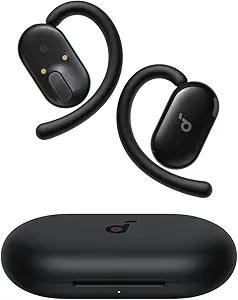


More Details on Our Top Picks
TRAUSI T6 Open-Ear Wireless Earbuds with ENC Noise Cancelling, 80H Playtime, IPX7 Waterproof, Earhook Sports Design (Black)
The TRAUSI T6 is the clearest pick here for runners who want to hear the path around them while listening. Its open-ear earhook design leaves the ear canal unsealed, which can make traffic and other nearby sounds easier to notice than with the in-ear JLab Go Sport+. The hooks and IPX7 water resistance suit sweaty sessions and wet-weather runs, while up to 80 hours with the case means fewer charging stops. That open fit has a cost: ambient noise can compete with your audio, and it will not give the same isolation as the Occiam T19’s noise cancellation. The 90-day warranty is also shorter than the coverage listed for the JLab and SHOKZ options. Choose the T6 for awareness and endurance; skip it if immersive sound or longer warranty coverage matters more.
Pros:- Open-ear design helps keep nearby sounds audible
- Up to 80 hours of total playback with the case
- IPX7 water resistance for wet and sweaty workouts
- Bluetooth 5.4 connectivity
Cons:- Open design lets ambient noise compete with audio
- 90-day manufacturer warranty is shorter than the JLab Go Sport+ and SHOKZ OpenDots 2 warranties
Best for: Road and trail runners who want an earhook fit and more awareness of nearby sounds during workouts
Not ideal for: Runners who need strong noise isolation, immersive bass, or longer warranty coverage
- Design:Open-ear with earhooks
- Bluetooth:5.4
- Total playtime:Up to 80 hours with charging case
- Water resistance:IPX7
- Noise feature:ENC
- Controls:Touch
- Warranty:90 days
Our verdict“Pick the TRAUSI T6 if hearing your surroundings and going long between charges matter more than isolation or a long warranty.”
JLab Go Sport+ True Wireless Workout Earbuds – Graphite
For runners who want a familiar in-ear sports fit with practical extras, the JLab Go Sport+ makes a strong everyday choice. Its earhooks and IP55 sweat and dust resistance are suited to regular workouts, while the 9-plus hours per bud and 26-plus from the case cover long stretches between charges. Compared with the TRAUSI T6, the JLab seals the ear rather than leaving it open, so it can provide a more contained listening experience but less awareness of nearby sounds. There is no active noise cancellation, and the protection rating is below the IPX7 ratings of the TRAUSI T6 and PocBuds T60. The useful distinction is its flexibility: multipoint pairs two devices, each bud works independently, and EQ modes let runners adjust the sound. Its two-year warranty adds reassurance for frequent use.
Pros:- Secure earhook fit with IP55 sweat and dust resistance
- 9-plus hours per earbud and 26-plus additional hours from the case
- Bluetooth multipoint supports two paired devices
- Two-year JLab warranty
Cons:- No active noise cancellation
- IP55 rating is lower than the IPX7 protection listed for TRAUSI T6 and PocBuds T60
Best for: Runners who want secure in-ear sports buds, two-device pairing, and a longer stated warranty
Not ideal for: Runners who prioritize open-ear awareness, active noise cancellation, or IPX7 water resistance
- Battery life:9+ hours per earbud, 26+ hours from case
- Water resistance:IP55
- Connectivity:Bluetooth multipoint for 2 devices
- Microphones:Dual MEMS mics per earbud
- EQ modes:JLab Signature, Balanced, Bass Boost
- Case charging time:2 hours
- Warranty:2 years
Our verdict“Choose the JLab Go Sport+ for versatile daily training features and warranty coverage, provided you do not need open-ear listening or stronger water resistance.”
SHOKZ OpenDots 2 Open-Ear Clip-On Earbuds, Black
The SHOKZ OpenDots 2 takes a different route from the hooked designs: its clip-on open-ear fit keeps the ear canal open without wrapping an earhook around it. That may suit runners who dislike conventional hooks, while the 6.4 g per-earbud weight and IP57 rating support a lightweight, workout-ready setup. Compared with the TRAUSI T6, SHOKZ lists more audio and call hardware, including Dolby Audio, dual 11.8 mm drivers, and three microphones; it also offers Bluetooth 6.1 multipoint and up to 40 hours total with the case. Those extras come alongside a different tradeoff: open-ear sound can leak and deliver less bass than the in-ear JLab Go Sport+ or Occiam T19. The pinch and tap controls may also take practice. It suits runners who value an open fit with added connectivity and call features.
Pros:- Clip-on open-ear design keeps the ear canal unsealed
- 6.4 g per earbud and IP57 water resistance
- Bluetooth 6.1 multipoint pairing
- Up to 40 hours total playback and Qi wireless charging
Cons:- Open-ear fit can leak sound and provide less bass than in-ear models
- Pinch and tap controls may take time to learn
Best for: Runners who prefer a lightweight clip-on open-ear fit and also use earbuds for calls and multiple devices
Not ideal for: Runners seeking deep bass, strong noise isolation, or straightforward controls from the first run
- Design:Open-ear clip-on
- Earbud weight:6.4 g each
- Drivers:Dual 11.8 mm
- Battery life:Up to 10 hours per charge, 40 hours total with case
- Water resistance:IP57
- Bluetooth:6.1
- Charging:Qi wireless and USB-C
- Warranty:2 years
Our verdict“Choose the SHOKZ OpenDots 2 if you want an open clip-on fit with expanded call and connection features and can accept less bass.”
PocBuds T60 Wireless Bluetooth Earbuds with Earhooks, 80Hrs Playtime, IPX7 Waterproof, Black
The PocBuds T60 is aimed at runners who want a conventional sealed earbud fit and a case that can carry them through many workouts before a recharge. It offers up to 8 hours per charge and 80 hours total, matching the TRAUSI T6’s stated total while keeping the ear canal covered with three included tip sizes. Its IPX7 rating and earhooks make it a practical fit for sweaty training, and the battery display gives a quick read on remaining case power. Unlike the JLab Go Sport+, it supports Qi wireless charging as well as USB-C; the pad is sold separately. The case and hook design may feel bulky to runners who prefer the SHOKZ OpenDots 2’s lighter clip-on form, and its Bluetooth 5.3 is an older listed version than the SHOKZ’s 6.1. The five-year warranty stands out in this lineup.
Pros:- Up to 80 hours total playback, with up to 8 hours per charge
- IPX7 water resistance and secure earhooks
- USB-C and Qi wireless charging support
- Five-year manufacturer warranty
Cons:- Qi wireless charging pad is not included
- Over-ear hook design may not suit every runner
Best for: Runners who want a sealed, hooked fit, a battery display, and long total playback between case charges
Not ideal for: Runners who dislike over-ear hooks, want an open-ear design, or expect a Qi charging pad in the box
- Battery life:Up to 8 hours per charge, 80 hours total
- Bluetooth:5.3
- Water resistance:IPX7
- Driver size:13 mm
- Charging:USB-C and Qi wireless
- Bluetooth range:30 feet
- Included ear tips:3 sizes
- Warranty:5 years
Our verdict“Pick the PocBuds T60 if long case life, IPX7 protection, and a sealed earhook fit matter more than a compact open-ear design.”
Occiam T19 Active Noise Cancelling Wireless Earbuds with Ear Hooks
Among these five, the Occiam T19 is the clear choice for runners who want to reduce surrounding noise: it lists active noise cancellation up to 45 dB, while the TRAUSI T6’s open-ear design favors awareness and the JLab Go Sport+ has no ANC. Its flexible earhooks, three tip sizes, and physical buttons give runners a secure, adjustable in-ear setup with controls that do not depend on touch gestures. Battery life is up to eight hours per charge and 48 hours total in binaural mode; mono mode is listed at up to 90 hours, making that figure a different listening setup rather than a like-for-like comparison with the PocBuds T60’s 80-hour total. The main compromise is protection: Occiam describes the build as sweatproof and splash resistant but gives no IP rating, unlike the IPX7 PocBuds and TRAUSI models.
Pros:- Active noise cancellation rated for up to 45 dB reduction
- Flexible earhooks and three included ear tip sizes
- Physical buttons for playback, volume, and calls
- Up to 48 hours total playback in binaural mode
Cons:- No IP water-resistance rating is specified
- 30-foot Bluetooth range is limited for moving far from the connected device
Best for: Runners who want an in-ear fit with active noise cancellation and physical button controls
Not ideal for: Runners who need a stated IP water-resistance rating or want to hear more of their surroundings
- Noise cancellation:Active noise cancellation, up to 45 dB reduction
- Battery life per charge:Up to 8 hours
- Total playback:Up to 48 hours binaural; up to 90 hours mono
- Water protection:Sweatproof and splash resistant; no IP rating specified
- Charging:USB-C
- Bluetooth range:30 feet
- Controls:Physical buttons
- Ear tips:S, M, and L
Our verdict“Choose the Occiam T19 for noise reduction and physical controls, but pick an IPX7-rated alternative if water protection is a priority.”
TRAUSI i27 Wireless Earbuds with 54H Playtime, ENC Noise Cancelling, and IPX7 Waterproofing
The TRAUSI i27 suits runners who want earhooks and water resistance without relying on an oversized battery claim. Each charge is stated to last 6 hours, shorter than the bmani T16’s 8 hours, but a 10-minute quick charge adds up to 2 hours of playback—a useful option when a run is coming up and the earbuds are low. Its IPX7 rating and secure hooks fit a workout routine, while ENC is intended to reduce background noise on calls. The 54-hour figure includes the case, so it describes total use between wall charges rather than one long listening session. The tradeoff is limited per-charge runtime; runners on long outings may prefer the HAOYUYAN BX17’s stated 15 hours per charge.
Pros:- 10-minute charge is stated to provide up to 2 hours of playback
- Earhooks help keep the earbuds in place during movement
- IPX7 water resistance suits sweaty workouts and wet conditions
- LED case display shows remaining power
Cons:- Six hours of playback per charge is shorter than the bmani T16’s stated eight hours
- The 54-hour total includes case recharges and does not indicate single-charge runtime
Best for: Runners who often forget to charge their earbuds and can use a quick top-up before a workout
Not ideal for: Runners who need more than six hours of playback between case charges
- Connectivity:Bluetooth 5.4
- Playback per charge:Up to 6 hours
- Total playback with case:Up to 54 hours
- Quick charge:10 minutes for up to 2 hours of playback
- Full case charging time:1.5 hours
- Water resistance:IPX7
- Fit:Earhooks; three ear tip sizes included
- Earbud weight:7 g per earbud
Our verdict“Choose the TRAUSI i27 if quick pre-run charging matters more than long playback on a single charge.”
bmani T16 Wireless Earbuds with 80H Playtime, LED Display Charging Case, Over-Ear Hooks, Dual Mics, Bluetooth Headphones for Running Workout Gym (Black)
The bmani T16 is a good match for runners who want to adjust audio without tapping a touch-sensitive surface mid-stride. Its physical buttons make playback and volume control more deliberate than the touch controls on the TRAUSI i27, though they may take a firmer press. The over-ear hooks support a secure workout fit, and the stated 8 hours per charge gives it more between-charge listening time than the i27’s 6 hours. Its 80-hour total depends on using the charging case, and the sweat- and dust-resistant description is less specific than the HAOYUYAN BX17’s IPX7 rating. That makes the T16 a practical button-first pick for regular runs, but a less reassuring choice for runners who often face heavy rain or want a clearly stated water-resistance class.
Pros:- Physical buttons reduce accidental commands from brushing or adjusting the earbuds
- Over-ear hooks are designed to stay secure during workouts
- Eight hours of stated playback per charge
- LED charging case displays battery information
Cons:- Described as sweat-resistant and dust-resistant, without a stated IP rating
- The 80-hour total includes case recharges, while per-charge playback is eight hours
Best for: Runners who change tracks or volume while moving and prefer physical buttons over touch controls
Not ideal for: Runners who need a specific waterproof rating for training in heavy rain or wet conditions
- Connectivity:Bluetooth 5
- Playback per charge:Up to 8 hours
- Total playback with case:Up to 80 hours
- Drivers:10 mm dynamic
- Microphones:Dual
- Controls:Physical buttons
- Fit:Adjustable over-ear hooks
- Water and dust resistance:Described as sweat-resistant and dust-resistant
- Bluetooth range:Up to 15 m
Our verdict“Pick the bmani T16 if dependable button controls and eight-hour sessions matter more than a formal waterproof rating.”
HAOYUYAN BX17 Wireless Earbuds, Sports Bluetooth Headphones with 80Hrs Playtime, LED Power Display, Noise Canceling, IPX7 Waterproof (Rose Gold)
For runners who want fewer interruptions to recharge, the HAOYUYAN BX17 stands apart from the bmani T16 by stating up to 15 hours per charge, compared with the T16’s 8. That makes it better suited to long training blocks or days that combine a run with other listening. Soft earhooks and three ear tip sizes offer ways to tailor the fit, while the IPX7 rating adds a clearer water-resistance specification than the T16’s sweat-resistant description. Its 80-hour total still includes the case, and its noise reduction is not active noise cancellation. Button controls may also feel less immediate to runners accustomed to touch surfaces. This is a battery-first option for runners who value long individual sessions and a secure fit over active noise cancellation.
Pros:- Up to 15 hours of stated playback per charge
- IPX7 water resistance is specified for workout use
- Soft earhooks and three ear tip sizes support fit adjustment
- LED display shows case battery level
Cons:- Noise reduction is not active noise cancellation
- Button controls may be less convenient for runners who prefer touch commands
- The 80-hour total includes charging-case recharges
Best for: Distance runners and workout regulars who want long playback between charges and an adjustable earhook fit
Not ideal for: Runners looking for active noise cancellation or touch-based controls
- Model:BX17
- Playback per charge:Up to 15 hours
- Total playback with case:Up to 80 hours
- Driver size:14.3 mm
- Water resistance:IPX7
- Charging:USB Type-C fast charging
- Controls:Button controls
- Fit:Soft earhooks; three ear tip sizes
- Color:Rose Gold
Our verdict“Choose the HAOYUYAN BX17 if long single-charge playback and IPX7 water resistance matter more than active noise cancellation.”
Wireless Sports Earbuds with Ear Hooks, Bluetooth 5.3, ENC Noise Cancelling
The Wireless Sports Earbuds put call handling alongside the basics runners need: hooks for a steadier fit, a stated IP7 waterproof coating, and up to 8 hours of playback per charge. Their ENC noise reduction is aimed at clearer calls, which gives them a different focus from the long-session HAOYUYAN BX17 and its 15-hour per-charge claim. The case brings stated total playback to 75 hours, but that figure includes recharges; it does not mean the earbuds last that long outside the case. Three tip sizes offer some fit adjustment, though an earhook cannot guarantee comfort for every ear. Touch controls may also register an unintended command if adjusted while running, and the supplied data does not specify the driver’s bass performance beyond noting it may lack depth compared with premium options.
Pros:- ENC noise reduction is included for calls
- Earhooks support a more secure fit during running
- IP7 waterproof coating is specified
- Three ear tip sizes support fit adjustment
Cons:- Touch controls can activate accidentally while adjusting the earbuds
- Eight hours per charge is less than the HAOYUYAN BX17’s stated 15 hours
- Bass may lack depth compared with premium earbuds
Best for: Runners who take calls during workouts and want earhooks, ENC call noise reduction, and stated water resistance
Not ideal for: Runners who prioritize deep bass, dislike touch controls, or need more than eight hours per charge
- Connectivity:Bluetooth 5.3
- Driver size:13 mm
- Noise reduction:ENC
- Playback per charge:Up to 8 hours
- Total playback with case:Up to 75 hours
- Charging time:1.5 hours
- Charging port:USB Type-C
- Bluetooth range:Up to 10 m
- Ear tip sizes:Three
Our verdict“Pick these if call noise reduction and a hooked workout fit matter more than long single-charge playback or deeper bass.”
HAOYUYAN BX17 Wireless Sports Earbuds with Ear Hooks, 80-Hour Battery, LED Display, and IPX7 Waterproofing
This black version of the HAOYUYAN BX17 shares the Rose Gold BX17’s headline running strengths: flexible earhooks, three ear tip sizes, IPX7 water resistance, and up to 15 hours of playback per charge. That makes it a stronger choice for long sessions than the TRAUSI i27, which is stated to last 6 hours per charge. The listed Bluetooth 5.3 and automatic reconnection add convenience between workouts, while the Type-C case provides up to eight additional charges. Noise isolation is passive, so it will not actively cancel surrounding sound; runners who want calls with ENC can look instead at the Wireless Sports Earbuds in this group. The Black model makes sense when color is the deciding distinction, but its supplied feature set does not show a performance advantage over the Rose Gold BX17.
Pros:- Up to 15 hours of stated playback per charge
- IPX7 water resistance suits workouts and outdoor use
- Flexible earhooks and three tip sizes support a secure fit
- Bluetooth 5.3 and automatic reconnection are specified
Cons:- Noise isolation is passive rather than active noise cancellation
- The 80-hour total includes case recharges
- No stated performance difference from the Rose Gold BX17
Best for: Runners who want the BX17’s long stated per-charge playback and IPX7 rating in a black colorway
Not ideal for: Buyers who want active noise cancellation or a distinct feature advantage over the Rose Gold BX17
- Model:BX17
- Connectivity:Bluetooth 5.3
- Playback per charge:Up to 15 hours
- Total playback with case:Up to 80 hours
- Additional case charges:Up to 8
- Driver size:14.3 mm
- Water resistance:IPX7
- Charging port:USB Type-C
- Color:Black
Our verdict“Choose this BX17 if you want its long-session running features in black and do not need active noise cancellation.”
inscamera Clip-On Open-Ear Wireless Earbuds with Bluetooth 6.0
The 5g clip-on design keeps each earbud outside the ear canal, which suits runners who find in-ear tips uncomfortable or want to stay aware of nearby traffic. Compared with the Soundcore V20i, this pair has a lighter stated weight per earbud and a simpler fit style, while Soundcore offers adjustable positions and app-based sound settings. The inscamera’s 10 hours per charge is useful for long outings, and its IPX7 rating adds protection for sweaty sessions and rain. The tradeoff is shared by open-ear designs: ambient noise can mask audio, and bass may feel less forceful than with sealed earbuds. I’d choose it for comfort and awareness, but skip it if a secure in-ear seal or immersive sound matters most.
Pros:- 5g clip-on design avoids placing an earbud in the ear canal
- Up to 10 hours of playback per charge
- IPX7 water resistance for sweat and rain
- Bluetooth 6.0 multipoint connectivity
Cons:- Open-ear fit lets surrounding noise in and may weaken bass impact
- The listed Bluetooth 6.0 support may not offer a benefit with older devices
Best for: Runners who dislike earbuds inside the ear canal and want a lightweight clip-on fit for longer outings.
Not ideal for: Runners who train beside loud roads or want strong passive noise isolation and deep bass.
- Design:Clip-on open-ear
- Weight:5g per earbud
- Bluetooth:Bluetooth 6.0
- Driver:11mm titanium diaphragm
- Battery:Up to 10 hours per charge; 40 hours with case
- Water resistance:IPX7
- Bluetooth range:50 feet
- Warranty:1 year
Our verdict“Choose the inscamera if an outside-the-ear clip and long per-charge playback matter more than noise isolation.”
Soundcore V20i by Anker Open-Ear True Wireless Earbuds
Four adjustable positions give the V20i a fit advantage for runners who want open-ear awareness but need more room to fine-tune how the earbuds sit. Compared with the inscamera Clip-On, Soundcore adds app tools such as EQ modes and HearID, so listeners can shape the sound rather than rely on a fixed setup. Its 16mm titanium-coated drivers with BassUp are intended to add weight to music, though an open-ear design still cannot block nearby traffic or crowd noise like a sealed earbud. Four microphones with AI enhancement also make it a more feature-rich choice for calls than a bare-bones workout pair. The app dependence and ambient noise are the main compromises; I’d skip it if you want simple controls without setup or isolation on noisy routes.
Pros:- Four adjustable fit positions allow positioning changes
- Open-ear shape helps preserve awareness of surroundings
- Soundcore app includes HearID, EQ modes, spatial audio, and firmware updates
- Four microphones with AI enhancement for calls
Cons:- Open-ear construction admits ambient noise and can soften bass in loud places
- Access to the full feature set depends on downloading the Soundcore app
Best for: Runners who want an open fit with adjustable positioning and are comfortable tuning settings through a companion app.
Not ideal for: People who prefer earbuds with no app setup or need audio isolation on loud running routes.
- Design:Open-ear true wireless
- Driver:16mm titanium-coated domes
- Fit adjustment:4 positions
- Microphones:4 with AI enhancement
- Audio features:BassUp, HearID, EQ modes, spatial audio
- App:Soundcore app with OTA firmware updates
Our verdict“Pick the V20i if adjustable placement and app-based sound options outweigh the need for isolation.”
TRAUSI i27 Wireless Earbuds with ENC Noise Cancelling, 54H Playtime, LED Power Display, IPX7 Waterproof, Earhooks for Running/Workouts (Black)
The earhook fit and three ear-tip sizes make the i27 a practical pick for runners who want a more anchored fit than the open-ear options from Soundcore and inscamera. Its 54 hours of stated total playback reduces how often the case needs charging, while the LED display makes remaining case power easier to check before heading out. A 10-minute charge is listed as enough for two hours of playback, a useful fallback when a workout is imminent. Bluetooth 5.4 supports a stated range of up to 15 meters, and the IPX7 rating suits sweaty sessions and rain. The drawbacks are a short 90-day warranty and touch controls that may take practice. I’d choose it for a secure, sealed fit and battery convenience, not for a more established warranty or open-ear awareness.
Pros:- Earhooks and S/M/L ear tips support a more secure fit
- Up to 54 hours total playback with the case
- 10-minute quick charge is listed to provide 2 hours of playback
- IPX7 water resistance and LED battery display
Cons:- The 90-day warranty is shorter than the 1-year coverage listed for the inscamera clip-on
- In-ear tips can reduce awareness of surrounding sounds
- Touch controls may take time to learn
Best for: Runners who want earhooks, multiple tip sizes, and a charging case that can cover frequent training sessions.
Not ideal for: Runners who need to hear surrounding traffic clearly or place high importance on a longer warranty.
- Fit:In-ear earbuds with earhooks; S/M/L ear tips
- Bluetooth:Bluetooth 5.4
- Playback:6 hours per charge; 54 hours total with case
- Quick charge:10 minutes provides 2 hours of playback
- Case capacity:400mAh
- Water resistance:IPX7
- Bluetooth range:Up to 15m (50ft)
- Warranty:90 days
Our verdict“The i27 suits runners who prioritize a secure earhook fit and long case runtime over open-ear awareness.”
VNMN YYK-Q63 True Wireless Sports Earbuds with Ear Hooks, 120hrs Playtime, Wireless Charging Case, LED Display, IPX7 Waterproof
Up to 120 hours with the case makes the YYK-Q63 the battery-focused choice in this group, well ahead of the TRAUSI i27’s listed 54 hours total. Its earhooks and in-ear shape are aimed at staying put during workouts, and the IPX7 rating is suited to sweat and rain. A dual LED display helps track charge across the case and earbuds, while wireless charging offers another way to top up the case. That long runtime comes with tradeoffs: VNMN is described as an unproven brand, and its push-button controls may feel less convenient than touch controls on the AOTONOK Q77. The 14 hours per charge is also a stated figure rather than a reason to ignore fit and comfort. I’d pick it when charging frequency is the priority, but not for brand familiarity or open-ear awareness.
Pros:- Up to 120 hours stated playback with the case
- Earhooks are designed to help keep the earbuds secure during exercise
- Wireless charging case with dual LED power display
- IPX7 water resistance for sweat and rain
Cons:- The brand has less established recognition than Soundcore by Anker
- Push-button controls may be less convenient for some runners
- In-ear fit offers less awareness of surroundings than open-ear alternatives
Best for: Runners and travelers who want an earhook sports fit and prefer to recharge their case infrequently.
Not ideal for: Buyers who want an open-ear design, a familiar headphone brand, or touch controls.
- Fit:In-ear with earhooks
- Bluetooth:Bluetooth 6.1
- Driver:16.2mm
- Playback:14 hours per charge; 120 hours total with case
- Charging:1 hour; wireless charging case
- Water resistance:IPX7
- Controls:Push button
- Noise reduction:ENC and CVC 8.0
Our verdict“Choose the YYK-Q63 if long case runtime and a secure earhook fit are your main priorities.”
AOTONOK Q77 Open-Ear Wireless Headphones with 4 ENC Noise-Canceling Microphones
Four ENC microphones set the Q77 apart for runners who take calls between or during sessions, while its open-ear shape leaves the ear canal unsealed for greater awareness of nearby sounds. Compared with the Soundcore V20i, the Q77 lists a longer total runtime with its case and USB-C charging, but Soundcore offers app-based EQ and fit adjustment that AOTONOK does not list. The Q77 provides up to 8 hours per charge, with another 42 hours from the case, and a 15-minute charge is listed to provide two hours of listening. That balance favors everyday convenience over elaborate tuning. Open-ear sound can leak and bass may be lighter than with the in-ear TRAUSI i27, so I’d skip this pair if isolation or strong low end is the goal.
Pros:- Open-ear design supports awareness of nearby sounds
- Four ENC microphones for calls
- Up to 50 hours total playback with the case
- 15-minute quick charge is listed to provide 2 hours of listening
Cons:- Open-ear design can leak sound and deliver less bass than in-ear alternatives
- Per-charge playback is listed at 8 hours, shorter than the inscamera’s 10 hours
Best for: Runners who want to stay aware of their surroundings and take calls without carrying a separate headset.
Not ideal for: Listeners who run in loud environments or want a sealed fit with stronger bass and noise isolation.
- Design:Open-ear with silicone earhooks
- Bluetooth:Bluetooth 5.4
- Driver:14.2mm dynamic
- Microphones:4 ENC microphones
- Playback:8 hours per charge; 50 hours total with case
- Quick charge:15 minutes provides 2 hours of listening
- Water resistance:IPX7
- Bluetooth range:Up to 33 feet (10 meters)
Our verdict“The Q77 is a sensible open-ear choice for runners who value call microphones and awareness over isolation.”
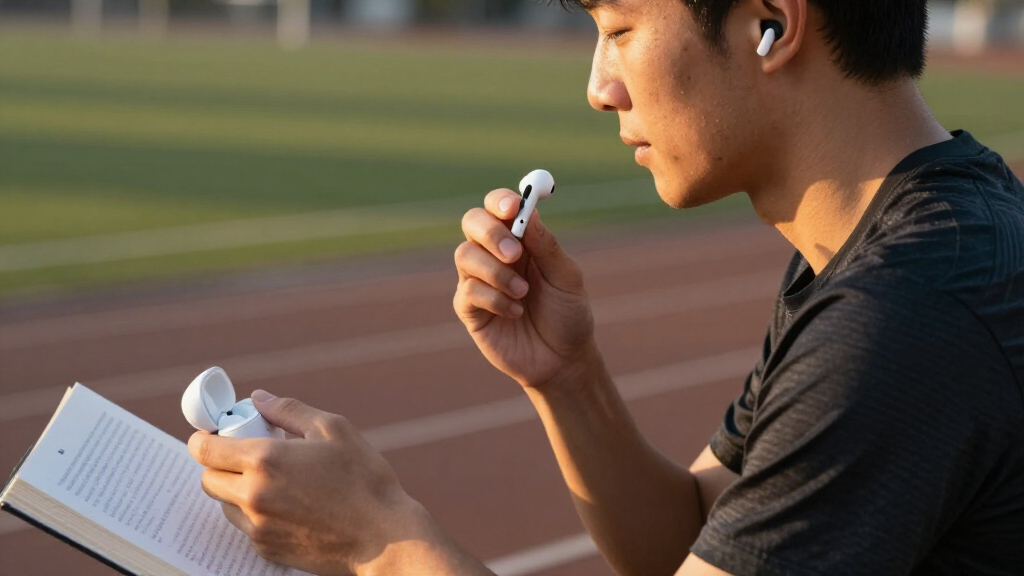
How We Picked
Every model here was judged through one narrow lens: performance while running. That meant fit security came first — earhooks and clip-on mechanisms were weighted heavily because a bud that pops out at kilometer three is useless regardless of its other specs. Sweat and weather protection came second; IPX7 or an equivalent sealed build was treated as the baseline for serious training, while anything less was flagged as a fair-weather option. From there I compared real-world battery math: solo playtime per charge for daily runs, plus total hours with the case for people who charge weekly rather than nightly.
Sound and call quality were evaluated relative to price tier, not against audiophile standards — a running bud needs energetic bass to mask footfall noise and wind, plus a usable mic for mid-run calls. I also weighed charging convenience (LED power displays, wireless charging cases) and whether control schemes work with sweaty fingers or gloved hands in winter. Finally, models with overlapping specs — like the two TRAUSI i27 listings and the two HAOYUYAN BX17 variants — were kept distinct so readers can compare color options and bundle differences rather than guessing. The ranking reflects which tradeoffs most runners can live with, not which spec sheet is longest.
Factors to Consider When Choosing Wireless Earbuds For Running
Before zeroing in on a specific model, it helps to understand what actually separates a great running earbud from a generic wireless one. The factors below are where most buyers either overpay for features they will never use on a run, or cheap out on the one thing that ruins the experience.Fit Style: Earhook, In-Ear, or Open-Ear
The single biggest decision is how the bud attaches to your head, because it dictates everything else about the experience. Over-ear hooks (TRAUSI T6, PocBuds T60, Occiam T19, bmani T16) are the safest bet for high-intensity running, sprint intervals, and trail running with jarring descents — the hook physically cannot be shaken loose. Standard in-ear designs (JLab Go Sport+) feel lighter and less conspicuous, but ear anatomy varies enormously, so a fit that works for one runner may slowly work loose on another within a mile. Open-ear clip-on and air-conduction designs (SHOKZ, Soundcore V20i, inscamera) trade some bass response and maximum volume for total awareness of your surroundings. A common mistake is choosing based on looks alone: many runners buy slim in-ear buds, struggle with mid-run adjustments for weeks, and end up buying hook models anyway. If you run on roads with traffic, the open-ear tradeoff is genuinely worth it; if you run on closed trails or a treadmill, secure isolation is the better pick.
Waterproofing: What IPX Ratings Actually Mean for Runners
IPX7 is the rating that matters for running, and it appears on most models in this lineup for good reason — it means the buds can survive full submersion, which comfortably covers sweat storms, heavy rain, and post-run rinsing under a tap. IPX4 or IPX5, common on cheaper general-purpose earbuds, handles light sweat but can fail during long summer runs or when you get caught in a downpour. Be careful with marketing language: ‘sweat-resistant’ without a stated IP rating usually means the manufacturer avoided certification, which is a warning sign rather than a feature. One overlooked point is that the charging case is rarely waterproof on any of these models — buds can go in the case wet occasionally, but making a habit of it corrodes the charging contacts. Rinse salt sweat off IPX7 buds periodically, because dried salt degrades speaker grilles and microphone ports over a season. Runners in humid climates or anyone training for a marathon should treat IPX7 as non-negotiable rather than a nice-to-have.
Battery Life: Ignore the Big Number on the Box
Headline figures like ’80 hours’ or ‘120 hours’ refer to total playtime including the charging case, not what the buds deliver in one session — and that distinction trips up a lot of buyers. What actually matters for a daily runner is single-charge playtime, which typically runs 6-10 hours across this lineup; even marathon training rarely needs more than 3-4 hours per session, so nearly every model here covers a week of daily runs on one bud charge. Where the big case numbers become genuinely useful is travel, race weekends, and forgetting to charge for days — the VNMN YYK-Q63’s 120-hour case with wireless charging is built exactly for that kind of negligence-proof use. Fast charging is another underrated feature: a 10-minute charge that yields an hour of playback can rescue a dead pair before an evening run. Don’t pay a premium for battery capacity you won’t use — a runner doing 30-minute jogs gets nothing from a 120-hour case that a standard 30-hour case doesn’t already provide. Match the battery tier to how often you realistically charge your devices.
Noise Cancelling vs. Situational Awareness
This is where running earbuds differ most from everyday earbuds, and choosing wrong can be a safety issue. Active Noise Cancelling (ANC), like the Occiam T19 offers, is fantastic on a treadmill or indoor track but can leave you deaf to cars, cyclists, and dogs when running outdoors. ENC (Environmental Noise Cancellation), which appears on most budget models here, is a microphone technology for call clarity, not listening isolation — many buyers confuse the two and end up disappointed that their ‘noise cancelling’ buds still let traffic noise in. Open-ear designs sidestep the entire question by never blocking your ear canal, at the cost of weaker bass and audibility in loud wind. The honest advice: pick your primary environment first, then your noise technology. Outdoor road runners should prioritize awareness (open-ear or a tight fit with transparency habits), while gym and treadmill runners can enjoy full ANC or passive isolation guilt-free. If you run in both settings, a hook model with ENC and a good physical seal offers a workable middle ground.
Controls, Comfort Over Distance, and Sweat Usability
Small usability details decide whether you love or tolerate a pair of running buds after a month. Physical buttons beat touch controls for running — touch surfaces misfire when damp with sweat or when rain hits them, causing phantom track skips and accidental assistant launches mid-interval. Over-ear hook models tend to use button or press controls for exactly this reason, while compact in-ear designs lean on touch, which is worth checking before buying. Weight matters more than buyers expect: a hook bud carrying a large battery can cause ear fatigue on runs past 90 minutes, whereas clip-on open-ear models distribute pressure around the ear rim instead of inside the canal. Also consider whether the charging case is pocketable — some high-capacity cases (especially 120-hour models) are too bulky for a running belt, so ‘more battery’ can literally weigh you down. Finally, check how controls are split between the two buds; adjusting volume from one side while skipping tracks from the other is far easier to operate by feel at pace than a multi-tap gesture menu you need to memorize.
Budget Tiers: When to Pay More and When Not To
The running earbud market has an unusual structure: the budget tier is remarkably complete, with IPX7, earhooks, huge battery totals, and LED displays all available at entry prices, which means paying more buys refinement rather than fundamentals. Premium open-ear models like the SHOKZ OpenDots 2 and Soundcore V20i justify their price through fit engineering, better sound tuning for open designs, and stronger app or warranty support — worthwhile if you run daily and plan to keep the pair for years. Where cheap models genuinely fall short is microphone quality in wind, control consistency, and long-term durability of hinges and charging contacts. A sensible strategy for new runners is to buy a solid budget hook model first, run a full season in it, and only upgrade once you know your real preferences (open-ear versus sealed, button versus touch, how much battery you actually use). Avoid paying double for ANC or premium sound if you mostly listen to podcasts at moderate volume — the differences shrink dramatically in that use case. The most expensive mistake in this category is not buying a bad pair; it’s buying a premium pair whose design philosophy doesn’t match where and how you run.
Frequently Asked Questions
Are open-ear earbuds actually good for running, or do they fall out and sound weak?
Open-ear designs like the SHOKZ OpenDots 2 and Soundcore V20i are built specifically for running, and their clip-on mechanisms grip the ear rim firmly enough for sprint work — they don’t rely on your ear canal at all, which makes them immune to the fit problems in-ear buds face. The honest tradeoff is sound: because nothing seals your ear, bass is lighter and loud environments like windy roads or busy streets can mask your music. That same openness is exactly why road runners love them — you hear traffic, cyclists, and approaching dogs clearly, which is a genuine safety feature rather than a compromise. If your runs are mostly outdoors near traffic, the sound sacrifice is worth it. Treadmill and trail runners who want punchy bass will be happier with a sealed in-ear or earhook model instead.
Do I really need IPX7, or is a lower waterproof rating fine for running?
IPX7 is the sensible target because sweat is more corrosive than people assume — a hard hour of running can soak a bud more thoroughly than light rain, and salt degrades speakers and charging contacts over months. Lower ratings like IPX4 will survive a typical gym session, but they’re rated against splashes, not sustained moisture, so marathon training, humid climates, or rainy-weather running pushes them past their design limits. Since most earhook models in this roundup — TRAUSI, PocBuds, Occiam, bmani, and others — include IPX7 at entry-level prices, there’s rarely a cost reason to settle for less. The one caveat: even on IPX7 buds, the charging case is not waterproof, so let buds air-dry before docking them. Treat IPX7 as cheap insurance rather than an upgrade; it’s the difference between a one-season and a multi-year purchase.
What’s the difference between ANC and the ENC noise cancelling on these earbuds?
The acronyms look similar but do completely different jobs. ANC (Active Noise Cancelling) physically counteracts outside sound for your ears — that’s what the Occiam T19 offers, and it’s what you want for blocking treadmill noise or gym clatter. ENC (Environmental Noise Cancellation), found on models like the TRAUSI T6 and i27, processes sound through the microphones so the person on the other end of your calls hears less wind and traffic — it does almost nothing to what you hear while listening. Some budget listings blur this distinction in their marketing, which leads buyers to expect silence and get nothing of the sort. If quiet listening matters to you, look specifically for ANC; if you take calls mid-run, ENC is genuinely useful. For outdoor road running, you may actually prefer neither, since blocking your environment is a hazard.
Are earhooks comfortable for long runs, or do they hurt after a while?
Modern earhooks are far more comfortable than older designs because they’re built around flexible silicone that wraps over the ear rather than pressing into it — models like the PocBuds T60 and bmani T16 distribute weight across the whole ear, which many runners find more comfortable than in-ear buds on long outings. Comfort over distance depends mainly on bud weight and how the hook interacts with glasses or sunglasses arms, which is worth checking if you wear both. Runs beyond about two hours are where cheap, stiff hooks start to chafe, which is one area where premium engineering pays off. The adjustment period is real: the first few runs can feel unfamiliar, but most runners stop noticing the hook within a week. If you’ve had a bad experience with an old rigid hook design from years ago, it’s worth trying a current soft-hook model before writing the category off.
How much battery do I actually need for running?
Far less than the marketing suggests. Even a serious marathon training block rarely exceeds four hours of playback per session, and nearly every model here delivers 6-10 hours on a single bud charge — so solo playtime is a solved problem across the board. The big numbers like the VNMN YYK-Q63’s 120 hours refer to total use with the charging case, which only matters if you travel frequently, race on weekends, or habitually forget to charge your gear. For a typical runner doing 30- to 60-minute sessions, a modest 30-40 hour case covers two weeks between charges with room to spare. One feature genuinely worth prioritizing is fast charging, since a 10-minute top-up before an evening run rescues dead buds more often than a giant case ever will. My advice: buy battery for your charging habits, not for the number on the box.
Conclusion
After comparing all 15 models, the right choice comes down to where you run and how you want your buds to sit. For best overall, the TRAUSI T6 combines the most reliable fit formula in running — earhooks plus IPX7 — with 80 hours of total battery, making it the safest bet for the widest range of runners. The PocBuds T60 takes best value by matching that core formula at a friendlier price, while the VNMN YYK-Q63 is the pick for maximum endurance with its 120-hour case and wireless charging. Best premium goes to the SHOKZ OpenDots 2, whose clip-on open-ear design is the most refined safety-first option here, with the Soundcore V20i as the smarter-value open-ear alternative for road runners who want awareness without the premium price. For beginners or anyone unsure whether they prefer hooks, the JLab Go Sport+ offers a light, low-commitment starting point, while treadmill and gym runners who want quiet should jump straight to the Occiam T19 with ANC. Whatever you choose, match the design to your environment first — a secure, waterproof pair that fits your typical route beats a longer spec sheet every single time.
Halloween Picks
halloween
As an affiliate, we earn on qualifying purchases.