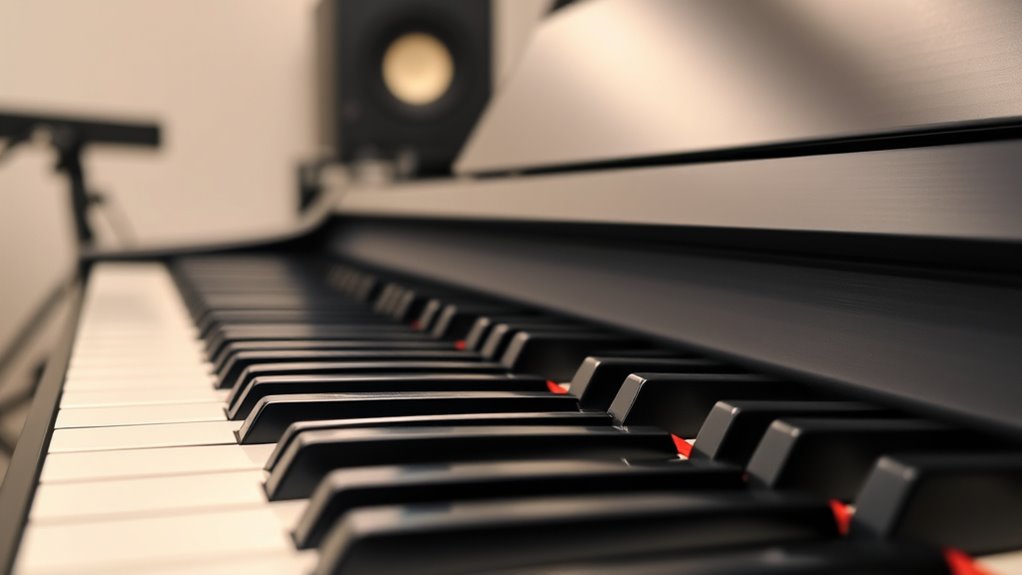

The best digital piano keyboards balance a playable keybed with the features and setup a buyer actually needs. I’d put the Yamaha P71 first for its 88 weighted keys and focused piano format, while the UISCOM 88-key weighted model stands out for a more furniture-style setup with triple pedals, and the Alesis Recital Play offers a full-size option aimed at learners. The main tradeoff is between weighted, piano-like keys and lighter, more portable 61-key keyboards that often come with stands and other accessories. Included bundles can be convenient, but they do not automatically provide the most realistic playing feel. Read on for how these choices differ and which one fits your space, goals, and practice habits.

Get workout gear delivered free with Prime
- Fast, free delivery on millions of items
- Prime Video, Amazon Music and more included
- Member-only deals all year
Complete the kit


Key Takeaways
- The Yamaha P71 is the clearest piano-first pick in this group: its 88 weighted keys prioritize a more piano-like practice experience over bundled extras.
- Full-size keyboards are not all alike. The roundup includes weighted, semi-weighted, and unspecified key actions, so the number of keys alone does not tell you how closely an instrument may suit piano study.
- UISCOM’s weighted 88-key model is the standout furniture-style setup, pairing weighted keys with a wooden desk and triple pedals; that added footprint makes it less suited to frequent moving.
- 61-key kits favor convenience and portability: the RockJam, Donner, Alesis Melody, JIKADA, and Yamaha portable options suit lighter setups better than full-size practice, but offer a narrower keyboard.
- Accessory bundles vary more than the product names suggest. Stands, benches, headphones, pedals, and microphones can help a new player get started, but buyers should compare key action and intended use before choosing by included extras.




| digital piano keyboard | Keys | Connectivity | Included accessories |
|---|---|---|---|
| RockJam RJ761 61-Key Keyboard | 61 | MIDI, 3.5 mm audio jack | Stand, stool, sustain pedal, headphones |
| Yamaha P71 88-Key Weighted Act | 88 | USB, auxiliary, 3.5 mm headphone jack | Sustain pedal, power supply |
| 88-Key Digital Piano Keyboard | 88 | Bluetooth, USB-MIDI | Power adapter, sustain pedal, stand, carrying case, headphones, microphone |
| Alesis Recital Play 88-Key Pia | 88 | USB-MIDI, 3.5 mm headphone jack | Stand, sustain pedal, headphones, carry case |
| Alesis Melody 61 MK4 61-Key Pi | 61 | USB-MIDI, 3.5 mm auxiliary, sustain pedal input | Stand, bench, headphones |
| JIKADA 61 Key Portable Electro | 61 | — | Stand, folding stool, headphones, microphone, music rest, power adapter |
| Yamaha 61-Key Portable Keyboar | 61 full-sized keys | — | — |
| UISCOM 88 Key Weighted Digital | 88 | USB | — |
| 88 Key Digital Piano with Semi | 88 | USB and Bluetooth | Stand, carrying case, headphones, sustain pedal, music rest, power adapter, key stickers |
| 88 Key Digital Piano Keyboard | 88 | USB-MIDI and Bluetooth | Stand, carrying case, headphones, sustain pedal, microphone, power adapter |
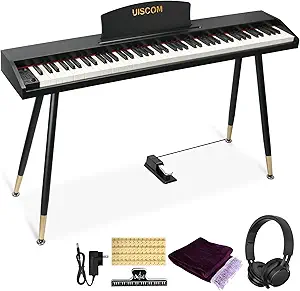
| UISCOM Digital Piano Keyboard | 88 | Bluetooth and MIDI-USB | Wooden stand, triple pedal, headphones, music stand, and key stickers |
| UISCOM Digital Piano Keyboard | 88 | USB-MIDI and Bluetooth | — |
| Donner 61-Key Electric Piano K | 61 | — | — |
| RockJam RJ5061 61-Key Keyboard | 61 | — | — |
More Details on Our Top Picks
RockJam RJ761 61-Key Keyboard Piano Kit with Stand, Stool, Sustain Pedal, and Headphones
The RockJam RJ761 is the most ready-to-start 61-key option here: its kit includes a stand, stool, headphones, and sustain pedal, so a beginner can set up a home practice spot without sourcing those essentials separately. The touch display gives direct access to tones and rhythms, while the headphone jack supports quiet practice. Compared with the Alesis Melody 61 MK4, this is the more substantial bundled setup, but it is also much heavier at 19.8 pounds, so it is less convenient to move or carry. Its 61 keys and beginner-oriented controls suit early lessons and casual playing, not someone seeking a full-range piano layout or advanced performance control. The listed MIDI support and learning-app compatibility add useful practice options, though the feature set remains focused on beginners.
Pros:- Includes stand, stool, headphones, and sustain pedal for a ready-made beginner setup
- Touch display makes selecting tones and rhythms straightforward
- Headphone jack supports quiet practice
- MIDI support and Simply Piano lesson compatibility add learning and recording options
Cons:- At 19.8 pounds, it is heavier and less convenient to move than the Alesis Melody 61 MK4
- The 61-key range is narrower than the 88-key Yamaha P71 and Alesis Recital Play
- Beginner-focused features may feel limiting as playing needs grow
Best for: First-time learners setting up a dedicated home practice space who want a stand, stool, headphones, and sustain pedal in one kit.
Not ideal for: Players who need 88 keys, a lightweight keyboard for frequent travel, or extensive controls for advanced performance.
- Keys:61
- Built-in features:Built-in speaker, digital display, touch screen, headphone jack
- Connectivity:MIDI, 3.5 mm audio jack
- Included accessories:Stand, stool, sustain pedal, headphones
- Power:Corded electric
- Dimensions:12.8 x 36.2 x 4.4 inches
- Weight:19.8 pounds
- Warranty:2 years
Our verdict“Choose the RJ761 if you want a substantial, accessory-rich 61-key setup for learning at home rather than a lightweight or full-range piano.”
Yamaha P71 88-Key Weighted Action Digital Piano with Sustain Pedal and Power Supply
For buyers focused on piano technique, the Yamaha P71 stands apart from the other options in this group with 88 weighted, hammer-action keys. That action provides resistance more like an acoustic piano, making it a stronger fit for practicing touch and dynamics than the semi-weighted 88-key Alesis Recital Play or the 61-key RockJam RJ761. It also has built-in speakers, multiple voices, Duo Mode, and a sustain pedal, while its relatively slim body is suited to a home setup. The tradeoff is simplicity: controls and features are limited compared with the more sound- and rhythm-focused beginner keyboards. Its listed connectivity includes USB and auxiliary, but not MIDI support, so buyers who specifically need MIDI should compare it carefully with the Alesis Recital Play. At 25 pounds, it is portable between rooms, not an especially light travel choice.
Pros:- 88 weighted hammer-action keys support piano-style touch and technique
- Includes a sustain pedal and power supply
- Built-in speakers allow practice without headphones
- USB and auxiliary connectivity support straightforward home use
Cons:- Limited controls and features compared with the sound-rich Alesis Recital Play
- Listed connectivity does not include MIDI support
- At 25 pounds and over 52 inches wide, it is less convenient to transport than compact 61-key models
Best for: Learners moving toward acoustic-piano technique who want a full 88-key range and weighted hammer action for regular home practice.
Not ideal for: Beginners seeking a large collection of rhythms, bundled stand and headphones, or a lightweight keyboard for frequent travel.
- Keys:88
- Key action:Weighted hammer action
- Sound features:Multiple voices
- Modes:Duo Mode
- Connectivity:USB, auxiliary, 3.5 mm headphone jack
- Included accessories:Sustain pedal, power supply
- Dimensions:11.5 x 52.25 x 6 inches
- Weight:25 pounds
Our verdict“Pick the P71 if realistic weighted action and a full piano range matter more than bundled accessories, extensive rhythms, or portability.”
88-Key Digital Piano Keyboard for Beginners with Accessories
This 88-key bundle is the sound-and-rhythm choice for beginners who want more than a basic piano voice. Its listed 1,000 timbres and 1,000 rhythms, plus 150 demo songs and recording functions, offer plenty of material for exploring styles and making practice more varied. The included stand, carrying case, headphones, sustain pedal, and microphone make it more performance-oriented out of the box than the Yamaha P71, which is the clearer choice for weighted piano feel but has fewer listed creative features. This model uses semi-weighted keys, so it does not provide the hammer-action resistance of the Yamaha, and the broad sound selection should not be mistaken for a more piano-realistic touch. Bluetooth and USB-MIDI add flexibility for music software. Build and durability details are limited, while the stand and case can make the full kit cumbersome to transport.
Pros:- 88 keys provide a full-range layout
- Large listed selection of timbres and rhythms supports varied practice
- Bluetooth and USB-MIDI enable connections to compatible devices and music software
- Bundle includes stand, carrying case, headphones, sustain pedal, and microphone
Cons:- Semi-weighted keys do not offer the hammer-action feel of the Yamaha P71
- Stand and accessories make the complete kit less convenient to transport
- Product data gives limited detail about build quality and durability
Best for: Beginners who want a full 88-key layout, varied accompaniment and sounds, and included accessories for home practice or occasional performance.
Not ideal for: Piano students prioritizing weighted hammer action, or frequent travelers who need a compact setup with well-documented durability.
- Keys:88
- Key type:Semi-weighted
- Timbres:1,000
- Rhythms:1,000
- Demo songs:150
- Connectivity:Bluetooth, USB-MIDI
- Included accessories:Power adapter, sustain pedal, stand, carrying case, headphones, microphone
Our verdict“Choose this bundle for sound variety and included performance accessories, but choose the Yamaha P71 if weighted piano action is your priority.”
Alesis Recital Play 88-Key Piano Keyboard Bundle
The Alesis Recital Play is the practical pick for a beginner who wants 88 keys without committing to a weighted home piano. It pairs touch-sensitive keys with built-in speakers, lesson and record modes, split, reverb, and a listed selection of 480 sounds. The included stand, sustain pedal, headphones, and carry case make the bundle more immediately useful for lessons or moving between practice locations than the Yamaha P71, which offers weighted hammer action but fewer listed learning features. That comparison also marks the main tradeoff: the Recital Play’s keys are touch-sensitive, not described as weighted, so it is less suited to players building acoustic-piano technique. At 5.5 kg, it is portable for an 88-key instrument, though its full-length body still takes up space. USB-MIDI supports compatible learning software, and battery use requires six AA batteries, which are not included.
Pros:- 88 touch-sensitive keys offer a full range and responsive playing
- Includes stand, sustain pedal, headphones, and carry case
- Lesson, record, split, and reverb functions support varied practice
- USB-MIDI works with compatible learning software
Cons:- Touch-sensitive keys do not match the weighted hammer action of the Yamaha P71
- Six AA batteries are required for battery-powered use and are not included
- Beginner-oriented controls may limit advanced performance use
Best for: New players who want an 88-key keyboard with learning modes and a carry case for lessons, home practice, or occasional transport.
Not ideal for: Players who need weighted hammer action, advanced stage controls, or battery-ready portability without buying batteries separately.
- Keys:88
- Key response:Touch-sensitive
- Sounds:480 listed sounds
- Modes and effects:Split, lesson, record, reverb
- Connectivity:USB-MIDI, 3.5 mm headphone jack
- Power:Power adapter or 6 AA batteries; batteries not included
- Included accessories:Stand, sustain pedal, headphones, carry case
- Weight:5.5 kg
Our verdict“Choose the Recital Play for a portable, accessory-rich 88-key learning keyboard, not for weighted piano action.”
Alesis Melody 61 MK4 61-Key Piano Keyboard Bundle
At 6.6 pounds, the Alesis Melody 61 MK4 is the easiest option in this group to carry between rooms or pack for casual practice. Its 61 keys keep the instrument compact, while built-in speakers, sounds, accompaniment rhythms, USB-MIDI, and included online lessons give beginners ways to practice without adding much equipment. The bundled stand, bench, and headphones make it a more complete starter setup than a bare portable keyboard. Compared with the RockJam RJ761, the Melody 61 MK4 is dramatically lighter and supports battery or AC power, but the RockJam kit includes a touch display and is a heavier, more home-oriented arrangement. Neither 61-key model supplies the full range of the Yamaha P71 or Alesis Recital Play. This Alesis is explicitly beginner-focused, and portable battery use requires six AA batteries, which are not included.
Pros:- Light 6.6-pound body is easier to carry than the RockJam RJ761
- Built-in speakers and battery-or-AC power support flexible practice locations
- Includes stand, bench, headphones, and access to online lessons
- USB-MIDI supports compatible recording and learning software
Cons:- 61 keys provide less range than the 88-key Yamaha P71 and Alesis Recital Play
- Six AA batteries for portable use are not included
- Beginner-oriented design offers less room for advancing players
Best for: Beginner students and families who need a lightweight 61-key keyboard with built-in speakers, bundled practice accessories, and the option to play away from an outlet.
Not ideal for: Players who need 88 keys, weighted action, or battery-powered use without purchasing batteries separately.
- Keys:61
- Weight:6.6 pounds
- Power:Batteries or AC adapter; 6 AA batteries required for battery use
- Connectivity:USB-MIDI, 3.5 mm auxiliary, sustain pedal input
- Built-in features:Speakers, sounds, demo songs, accompaniment rhythms
- Included accessories:Stand, bench, headphones
- Dimensions:9.12 x 36 x 2.88 inches
- Supported software:Skoove, Melodics
Our verdict“Pick the Melody 61 MK4 if low weight and flexible beginner practice matter more than a full 88-key range or piano-style weighted action.”
JIKADA 61 Key Portable Electronic Keyboard Piano, 3 Teaching Modes
The JIKADA is the strongest choice here for a beginner who wants a ready-to-play 61-key setup rather than a piano-focused instrument. Its light-up keys and three teaching modes give new players guidance, while the included stand, stool, headphones, and microphone cover more of the initial setup than the Yamaha 61-Key Portable Keyboard. It also offers a broad set of sounds and rhythms, plus recording and memory functions for experimenting beyond basic lessons. The tradeoff is that this is a feature-rich portable keyboard, not a weighted digital piano: the listing does not specify weighted action, and its 61 keys offer less range than the 88-key UISCOM. I’d skip it if realistic piano touch or room to play advanced repertoire matters more than bundled learning aids.
Pros:- Three teaching modes and light-up keys offer built-in learning support.
- Includes stand, folding stool, headphones, microphone, and music rest.
- Many tones, rhythms, demo songs, and percussion sounds encourage exploration.
- Recording, playback, and memory functions support practice and quick setting changes.
Cons:- No weighted-key action is specified, so it is less suited to piano-technique training.
- Its 61-key range is narrower than the 88-key options in this roundup.
- The many functions may distract beginners who want a simpler lesson instrument.
Best for: New players who want guided lessons, lighted keys, and a stand, stool, headphones, and microphone in one bundle.
Not ideal for: Piano students focused on developing weighted-key technique or playing music that needs a full 88-key range.
- Keys:61
- Teaching features:Three teaching modes; light-up keys
- Sounds and accompaniment:255 tones, 255 rhythms, 50 demo songs, 61 keyboard percussion types
- Practice functions:Record and playback; metronome; sustain; vibrato; split; transposition
- Connections:Audio input/output, microphone jack, UDISK port
- Included accessories:Stand, folding stool, headphones, microphone, music rest, power adapter
- Dimensions:36.4 × 13.4 × 3.5 inches
- Power:Corded electric
Our verdict“Choose the JIKADA for an all-in-one learning and entertainment bundle, but pick an 88-key model if piano range and touch are your priorities.”
Yamaha 61-Key Portable Keyboard for Beginners with Built-In Songs and Power Adapter
This Yamaha takes a more focused approach than the JIKADA: its 61 full-sized keys, built-in songs, and quiz mode center the experience on learning rather than a large accessory bundle or an extensive list of sounds. Smart Chord can make accompaniment more approachable for players who are not ready to form full chords, while the portable grand piano button offers a direct route to a piano sound. Compared with the JIKADA, it has fewer specified teaching and sound-shaping features, but its simpler feature set may be easier for a beginner to use. The main limitation is its 61-key range and lack of weighted-action information; it is not the best fit for learners preparing for a full-size acoustic piano. The power adapter is included, though the listing does not describe battery operation.
Pros:- Full-sized 61-key layout gives beginners familiar key spacing.
- Quiz mode and built-in songs add structured practice options.
- Smart Chord helps players create accompaniment with less chord knowledge.
- Power adapter is included for a ready-to-connect setup.
Cons:- The 61-key range is more limited than the 88-key UISCOM and other full-range models.
- No weighted action or included stand and bench are specified.
- Its listed features are less extensive than the JIKADA’s broad selection of tones and rhythms.
Best for: First-time players who want full-sized keys, built-in learning activities, and an uncomplicated portable keyboard.
Not ideal for: Students seeking weighted keys, a full 88-key range, or an included stand, bench, and headphones.
- Keys:61 full-sized keys
- Learning features:Quiz mode and built-in songs
- Chord feature:Smart Chord
- Piano sound control:Portable Grand Piano button
- Power accessory:Power adapter included
- Portability:Portable keyboard
Our verdict“Pick this Yamaha for a simple, learning-oriented first keyboard; choose an 88-key model if you want room to grow into full piano repertoire.”
UISCOM 88 Key Weighted Digital Piano with Wooden Desk and Triple Pedals
The UISCOM is the clear choice in this group for players who want a full 88-key range with progressive hammer-action weighting. That action is a meaningful step beyond the semi-weighted keys on the two accessory-heavy beginner keyboards here: it is better suited to practicing control and touch associated with piano playing. Its triple-pedal setup adds expressive options, and MIDI connectivity makes it more adaptable for computer-based music work. The wooden desk/vanity format also gives it a furniture-like role that portable bundles such as the JIKADA do not fill. Those strengths come with caveats: the listing gives little detail about its sound library and does not specify built-in speakers or amplification. I’d choose it for a dedicated home setup, not for easy transport or buyers who need clear sound-system details before purchasing.
Pros:- 88 weighted keys with progressive hammer-action suit piano-focused practice.
- Triple pedals provide more expressive control than a basic sustain pedal.
- USB MIDI supports connection to compatible music software and devices.
- Desk/vanity design offers a more furniture-like home setup than portable keyboards.
Cons:- Built-in speakers or amplification are not specified in the product information.
- Sound customization options are not described in enough detail to compare confidently.
- The feature set and setup may feel involved for a first-time player seeking a simple keyboard.
Best for: Home piano learners and MIDI users who want 88 weighted keys, three pedals, and a furniture-style setup.
Not ideal for: Players who need a portable keyboard, want clearly documented built-in amplification, or prefer a simple beginner bundle.
- Keys:88
- Key action:Weighted progressive hammer-action
- Pedals:Triple-pedal setup
- Connectivity:USB
- MIDI support:MIDI; supported software listed for Windows, macOS, and Linux
- Headphone jack:6.35 mm
- Included items:Power adapter and user manual
- Finish and color:Brown; painted or lacquered finish
Our verdict“Choose the UISCOM for weighted-key home practice and triple-pedal expression, but favor a portable bundle if mobility or documented speakers matter more.”
88 Key Digital Piano with Semi-Weighted Keys, Stand, Carrying Case, Headphones, and Accessories
This model’s main appeal is practical: it pairs an 88-key layout and semi-weighted action with a stand, carrying case, headphones, sustain pedal, and music rest. That makes it a more travel-ready package than the home-oriented weighted UISCOM, while offering a full key range that the 61-key Yamaha and JIKADA cannot match. USB-MIDI and Bluetooth expand its usefulness for teaching, recording, and compatible devices; multiple tones, rhythms, and demo songs also leave room to experiment. The compromise is the semi-weighted feel, which does not match the UISCOM’s progressive hammer-action for piano technique. The product information also gives limited detail about construction and the exact sound set. I’d favor it for a beginner who needs a complete, movable setup, not a player seeking a documented acoustic-style touch.
Pros:- 88 keys provide a broader playing range than the 61-key Yamaha and JIKADA.
- Semi-weighted keys offer more resistance than an unspecified unweighted action.
- Stand, carrying case, headphones, sustain pedal, and music rest are included.
- USB-MIDI and Bluetooth support a range of compatible connection uses.
Cons:- Semi-weighted keys do not offer the progressive hammer-action specified on the UISCOM.
- Detailed information about construction and durability is limited.
- The described tones, rhythms, and recording features are not fully itemized.
Best for: Beginners and adult learners who want 88 keys, bundled practice accessories, and connections for compatible devices.
Not ideal for: Piano students seeking fully weighted hammer-action or buyers who need detailed evidence about build quality and sound features.
- Keys:88
- Key action:Semi-weighted
- Connectivity:USB and Bluetooth
- MIDI:USB-MIDI
- Included accessories:Stand, carrying case, headphones, sustain pedal, music rest, power adapter, key stickers
- Additional features:Multiple tones, rhythms, and demo songs
- Color:Black
- Backlit control:Backlit pad
Our verdict“Choose this bundle for portable 88-key practice with accessories, but select the weighted UISCOM if piano-style key action is your priority.”
88 Key Digital Piano Keyboard with Accessories for Beginners
Among the two semi-weighted 88-key bundles, this one stands out for its stated breadth of onboard material: 1,000 timbres, 1,000 rhythms, and 150 demo songs. Those options give curious beginners more to explore than the other 88-key accessory bundle, whose sound library is not quantified. It also includes a stand, case, headphones, sustain pedal, and microphone, while USB-MIDI and Bluetooth add connection options. The key tradeoff is that semi-weighted action is not the same as hammer-action weighting; the UISCOM is a better match for piano-focused touch development. The listing also does not specify built-in speakers or provide much detail about durability, so I would verify the intended setup before relying on it as a standalone practice instrument. Its feature count favors experimentation over a clearly documented piano feel.
Pros:- The stated 1,000 timbres and 1,000 rhythms offer extensive sound and accompaniment variety.
- Includes 150 demo songs for listening and practice.
- Stand, carrying case, headphones, sustain pedal, microphone, and power adapter are included.
- USB-MIDI and Bluetooth provide multiple connection options.
Cons:- Semi-weighted keys do not replicate the weighted hammer-action of the UISCOM.
- Built-in speakers or amplification are not specified.
- Limited construction details make durability difficult to judge from the listing.
Best for: Beginners who want an 88-key practice keyboard with many listed sounds and rhythms, plus a broad accessory package.
Not ideal for: Advanced pianists seeking hammer-action keys, or buyers who require clear specifications for speakers and construction.
- Keys:88
- Key type:Semi-weighted
- Timbres:1,000
- Rhythms:1,000
- Demo songs:150
- Connectivity:USB-MIDI and Bluetooth
- Included accessories:Stand, carrying case, headphones, sustain pedal, microphone, power adapter
Our verdict“Pick this model for a feature-rich beginner bundle and sound exploration, but choose the UISCOM for weighted-key piano practice.”
UISCOM Digital Piano Keyboard 88-Key Semi-Weighted for Beginners, Electric
The appeal here is the ready-to-practice bundle: an 88-key keyboard comes with a wooden stand, triple pedal, headphones, music stand, and key stickers. That gives a new player more of the home setup in one purchase than the Donner DEK-610S, which has fewer keys but adds a stool and microphone. Full-length keys leave room to learn pieces that span a piano’s range, while the semi-weighted action keeps the touch lighter than the weighted Yamaha P71. Bluetooth and MIDI-USB add routes to apps and other devices, though the listed connector details identify MIDI USB and do not clarify the Bluetooth functions. The tradeoff is that semi-weighted keys are less piano-like for players building classical technique, and the product information gives little detail about speaker performance or power options.
Pros:- Full 88-key range supports lessons and repertoire beyond a compact 61-key keyboard.
- Stand, triple pedal, headphones, music stand, and key stickers create a useful practice setup.
- Semi-weighted action offers more resistance than an unweighted beginner keyboard.
- Bluetooth and MIDI-USB support connections with compatible devices and music apps.
Cons:- Semi-weighted keys do not reproduce the feel of the Yamaha P71’s weighted action.
- Available details do not establish the built-in speaker setup or sound quality.
- Power adapter or battery options are not specified in the supplied product information.
Best for: Beginners setting up a permanent home practice area who want 88 keys, a stand, pedals, and headphones in the box.
Not ideal for: Learners focused on developing weighted-key piano technique, or buyers who need clearly specified onboard speakers and power options.
- Keys:88
- Key action:Semi-weighted
- Connectivity:Bluetooth and MIDI-USB
- Headphone jack:3.5 mm
- Included accessories:Wooden stand, triple pedal, headphones, music stand, and key stickers
- Stand design:Four-leg stand
- Color:Brown
- Style:Classic
Our verdict“Choose this UISCOM if a furnished 88-key home practice setup matters more than fully weighted keys or clearly documented speaker performance.”
UISCOM Digital Piano Keyboard for Beginners, Full Size 88 Key Semi-Weighted Electric Piano with Stand, Power Adapter, Sheet Music Stand, Pedal, Headphone, USB-MIDI Compatibility, Wood Black
This UISCOM is the more feature-heavy of the two 88-key UISCOM options: its listed 600 tones, 800 rhythms, and 80 demo songs give curious beginners plenty to explore beyond piano practice. It also includes a stand, power adapter, sheet music stand, pedal, and headphones, making the setup more clearly specified than the other UISCOM model, whose power details are absent. Bluetooth and USB-MIDI broaden its use with compatible devices, while the semi-weighted keys provide a lighter touch than the weighted Yamaha P71. That lighter action can suit casual learning, but it is a compromise for anyone focused on piano technique. The large sound and rhythm library may also distract a learner who wants a simpler instrument; compared with the more straightforward 61-key RockJam RJ5061, this is the fuller-range, more feature-dense choice.
Pros:- 88 keys provide the full range for lessons and a wider range of repertoire.
- Includes stand, power adapter, sheet music stand, pedal, and headphones.
- USB-MIDI and Bluetooth offer connection options for compatible learning devices.
- Large tone, rhythm, and demo-song selection supports varied practice and exploration.
Cons:- Semi-weighted action is less suitable than the Yamaha P71 for building weighted-key technique.
- The extensive tone and rhythm menus may feel distracting to learners seeking a straightforward piano layout.
- The supplied description does not specify speaker power or a polyphony figure.
Best for: Beginners who want full 88-key range, a supplied power adapter, and a broad selection of sounds and rhythms for experimentation.
Not ideal for: Players who need weighted piano action, or absolute beginners who would rather have a simpler control set and fewer options.
- Keys:88
- Key type:Semi-weighted
- Tones:600
- Rhythms:800
- Demo songs:80
- Connectivity:USB-MIDI and Bluetooth
- Pedals:Triple pedal
- Included components:Stand, power adapter, sheet music stand, pedal, and headphones
- Finish:Wood grain, black
Our verdict“Pick this UISCOM over the simpler 88-key option if you want a supplied power adapter and a large library of sounds, and accept semi-weighted keys.”
Donner 61-Key Electric Piano Keyboard Kit with Stand, Stool, Microphone, and Accessories
The Donner DEK-610S puts the emphasis on a portable, ready-to-play kit rather than full piano range: it includes a stand, stool, microphone, and power adapter, plus built-in speakers rated at 2 × 10W. Its 61 keys are easier to fit into a flexible practice or performance setup than either 88-key UISCOM, but they limit access to the full range expected for many piano lessons and advanced pieces. The 249 voices and rhythms offer plenty of variety, while 32-note polyphony is a more modest ceiling when many notes or layered sounds are playing together. Compared with the RockJam RJ5061, the Donner lists speaker power and a microphone, whereas the RockJam bundle includes headphones and a bench. This makes Donner a stronger fit for playing aloud and casual performance, not for piano-focused progression.
Pros:- Stand, stool, microphone, and power adapter provide a substantial out-of-box kit.
- Two 10W speakers support playing aloud without relying on external amplification.
- 249 voices and 249 rhythms add variety for casual practice and performance.
- 61-key format is more portable than the full-size UISCOM keyboards.
Cons:- 61 keys provide less range than either 88-key UISCOM and can constrain piano repertoire.
- 32-note polyphony may limit how many notes sustain clearly in dense passages or layered sounds.
- The LCD display is described as basic rather than a detailed interface.
Best for: Beginners and casual performers who want a portable 61-key setup with built-in speakers, a stool, and a microphone.
Not ideal for: Piano students who need 88 keys for lessons, or players who prioritize a weighted action and more advanced performance controls.
- Keys:61
- Voices:249
- Rhythms:249
- Demo songs:50
- Polyphony:32-note
- Speakers:2 × 10W
- Display:LCD
- Included components:Stand, stool, microphone, and power adapter
Our verdict“Choose the Donner for a portable, speaker-equipped keyboard kit with performance extras, not for full-range piano study.”
RockJam RJ5061 61-Key Keyboard Piano Kit with Stand, Bench & Headphones
The RJ5061 is aimed squarely at getting a new player started: its stand, padded bench, headphones, and note stickers cover familiar beginner needs, while the 3.5 mm headphone jack allows quieter practice. The 61-key layout takes less commitment than the 88-key UISCOM models, but it also gives less room for full-range piano pieces and lessons. Its 200 tones, 200 rhythms, and pitch bend wheel lean toward exploration and keyboard-style playing; those features distinguish it from a more piano-focused instrument like the Yamaha P71, whose weighted action is better suited to developing piano touch. Unlike the Donner DEK-610S, this kit lists headphones and a bench but does not specify speaker wattage or include a microphone. It is battery powered, and batteries are not included, so power planning is part of setup.
Pros:- Bench, stand, headphones, and note stickers support a convenient beginner setup.
- Headphone jack enables quieter practice at home.
- Pitch bend wheel and preset sounds and rhythms encourage expressive keyboard exploration.
- At 3.3 kg, the listed weight supports moving the keyboard between practice spots.
Cons:- 61 keys offer less range than the full-size UISCOM models.
- Battery-powered operation requires separately supplied batteries.
- Beginner-oriented features and specifications are less suited to advanced piano study.
Best for: First-time learners, including children and adults, who want a compact 61-key keyboard with a bench, headphones, and beginner-friendly accessories.
Not ideal for: Students following lessons that require 88 keys or weighted action, and buyers who want a supplied power adapter or documented speaker output.
- Keys:61
- Skill level:Beginner
- Tones:200
- Rhythms:200
- Special features:Pitch bend wheel, preset tones and rhythms, USB, and Simply Piano app content
- Power source:Battery powered; batteries not included
- Headphone jack:3.5 mm
- Weight:3.3 kg
- Included components:Keyboard, stand, headphones, note stickers, and piano bench
Our verdict“Choose the RJ5061 for an accessory-rich first keyboard and quiet practice, but choose an 88-key model for broader piano study.”

How We Picked
I ranked these digital piano keyboards by how well their described features serve common needs: learning piano, home practice, portability, and a ready-to-use starter setup. I gave priority to key count and action because they shape both the music a player can perform and the feel of practice; weighted full-size models rank ahead for piano-focused study, while 61-key keyboards make more sense where space and easy handling matter. I also weighed included pedals, stands, benches, headphones, and teaching features as practical benefits, not substitutes for a suitable keybed.
The ranking separates piano-first instruments from portable keyboards and broad accessory bundles rather than treating them as interchangeable. Where the listed product details do not specify a feature—such as a particular sound engine or key response—I do not assume it is present. A bundle can rank well for convenience while sitting below a model with more clearly specified piano-focused action. That approach gives buyers a clearer view of what the available descriptions support and where they should verify details before ordering.
Factors to Consider When Choosing Digital Piano Keyboards
Before choosing among these digital piano keyboards, decide what you want the instrument to help you do. A keyboard for learning two-handed piano has different needs from one for casual playing, a shared room, or a beginner who wants a complete kit. These distinctions can prevent paying for accessories you will replace or buying a compact model that limits your practice later.
Choose Key Count for Your Music and Space
An 88-key keyboard covers the full piano range, which is useful for lessons and repertoire that moves across the keyboard. A 61-key model takes up less room and is easier to move, but some pieces or exercises may call for notes it does not have. Buyers sometimes choose a shorter keyboard because it looks simpler, then find that their lessons assume a full-size instrument. The reverse mistake is giving a full-size model permanent space when the player only needs a portable practice keyboard. Match key count to the music and teaching materials you expect to use, not just the instrument’s footprint.
Understand What Key Action Means for Practice
Key action describes how the keys respond under your fingers, and it matters more for piano technique than a long list of sounds or accessories. Weighted keys are generally the more relevant starting point for players who want a piano-like resistance, while semi-weighted and unspecified action should not be assumed to feel the same. A listing that says “88 keys” describes range, not touch; check the action separately. If you are following formal lessons, ask the teacher whether a particular action type will support the exercises being taught. Players focused on casual melodies or portable use may accept a lighter feel in exchange for a smaller keyboard or simpler setup.
Decide Whether a Bundle Saves Effort or Adds Clutter
Bundled stands, benches, pedals, and headphones can make a first setup easier, especially when you have no existing accessories. But included items may not match your preferred playing position or fit the instrument as securely as a dedicated replacement. Check exactly what is included and whether the stand is stable enough for regular practice; a microphone or extra accessory has little value if piano feel is your main goal. A barebones instrument can be the better choice if you already own a stand and headphones. Compare the cost of replacing weak accessories against the value of having a complete setup immediately, without letting bundle size distract from key action.
Plan for Pedals and Piano Technique
A sustain pedal helps players practice phrasing and techniques that are central to piano music, but a pedal included in a bundle may differ from a multi-pedal arrangement. Triple pedals are more relevant to players seeking a furniture-style piano setup or lessons that use the full pedal system. Beginners can start with a basic sustain pedal if their exercises call for it, then add equipment as their playing develops. Check whether a pedal is included, rather than assuming every keyboard kit has one. Also think about where it will sit: a stable bench and comfortable pedal position can matter as much to daily practice as the keyboard itself.
Match Portability to How Often You Will Move It
A portable 61-key keyboard is easier to store, carry, and set up in shared spaces, while an 88-key instrument usually asks for more room and a more permanent arrangement. Buyers who move between lessons or rooms should check the keyboard’s overall setup, not just the key count: a stand, bench, and accessories add bulk. A wooden desk and triple pedals may create a more settled home station but work against frequent transport. If the instrument will stay in one place, comfort and stability may matter more than compactness. If it needs to pack away after each session, a lighter keyboard and fewer separate components can make practice easier to maintain.
Check Connectivity and Learning Features Against Your Plan
Teaching modes, built-in songs, and USB-MIDI compatibility solve different problems, so prioritize the feature tied to your learning plan. Built-in lessons can offer a starting point for independent practice, but they do not replace instruction or feedback on posture and technique. USB-MIDI is useful when you want to connect a keyboard to compatible software, yet it is unnecessary if you plan to play without a computer. Before buying, verify what ports and learning functions the specific model provides rather than inferring them from a broad product title. This check can help avoid paying attention to an appealing feature label that does not support the way you intend to practice.
Frequently Asked Questions
Should I choose 88 weighted keys or a 61-key keyboard as a beginner?
Choose 88 weighted keys if your goal is piano study, your lesson material uses a full range, and you have room for a larger instrument. A 61-key keyboard can be a practical first step when portability, storage, or a smaller practice space matters more. The tradeoff is that a shorter keyboard may limit some exercises and pieces, while lighter keys may not prepare you for a weighted piano feel as directly. In this roundup, the Yamaha P71 and weighted UISCOM model speak more to piano-focused practice; the 61-key kits prioritize convenience. Let your intended lessons and available space settle the decision.
Is semi-weighted action enough for learning piano?
Semi-weighted action may suit casual playing and some early learning, but it should not be treated as equivalent to weighted keys. The right choice depends on whether your practice is aimed at piano technique or general keyboard playing. If a teacher expects regular work on dynamics and finger control, ask which kind of key response they recommend before committing. Also check the exact model description, since some listings in this category state key count without clearly identifying action. When piano feel is a priority, favor a listing that explicitly specifies weighted keys rather than relying on assumptions.
Are the included stands, benches, and headphones good enough to keep?
They can be useful for getting started, but an included accessory is not automatically the best long-term fit. A stand needs to feel stable during playing, and a bench should allow a comfortable seated position; headphones should suit your listening needs and fit. Bundles differ, so confirm the exact items included with the specific model rather than relying on a general kit name. If you already own reliable accessories, a bundle adds less value and should not outweigh a better-suited keyboard. Treat extras as a convenience, then judge the instrument itself on its keys and intended use.
When does a triple-pedal keyboard make sense over a sustain-pedal bundle?
A triple-pedal setup makes the most sense when you want a more piano-like home station or have instruction that uses more than sustain. For a beginner learning basic pieces, a sustain pedal is often the first pedal-related need, so a triple setup may add bulk without helping current practice. Consider whether the keyboard will stay in one place, since a furniture-style configuration is less convenient to move than a simple portable kit. The weighted UISCOM model is the roundup’s clearest option with a wooden desk and triple pedals. Choose that type for a settled setup, not just because more pedals sound like a larger package.
Can a portable keyboard replace a full-size digital piano for lessons?
It can work for lessons that focus on basic notes, melodies, or general keyboard skills, especially when portability is a real need. It may be a poor fit if your teacher assigns pieces that use the full piano range or expects practice on weighted keys. Ask the teacher whether the current course depends on 88 keys or a particular action before buying a 61-key model. The portable Yamaha, RockJam, Donner, Alesis Melody, and JIKADA options suit space-conscious use, while the full-size picks better match piano-centered study. If you expect to advance into broader repertoire, choosing full size at the start can reduce the chance of needing to replace the keyboard later.
Conclusion
For the strongest piano-first balance in this lineup, I recommend the Yamaha P71 as best overall: its 88 weighted keys make its purpose clear, though it offers a more focused setup than the accessory-heavy kits. The best premium-style choice is the weighted UISCOM 88-key model with wooden desk and triple pedals, suited to a dedicated home station rather than frequent moving. For a learner who values a full-size format, the Alesis Recital Play is a beginner-oriented option to compare, while the best value in convenience depends on which 61-key bundle includes the accessories you actually need. Choose the Yamaha 61-key portable keyboard when compact practice and built-in songs matter, or a RockJam or Donner kit when having a stand and bench together is the priority. If your main goal is piano technique, favor specified weighted action over the longest accessory list; if space and mobility lead, a 61-key kit is the more practical match.
Fall Picks
fall essentials
As an affiliate, we earn on qualifying purchases.