
The best habit trackers for runners make it easier to follow a training routine without turning every run into a paperwork task. My best overall pick is the Running Log Journal 2022 for its running-focused workout, goal, and habit tracking; the Clever Fox 24-Month Habit Tracker stands out for long-term planning, while the gisgfim 14-page tracker suits runners who want a compact, low-commitment format. The main tradeoff is between running-specific detail and a flexible habit grid that can track sleep, strength work, recovery, and mileage together. Undated formats add flexibility, but larger journals offer more room at the cost of portability. Read on for how the 12 options differ and which kind of runner each one suits.

Get workout gear delivered free with Prime
- Fast, free delivery on millions of items
- Prime Video, Amazon Music and more included
- Member-only deals all year
Complete the kit



Key Takeaways
- The running-focused journal is the clearest fit for training logs: the Running Log Journal 2022 is the only title that explicitly centers running and pairs it with goals and habit tracking.
- Long planning horizons stand apart from short-run experiments: Clever Fox is labeled for 24 months, while gisgfim offers 14 pages, making them suited to very different tracking commitments.
- Undated formats suit runners with changing seasons: several calendars can start when a training block begins rather than requiring a January start.
- Large spiral-bound layouts prioritize writing space over portability: the 11.7-by-8.5-inch options may fit detailed notes better, but are less convenient to carry on runs.
- Repeated and near-repeated titles make layout verification important: Lamare appears twice, and several other listings use similar names, so compare the exact edition and format before choosing.


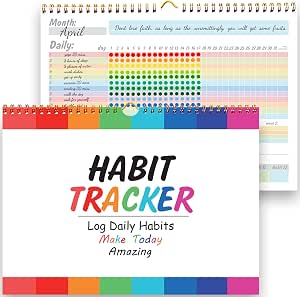



| habit trackers for runner | Format | Binding |
|---|---|---|
| Habit Tracker Calendar | Undated | Twin-wire |
| Sad to Savage 12-Month Habit T | Undated habit tracker | Spiral-bound with hanging hook |
| Lamare Habit Tracker Calendar | Undated notebook | — |
| Habit Tracker Calendar | — | — |
| Habit Tracker Calendar | — | Twin-wire |
| Hadigu Undated 12-Month Habit | Organizer | Spiral |
| Clever Fox Habit Tracker Calen | Day-to-day calendar | — |
| Lamare Habit Tracker Calendar | Organizer | — |
| gisgfim Undated Habit Tracker | Notebook and organizer | Spiral |
| Running Log Journal 2022: 365- | — | — |
| KAICN Daily | Desk or wall calendar | Twin-wire listed; product details also describe binding as unknown |
| Habit Tracker Calendar | Habit tracker planner | Spiral |
More Details on Our Top Picks
Habit Tracker Calendar, Daily Weekly Goal and Habit Tracker Journal, 12 Months Undated Habits Planner with Spiral Binding, 11.7″x8.5″
For runners who want one paper view of training and the routines around it, this undated calendar stands out for its daily, weekly, and monthly tracking. I’d use the daily spaces for runs, mobility, or strength work, then reserve weekly and monthly entries for longer-term consistency goals. Its 11.7-by-8.5-inch format gives those sections room, but makes it less convenient to carry than the more compact Lamare Habit Tracker Calendar and Journal. The flexible start date also suits runners whose plans don’t line up with January. The main limitation is capacity: it supports up to 12 daily, four weekly, and four monthly habits, so runners tracking many training details may run out of room. It is a paper-only tool, with no app sync.
Pros:- Undated layout can start at any point in a training year
- Daily, weekly, and monthly sections support both run-day routines and broader goals
- Twin-wire binding makes the planner easy to open flat
- Large page format provides room to record multiple areas of life
Cons:- Habit capacity is capped at 12 daily, four weekly, and four monthly entries
- 11.7-by-8.5-inch size is less portable than the Lamare notebook
- No digital features or app integration
Best for: Runners who want a roomy, undated paper planner for recording training habits alongside weekly and monthly wellness goals.
Not ideal for: Runners who need a portable log, digital syncing, or space to track more than 12 daily habits and four weekly or monthly habits.
- Size:11.7 x 8.5 inches
- Pages:12
- Binding:Twin-wire
- Material:Premium paper
- Daily habit capacity:Up to 12 habits
- Weekly habit capacity:Up to 4 habits
- Monthly habit capacity:Up to 4 habits
- Format:Undated
Our verdict“Choose this if you want a spacious, flexible paper tracker for running routines and related goals, and don’t need to carry it on runs.”
Sad to Savage 12-Month Habit Tracker Journal
This journal is the most instructional pick here: alongside its 12-month habit tracking, it explains ideas such as habit stacking and the habit loop. For a runner trying to make warm-ups, strength sessions, or recovery routines more consistent, that guidance can help turn a vague intention into a repeatable cue. The affirmations add encouragement, while the hanging hook keeps the tracker visible without taking up desk space. Compared with the Habit Tracker Calendar, Daily Weekly Goal and Habit Tracker Journal, this option puts more emphasis on learning and motivation than on a clearly specified daily-weekly-monthly layout. Its tradeoff is a fixed 12-month tracking span and paper-only format; runners seeking detailed mileage or workout records will need another log.
Pros:- Includes explanations of habit stacking and the habit loop
- Affirmations offer prompts for maintaining motivation
- Spiral binding and hanging hook support visible, accessible placement
- Thick paper is described as no-bleed
Cons:- Tracking is limited to a 12-month period
- No digital integration is listed
- Does not replace a detailed running log for mileage or workout notes
Best for: Runners who are new to habit tracking and want prompts and habit-building explanations to support consistent training routines.
Not ideal for: Runners who need a dedicated mileage and workout log, an app-connected tracker, or tracking beyond the journal’s 12-month span.
- Duration:12 months
- Format:Undated habit tracker
- Binding:Spiral-bound with hanging hook
- Material:Paper
- Dimensions:10 x 9 x 1 inches
- Weight:0.26 kg
- Model number:HT-001
- Brand:Sad to Savage
Our verdict“Pick this if guidance and visible encouragement matter more to you than detailed run-by-run logging.”
Lamare Habit Tracker Calendar and Journal
The Lamare is a good fit for runners who want a habit notebook that can follow their schedule rather than a calendar year. Its undated weekly and monthly layouts make it easy to start with a new training block, and the format can cover workouts, goals, and self-care habits in the same place. The 120 GSM FSC-certified paper is designed to resist ink bleed-through, which helps if you use pens or markers to distinguish easy runs, strength work, and recovery. Compared with the larger 11.7″x8.5″ Habit Tracker Calendar, this 9.8-by-7.8-inch notebook is easier to store and carry, though its listing doesn’t specify daily tracking sections or a habit-capacity limit. That makes it less suited to runners who want a highly granular daily checklist.
Pros:- Undated layout allows flexible start dates
- Weekly and monthly views suit training blocks and longer-term goals
- 120 GSM paper is designed to resist ink bleed-through
- FSC-certified paper
Cons:- Daily tracking sections are not specified
- No stated habit capacity or running-specific workout fields
- No digital features or app integration are listed
Best for: Runners who want an undated, moderately sized notebook for weekly training habits, monthly goals, and recovery routines.
Not ideal for: Runners who need confirmed daily tracking sections, a defined habit capacity, or a running-specific record of mileage and workout details.
- Format:Undated notebook
- Layout:Weekly and monthly
- Cover:Thick cardboard
- Paper:120 GSM, FSC-certified
- Dimensions:9.8 in W x 7.8 in H
- Paper size:21 cm
- Model year:2022
- Unit count:1
Our verdict“Choose the Lamare if you want flexible weekly and monthly habit planning in a smaller format, rather than a detailed daily run log.”
Habit Tracker Calendar – Daily, Weekly & Monthly Habit Tracker Journal
This calendar’s main advantage for runners is how easily it can stay in view: its hanging hole and desk-display option turn habit tracking into a reminder to follow through on runs, mobility, or recovery. The daily, weekly, and monthly sections let you mark immediate actions while keeping an eye on consistency over time. Its 10-by-8-inch size is less imposing than the larger 11.7″x8.5″ Habit Tracker Calendar, though it still needs a wall or desk spot rather than fitting naturally into a running belt or pocket. The 120gsm paper is designed to resist bleed-through, but the product is a paper tracker without app integration. There are also no stickers or hanging accessories included, so runners may need their own supplies to display or personalize it.
Pros:- Daily, weekly, and monthly sections support short- and long-term habits
- Can be hung or displayed on a desk for visibility
- 120gsm paper is described as bleed-resistant
- 10-by-8-inch size is smaller than the 11.7-by-8.5-inch calendar in this roundup
Cons:- No digital integration is included
- Stickers and customization tools are not included
- Hanging may require separate accessories
Best for: Runners who want a paper habit calendar on a wall or desk as a daily cue for training and recovery routines.
Not ideal for: Runners who need a portable tracker, digital syncing, or included accessories for hanging and customizing the calendar.
- Size:10 x 8 inches
- Paper weight:120gsm
- Material:Premium paper
- Tracking sections:Daily, weekly, and monthly
- Display options:Wall hanging or desk display
- Hanging hole:Included
Our verdict“Pick this if keeping your running habits in plain sight matters more than portability or app-based tracking.”
Habit Tracker Calendar – Daily, Weekly & Monthly Habit Journal
This tracker is built around easy visibility: runners can leave it on a desk or hang it where a training routine is hard to miss. The daily, weekly, and monthly sections can accommodate habits such as running, strength work, and stretching, while 120gsm paper is intended to reduce ink bleed-through. Its 8-by-10-inch dimensions give it a different footprint from the 10-by-8-inch Habit Tracker Calendar with Hanging Hole; the best fit depends on the space and orientation you have available. Both are paper-first options without digital tools, and neither replaces a dedicated running log for mileage and workout notes. This model also lacks included stickers or other accessories, and its limited design choices offer less room for personalization.
Pros:- Daily, weekly, and monthly tracking supports varied training habits
- 120gsm paper is described as helping prevent ink bleed
- Twin-wire binding
- Can be placed on a desk or hung for visibility
Cons:- 8-by-10-inch format may not suit small wall or desk spaces
- No stickers or additional accessories are included
- Limited color or design options are specified
Best for: Runners who want a twin-wire habit tracker that can stay accessible on a desk or be displayed on a wall.
Not ideal for: Runners with little wall or desk space, or those who want app syncing, customization accessories, or a detailed run-by-run log.
- Size:8 x 10 inches
- Paper quality:120gsm premium paper
- Binding:Twin-wire
- Material:High-grade materials
- Tracking sections:Daily, weekly, and monthly
- Display options:Desk placement or wall hanging
Our verdict“Choose this if you want a straightforward desk-or-wall habit tracker and have room to keep it visible.”
Hadigu Undated 12-Month Habit Tracker Calendar, A4
The Hadigu A4 is a good fit for runners who want their routine visible at home rather than tucked into a journal. Its wall hanger and spiral binding make monthly check-ins easy to see, while 15 tracking lines leave room for habits such as easy runs, strength work, stretching, and recovery. The undated format lets you begin with your current training cycle, and the notes and idea-cloud pages can hold reminders or goals. Compared with the gisgfim Undated Habit Tracker, Hadigu offers fewer tracking lines per month but adds a dedicated notes page and idea-cloud page. The tradeoff is its relatively short supply of tracking pages: it covers 12 months, and each layout assumes a 31-day month, so runners wanting a longer log or more detailed run-by-run records may outgrow it.
Pros:- Undated monthly pages can start alongside any training plan.
- Wall hanger and spiral binding support visible, convenient checking.
- Heavy paper is described as pen-friendly and resistant to ink bleed.
- Notes and idea-cloud pages provide space for goals and reminders.
Cons:- Only 12 monthly tracking pages are included.
- Each monthly layout is designed for 31 days, which may not suit shorter months.
- The 15 tracking lines may not fit runners monitoring a large set of habits.
Best for: Runners who want a visible wall calendar for a handful of recurring training and recovery habits.
Not ideal for: Runners tracking many metrics or detailed daily workouts, since it has 15 tracking lines per monthly page and only 12 monthly pages.
- Brand:HADIGU
- Format:Organizer
- Calendar duration:12 undated months
- Tracking lines:15 per monthly page
- Paper size:A4 (8.3 × 11.7 in)
- Binding:Spiral
- Wall hanger:Included
- Additional pages:1 lined notes page and 1 idea-cloud page
Our verdict“Choose Hadigu if a visible wall tracker for a focused set of running habits matters more than extensive logging space.”
Clever Fox Habit Tracker Calendar, 24-Month Daily Goal Journal, Black
For runners who want to follow routines across multiple training seasons, the Clever Fox 24-month calendar stands out for its extended run and separate spaces for daily, weekly, and monthly habits. Its capacity—up to 12 daily, 5 weekly, and 5 monthly habits—can accommodate frequent actions such as running, mobility work, and weekly planning alongside monthly goals. The user guide may also help a newer tracker user establish a system rather than simply fill boxes. Compared with the Hadigu A4, Clever Fox offers twice as many monthly pages and more explicitly tiered habit frequencies, but its habit slots are capped. That structure suits a defined routine, not an ever-expanding list of training metrics. The 10 × 8-inch format is also less suited to runners who want a compact pocket log for use on the go.
Pros:- Provides 24 monthly pages for longer-term routine tracking.
- Separates daily, weekly, and monthly habits to match different training rhythms.
- Includes a detailed user guide for setting up a tracking routine.
- 120 gsm paper is designed to resist ink bleed-through.
Cons:- Habit spaces are capped at 12 daily, 5 weekly, and 5 monthly entries.
- The 10 × 8-inch format may be bulky for portable run-day use.
Best for: Runners who want to maintain a set daily, weekly, and monthly routine across two years without dated pages dictating when to start.
Not ideal for: Runners who need more than 12 daily, 5 weekly, or 5 monthly habit slots, or want a small journal to carry on runs.
- Brand:Clever Fox
- Model:CFHC
- Duration:24 months
- Habit tracking capacity:Up to 12 daily, 5 weekly, and 5 monthly habits
- Size:10 × 8 inches
- Paper:120 gsm pearl-white paper
- Format:Day-to-day calendar
- Color:Black
Our verdict“Choose Clever Fox if you want a structured, two-year record of a defined running routine rather than a portable workout log.”
Lamare Habit Tracker Calendar and Journal
The Lamare Habit Tracker Calendar and Journal suits runners who want to review both the week-to-week rhythm and their broader monthly goals. Its undated weekly and monthly layouts let you begin at any point in a training block, while the 120 GSM FSC-certified paper is designed to handle regular writing with less risk of ink showing through. Compared with the Clever Fox 24-Month Calendar, Lamare’s appeal is flexible planning at two time scales rather than a stated two-year duration or a specified number of habit slots. That makes it a less prescriptive option, but also leaves less information about how much tracking space is available. The product details do not specify a running-specific workout log, page count, or binding, so runners wanting mileage fields or a clear long-range page commitment may prefer a more explicitly structured planner.
Pros:- Undated layouts can be started at any point in a training cycle.
- Weekly and monthly views support both routine check-ins and broader goal planning.
- 120 GSM paper is designed to resist ink bleed-through.
- FSC-certified paper is specified.
Cons:- The provided details do not state the number of pages or months covered.
- No specific habit-slot capacity or dedicated running-log fields are listed.
- Binding details are not provided, so its display and portability options are unclear.
Best for: Runners who want undated weekly and monthly views for routines, goals, workouts, and self-care without a fixed start date.
Not ideal for: Runners who need a clearly stated page count, defined habit-slot capacity, or dedicated mileage and workout fields.
- Brand:Lamare
- Material:Paper and cardboard
- Paper weight:120 GSM
- Paper size:9.8 × 7.8 inches
- Item dimensions:7.8 × 9.8 inches
- Format:Organizer
- Layout:Undated weekly and monthly
- Paper certification:FSC-certified
Our verdict“Choose Lamare for flexible weekly and monthly habit planning, but skip it if you need a defined running-log format or documented tracking capacity.”
gisgfim Undated Habit Tracker Calendar and Goal Planner, 14 Pages
The gisgfim Undated Habit Tracker gives runners unusually broad habit-slot capacity for a monthly wall-style planner: up to 10 daily, 10 weekly, and 5 monthly habits, plus space for a monthly intention. That can suit someone tracking running, cross-training, sleep routines, and recovery practices together. Its undated pages allow a flexible start, while the spiral binding and hanging hole make it easy to keep visible. Compared with the Hadigu A4, gisgfim allows more weekly and daily habits, but provides only 14 pages and its large 8.5 × 11.8-inch format is less convenient to carry. The listed 14-month duration offers a longer planning span than Hadigu’s 12 months, though the limited page count means buyers should check whether the layout matches their logging needs before relying on it for detailed training records.
Pros:- Offers up to 10 daily, 10 weekly, and 5 monthly habit spaces.
- Undated format allows a flexible start.
- Includes a monthly intention area for setting a training focus.
- Spiral binding and hanging hole support visible display.
Cons:- The 8.5 × 11.8-inch format may be inconvenient to carry.
- The 14-page total limits space for extended or detailed workout logging.
Best for: Runners who track many daily and weekly routines and want a large-format planner with room for a monthly intention.
Not ideal for: Runners who need a compact training journal or extensive dated run-by-run notes; its format is large and it has 14 pages.
- Brand:gisgfim
- Format:Notebook and organizer
- Calendar type:Undated
- Duration:14 months
- Page count:14
- Habit tracking spaces:10 daily, 10 weekly, and 5 monthly habits
- Paper size:8.5 × 11.8 inches
- Binding:Spiral
- Color:Red
Our verdict“Choose gisgfim if tracking many recurring habits on a visible page matters more than portability or detailed run notes.”
Running Log Journal 2022: 365-Day Workout Diary with Motivational Sayings, Monthly and Daily Calendar, Goals and Habits Tracker
Unlike the general-purpose planners in this group, the Running Log Journal 2022 is explicitly framed around runners: it combines daily workouts with goals, habits, and monthly and daily calendars. That focus makes it the most directly relevant choice here for someone who wants their tracking tied to actual training rather than only checking off general routines. Motivational sayings add encouragement, though they do not replace practical workout fields. Compared with the Lamare Habit Tracker Calendar and Journal, this title signals a stronger emphasis on running workouts, while Lamare specifies undated weekly and monthly layouts and paper details. The key tradeoff is the limited product information: no size, paper, binding, or specific workout fields are provided, and the 2022 label makes its dated usability unclear. I would choose it only after confirming the calendar dates fit your needs.
Pros:- Designed specifically as a running log and workout diary.
- Includes daily and monthly calendars for tracking across different time scales.
- Combines workout tracking with goals and habits.
- Motivational sayings provide prompts alongside the tracking pages.
Cons:- The 2022 title may make its calendar less suitable for current or future use.
- Product details do not specify size, paper, binding, or the exact workout fields.
- The available information does not clarify the scope of its habit-tracking tools.
Best for: Runners seeking a diary explicitly described for daily workouts, goals, and habits, and who can confirm the 2022 calendar format suits them.
Not ideal for: Runners who need an undated planner, known paper and size details, or clearly documented workout fields before buying.
- Title year:2022
- Journal type:365-day workout diary
- Focus:Running log
- Calendar layouts:Monthly and daily
- Tracking:Workouts, goals, and habits
- Additional content:Motivational sayings
Our verdict“Choose this only if you want a running-focused diary and have verified that its 2022 calendar dates work for your intended use.”
KAICN Daily, Weekly & Monthly Habit Tracker Calendar Journal
For runners who want their routine visible between workouts, the KAICN tracker’s hanging hole gives it an advantage over the desk-focused Habit Tracker Calendar, 11.7″x8.5″. Its daily, weekly, and monthly tracking can help connect run-day habits—such as stretching or preparing gear—with broader goals like consistent training. The undated 12-month format also lets a runner begin at any point in a season rather than wait for a calendar year.
The tradeoff is its 7.9 x 10-inch format: it takes less space than the larger spiral planner, but offers a smaller writing area. The product details also conflict on binding, even though twin-wire is listed in the specifications. This is a general habit calendar, not a running log, so it won’t record mileage or route details.
Pros:- Tracks daily, weekly, and monthly routines in one calendar
- Undated 12-month layout can start at any point in a training cycle
- Can be hung on a wall or used on a desk
- 120 gsm paper is described as resistant to ink bleed-through
Cons:- Smaller writing area than the 11.7 x 8.5-inch Habit Tracker Calendar
- Monthly calendar format may not suit runners wanting a dated daily planner
- Binding information is inconsistent across the product details
Best for: Runners who want a compact habit calendar they can hang near a training area and use for routines alongside running
Not ideal for: Runners who need dated daily pages, generous space for notes, or mileage and workout records
- Format:Desk or wall calendar
- Duration:12 months, undated
- Tracking cadence:Daily, weekly, and monthly
- Dimensions:7.9 x 10 inches
- Paper:120 gsm
- Binding:Twin-wire listed; product details also describe binding as unknown
- Hanging hole:Yes
- Item weight:0.15 kg
Our verdict“Choose the KAICN if you want a compact, displayable tracker for running-related routines rather than a detailed training log.”
Habit Tracker Calendar – 12 Months Undated Daily Goal and Habit Tracker, Spiral Bound Planner, 11.7″x8.5″
The standout here is writing room: at 11.7 x 8.5 inches, this spiral-bound planner gives runners more space than the smaller KAICN Daily, Weekly & Monthly Habit Tracker Calendar Journal for marking habits and adding brief notes. Its 12 undated pages support daily, weekly, and monthly tracking, so a runner can build consistency around training, recovery, sleep, or mobility without being tied to a start date.
That flexibility comes with a limit: 12 pages means this is not a year of daily diary entries, and the undated format depends on the owner to keep the routine going. Like the KAICN, it tracks habits rather than running performance; runners seeking mileage, pace, or workout history will need a separate log. Choose this one for a larger page and flexible habit check-ins, not detailed training records.
Pros:- Large 11.7 x 8.5-inch format provides more writing room than the KAICN tracker
- Undated pages allow use to begin at any time
- Supports daily, weekly, and monthly habit tracking
- 120 gsm paper is described as thick and resistant to ink bleed-through
Cons:- Only 12 undated pages, limiting room for ongoing detailed records
- No start dates or built-in schedule to prompt consistent use
- Does not provide running-specific fields such as mileage, pace, or route
Best for: Runners who want a larger-format tracker for several training-support habits and prefer choosing their own start date
Not ideal for: Runners who want a dated daily planner, a long-form training diary, or space for mileage and pace records
- Size:11.7 x 8.5 inches
- Pages:12 undated pages
- Tracking cadence:Daily, weekly, and monthly
- Duration:12 months
- Paper:120 gsm
- Binding:Spiral
- Format:Habit tracker planner
Our verdict“Pick this planner over the smaller KAICN if page space matters more than wall display or running-specific workout records.”

How We Picked
I ranked these trackers by how directly their stated format supports a runner’s routine: logging runs or workouts, setting goals, and recording repeatable habits such as strength sessions, mobility, and recovery. I also weighed the practical details available in the product titles, including dated versus undated use, stated tracking duration, page count, and physical format. A running-specific diary earns an advantage for training context; a general habit calendar can still rank well when flexibility or a longer planning horizon better serves runners who track habits beyond mileage.
The ranking reflects the information supplied for these products, not hands-on testing or claims about unlisted paper quality, prompts, or layouts. Several entries have nearly identical names, and one Lamare title appears twice, so I treat exact edition and format as important purchase checks rather than assuming the listings are interchangeable. Products with a clear use case rank ahead of options whose titles reveal little about their runner-specific value. A general tracker can be a better match than a running log for someone focused on consistency across training and recovery, but it offers less explicit running context.
| habit trackers for runner | Binding |
|---|---|
| Habit Tracker Calendar | Twin-wire |
| Sad to Savage 12-Month Habit T | Spiral-bound with hanging hook |
| Lamare Habit Tracker Calendar | — |
| Habit Tracker Calendar | — |
| Habit Tracker Calendar | Twin-wire |
| Hadigu Undated 12-Month Habit | Spiral |
| Clever Fox Habit Tracker Calen | — |
| Lamare Habit Tracker Calendar | — |
| gisgfim Undated Habit Tracker | Spiral |
| Running Log Journal 2022: 365- | — |
| KAICN Daily | Twin-wire listed; product details also describe binding as unknown |
| Habit Tracker Calendar | Spiral |
Factors to Consider When Choosing Habit Trackers For Runners
Before choosing a journal, decide what you want the habit tracker to change: missed runs, inconsistent cross-training, or habits that affect recovery. A suitable format should make the desired behavior easy to record and review, not simply provide more boxes to fill.
Choose Running Detail or Broader Habit Tracking
A running-focused diary is useful if you want your running routine to be the main subject of the journal. A general habit calendar makes more sense when your training plan depends on several linked behaviors, such as sleep, mobility, hydration, and strength work. A common mistake is buying a tracker with many habit columns when you only need to mark whether you ran. The reverse problem is choosing a simple grid when you need space to record workout context or goals. Decide which information you will actually review each week, then prioritize a format that makes that information visible.
Match the Time Span to Your Training Cycle
A year-long journal can connect daily habits to a full season, while a shorter format lets you try a tracking system without making it a permanent commitment. Undated calendars can begin with a new training block or a return from time off, which avoids wasting pages when your schedule shifts. A long horizon is not automatically more useful: if the layout becomes a chore after a few weeks, extra months will not help. Runners following multiple seasons may value continuity, while those testing a new routine may prefer a smaller commitment. Check whether the stated duration refers to calendar months, pages, or another measure before buying.
Be Realistic About Portability and Writing Space
A large planner can give you room for notes, but it may be awkward to carry in a running belt or bring on a trip. A compact tracker is easier to keep nearby, though small pages can limit the detail you can record. Consider where you will fill it in: at home after a run, at work during a break, or while traveling. Runners who log only a quick completion mark can usually trade space for portability. If you want to add workout notes, recovery observations, or weekly reflections, prioritize usable writing area rather than the smallest footprint.
Set a Sustainable Number of Habits
Tracking too many behaviors can make a journal feel like another training obligation. Start with a few actions that support your current goal, such as completing planned runs and one recovery habit, then add more only if the routine sticks. A missed checkbox should provide information, not become a reason to abandon the tracker. Choose labels you can answer consistently, such as “mobility session” rather than a vague target like “be healthier.” The best tracker is not the one that records the most; it is the one you will keep using during busy weeks and recovery periods.
Check the Exact Edition Before Ordering
Several products in this roundup have similar or repeated listing names, so a title alone may not distinguish their layouts or physical dimensions. Confirm the exact edition, page count, duration, and binding in the listing details before choosing. This matters especially when replacing a journal you already own or selecting a format for a specific training block. Do not assume that two journals with near-identical names have the same interior. When details are unclear, favor the listing that states the format and tracking period plainly.
Frequently Asked Questions
Should I choose a running log or a general habit tracker?
Choose a running log if you want the journal to focus on workouts, goals, and running consistency. Pick a general habit tracker if your main challenge is keeping several supporting routines on course, such as strength work, mobility, or rest habits. The Running Log Journal 2022 is the most explicitly running-centered title in this roundup, while the calendar-style options offer broader habit framing. Before deciding, list the information you want to review at the end of each week. If that list is mostly about training sessions, a running log is the closer fit.
Is an undated tracker useful if I follow a race training plan?
Yes, an undated tracker can start alongside a race block, even if that block begins midyear. It can also be easier to resume after an illness, injury break, or schedule change because unused calendar dates do not define your progress. A dated plan may still be preferable if you want fixed weeks aligned to a coach’s schedule. Check that the tracker has enough pages for the full block and any review notes you want to keep. Treat the journal as a record of habits, not a substitute for a structured training plan.
Do I need a full-year tracker, or is a short format enough?
A full-year tracker is helpful if you want to compare routines across a season or maintain one record for a long training cycle. A short format can be a better choice when you are unsure whether daily tracking suits you or want to test a small set of habits first. In this roundup, the Clever Fox title specifies 24 months, while gisgfim specifies 14 pages, illustrating how different the commitment can be. Confirm what the stated duration means before treating it as a usable time span. Choose based on how long you expect to review the same habits, not on the largest number alone.
Will a large spiral-bound tracker be practical for logging runs on the go?
A large spiral-bound journal is generally better suited to a desk or home routine than to carrying during a run. Its extra writing area may help if you complete detailed notes after training, but it can add bulk to a running bag. For quick check-ins away from home, a smaller format may be easier to keep with your everyday items. Decide whether you need to write during the workout or can record it afterward. Most runners can separate the activity itself from the habit log and fill in the journal after the run.
How can I choose between two trackers with nearly identical names?
Compare the exact listing details rather than relying on a similar title or brand name. Check dimensions, binding, stated duration, page count, and whether the tracker is undated. This roundup includes repeated or closely matching names, including two Lamare entries, so the title by itself may not identify the version you want. Look for interior-page images or product specifications if the listing provides them. If key details remain unclear, select the option with the most clearly stated format rather than assuming the products are identical.
Conclusion
For the best overall fit, I recommend the Running Log Journal 2022 to runners who want a journal explicitly framed around running, workouts, goals, and habits. For long-range tracking, choose Clever Fox if its stated 24-month span matches your routine; for a short, compact commitment, gisgfim’s 14-page format is the more natural fit. Beginners may prefer an undated general calendar so they can start with a few simple habits and adjust their routine without a fixed start date. Runners who want more writing room can compare the large 11.7-by-8.5-inch spiral-bound options, while those focused on training context should prioritize the running log. Before ordering, verify the exact edition and layout, especially for titles that appear more than once or closely resemble another listing.