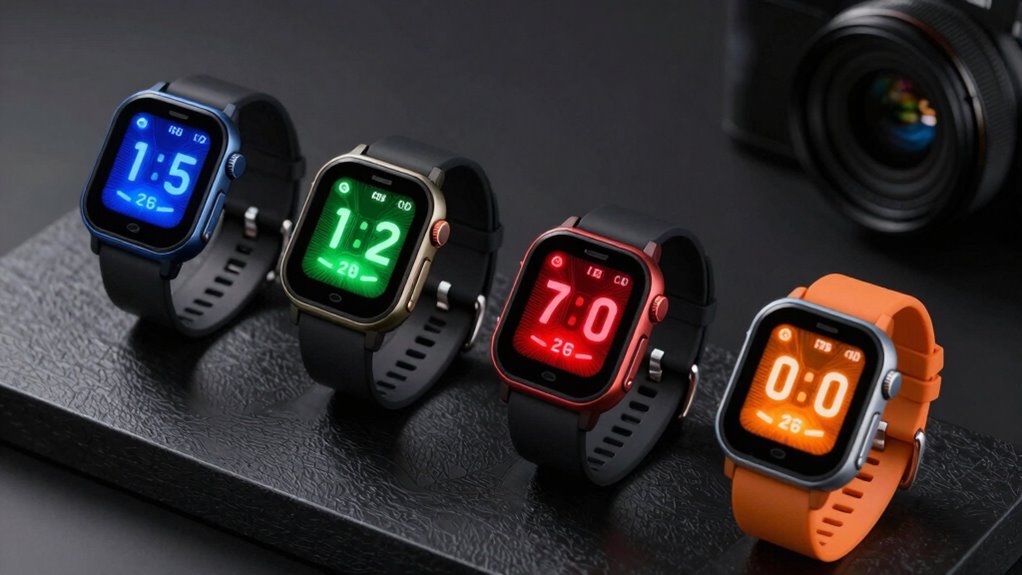

When a run takes an unexpected turn, a watch that can help you find your way back matters more than a long list of general fitness features. I rank the Amazfit Cheetah 2 Pro first because the supplied details explicitly include offline maps and automatic rerouting. The Amazfit Active 3 is a simpler map-capable alternative, while the COROS PACE 3 stands out for light weight, dual-frequency GPS, and long GPS battery life.

Get workout gear delivered free with Prime
- Fast, free delivery on millions of items
- Prime Video, Amazon Music and more included
- Member-only deals all year
The main tradeoff is that route guidance is not equally documented across these five watches. Some descriptions name rerouting directly; others mention route planning, offline maps, or GPS without confirming that the watch can recalculate a route after a wrong turn. I separate those capabilities rather than treating them as interchangeable. My ranking favors clear rerouting evidence first, then map support, GPS and battery characteristics, and the watch’s usefulness for runners who do not need navigation on every outing.
Complete the kit



Key Takeaways
- Amazfit Cheetah 2 Pro is the clearest rerouting pick here: its listed features expressly include offline maps and automatic rerouting.
- Amazfit Active 3 offers offline map support, but the supplied description does not explicitly promise automatic route recalculation.
- COROS PACE 3 is the lightest documented option at 30 g and lists dual-frequency GPS, though rerouting capability is not specified.
- Garmin Forerunner 165 adds a bright AMOLED display and wrist-based heart rate, but its listed features do not confirm maps or rerouting.
- Garmin Forerunner 55 suits runners who prioritize training guidance and battery life over on-watch route recovery.
| Amazfit Cheetah 2 Pro Smart Watch, 1.32″ AMOLED Sapphire Glass, iOS/Android |  | Best Overall for Explicit Rerouting | Display: 1.32-inch AMOLED | Case and glass: Grade 5 titanium and sapphire glass | General battery life: Up to 17 days | VIEW ON AMAZON | See Our Full Breakdown |
| Amazfit Active 3 Smart Watch, 1.32″ AMOLED, Sapphire Glass, GPS, iOS/Android |  | Best for Offline Maps and Everyday Use | Display: 1.32-inch AMOLED | Glass: Sapphire | Frame: Stainless steel | VIEW ON AMAZON | See Our Full Breakdown |
| COROS PACE 3 GPS Sport Watch, Lightweight Running Watch – Chalk Nylon |  | Best Lightweight GPS Companion | Weight: 30 g | Display: 1.2-inch transflective touchscreen | GPS battery life: Up to 38 hours | VIEW ON AMAZON | See Our Full Breakdown |
| Garmin Forerunner 165 Running Smartwatch, 43mm, Whitestone |  | Best for Training Feedback and a Bright Display | Case size: 43 mm | Display: AMOLED touchscreen | Smartwatch battery life: Up to 11 days | VIEW ON AMAZON | See Our Full Breakdown |
| Garmin Forerunner 55 GPS Running Smartwatch, Black |  | Best for Basic Running Plans | Display size: 1.04 inches | Activity profiles: 17 | Satellite systems: GPS, GLONASS, Galileo | VIEW ON AMAZON | See Our Full Breakdown |
| running watch for route rerouting | Display |
|---|---|
| Amazfit Cheetah 2 Pro Smart Wa | 1.32-inch AMOLED |
| Amazfit Active 3 Smart Watch | 1.32-inch AMOLED |
| COROS PACE 3 GPS Sport Watch | 1.2-inch transflective touchscreen |
| Garmin Forerunner 165 Running | AMOLED touchscreen |
| Garmin Forerunner 55 GPS Runni | — |
More Details on Our Top Picks
Amazfit Cheetah 2 Pro Smart Watch, 1.32″ AMOLED Sapphire Glass, iOS/Android
The Cheetah 2 Pro earns the top spot for one direct reason: its feature list names both offline maps and automatic rerouting. Among these five descriptions, that is the clearest match for a runner who wants help after missing a turn, rather than a watch that merely records a GPS track. Compared with the Active 3, it has the stronger stated navigation case because rerouting is explicitly listed, not just offline map support.
Its Grade 5 titanium case and sapphire glass also suit frequent outdoor use, and the stated 29 hours in accurate GPS mode gives a concrete endurance figure for long outings. The 1.32-inch AMOLED screen is larger than the Forerunner 55’s 1.04-inch display, which may make map viewing more comfortable, although the supplied details do not describe map legibility or route prompts in practice. Up to 17 days of general battery life is useful between charges, but it should not be confused with the shorter GPS-mode figure.
This is the most navigation-focused pick in the group, yet it is not automatically the best fit for every runner. The description frames it for serious marathon training, and the mix of mapping, health tracking, and training features could be more than a casual runner needs. I would also verify the exact map and rerouting behavior for the intended region before buying. Unlike the Forerunner 165, its listed advantages do not center on features such as Garmin Pay or incident detection. Choose it for the clearest stated rerouting capability, not for a broad smartwatch feature set.
Pros:- Automatic rerouting is explicitly listed alongside offline maps.
- Sapphire glass and a Grade 5 titanium case are built for regular outdoor wear.
- Lists up to 29 hours in accurate GPS mode.
- Includes a 1.32-inch AMOLED display and a dual-color flashlight.
Cons:- Its feature set may feel complex for runners who only need basic pace and distance tracking.
- The supplied details do not explain map coverage, turn prompts, or how rerouting works.
- Smartwatch capabilities are described as more limited than its running and navigation functions.
Best for: Runners who regularly explore unfamiliar routes and want the clearest stated combination of offline maps and automatic rerouting.
Not ideal for: Casual runners seeking a simple training watch, or anyone who wants navigation details confirmed for a particular region before purchase.
- Display:1.32-inch AMOLED
- Case and glass:Grade 5 titanium and sapphire glass
- General battery life:Up to 17 days
- Accurate GPS battery life:29 hours
- Navigation:Offline maps and automatic rerouting listed
- Health monitoring:Heart rate, blood oxygen, sleep, and stress
- Additional feature:Dual-color flashlight
Our verdict“I rank the Cheetah 2 Pro first because it is the only listed watch here with automatic rerouting explicitly stated, though buyers should check local map support.”
Amazfit Active 3 Smart Watch, 1.32″ AMOLED, Sapphire Glass, GPS, iOS/Android
The Active 3 takes second place because its description confirms offline map support, a useful starting point for route following when a phone connection is inconvenient. It also includes built-in GPS and multiple satellite systems, plus structured training and coaching. Compared with the Cheetah 2 Pro, however, its navigation promise is less specific: the supplied details do not explicitly name automatic rerouting. If recalculating a missed turn is the deciding feature, the Cheetah is the safer choice based on the information available.
For daily wear, the Active 3 makes a more balanced pitch. Its 1.32-inch AMOLED display, sapphire glass, stainless steel frame, and stated battery life of up to 12 days combine durability with familiar smartwatch functions. Bluetooth calls and Android voice commands add a connected-use angle that the more running-centered Cheetah description does not emphasize. Those extras can make the watch more appealing off the route, though Bluetooth call support may be more limited on iOS.
The tradeoff is ambiguity around navigation depth. Offline maps do not by themselves confirm turn-by-turn instructions or automatic recovery after leaving a route, so I would not assume the Active 3 matches the Cheetah 2 Pro for rerouting. It is also a less clearly documented choice than the COROS PACE 3 for GPS battery endurance, since the description gives general battery life but no GPS-mode duration. This is a good fit for runners who want maps alongside everyday smartwatch functions, provided they check the route-guidance details that matter to them.
Pros:- Offline map support is listed for route use.
- Sapphire glass and a stainless steel frame add a durable build.
- Up to 12 days of stated battery life.
- Supports Bluetooth calls and Android voice commands.
Cons:- Automatic rerouting is not explicitly listed in the supplied details.
- Bluetooth calling and voice features may be more limited on iOS.
- No GPS-mode battery estimate is provided.
Best for: Runners who want offline map support, a durable AMOLED watch, and everyday connected features in one device.
Not ideal for: Runners who require confirmed automatic rerouting or need a clearly stated GPS-mode battery duration.
- Display:1.32-inch AMOLED
- Glass:Sapphire
- Frame:Stainless steel
- GPS:Built-in GPS with multiple satellite systems
- Maps:Offline map support
- Battery life:Up to 12 days
- Connectivity:Bluetooth calls; Android voice commands
- Compatibility:iOS and Android
Our verdict“I would choose the Active 3 over the training-first Garmins for stated offline maps and daily smartwatch use, but not over the Cheetah when confirmed rerouting is the priority.”
COROS PACE 3 GPS Sport Watch, Lightweight Running Watch – Chalk Nylon
The COROS PACE 3 is the strongest choice here for runners who value a light, low-profile watch and dependable GPS tracking, rather than documented automatic rerouting. At 30 g and 11.7 mm thick, it is substantially described around comfort, while its dual-frequency GPS is positioned for accurate tracking in urban environments. Route planning is listed, but the supplied details do not confirm offline maps or automatic rerouting. That puts it behind both Amazfit picks for the specific job of recovering from a wrong turn.
Its battery figures are a clear advantage: up to 38 hours of GPS tracking and 24 days of daily use are listed. The GPS runtime is longer than the Cheetah 2 Pro’s stated 29 hours in accurate GPS mode, although those figures use different descriptions of GPS modes and should not be treated as a controlled comparison. For long training sessions or multi-day activities, the PACE 3 gives a useful stated endurance reference without the Cheetah’s titanium-and-sapphire positioning.
The 1.2-inch transflective touchscreen is a different display choice from the AMOLED screens on the Amazfit models and Forerunner 165. Buyers who want a bright, saturated screen may prefer those alternatives; runners prioritizing a slim design and battery life may favor COROS. The supplied description does not list health metrics, so I would not select it over the Forerunner 165 for wrist-based heart-rate tracking. Its role is a lightweight GPS sport watch with route planning, not the best-supported rerouting watch in this lineup.
Pros:- Lightweight 30 g design with a slim 11.7 mm profile.
- Dual-frequency GPS is listed for accurate tracking in urban areas.
- Up to 38 hours of GPS tracking and 24 days of daily use are stated.
- Route planning and multiple activity modes support varied training.
Cons:- Automatic rerouting and offline maps are not confirmed in the supplied details.
- The description does not specify heart-rate monitoring or other health metrics.
- The listed configuration is Chalk Nylon, with limited color information.
Best for: Runners who prioritize low weight, dual-frequency GPS, and long stated GPS runtime over confirmed automatic rerouting.
Not ideal for: Runners who need offline maps or automatic route recalculation clearly confirmed before purchase, or who want listed wrist-based health metrics.
- Weight:30 g
- Display:1.2-inch transflective touchscreen
- GPS battery life:Up to 38 hours
- Daily battery life:Up to 24 days
- GPS:Dual-frequency
- Thickness:11.7 mm
- Band:Nylon
- Navigation:Route planning listed; rerouting not specified
Our verdict“The PACE 3 is my lightweight GPS pick, but its route-planning mention is not enough to place it ahead of watches with stated map support.”
Garmin Forerunner 165 Running Smartwatch, 43mm, Whitestone
The Forerunner 165 ranks ahead of the Forerunner 55 for runners who want a more modern display and a broader set of listed training and everyday features. Its AMOLED touchscreen is a sharper visual approach than the Forerunner 55’s small 1.04-inch display, and it adds wrist-based heart rate, incident detection, Garmin Pay, and smart notifications. But none of the supplied features confirms offline maps, route planning, or automatic rerouting. For this roundup, those omissions matter more than its broader smartwatch specification.
Garmin lists more than 25 activity profiles, including running, cycling, HIIT, and strength, compared with 17 built-in profiles for the Forerunner 55. That makes the 165 the more versatile training companion of the two, and its personalized workout suggestions may appeal to runners who follow structured plans. Battery life is stated as up to 11 days in smartwatch mode and 19 hours in GPS mode. The GPS figure is shorter than the PACE 3’s listed 38 hours, though the watches’ mode definitions may differ.
For navigation-led buying, the Cheetah 2 Pro is a clearer pick because it explicitly names rerouting, while the Active 3 at least names offline maps. The Forerunner 165 is better suited to someone who wants an AMOLED running watch with training and health functions and does not rely on on-watch route recovery. Some safety features require a smartphone, and the fixed 43 mm size may not suit every wrist. I would not pay for its broader feature mix expecting map navigation that the supplied description does not promise.
Pros:- Bright AMOLED touchscreen provides a more modern display than the Forerunner 55.
- Wrist-based heart rate and more than 25 activity profiles are listed.
- Includes personalized workout suggestions, smart notifications, and Garmin Pay.
- Lists up to 19 hours of GPS-mode battery life.
Cons:- Offline maps and automatic rerouting are not specified.
- Some safety features require a connected smartphone.
- The 43 mm case size may not suit every wrist.
Best for: Runners who want a bright AMOLED display, wrist-based heart rate, varied activity profiles, and training prompts.
Not ideal for: Runners choosing primarily for offline maps or automatic rerouting, since neither capability is listed in the supplied details.
- Case size:43 mm
- Display:AMOLED touchscreen
- Smartwatch battery life:Up to 11 days
- GPS battery life:Up to 19 hours
- Positioning:Built-in GPS
- Activity profiles:More than 25
- Listed features:Wrist-based heart rate, incident detection, Garmin Pay, notifications
- Route rerouting:Not specified in the supplied details
Our verdict“I recommend the Forerunner 165 over the Forerunner 55 for display and training breadth, but neither is my first choice for documented route rerouting.”
Garmin Forerunner 55 GPS Running Smartwatch, Black
The Forerunner 55 is the simplest, most training-centered option in this ranking, with personalized suggestions, free training plans, and 17 activity profiles. It has multi-satellite GPS support for GPS, GLONASS, and Galileo, but its supplied feature list does not mention offline maps, route planning, or automatic rerouting. That makes it a weaker match than either Amazfit for route recovery, and a less capable navigation choice than a buyer might expect from a GPS watch.
Its appeal is straightforward: runners who mostly follow familiar routes can focus on training guidance and activity tracking instead of map features they may rarely use. Compared with the Forerunner 165, the Forerunner 55 has a smaller 1.04-inch display and fewer listed profiles, while the 165 adds an AMOLED screen, wrist-based heart rate, and more smartwatch functions. The 55 description does cite extended battery life, but it does not provide an exact duration, so I cannot compare its runtime directly with the specific GPS figures for COROS and the Cheetah 2 Pro.
This watch makes the most sense when route rerouting is not the real requirement. If a runner wants a low-complexity Garmin for plans, basic tracking, and varied workouts, it has a clear role. If the goal is finding a way back after leaving a planned route, the Cheetah 2 Pro is a substantially better documented match, and the Active 3 at least lists offline maps. The small screen is another limitation for viewing route information, and limited smartwatch features may frustrate buyers who want an all-purpose connected device.
Pros:- Personalized training suggestions and free training plans are listed.
- Supports GPS, GLONASS, and Galileo satellite systems.
- Offers 17 built-in activity profiles.
- The description cites extended battery life.
Cons:- Offline maps, route planning, and automatic rerouting are not specified.
- The 1.04-inch display is smaller than those on the other listed AMOLED options.
- Smartwatch features beyond fitness tracking are limited, and no exact battery duration is supplied.
Best for: Runners following familiar routes who value guided training plans and multi-satellite GPS over map navigation.
Not ideal for: Runners who want on-watch route recovery, offline maps, a large display, or a broad smartwatch feature set.
- Display size:1.04 inches
- Activity profiles:17
- Satellite systems:GPS, GLONASS, Galileo
- Training:Personalized suggestions and free training plans
- Tracking:All-day activity tracking
- Battery life:Extended battery life stated; duration not specified
- Included:Charging cable and documentation
- Route rerouting:Not specified in the supplied details
Our verdict“I would choose the Forerunner 55 for training structure on familiar routes, not as a watch for rerouting after a missed turn.”

How We Picked
I ranked these watches around the specific problem in the title: following a running route and recovering when a turn is missed. I gave the most weight to features that directly address that problem. Automatic rerouting is stronger evidence than route planning alone, and offline maps are useful only when the product description says they are available on the watch.
Next, I compared the details that shape real route-following decisions: GPS capabilities, stated GPS battery life, display type and size, and whether the watch seems aimed at a runner who wants navigation or primarily wants training support. I also considered fit and everyday practicality, since a heavy or inconvenient watch can be a poor match for routine runs even if its navigation is capable.
The supplied product information does not confirm turn-by-turn guidance, map coverage, route-file compatibility, or automatic rerouting for every model. I do not infer those capabilities from the presence of GPS. That distinction affects the order: the Cheetah 2 Pro ranks first for its explicit rerouting feature, while the Active 3 follows for stated offline map support. COROS and Garmin options rank lower for this particular use because their supplied descriptions emphasize GPS or training without clearly listing rerouting. Those watches may still suit runners whose priority is different, but buyers should verify navigation behavior before relying on them for unfamiliar routes.
Factors to Consider When Choosing Running Watch For Route Rerouting
For route rerouting, I would start by separating three features that product listings can blur together: GPS tracking, route planning, and automatic rerouting. GPS tracking records where you go. Route planning suggests or loads a course. Automatic rerouting means the watch can respond when you leave that course; offline maps can make that guidance available without depending on a live connection, but map support alone does not prove that the watch recalculates a route.
Look for explicit rerouting language
If a watch must guide you after a wrong turn, prioritize a description that actually says automatic rerouting. In this group, that wording appears for the Amazfit Cheetah 2 Pro. The Active 3 lists offline maps, but not automatic recalculation, while COROS PACE 3 lists route planning without confirming rerouting. The Garmin descriptions focus on running and training features and do not specify maps or route recovery. I would verify the feature in the maker’s current documentation before relying on any watch for unfamiliar trails or city routes.
Treat offline maps and route planning as separate benefits
Offline maps can be valuable when a run takes place where phone reception is unreliable, but they may not tell you whether a watch can create or recalculate a route. Route planning can help prepare a course, yet it is not the same as directions when you deviate. The Cheetah 2 Pro lists both offline maps and automatic rerouting, making its description the most complete here. The Active 3 lists offline map support, which is promising for map use but leaves the recalculation question open.
Match GPS endurance to the routes you run
Long runs and extended outings make GPS-mode battery life more relevant than general smartwatch battery life. The PACE 3 lists up to 38 hours of GPS tracking, and the Cheetah 2 Pro lists 29 hours in accurate GPS mode. The Forerunner 165 lists up to 19 hours in GPS mode. These figures are reported in different terms, so I would check the exact tracking mode that matches your use rather than treating them as perfectly comparable tests. The Forerunner 55 description says battery life is extended but gives no duration.
Choose a display and fit that suit route checks
A route watch needs to be comfortable enough to wear and readable enough for quick checks. The Forerunner 55’s 1.04-inch display is the smallest stated screen here; the COROS PACE 3 lists a 1.2-inch transflective touchscreen, while both Amazfit models list 1.32-inch AMOLED displays. The Forerunner 165 also offers an AMOLED touchscreen. Larger displays may make information easier to view, but the supplied details do not establish map readability in real conditions. COROS is the clearest light-fit option at 30 g.
Buy only the training features you will use
Navigation is the main filter, but training features can break a tie. The Forerunner 55 emphasizes plans and personalized suggestions, while the Forerunner 165 adds a brighter display, heart-rate monitoring, and more than 25 activity profiles. COROS offers multiple sport modes with long GPS endurance, and the Amazfit watches pair route features with health tracking. I would avoid paying attention to a long feature list unless it supports your actual routine: a runner who wants rerouting may gain more from confirmed map behavior than from extra activity modes.
Check phone and regional requirements
Before choosing a map-capable watch, confirm that its maps cover the area where you run and that the route features work in the way you expect. Also check which features need a phone connection. The Active 3 lists Bluetooth calls and Android voice commands, with possible limits on iOS; the Forerunner 165 notes that some safety features require a smartphone. Product descriptions here do not provide detailed regional map coverage or a full account of route-file and phone requirements, so those details deserve a direct check before purchase.
Frequently Asked Questions
Which watch in this roundup explicitly lists automatic rerouting?
The Amazfit Cheetah 2 Pro is the only watch in this comparison whose supplied description explicitly lists automatic rerouting. It also lists offline maps, making it the clearest match for a runner who wants the watch to help after leaving a planned route. I would still check map availability and the exact guidance behavior for the area and routes you intend to use.
Does offline map support mean a watch will reroute me?
No. Offline maps indicate that map data can be available on the watch without relying on a live connection, but they do not by themselves confirm automatic route recalculation or turn-by-turn prompts. The Amazfit Active 3 lists offline map support, while automatic rerouting is not specified in its supplied details. If recovering from a wrong turn is essential, look for rerouting named directly and verify how it works.
Which option has the longest stated GPS battery life?
The COROS PACE 3 lists up to 38 hours of GPS tracking, the longest specific GPS figure among these product details. The Cheetah 2 Pro lists 29 hours in accurate GPS mode, and the Forerunner 165 lists up to 19 hours in GPS mode. Since the descriptions use different mode labels, I would confirm the relevant settings before comparing endurance for a particular run.
Are the Garmin Forerunner 55 or 165 suitable for route rerouting?
Both include GPS, but the supplied descriptions do not confirm offline maps, route planning, or automatic rerouting for either Garmin. The Forerunner 55 is better framed around training plans and basic running support; the Forerunner 165 adds an AMOLED display, wrist-based heart rate, and more activity profiles. I would choose one for those training benefits, not assume it will provide route recovery without checking current Garmin feature details.
What should I verify before relying on a watch on unfamiliar routes?
Check whether the watch supports the specific guidance you need: offline maps, route loading or planning, turn prompts, and automatic rerouting are distinct functions. Confirm that maps cover your running area, learn whether navigation requires a phone, and compare GPS-mode battery life with your longest outing. For the watches in this roundup, the supplied descriptions leave some of those details unspecified, so I would confirm them before depending on the watch away from familiar routes.
Conclusion
For runners who make route recovery the deciding factor, I recommend the Amazfit Cheetah 2 Pro: it is the clearest pick because automatic rerouting and offline maps are both listed. If you want offline map support with a more everyday smartwatch emphasis, the Amazfit Active 3 is a reasonable alternative, but confirm whether its guidance can recalculate after a missed turn. For runners who care more about a lightweight watch and long GPS sessions than confirmed rerouting, the COROS PACE 3 stands out. Choose the Forerunner 165 for its AMOLED screen and broader training features, or the Forerunner 55 for plans and straightforward running support on familiar routes. I would not buy any model here for route rerouting unless its map coverage and exact guidance behavior meet the needs of the places you run.
Halloween Picks

Pumpkin Halloween Fog Machine with 12-Color LED Lights, Bluetooth Speaker, and Remote

JOYIN 5-Foot Halloween Animatronic Drinking Skeleton

Spirit Halloween 54-Inch Sitting Scarecrow Animatronic
As an affiliate, we earn on qualifying purchases.