For runners who want maps on their wrist, the Amazfit Active Max is the clearest match in this group because its product details specifically list offline map downloads and 4GB of storage. The Garmin Forerunner 570 models are stronger choices for structured training and compact fit, while the Forerunner 165 offers a simpler running-focused option with GPS and training guidance. The key tradeoff is that GPS tracking is not the same as on-watch mapping: several watches here record routes but the supplied details do not confirm downloadable maps or turn-by-turn navigation.

Get workout gear delivered free with Prime
- Fast, free delivery on millions of items
- Prime Video, Amazon Music and more included
- Member-only deals all year
I rank these watches by how convincingly they serve a runner choosing around maps, then by training usefulness, controls, battery claims, and fit. If offline route viewing is nonnegotiable, I would start with the Active Max and verify map coverage and navigation behavior before buying. If your priority is following workouts and recording familiar routes, the Garmin options make more sense, even though their provided specifications leave map support unclear.
Complete the kit


Key Takeaways
- Amazfit Active Max is the only listing here that explicitly names offline map downloads; confirm the map region and whether routes can be followed on the watch.
- The Forerunner 570 listings emphasize training tools and a 42mm case, but their supplied details do not confirm offline maps.
- Forerunner 165 has built-in GPS and adaptive guidance, yet those features alone do not establish that it displays downloadable maps.
- Forerunner 55 offers long stated battery life and basic GPS tracking, but its small screen and unsupported on-device courses make it a weak map pick.
- Choose according to the job: offline maps point toward Amazfit, structured training toward a Forerunner 570, and straightforward running toward the Forerunner 165.
| Amazfit Active Max Smart Watch, 1.5″ AMOLED Display, GPS, iOS/Android |  | Best for offline-map potential | Display: 1.5-inch AMOLED | GPS: Built-in GPS with multiple satellite support | Mapping: Offline map download listed | VIEW ON AMAZON | See Our Full Breakdown |
| Garmin Forerunner 570, 42mm, Aluminum, Bone/Mango |  | Best compact training companion | Display: AMOLED touchscreen | Case size: 42mm | Bezel: Aluminum | VIEW ON AMAZON | See Our Full Breakdown |
| Garmin Forerunner 165 GPS Running Smartwatch, 43 mm, Black |  | Best entry point for everyday run tracking | Display: AMOLED touchscreen | Case size: 43mm | GPS: Built-in GPS | VIEW ON AMAZON | See Our Full Breakdown |
| Garmin Forerunner 570, 42mm, Aluminum, Whitestone/Cloud Blue |  | Best for training features in a compact package | Display: AMOLED touchscreen | Case size: 42mm | Bezel: Aluminum | VIEW ON AMAZON | See Our Full Breakdown |
| Garmin Forerunner 55 GPS Running Watch – Daily Suggested Workouts, 2‑Week Battery, Aqua | 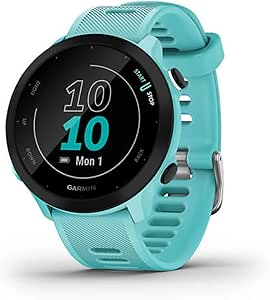 | Best simple GPS watch, weakest map fit | Screen: 1.04 inches | Resolution: 480 x 272 pixels | GPS: GPS | VIEW ON AMAZON | See Our Full Breakdown |
| running watches with mapping feature | Battery life | Display | GPS | Storage |
|---|---|---|---|---|
| Amazfit Active Max Smart Watch | Up to 25 days | 1.5-inch AMOLED | Built-in GPS with multiple satellite support | 4GB |
| Garmin Forerunner 570 | Up to 10 days smartwatch; 18 hours GPS | AMOLED touchscreen | — | — |
| Garmin Forerunner 165 GPS Runn | Up to 11 days smartwatch; 19 hours GPS | AMOLED touchscreen | Built-in GPS | 4GB |
| Garmin Forerunner 570 | Up to 10 days smartwatch; 18 hours GPS | AMOLED touchscreen | — | — |
| Garmin Forerunner 55 GPS Runni | Up to 2 weeks smartwatch; 20 hours GPS | — | GPS | 32MB |
More Details on Our Top Picks
Amazfit Active Max Smart Watch, 1.5″ AMOLED Display, GPS, iOS/Android
The Amazfit Active Max earns the lead because it is the only watch in this lineup whose supplied description explicitly calls out offline map downloads. Its 4GB storage gives that feature practical context, and the large 1.5-inch AMOLED screen should make route information easier to read than on the Forerunner 55’s 1.04-inch display. For a buyer searching specifically for a running watch with maps, that evidence matters more than a generic built-in GPS claim.
There is still a verification step: the listing does not spell out map coverage, route creation, turn-by-turn prompts, or how maps are transferred. I would confirm those points before treating it as a full navigation watch. Its advertised battery life of up to 25 days is also a smartwatch-mode figure in the supplied details, not a promise of that runtime with GPS and maps active. Compared with the Garmin Forerunner 570, the Active Max makes the more direct map case; the Garmin entries offer clearer training and running credentials but no confirmed map downloads in their provided descriptions.
The tradeoff is a broader smartwatch feature set and an interface that may take more learning. Some calls and messaging features rely on a paired phone, and 50-meter water resistance is not a reason to treat it as a specialist aquatic watch. I would pick it when offline map support is the priority, but choose a Garmin when established running plans and training metrics matter more than the map claim.
Pros:- Offline map downloads are explicitly listed.
- Large 1.5-inch AMOLED screen suits viewing route information.
- 4GB storage is listed for music and maps.
- Long stated smartwatch battery life and multiple-sport support.
Cons:- Map coverage and turn-by-turn behavior are not detailed in the supplied information.
- Some calling and messaging functions depend on a smartphone.
- The interface may feel complex, and GPS/map use may reduce the stated smartwatch runtime.
Best for: Runners who want a large display and explicit offline-map support, and who are prepared to check map coverage and route-guidance details before purchase.
Not ideal for: Runners who need clearly documented turn-by-turn course guidance, or who prefer a straightforward, training-first interface with minimal setup.
- Display:1.5-inch AMOLED
- GPS:Built-in GPS with multiple satellite support
- Mapping:Offline map download listed
- Storage:4GB
- Battery life:Up to 25 days
- Water resistance:50 meters
- Compatibility:Android and iOS
Our verdict“I rank the Active Max first for its explicit offline-map claim, while advising buyers to verify the exact navigation functions they need.”
Garmin Forerunner 570, 42mm, Aluminum, Bone/Mango
The 42mm Forerunner 570 is the more compelling choice for runners who value a smaller case and structured training over confirmed offline maps. Its AMOLED touchscreen pairs with button controls, a useful combination when a runner wants to tap through menus but still have physical input during exercise. Personalized training plans and health insights give it a more performance-oriented role than the Active Max’s broader smartwatch pitch.
For the maps-focused buyer, however, the distinction is important: the provided specifications list GPS, GLONASS, and Galileo, but do not confirm downloadable maps or on-watch course navigation. Those satellite systems can help record location; they do not, by themselves, mean a map is visible on the watch. Compared with the Active Max, this Garmin has stronger stated emphasis on training plans and a known compact size, while the Amazfit has the more direct offline-map claim. I would not buy this 570 specifically for maps without checking Garmin’s supported navigation features for the exact configuration.
Battery life is listed as up to 10 days in smartwatch mode and 18 hours in GPS mode, a more explicit split than the Active Max listing provides. The 42mm size may suit smaller wrists, but could feel cramped for buyers wanting a larger map view. Phone pairing is needed for call features, and some health metrics are estimates. The two Forerunner 570 entries in this roundup appear similar in core use; this version’s practical advantage is a compact, training-first package rather than a separate mapping capability.
Pros:- Compact 42mm case is suited to smaller wrists.
- AMOLED touchscreen plus buttons offers flexible control.
- Personalized training plans and health insights support routine-focused runners.
- GPS, GLONASS, and Galileo are listed.
Cons:- Offline maps and on-watch course guidance are not confirmed in the supplied details.
- GPS-mode battery life is listed as up to 18 hours, below smartwatch-mode runtime.
- Call functionality requires smartphone pairing, and some metrics are estimates.
Best for: Runners with smaller wrists who want structured training plans, multi-satellite GPS, and a bright screen with button controls.
Not ideal for: Buyers who require confirmed offline maps or a large display for route inspection.
- Display:AMOLED touchscreen
- Case size:42mm
- Bezel:Aluminum
- Satellite systems:GPS, GLONASS, Galileo
- Battery life:Up to 10 days smartwatch; 18 hours GPS
- Water resistance:50 meters
- Controls:Touchscreen and buttons
Our verdict“I recommend this Forerunner 570 for compact, structured training rather than map-first navigation.”
Garmin Forerunner 165 GPS Running Smartwatch, 43 mm, Black
The Forerunner 165 is the most straightforward running-first Garmin in this set. It combines built-in GPS with adaptive workout guidance, recovery insights, and more than 25 activity profiles, without leaning as heavily on the broader call and voice-assistant features listed for the Forerunner 570. Touchscreen and button controls give runners more than one way to operate it, while its 43mm case sits between a compact fit and a larger display.
That makes it appealing for people who want to track familiar routes and follow training suggestions, but I would separate that use from map navigation. The supplied details confirm GPS tracking, not offline maps or turn-by-turn course guidance. Compared with the Amazfit Active Max, it has less explicit map support; compared with the Forerunner 55, it offers an AMOLED display and a broader stated activity profile count. Its 4GB storage is listed, but storage capacity alone does not prove downloadable map availability.
Battery life is up to 11 days in smartwatch mode and 19 hours in GPS mode. Those figures are useful for regular training, though not a claim of multi-day GPS navigation. Safety alerts and tracking features depend on a paired smartphone and network coverage, which limits their usefulness in remote areas. I would choose it for accessible running metrics and adaptive plans, then look elsewhere if the watch must carry and display offline maps.
Pros:- Built-in GPS records pace and distance.
- Adaptive workout guidance and recovery insights support consistent training.
- AMOLED touchscreen with physical button controls.
- Up to 11 days of smartwatch-mode battery life is listed.
Cons:- The provided specifications do not confirm map downloads or on-watch navigation.
- Safety and tracking features may require a paired phone and network coverage.
- GPS-mode battery life is listed as up to 19 hours.
Best for: Newer or recreational runners who want GPS route recording, adaptive workouts, and recovery information in a lighter running-focused watch.
Not ideal for: Runners who need documented offline map downloads, independent safety connectivity, or confirmed turn-by-turn navigation.
- Display:AMOLED touchscreen
- Case size:43mm
- GPS:Built-in GPS
- Activity profiles:25+
- Storage:4GB
- Battery life:Up to 11 days smartwatch; 19 hours GPS
- Controls:Buttons and touchscreen
- Compatibility:Android and iPhone
Our verdict“I would choose the Forerunner 165 for approachable running guidance, not as a confirmed mapping watch.”
Garmin Forerunner 570, 42mm, Aluminum, Whitestone/Cloud Blue
This Forerunner 570 shares the 42mm format and core training direction of the Bone/Mango listing, so I would treat the two as near-identical choices rather than claim one has a mapping advantage. The Whitestone/Cloud Blue listing highlights training readiness, personalized workouts, sleep and recovery reports, incident detection, and smartphone call and voice-assistant support. That breadth makes it a better fit for runners who want a compact daily training watch with connected conveniences.
For mapping, though, the evidence remains limited. The supplied product information does not specify offline map downloads, map display, or course-following behavior. Compared with the Amazfit Active Max, this 570 has more explicitly described training and safety features but a less direct map case. Compared with the other 570 listing, it spells out additional features such as training readiness and incident detection; I would still confirm which functions are available in the exact version and region rather than assume every feature works without a phone.
The AMOLED screen should be easy to read, and the lightweight aluminum bezel helps keep the watch from feeling overly bulky. On the other hand, a 42mm case may not suit larger wrists or anyone who wants more room to examine a route. Battery is listed at up to 10 days in smartwatch mode and 18 hours in GPS mode. This is a capable training-oriented option, but a buyer choosing primarily for maps should put the Active Max ahead unless Garmin’s exact navigation support is verified.
Pros:- Training readiness, personalized workouts, and recovery reports are listed.
- 42mm size and lightweight aluminum bezel suit compact-wear preferences.
- Incident detection and phone-call support add connected functions.
- AMOLED touchscreen and multi-sport activity support.
Cons:- The supplied details do not confirm offline maps or turn-by-turn navigation.
- Some call and incident-detection functions rely on a smartphone.
- The 42mm case may feel small on larger wrists; GPS-mode battery is listed at 18 hours.
Best for: Runners with smaller wrists who want training readiness, recovery reporting, and connected safety features in a compact watch.
Not ideal for: Map-first buyers who need verified offline maps, or runners who prefer a larger watch face and less phone dependence.
- Display:AMOLED touchscreen
- Case size:42mm
- Bezel:Aluminum
- Training features:Personalized workouts and training readiness
- Recovery features:Sleep and recovery reports
- Battery life:Up to 10 days smartwatch; 18 hours GPS
- Activity profiles:30+ listed
- Connected features:Calls and voice assistant support
Our verdict“I would select this 570 for compact training and recovery tools, not for unverified map functions.”
Garmin Forerunner 55 GPS Running Watch – Daily Suggested Workouts, 2‑Week Battery, Aqua
The Forerunner 55 is a basic running companion for buyers who want GPS tracking and daily suggested workouts without a large set of advanced features. Its listed two-week smartwatch battery life and up to 20 hours in GPS mode make it a practical option for routine training. It also includes wrist-based heart-rate monitoring and several wellness measures. For runners focused on pace and distance on familiar routes, that may be enough.
It ranks last here because the map-specific tradeoffs are unusually clear. The product details say its PacePro feature does not support on-device courses, and they do not identify offline maps. Its 1.04-inch screen is also the smallest in the group, making route inspection less comfortable than on the Active Max’s 1.5-inch display or the AMOLED Garmin models. Compared with the Forerunner 165, it is simpler and claims longer smartwatch-mode battery life, but it gives up the newer AMOLED screen and the 165’s broader activity-profile listing.
The 32MB storage is another constraint for buyers hoping to add map content or many apps; the supplied details describe Connect IQ customization, not map downloads. I would pick the 55 only if uncomplicated GPS running, suggested workouts, and battery life matter more than seeing maps. For course navigation, I would choose the Active Max if its offline-map behavior checks out, or verify a Garmin model with explicitly documented mapping before purchasing.
Pros:- Built-in GPS and wrist-based heart-rate monitoring.
- Daily suggested workouts provide simple training direction.
- Up to two weeks of smartwatch-mode battery life is listed.
- Connect IQ customization supports downloadable faces, apps, and widgets.
Cons:- PacePro does not support on-device courses, and offline maps are not listed.
- The 1.04-inch screen is cramped for route detail.
- 32MB storage limits room for downloadable content.
Best for: Runners who want basic GPS pace and distance tracking, daily workout suggestions, and long stated smartwatch battery life.
Not ideal for: Anyone who needs offline maps, on-watch course support, a large screen, or substantial storage for navigation content.
- Screen:1.04 inches
- Resolution:480 x 272 pixels
- GPS:GPS
- Storage:32MB
- Battery life:Up to 2 weeks smartwatch; 20 hours GPS
- Sensors:Wrist heart rate, cadence alerts, stress tracking
- Water resistance:Water-resistant
Our verdict“I recommend the Forerunner 55 for straightforward run tracking, but not for buyers whose main requirement is maps.”

How We Picked
I treated mapping capability as the deciding category, not as a synonym for GPS. A watch can use satellite signals to record pace, distance, and a route without showing downloadable maps or guiding a runner along a course. I gave the strongest map-specific weight to explicit product information about offline maps, storage for maps, and navigation. Where those details were not provided, I say so rather than infer a feature from a GPS label.
After mapping, I compared the watches on practical running needs: screen legibility, physical controls, stated battery life, training tools, case size, and smartphone dependence. I also counted drawbacks that affect the intended use. The two Forerunner 570 entries share a model family and closely related capabilities, so I distinguish them by the listing details and color while treating them as near-equivalent choices—not as separate levels of map performance. The Forerunner 55 ranks lower because its listing explicitly says PacePro does not support on-device courses and its small display is less suited to examining route detail.
| running watches with mapping feature | GPS | Battery life |
|---|---|---|
| Amazfit Active Max Smart Watch | Built-in GPS with multiple satellite support | Up to 25 days |
| Garmin Forerunner 570 | — | Up to 10 days smartwatch; 18 hours GPS |
| Garmin Forerunner 165 GPS Runn | Built-in GPS | Up to 11 days smartwatch; 19 hours GPS |
| Garmin Forerunner 570 | — | Up to 10 days smartwatch; 18 hours GPS |
| Garmin Forerunner 55 GPS Runni | GPS | Up to 2 weeks smartwatch; 20 hours GPS |
Factors to Consider When Choosing Running Watches With Mapping Features
I would start by deciding what “maps” means for your runs. Some buyers only need GPS to record where they went; others want an offline map on the watch, a breadcrumb line, or turn-by-turn directions. Those are different capabilities, and this lineup does not document them equally.
Separate GPS tracking from map navigation
GPS records location so a watch can calculate pace, distance, and a route after a run. Map navigation adds a visual reference or course guidance while you are moving. The Active Max is the only product here whose supplied description specifically names offline map downloads. For the Garmin watches, GPS and satellite-system support are documented, but the provided details do not confirm offline maps. Before choosing one for unfamiliar trails or travel, check whether it displays map tiles, follows imported routes, and provides turn prompts without a phone.
Match screen size and controls to your route use
A larger, clear display helps when checking a route at a glance. The 1.5-inch Active Max has the most generous stated screen in this set, while the Forerunner 55’s 1.04-inch display is a weaker fit for reading map detail. The 42mm Forerunner 570 models suit buyers who want a compact case; the Forerunner 165’s 43mm case is slightly larger. Touchscreens can make map browsing feel natural, while physical buttons offer dependable input during a run. Neither control style can make a watch a map device if mapping support is absent.
Read battery figures in the right mode
Smartwatch battery claims are not the same as continuous GPS runtime. The listings give separate GPS figures for the Garmin watches: up to 18 hours for the 570, 19 hours for the 165, and 20 hours for the 55. The Active Max listing states up to 25 days but does not provide a separate GPS-and-maps figure. If you plan long runs or all-day navigation, compare the expected runtime with GPS, screen use, and map display active rather than relying on the longest headline number.
Choose training depth without overbuying
The Forerunner 570 listings place more emphasis on personalized workouts, training readiness, and recovery tools. The Forerunner 165 gives everyday runners adaptive guidance and recovery insights in a simpler running-focused package. The Forerunner 55 covers core GPS running and daily suggested workouts with fewer map-friendly comforts. If route recording and a basic training prompt are enough, the simpler model may fit; if plans and recovery metrics shape your routine, the 570 or 165 is a better match. I would not mistake those training features for mapping support.
Check phone dependence and exact navigation behavior
Phone pairing affects calls, notifications, and some safety features in these listings. That matters if you run where you prefer to leave your phone behind. Before buying, confirm how maps are loaded, whether maps can be used offline, whether a phone is needed to create or sync routes, and whether emergency features require network coverage. For the Active Max, ask about map availability by region. For the Garmin models, verify the exact navigation functions available for the selected watch rather than assuming built-in GPS includes on-watch maps.
Frequently Asked Questions
Which watch in this lineup explicitly supports offline maps?
The Amazfit Active Max is the only listing that explicitly names offline map downloads and 4GB of storage for music and maps. The product information does not explain map coverage, route imports, or turn-by-turn guidance, so I would check those details before relying on it for unfamiliar routes.
Does built-in GPS mean a watch has maps?
No. Built-in GPS lets a watch calculate location and record running data such as pace, distance, and a route. A map display or course-navigation feature is separate. In this roundup, several Garmin watches list GPS or multiple satellite systems without confirming downloadable maps, so I would verify map support directly for the exact model.
Which option has the largest screen for viewing route information?
The Amazfit Active Max has the largest stated display here at 1.5 inches. That gives it a clear screen-size advantage over the Forerunner 55’s 1.04-inch screen and the Garmin models described as AMOLED touchscreen watches without a specific display measurement. Screen size can help with readability, but it does not confirm that detailed maps or turn-by-turn directions are available.
Which watch is best for a runner who mainly wants training plans?
I would compare the two Forerunner 570 listings first if training plans, readiness, and recovery reporting are priorities. The Forerunner 165 is a more straightforward alternative with adaptive workout guidance and recovery insights. The choice depends on which features and case size suit your routine; none of those training capabilities, as described here, establish offline map support.
Can the Forerunner 55 guide me along an on-watch course?
The supplied Forerunner 55 information says PacePro does not support on-device courses, and it does not list offline maps. It remains a GPS running watch for tracking pace and distance, but I would not select it when following a map or course on the watch is the central requirement. Check current feature documentation if course guidance is a deciding factor.
Conclusion
For offline-map potential, choose the Amazfit Active Max, then confirm map coverage and guidance details before relying on it. For a compact watch centered on structured workouts, choose either Forerunner 570 listing based on fit and preferred color; the Whitestone/Cloud Blue description calls out readiness and recovery features, while the supplied information does not establish a map advantage over the Bone/Mango version. For everyday running guidance, choose the Forerunner 165, which combines built-in GPS with adaptive training and recovery insights. Pick the Forerunner 55 if simple GPS tracking, suggested workouts, and its stated battery life matter more than map viewing. If offline maps are a firm requirement, I would not treat any GPS label as proof: verify the exact navigation features before making the final choice.