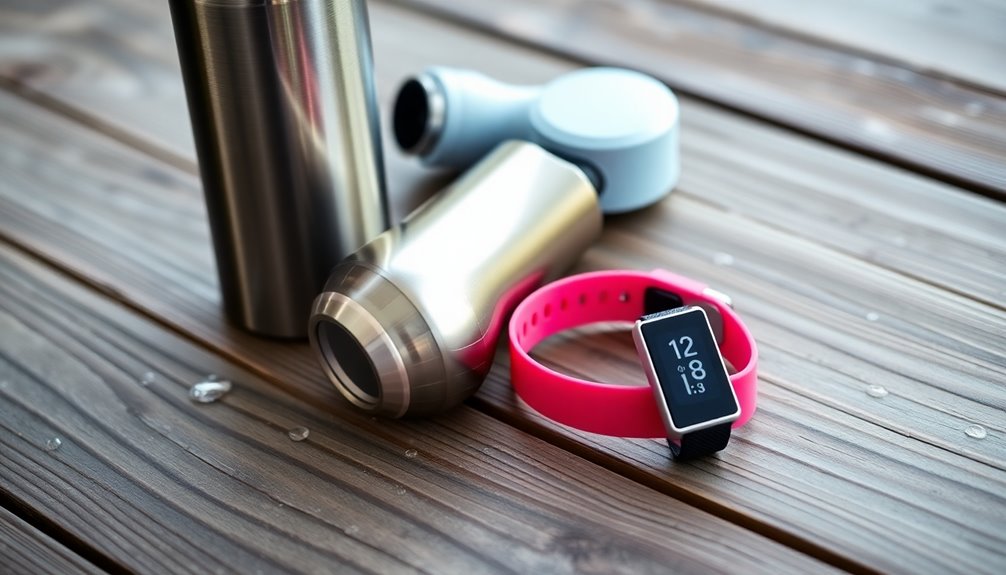
Wearable hydration devices range from tools that measure sweat and electrolytes to packs and bottles that simply keep water within reach. I rank the NIX Hydration Biosensor first for athletes who want personalized hydration data, while the XBT Hydration Pack is a lighter, more traditional choice for carrying water on the move. The Maelstrom 2L Backpack stands out for outdoor versatility, including helmet storage.

Get workout gear delivered free with Prime
- Fast, free delivery on millions of items
- Prime Video, Amazon Music and more included
- Member-only deals all year
The main choice is whether you need hydration guidance or water-carrying capacity. A sensor depends on sweat and a compatible phone or device; a pack adds weight and requires bladder cleaning but carries far more than a wrist bottle. I also compare fit, weather limitations, storage, and the kinds of activity each format suits, so the ranking reflects practical differences rather than treating every wearable as the same kind of product.
Complete the kit

Key Takeaways
- The NIX is the only option here that analyzes sweat for hydration and electrolyte insights; the other four carry water rather than measure hydration.
- The XBT and both 2L vests suit activities where hands-free water access matters, but their fit and storage details differ.
- Maelstrom is the most versatile backpack-style pick for cycling and hiking, with helmet storage and a stated one-year warranty.
- The wrist bottles are the most compact choice, but their 200 ml capacity is far below the packs’ 2L reservoirs.
- NIX is listed as not water resistant, so its sensor setup is a poor match for wet conditions despite its athletic focus.


| wearable hydration device | Weight | Water capacity | Storage | Materials |
|---|---|---|---|---|
| NIX Hydration Biosensor Starte | — | — | — | — |
| Maelstrom Hydration Backpack w | 1.1 lb | 2L | Four pockets and helmet storage | — |
| XBT Hydration Pack with 2L Wat | 5 oz | 2L | Multiple compartments | Nylon fabric and breathable mesh padding |
| Hydration Pack Vest | Described as lightweight; specific weight not provided | 2L | Multiple pockets | Oxford fabric and breathable mesh |
| 2PCS Wrist Water Bottle | 3.84 oz | — | — | Silicone and PP |
More Details on Our Top Picks
NIX Hydration Biosensor Starter Kit – Wearable Sweat Sensor for Athletes
I place NIX first because it addresses a different and more specialized question than the rest: what your sweat may indicate about hydration and electrolyte needs. Its sensor sends real-time sweat-analysis information to a smartphone app, with compatibility listed for iOS and Android as well as smartphones, smartwatches, and bike computers. For a training-focused athlete who wants guidance beyond carrying a drink, those connected insights give it a clear role that none of the packs or wrist bottles can fill.
The tradeoff is that NIX does not carry water. It complements a bottle or pack rather than replacing one, and accurate readings depend on active sweating. It is also listed as not water resistant, which makes wet-weather use a notable concern for an athletic sensor. Its 36-hour battery life may be limiting for especially long endurance use. Compared with the XBT or Maelstrom, this is the better pick for data; for immediate water access, either pack is more practical.
The starter kit includes a rechargeable pod, four patches, a charger case, and a USB-C cable. That gives a new user the core components for getting started, while the app connection can fit into an existing device setup. I would choose it for structured training where sweat information is useful, but skip it if the priority is a simple, weather-ready way to carry water.
Pros:- Provides real-time sweat-based hydration and electrolyte analysis.
- Works with iOS and Android and can connect with popular watches and bike computers.
- Starter kit includes a rechargeable pod, four patches, charging case, and USB-C cable.
- Offers a different training function from every water-carrying option in this lineup.
Cons:- Not water resistant, limiting suitability for wet-weather activities.
- Readings require active sweating, and the device does not hold drinking water.
- The stated 36-hour battery life may not cover very long endurance use.
Best for: Athletes who want app-connected sweat, sodium, and electrolyte insights during workouts and already have a separate way to carry water.
Not ideal for: People seeking a standalone water carrier, training in wet conditions, or doing long sessions where the stated battery life may not be enough.
- Sensor type:Sweat analysis
- Battery life:36 hours
- Connectivity:Bluetooth
- App compatibility:iOS and Android
- Supported devices:Smartphone, smartwatch, and bike computer
- Water resistance:Not water resistant
- Included:Rechargeable pod, four patches, charger case, and USB-C cable
Our verdict“Choose NIX for sweat-based training insights, but pair it with a separate water carrier and keep its weather limitation in mind.”
Maelstrom Hydration Backpack with 2L Water Bladder, Lightweight Running Vest, BPA-Free, Breathable Shoulder and Back Panel, Adjustable Chest Straps, Helmet Storage, Reflective Strip for Cycling and Running
Maelstrom is the most adaptable conventional water carrier in this group. Its 2L bladder, helmet storage, and reflective strip make it a natural fit for rides and hikes where a small amount of extra organization matters. The chest straps are specified across a 22.4–61-inch adjustment range, giving buyers clearer sizing information than the other pack listings provide. At 1.1 pounds, it weighs more than the XBT’s stated 5 ounces, so I would favor Maelstrom for gear flexibility over minimizing carried weight.
Its backpack format differs from the chest-pack approach of the Hydration Pack Vest 2.0. That can suit someone who wants a broader outdoor-use design, while the vest may appeal to a runner seeking a closer-fitting layout. Maelstrom lists four pockets, which is useful but still a modest amount of organization, and its PEVA bladder may not match the durability some buyers expect from a long-term reservoir. There is also no stated insulation, so I would not select it for keeping water cold.
The BPA-free 2L capacity works for many shorter outings, but it is not a high-volume solution for long routes. Its breathable panel and adjustable straps support comfort across different body sizes, though fit will still depend on individual shape and clothing layers. I rank it above the other water carriers for cycling and mixed outdoor use, not because it has the lightest build or the most storage, but because its feature mix is unusually versatile.
Pros:- Includes a 2L BPA-free bladder for hands-free water access.
- Adjustable chest straps have a stated 22.4–61-inch range.
- Helmet storage and reflective detailing support cycling and outdoor use.
- Breathable panel and a stated one-year warranty add practical reassurance.
Cons:- At 1.1 pounds, it is heavier than the XBT’s listed 5-ounce vest.
- Four pockets may not provide enough storage for gear-heavy outings.
- The PEVA bladder may be less durable than some alternatives, and insulation is not specified.
Best for: Cyclists and hikers who want a 2L hands-free reservoir, helmet storage, reflective visibility, and a clearly specified adjustable strap range.
Not ideal for: Weight-conscious runners, people needing extensive pocket storage, or buyers who prioritize an insulated or especially durable bladder.
- Water capacity:2L
- Weight:1.1 lb
- Material:Durable nylon
- Bladder:BPA-free PEVA
- Chest strap adjustment:22.4–61 inches
- Storage:Four pockets and helmet storage
- Warranty:One year
Our verdict“Pick Maelstrom when cycling-ready organization and strap adjustability matter more than the lightest possible carry.”
XBT Hydration Pack with 2L Water Bladder – Lightweight Running Vest for Men & Women
The XBT is my leading pick when a runner or hiker wants hands-free 2L capacity with a low listed weight. At 5 ounces, it is substantially lighter on paper than Maelstrom’s 1.1-pound backpack, and it adds breathable mesh padding, multiple compartments, reflective strips, and an emergency whistle. That mix makes it more focused on a light vest-style carry than Maelstrom’s helmet-friendly outdoor setup.
It also includes an adjustable shoulder fit and waist belt, plus side compression straps to help manage the load. Those features matter because a reservoir that shifts during a run can distract from the activity. The product description says the adjustable design may still fail to fit larger body types, however, so the straps should not be taken as a guarantee of universal fit. By comparison, Maelstrom provides a specific chest-strap range, which may be more useful for shoppers who want measurable sizing guidance before choosing.
The 2L bladder is enough for many shorter training sessions, but it remains the same capacity ceiling as the other packs here. Mesh padding keeps the design oriented toward breathability, though it may wear with extended use. I place XBT ahead of the Hydration Pack Vest 2.0 because it supplies a specific weight and extra safety features, while the 2.0 listing leaves its weight less defined. Choose it for a light, organized vest; choose Maelstrom if helmet storage and a stated strap range matter more.
Pros:- Listed weight is 5 ounces, lighter than Maelstrom’s stated 1.1 pounds.
- Includes a 2L BPA-free bladder and multiple compartments.
- Reflective strips and an emergency whistle add useful safety details.
- Adjustable shoulder straps, waist belt, and side compression straps support load control.
Cons:- May not fit larger body types despite adjustable straps.
- The 2L capacity may fall short for extended activities.
- Mesh padding may wear over time.
Best for: Runners and hikers seeking a lightweight vest with a 2L bladder, storage compartments, and basic safety features.
Not ideal for: Buyers who need a confirmed larger-body fit, a reservoir larger than 2L, or a pack with detailed long-term material durability information.
- Water capacity:2L
- Weight:5 oz
- Materials:Nylon fabric and breathable mesh padding
- Fit:Adjustable shoulder straps and waist belt
- Storage:Multiple compartments
- Safety features:Reflective strips and emergency whistle
- Load features:Side compression straps
Our verdict“Choose XBT for a lightweight, feature-rich vest, provided its fit suits your body and 2L is enough for your route.”
Hydration Pack Vest – Lightweight Chest Pack 2.0L Water Bladder Backpack for Running, Hiking, Cycling
This 2L vest is a straightforward choice for buyers who want a wearable reservoir with pockets and visibility details without needing a highly specialized sensor or a helmet-focused pack. It lists adjustable straps, breathable mesh, multiple pockets, and reflective strips on the front and back. That makes it more directly geared toward a chest-pack style than Maelstrom, whose strongest differentiators are its backpack layout and helmet storage.
Compared with XBT, the vest’s product information is less specific about weight and fit measurements. Both offer a 2L bladder, adjustable features, and storage, but XBT also lists an emergency whistle, side compression straps, and a 5-ounce weight. I therefore rank this model below XBT for buyers trying to compare carrying weight or safety details. Its moisture-wicking and breathable materials may suit active use, though the description also warns that larger chest sizes may find the fit tight.
As with the other reservoirs, regular cleaning is part of ownership. The stated leak-proof design is helpful, but it does not remove the need to rinse and dry a bladder between uses. The 2L capacity is suitable for many outings, not an answer for long-distance needs that call for more water. I would shortlist it when front-and-back reflectivity and a simple vest layout are the priorities, while choosing Maelstrom for clearer adjustment dimensions or XBT for its lighter stated weight.
Pros:- 2L bladder supplies hands-free water for many shorter outings.
- Reflective strips are described on the front and back.
- Breathable, moisture-wicking materials suit active use.
- Multiple pockets offer space for small essentials.
Cons:- May feel tight on larger chest sizes.
- The 2L capacity may not cover long-distance hydration needs.
- Bladder cleaning is required, and weight is not specified.
Best for: Runners, hikers, or cyclists who want a reflective 2L chest-style pack with multiple pockets and breathable materials.
Not ideal for: People with larger chest sizes, buyers who need more than 2L, or shoppers who want clearly stated weight and fit measurements.
- Water capacity:2L
- Materials:Oxford fabric and breathable mesh
- Fit:Adjustable straps
- Storage:Multiple pockets
- Visibility:Reflective strips on front and back
- Bladder design:BPA-free with leak-proof technology
- Weight:Described as lightweight; specific weight not provided
Our verdict“A sensible reflective vest option when its fit works for you, though XBT offers more specific weight and safety information.”
2PCS Wrist Water Bottle, Wearable Hands-Free Silicone 7 Oz Running Water Bottle, Sports Portable Fitness Cycling Marathon Rock Climbing (Black)
These wrist bottles take the most compact approach in the lineup: instead of carrying a reservoir on the torso, the set places a small drink directly on the wrist for quick access. That can appeal to someone who dislikes a vest or pack and wants water close at hand during a short run, climbing session, or other activity where stopping briefly to drink is acceptable. The silicone-and-PP construction is described as reusable and leak-proof, and the bottles are rated for hot and cold beverages across a stated temperature range.
The capacity is the central compromise. Each bottle is listed at 200 ml, far below the 2L reservoirs in XBT, Maelstrom, and the Hydration Pack Vest 2.0. The set includes two bottles, but that still does not make it equivalent to a full hydration pack for longer outings. Compared with NIX, this product carries water but provides no sweat analysis; compared with the packs, it offers access and compactness at the cost of volume and storage.
The wrist-worn fit is also personal: the listed dimensions and weight do not confirm comfort across different wrist sizes, and the description acknowledges that it may not fit everyone. Hand washing is required, so care is less convenient than a dishwasher-safe bottle would be. I rank it fifth as a general hydration choice, but it is the clearest pick for minimal, wrist-level access when a small amount of water is enough.
Pros:- Wrist-mounted format keeps a small drink easy to reach.
- Set includes two reusable bottles made with silicone and PP.
- Described as leak-proof and suitable for hot or cold beverages.
- Compact option for activities where a torso pack feels excessive.
Cons:- Each bottle holds only 200 ml, well below the packs’ 2L capacity.
- Hand wash only; not dishwasher safe.
- Wrist fit may not be comfortable or suitable for every user.
Best for: People who want a compact, hands-free drink on the wrist for short activities and prefer not to wear a hydration vest.
Not ideal for: Long-distance runners, buyers who need substantial water capacity, or anyone who finds wrist-mounted gear uncomfortable.
- Set size:Two bottles
- Capacity:200 ml each
- Materials:Silicone and PP
- Weight:3.84 oz
- Dimensions:3.67 × 4.57 inches
- Temperature range:−20°C to 100°C
- Care:Hand wash only
Our verdict“Choose these bottles for compact wrist-level access on short outings, not as a replacement for a high-capacity hydration pack.”

How We Picked
I ranked these five options by how well their design answers a specific wearable-hydration need: monitoring hydration, carrying water hands-free, or keeping a small drink immediately accessible. Because these products solve different problems, I did not treat a sweat sensor as a substitute for a bladder pack. I weighed the stated capacity, carrying format, fit adjustments, useful activity-specific features, and the limitations described for each product.
For hydration packs, I gave weight to the balance between capacity, comfort details, and storage. The XBT lists a 5-ounce weight, multiple compartments, and an emergency whistle; Maelstrom adds helmet storage and a broad stated chest-strap adjustment range. The Hydration Pack Vest 2.0 describes pockets and reflective details but supplies fewer measurable fit and weight specifics, so I rank it behind the more fully detailed alternatives. I also account for stated drawbacks: a 2L bladder needs cleaning, and no pack in this group provides more than 2L.
The NIX earns a distinct place because it offers sweat analysis rather than a water reservoir. I value its real-time electrolyte and sodium insights for athletes who want data, while its lack of water resistance and need for active sweating limit where it makes sense. The wrist bottles rank fifth for general-purpose hydration because 200 ml is a small amount, though their compact hands-free format makes them a valid niche option. I rely on the supplied product details and make no claim of firsthand testing.
| wearable hydration device | Storage | Materials |
|---|---|---|
| NIX Hydration Biosensor Starte | — | — |
| Maelstrom Hydration Backpack w | Four pockets and helmet storage | — |
| XBT Hydration Pack with 2L Wat | Multiple compartments | Nylon fabric and breathable mesh padding |
| Hydration Pack Vest | Multiple pockets | Oxford fabric and breathable mesh |
| 2PCS Wrist Water Bottle | — | Silicone and PP |
Factors to Consider When Choosing Wearable Hydration Devices
I would start by deciding whether you want a device to inform hydration choices or one that physically carries water. The five products do not all compete on the same measure: NIX reads sweat, three options carry a 2L bladder, and the wrist bottles favor compact access over capacity.Sensor or water carrier?
The NIX is the only product here that analyzes sweat for hydration, sodium, and electrolyte insights. It makes the most sense for athletes who use training data to guide decisions and already carry water separately. It is not a bottle or pack, and the stated need for active sweating means it is not a universal hydration monitor. Its lack of water resistance also matters for outdoor training.
If your main problem is carrying water without holding a bottle, choose one of the reservoir packs. The wrist bottles sit between those formats: easier to access than a pack, but far lower in capacity. I would not compare their 200 ml volume directly with NIX’s analytics; those are different functions.
Match capacity to the outing
The three packs each list a 2L bladder, which gives them a major capacity advantage over the wrist bottles. That amount can suit many shorter runs, hikes, or rides, though route length, conditions, and personal drinking needs vary. None of these packs offers a larger reservoir, so buyers planning longer outings may need a refill point or another source of water.
The wrist bottles’ 200 ml capacity makes them better for a small amount of water close at hand than for sustained hydration. Two bottles are included, but buyers should still compare the set’s total volume with their own needs rather than assuming “two-piece” means pack-level capacity.
Fit and carry style
Maelstrom gives the clearest stated strap sizing, with an adjustment range of 22.4–61 inches, while its 1.1-pound weight makes it heavier than the XBT’s listed 5 ounces. XBT has an adjustable shoulder setup and waist belt, but its description warns that it may not fit larger body types. The Hydration Pack Vest 2.0 also has adjustable straps and warns of a tight fit for larger chest sizes, without giving a weight or fit range.
I would treat adjustable straps as a starting point rather than a promise of fit. Consider clothing layers, movement, and where the reservoir sits against your body. For wrist bottles, check whether a wrist-mounted design is comfortable during the activity; their compactness is useful only if the fit works for you.
Storage, safety, and weather details
Maelstrom has helmet storage and reflective detailing, so it is the strongest match for a ride where helmet handling and visibility matter. XBT includes an emergency whistle, reflective strips, multiple compartments, and side compression straps. The Hydration Pack Vest 2.0 offers multiple pockets and reflectivity on both the front and back, but provides fewer specific details about weight and fit.
None of those listed features removes the need to think about weather and care. NIX is explicitly not water resistant. Reservoir packs need regular cleaning, and Maelstrom does not list insulation for cold retention. The wrist bottles are temperature resistant according to the supplied range, but require hand washing.
Choose what you will maintain
Bladder packs provide much more capacity than wrist bottles, but the reservoir needs rinsing and drying to keep it clean between uses. That routine is part of the ownership tradeoff, even when a bladder is described as BPA-free or leak-proof. NIX has a rechargeable pod and patches, so its upkeep centers on charging and its sensor setup rather than cleaning a large water reservoir.
The wrist bottles avoid a long hydration hose and large bladder, but they are hand-wash-only. I would select the format whose cleaning and charging routine fits your habits. A device that suits your route but is inconvenient to maintain can become the wrong choice for regular use.
Frequently Asked Questions
Which product actually measures hydration?
The NIX Hydration Biosensor is the only item in this comparison described as measuring sweat-related hydration, electrolyte, and sodium information. It connects to an app and compatible devices, but readings depend on active sweating, and it does not carry drinking water. The other four options are water carriers rather than sweat-analysis devices.
Which wearable hydration device carries the most water?
The Maelstrom, XBT, and Hydration Pack Vest 2.0 each list a 2L bladder, giving them the greatest stated capacity in this group. The wrist bottles hold 200 ml each, while NIX has no water capacity because it is a sensor kit. A 2L reservoir may suit many shorter outings, but route length and personal water needs determine whether it is enough.
Is the NIX sensor a replacement for a running vest?
No. NIX provides sweat-based information and app-connected alerts, but it does not carry water or provide the storage of a running vest. I would treat it as a training-data tool that may accompany a separate bottle or pack. A buyer who only needs water access is better served by one of the reservoir products.
Which pack is the lightest option?
The XBT lists a weight of 5 ounces, making it the lightest pack by the supplied specifications. Maelstrom lists 1.1 pounds, and the Hydration Pack Vest 2.0 is described as lightweight without a specific figure. Those numbers may not reflect every component or fit experience, so I would also compare the stated storage, strap design, and included bladder.
What should I check before buying a wearable hydration device?
Start with the format and capacity: sweat sensor, 2L reservoir pack, or small wrist bottle. Then check fit information, weight, weather limitations, storage, and cleaning requirements. In this lineup, NIX is not water resistant, some vest descriptions flag fit limitations, and all three bladder packs call for regular cleaning. Choose according to the activity and the tradeoffs you are prepared to manage.
Conclusion
For athletes who want sweat-based guidance, I recommend NIX, provided a separate water carrier is available and training conditions are not wet. For a lightweight 2L running vest, XBT is my pick; for cycling and mixed outdoor use with helmet storage and a stated strap range, choose Maelstrom. The Hydration Pack Vest 2.0 suits buyers who prioritize front-and-back reflectivity in a simple vest format, while the wrist bottles fit short outings where compact access matters more than volume. I would choose by the job first: data, reservoir capacity, or minimal wrist carry.
Fall Picks
fall essentials
As an affiliate, we earn on qualifying purchases.