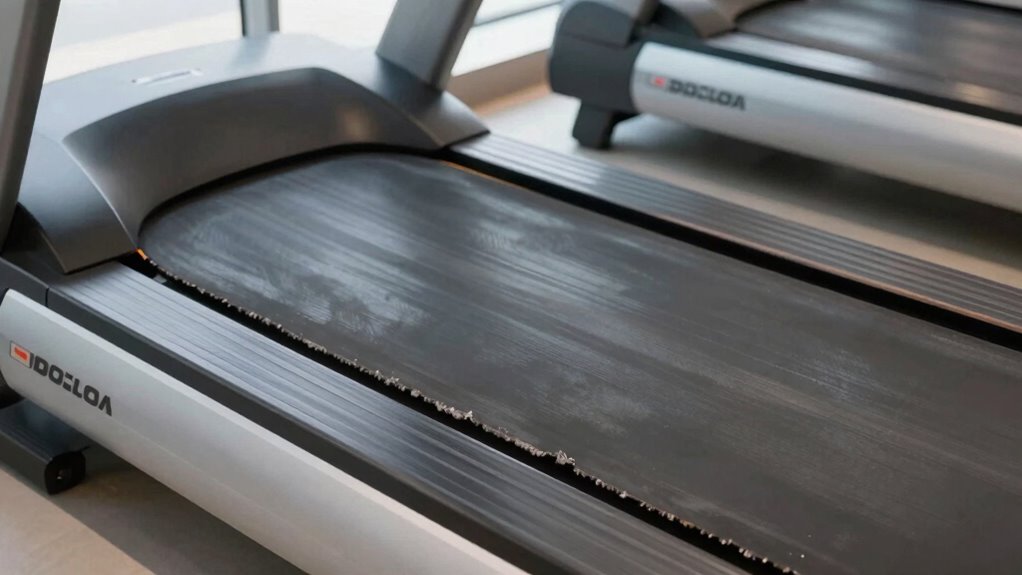

Using an incorrectly sized treadmill belt can make your runs uncomfortable and less effective. If the belt is too narrow or short, you’ll struggle with unnatural strides and instability, which can lead to soreness or injury over time. On the other hand, a belt that’s too wide or long might cause you to stumble or lose balance. Ensuring the right belt size supports your posture and performance, and if you want to find out how to fix this, keep going.
Key Takeaways
- An improperly sized belt causes unnatural gait, leading to discomfort and reduced running efficiency.
- Small belts force overreach, increasing joint strain and risking injury during treadmill workouts.
- Oversized belts destabilize your gait, making running feel awkward and unsafe.
- Incorrect belt dimensions can disrupt posture, causing soreness and decreasing motivation to exercise.
- Ensuring the belt matches your body and stride improves comfort, stability, and overall treadmill running experience.
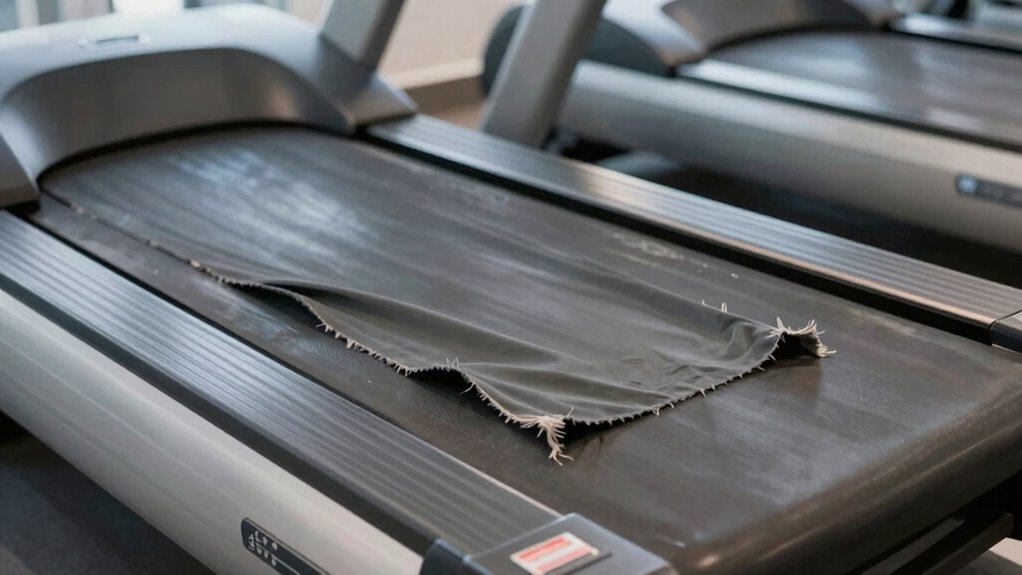
Have you ever wondered why your treadmill workouts feel uncomfortable or less effective? One common reason is a belt size mistake that many runners overlook. When the treadmill belt isn’t the right size, it can throw off your entire running experience, making every stride feel awkward and inefficient. Proper treadmill safety starts with ensuring your equipment fits your body and running style. If the belt is too short or too narrow, it forces you into unnatural running posture, which not only diminishes performance but also risks injury.
A treadmill that’s too small can cause you to overreach or feel cramped, leading to poor running posture. When you’re forced to stretch forward or sideways to stay on the belt, it puts unnecessary strain on your joints and muscles. Over time, this poor alignment can lead to discomfort, soreness, or even injury. Conversely, a belt that’s too long or wide might seem like an advantage, but it can actually make your gait less stable. You might find yourself stumbling or losing rhythm because the treadmill isn’t supporting your natural stride.
Ensuring the correct belt size is about matching the treadmill to your height, stride length, and running style. For example, taller runners or those with longer strides need a wider and longer belt to maintain proper running posture. When the belt size is appropriate, you can focus on your workout without constantly adjusting your gait or worrying about tripping. Proper treadmill safety isn’t just about avoiding accidents; it’s also about creating an environment where your body can move naturally and efficiently. Additionally, proper treadmill sizing can help prevent long-term injuries caused by unnatural running mechanics.
When the belt fits correctly, you’ll notice a more stable and comfortable running experience. Your posture stays upright, and your foot strikes the belt smoothly, reducing the risk of strain. A good fit also helps you maintain a consistent pace, making your workouts more effective. If your treadmill’s belt is too small or improperly sized, it’s worth considering an upgrade or adjustment. Many issues related to discomfort and ineffective workouts stem from this simple but essential mistake.
In the end, paying close attention to treadmill safety means ensuring that your equipment supports healthy running posture. Don’t overlook the importance of proper belt size—it’s a small detail with a big impact on your overall running comfort and performance. When your treadmill fits correctly, you’ll enjoy smoother, safer workouts that help you reach your fitness goals more efficiently.
treadmill belt size adjustment kit
As an affiliate, we earn on qualifying purchases.
As an affiliate, we earn on qualifying purchases.
Frequently Asked Questions
How Do I Measure My Treadmill Belt Size Accurately?
To measure your treadmill belt size accurately, use belt measurement techniques like removing the belt and measuring its length and width with a tape measure or ruler. Make sure to gauge along the edges, keeping the tape straight. Proper treadmill belt calibration is essential for accurate measurements. Double-check your measurements and compare them to your treadmill’s specifications to ensure the belt fits perfectly, preventing slipping or uneven wear.
Can Belt Size Affect Treadmill Motor Life?
Yes, belt size can influence your treadmill motor’s life. An improperly sized belt causes extra strain on the motor, leading to premature wear. Regular treadmill maintenance, like checking belt tension and alignment, helps prevent damage. When replacing the belt, follow correct belt replacement tips to guarantee proper fit. Keeping the belt in good condition reduces motor stress, prolonging your treadmill’s lifespan and maintaining smooth operation.
What Signs Indicate a Belt Size Mismatch?
Like a broken record, a belt mismatch signals itself through irregular treadmill belt tension or slipping. You might notice unusual noises, inconsistent belt movement, or the treadmill feeling less responsive, which can harm motor performance. If your belt is too tight or loose, it stresses the motor and hampers smooth operation. Keep an eye out for these signs to prevent further damage and guarantee your workout remains safe and effective.
Is It Better to Choose a Larger or Smaller Belt?
You should choose a belt size that’s slightly larger rather than smaller. A larger belt allows for proper tension adjustment, preventing slipping or excessive wear. Make sure to take into account the belt material, as some materials stretch more than others, affecting tension. Proper belt tension ensures smooth running and reduces strain on your treadmill’s motor. Always follow manufacturer guidelines for sizing and tensioning to optimize performance and longevity.
How Often Should I Check My Treadmill Belt Size?
You should check your treadmill belt size every 3 to 6 months. Think of it as essential treadmill maintenance—ignoring it can turn smooth runs into clunky, off-balance chaos. Regular inspections help catch loose or worn belts early, preventing costly belt replacements later. By staying vigilant, you keep your treadmill running smoothly and save yourself from the frustration of unexpected breakdowns, making every workout feel effortless.
Conclusion
Don’t let a wrong belt size sabotage your stride. Double-check your treadmill’s dimensions and don’t delay. A properly sized belt brings balance, boosts confidence, and transforms treadmill running from tedious to terrific. Make sure your belt fits perfectly, and you’ll experience effortless energy, enjoyable exercise, and exciting improvements. Take the time to tune your treadmill, and turn your training into a thrilling, triumphant journey. Your best run begins with the right fit—so get it right today!