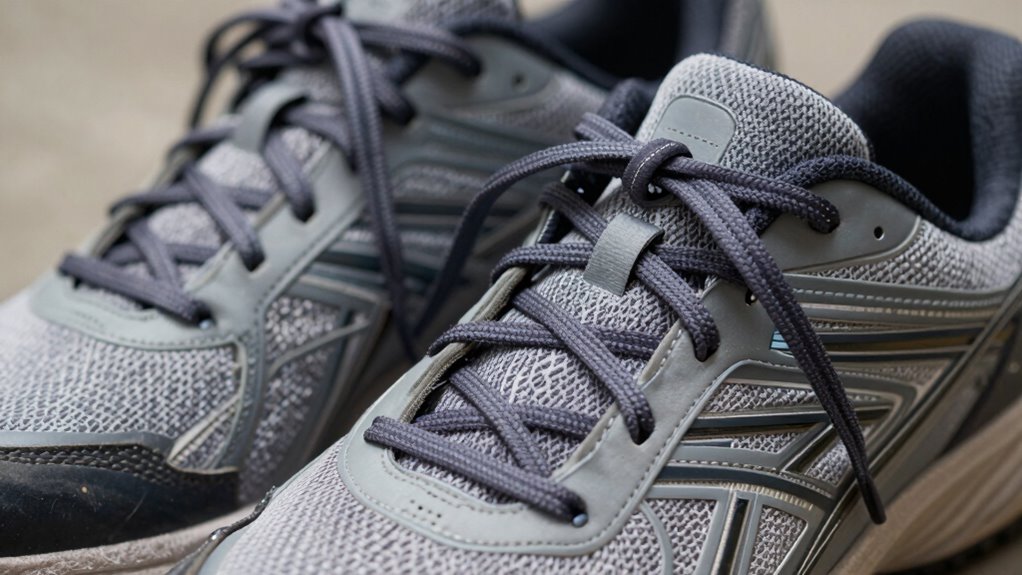

To fix heel slip, numb toes, and pressure points, start by using a heel-lock or runner’s loop lacing method to lock your heel in place and evenly distribute pressure. Tighten the eyelets around your ankle for added support, and choose durable, flexible laces that maintain tension. Adjust your lacing pattern to prevent pinching and ensure comfort. Keep these tips in mind, and you’ll discover even more ways to attain a perfect fit.
Key Takeaways
- Use heel-lock or runner’s loop lacing techniques to lock the heel in place and prevent slip.
- Tighten eyelets around the ankle for a secure fit, reducing heel movement and pressure points.
- Opt for durable, thicker laces that maintain tension and support, minimizing heel slip and discomfort.
- Avoid over-tightening laces to prevent numb toes and ensure even pressure distribution across the foot.
- Adjust lacing pattern at the top to improve ankle stability and reduce pressure on sensitive areas.
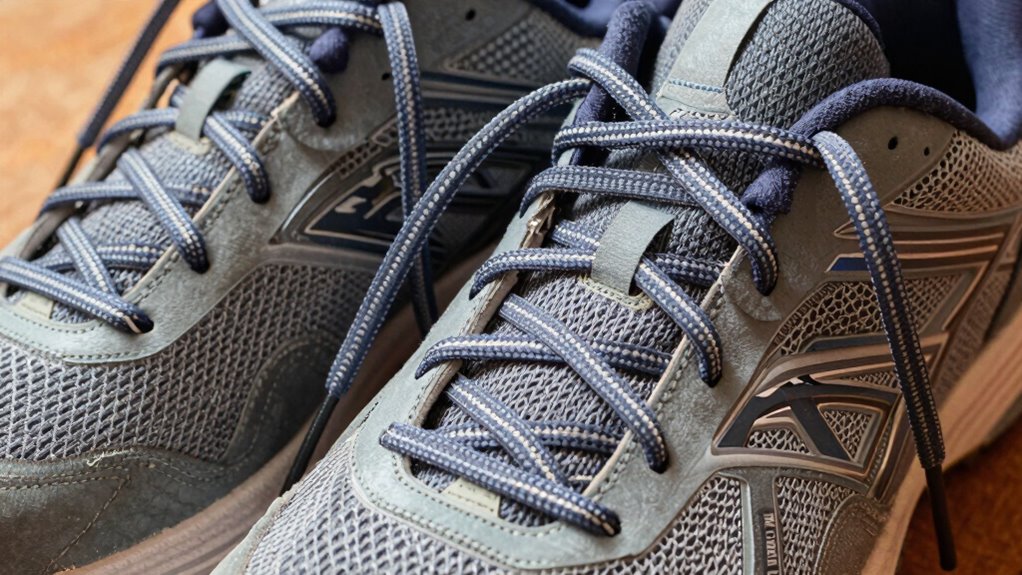
Have you ever struggled with lacing your shoes or wondered if there’s a quicker, better way to do it? If so, you’re not alone. Many people face issues like heel slip, numb toes, or uncomfortable pressure points, and the solution often starts with how you lace up. One of the key factors influencing comfort and support is ankle support, which can be improved through the right lacing techniques and materials. Choosing the proper lacing materials—such as sturdy, flexible laces—can make a big difference in how your shoes fit and feel throughout the day.
First, consider how your lacing method impacts ankle support. Proper lacing can lock your heel in place, preventing heel slip and giving you a more secure fit. To do this, focus on crisscrossing laces tightly through the eyelets, especially around the ankle area. You can also employ specific lacing techniques like heel-lock or runner’s loop, which create a snug fit around your ankle and reduce unwanted movement. These techniques require adjusting the lacing pattern at the top of your shoes, often by skipping eyelets or creating loops that lock your heel in place. This added ankle support minimizes heel slip, which is a common cause of blisters and discomfort during movement.
Proper lacing techniques lock your heel, improve fit, and reduce discomfort.
Next, the lacing materials you choose play a crucial role in how effectively your shoes support your foot. Opt for laces that are durable yet flexible enough to tighten securely without cutting into your skin. Thicker laces or those made from high-quality synthetic fibers tend to hold tension longer and resist fraying. When your laces stay tight, they help maintain the desired fit, reducing pressure points that can cause numb toes or pinching. If you experience numbness or tingling, it might be because your laces are too tight in certain areas or your lacing pattern isn’t evenly distributing pressure. Adjusting your laces and switching to better lacing materials can alleviate these issues, creating a more comfortable experience. Additionally, understanding the importance of proper support can help you select lacing techniques and materials that reduce discomfort and enhance stability. The goal is to find a balance that offers support without restricting blood flow or causing discomfort.
THE ICE SKATING TECHNIQUES: A Beginner-to-Intermediate Handbook to Ice Skating: Edges, Spins, Jumps, Off-Ice Training, Weekly Practice Plans & Skate Maintenance
As an affiliate, we earn on qualifying purchases.
As an affiliate, we earn on qualifying purchases.
Frequently Asked Questions
Can Lacing Hacks Improve Shoe Comfort for Wide Feet?
Yes, lacing hacks can improve shoe comfort for wide feet. You can try using custom insoles to add extra cushioning and support, making shoes fit better. Additionally, shoe stretchers help loosen tight areas, reducing pressure points. Experimenting with different lacing techniques, like skipping eyelets or creating a wider fit, also helps accommodate wider feet, ensuring comfort and reducing discomfort during wear.
Are There Specific Lacing Techniques for High-Arched Feet?
You’d think high arches would mean a perfect fit, but nope. For high-arched feet, try criss-cross lacing with extra arch support loops; it helps lift your arch and reduces toe compression. Skip tight laces to avoid squeezing your toes, and focus on a looser fit around the arch. This way, your shoes won’t just look good but also feel good, giving your high arches the support they desperately need.
Do Lacing Hacks Affect Shoe Durability Over Time?
Lacing hacks can impact shoe durability over time by affecting lacing tension and wear patterns on the shoe material. If you tighten your laces too much, it can stress the shoe’s fabric and seams, causing faster deterioration. Conversely, adjusting lacing tension to fit comfortably helps distribute pressure evenly, preserving the shoe’s structure longer. Be mindful of your lacing technique to maintain your shoes’ longevity and performance.
Can Lacing Adjustments Prevent Blisters During Long Walks?
Yes, lacing adjustments can help prevent blisters during long-distance walking. By loosening or tightening specific sections of your shoes, you reduce friction and pressure points that cause blisters. For example, skipping eyelets or creating a custom lacing pattern can improve fit and comfort. Make sure your shoes are snug but not tight, and consider using moisture-wicking socks to further enhance blister prevention on those extended walks.
Are Certain Lacing Hacks Better for Athletic Versus Casual Shoes?
Think of athletic shoes as racehorses and casual shoes as walking companions; different lacing hacks suit each. For athletic shoes, focus on adjusting lace height and using flexible materials to optimize support and fit during movement. Casual shoes benefit from simpler lacing, emphasizing comfort with softer materials. So, yes, certain hacks are better tailored—athletic shoes need secure, adaptable lacing, while casual shoes prioritize comfort and ease.
Conclusion
So, there you have it—your foolproof arsenal against heel slip, numb toes, and pressure points. Who knew that a few clever lacing tricks could turn your shoe woes into a distant memory? Next time your feet rebel, just remember: a little lacing finesse is all it takes to transform your footwear from torture devices to trusty companions. Because really, suffering in silence is so last century. Happy lacing!