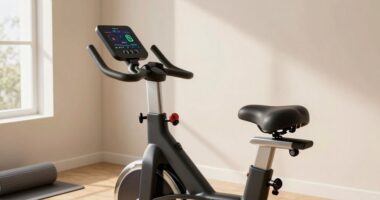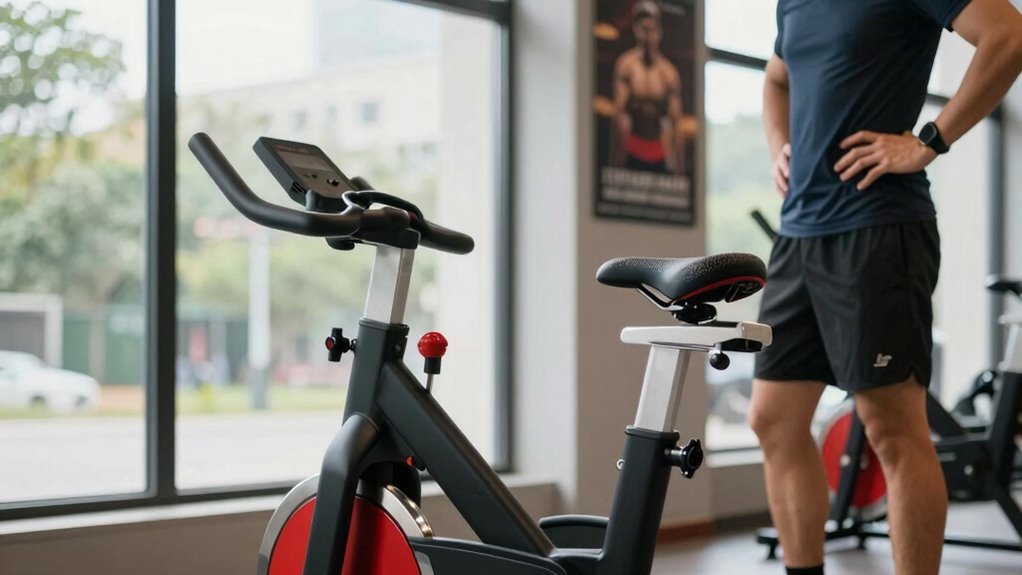
To set your saddle height correctly, stand next to your bike and align the saddle with your hip bone. When sitting, the leg at the bottom of the pedal stroke should have a slight bend of about 25-35°, and you can check this by pedaling backward. Make small adjustments to guarantee your knee isn’t overly straight or bent, which helps prevent strain and boosts performance. Keep your setup secure, and you’ll stay comfortable and safe—learn more to fine-tune your technique.
Key Takeaways
- Align the saddle with your hip bone when standing upright beside the bike.
- Adjust the saddle height so that when seated, your knee has a 25-35° bend at the pedal’s lowest point.
- Pedal backward to check for a slight knee bend, ensuring proper extension and comfort.
- Tighten the saddle securely after adjustment to prevent shifting during rides.
- Use a mirror or feedback from your body to fine-tune saddle height for optimal comfort and efficiency.
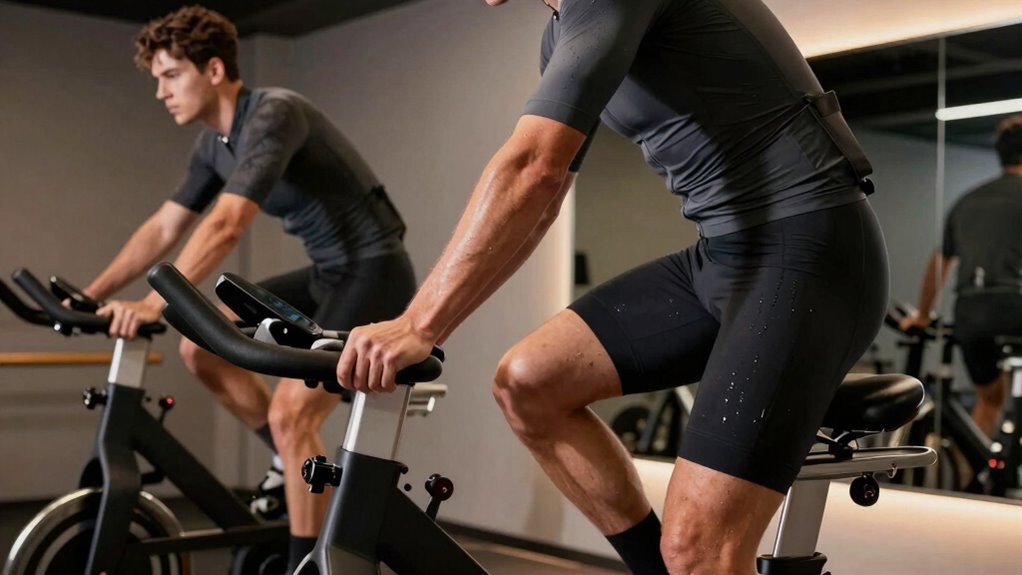
Indoor cycling has become a popular cross-training option for runners looking to boost endurance and reduce impact on their joints. If you’re serious about getting the most out of your sessions, setting your saddle height correctly is essential. Proper saddle height not only improves your efficiency but also helps prevent injuries. Before diving into adjustments, it’s wise to familiarize yourself with bike maintenance. Regularly checking your bike’s components, like the seat post, pedals, and handlebars, ensures everything functions smoothly and reduces the risk of accidents. A well-maintained bike is safer to ride, giving you confidence and peace of mind during intense workouts.
Indoor cycling boosts endurance and reduces joint impact; regular bike maintenance ensures safety and smooth performance.
When setting your saddle height, start by standing next to your indoor bike. Raise or lower the saddle so that it aligns roughly with your hip bone. Once you’re on the bike, place your foot at the 3 o’clock position on the pedal and pedal backward until your leg is almost fully extended but not locked out. Your knee should have a slight bend—about 25 to 35 degrees—when the pedal is at its lowest point. This position maximizes power transfer while minimizing strain on your knees. It’s important to be precise with this setup because an incorrect saddle height can lead to discomfort and overuse injuries, especially over long training sessions.
Keep in mind cycling safety as you make adjustments. Always tighten your saddle securely after setting the height; a loose saddle can shift unexpectedly and cause you to lose balance. When riding, wear appropriate gear like padded shorts and a helmet if your studio or home setup allows, and stay aware of your surroundings if you’re using a bike with an open frame or in a shared space. Proper safety measures help you stay focused and avoid accidents, preserving your training consistency. Additionally, understanding the importance of bike fit ensures you achieve optimal comfort and performance during your indoor rides.
If your indoor cycling setup includes a smart trainer or a digital display, use it to monitor your cadence and heart rate. These tools can help you maintain ideal effort levels and prevent overtraining. Make small adjustments to your saddle height if you notice discomfort or inefficient pedaling. Remember, bike maintenance also extends to checking your bike’s overall stability, ensuring quick-release levers or bolts are tight, and inspecting your pedals and straps for wear. Doing so not only enhances safety but also ensures your indoor cycling sessions are effective and enjoyable.
indoor cycling saddle height adjustment
As an affiliate, we earn on qualifying purchases.
As an affiliate, we earn on qualifying purchases.
Frequently Asked Questions
How Often Should I Adjust My Saddle Height During Indoor Cycling?
You should adjust your saddle height whenever you notice discomfort or if your form changes during indoor cycling. Regularly check your bike ergonomics to guarantee proper alignment, especially after changing saddle materials or riding longer sessions. Small tweaks can make a big difference, so re-evaluate every few rides. Proper saddle height helps prevent injury and improves efficiency, keeping you comfortable and motivated throughout your workout.
Can Saddle Height Affect My Running Performance?
Yes, saddle height can affect your running performance. If your saddle is too high or too low, you might experience knee pain, which can hinder your workout. Proper saddle height improves cycling efficiency and helps maintain proper leg biomechanics, translating to better running form. By setting your saddle correctly, you reduce strain on your knees and optimize your performance, making both cycling and running more comfortable and effective.
What Tools Are Best for Measuring Saddle Height Accurately?
Measuring saddle height accurately is a must, and the best tools are simple yet precise. You’ll want a reliable bike fit gauge, a tape measure, or a digital caliper. These measurement tools help you determine the correct saddle height by providing consistent, clear data. Using these tools keeps your setup secure, specific, and straightforward, ensuring you can smoothly sustain your stride, whether cycling or running.
How Does Saddle Height Influence Comfort During Long Rides?
A properly set saddle height enhances comfort during long rides by promoting an ergonomic posture, which reduces joint strain. When your saddle is correctly adjusted, you can pedal efficiently without overextending or compressing your knees, decreasing fatigue and discomfort. This ideal positioning allows your muscles and joints to work harmoniously, preventing soreness and injury, so you can ride longer and more comfortably.
Is There a Difference in Saddle Height Setup for Different Cycling Styles?
You might think all cycling styles need the same saddle height, but surprise—your posture changes! For sprinting, you’ll want a more aggressive, forward-leaning position, so raise the saddle slightly and tweak the angle for better support. For endurance rides, a relaxed posture calls for a lower saddle and a flatter angle. Adjusting saddle height and angle according to your cycling posture helps optimize comfort and efficiency in any style.
Conclusion
Now that you know how to set your saddle height properly, you’re ready to conquer indoor cycling like a pro. Remember, it’s all about comfort and efficiency—think of it as your secret weapon against the dreaded “chair butt.” Keep tweaking until it feels just right, and don’t forget to enjoy the ride. With this knowledge, you’ll be smashing your indoor cycling goals faster than you can say “Great Scott!” Happy pedaling!