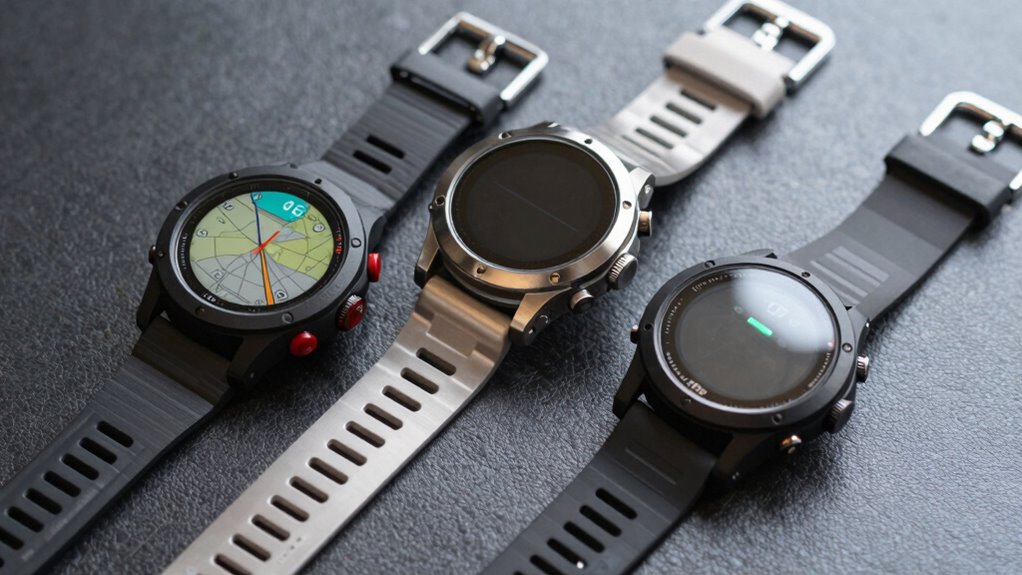

Choosing a running watch for ultramarathons demands a careful balance between battery endurance, functionality, and durability. Today, I’ll highlight five standout models, starting with the Garmin Enduro 3 for its exceptional solar battery life, and the Amazfit Active Max for its impressive display and all-day tracking. Each of these options offers unique advantages, but also comes with tradeoffs worth considering based on your specific needs, whether you’re racing multi-day events or seeking a reliable everyday companion.

Get workout gear delivered free — and shop member deals
- Fast, free delivery on millions of items
- Access to Prime Big Deal Days deals on October 6–7
- Prime Video, Amazon Music and more included
Complete the kit



Key Takeaways
- Battery life is the most critical factor for ultramarathon watches, with solar and ultra-long modes leading the way.
- Display clarity and size matter for quick readability during races, but larger screens can add bulk.
- Navigation and mapping features are vital for unsupported races, but can increase complexity and cost.
- Durability and water resistance are non-negotiable for outdoor endurance events, especially in varying weather.
- Price varies significantly; high-end models offer advanced features but may be overkill for casual ultrarunners.
| Garmin Enduro 3 Solar GPS Smartwatch, 51mm, Sapphire, Black UltraFit Nylon Strap |  | Best for Unmatched Battery Life and Navigation | Battery Life: Up to 90 days (smartwatch), 320 hours (GPS with solar) | Display: 1.4-inch Power Sapphire | Maps: Preloaded TopoActive and ski maps | VIEW ON AMAZON | See Our Full Breakdown |
| Amazfit Active Max Smart Watch, 1.5″ AMOLED Display, GPS, iOS/Android |  | Best for Display and All-Day Tracking | Display: 1.5-inch AMOLED | Battery Life: Up to 25 days | Storage: 4GB | VIEW ON AMAZON | See Our Full Breakdown |
| SUUNTO Run GPS Sport Running Watch, Lightweight 1.32″ AMOLED Black Textile |  | Best for Precision and Lightweight Comfort | Display: 1.32″ AMOLED | Battery Life: Up to 12 days | GPS Technology: Dual-frequency | VIEW ON AMAZON | See Our Full Breakdown |
| Built-in GPS Distance Tracking Watch for Men and Women, Waterproof, Long Battery Life (Black) |  | Best for All-Around Outdoor Use | Display Size: 2.06 inches | Battery Life: 7 days heavy use, 20 days light | Water Resistance: 50 meters | VIEW ON AMAZON | See Our Full Breakdown |
| Garmin Enduro 2 Ultraperformance Watch, Solar Charging, Long Battery Life, Preloaded Maps, Black | 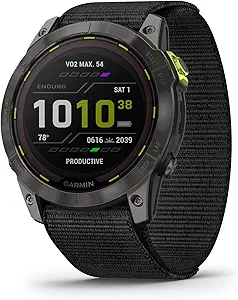 | Best for Rugged Outdoor Performance | Battery Life: Up to 46 days (smartwatch), 150 hours (GPS) | Display: 1.4-inch Power Sapphire | Maps: Preloaded TopoActive | VIEW ON AMAZON | See Our Full Breakdown |
| running watch for ultramarathon battery | Battery Life | Display | Water Resistance | Connectivity |
|---|---|---|---|---|
| Garmin Enduro 3 Solar GPS Smar | Up to 90 days (smartwatch), 320 hours (GPS with solar) | 1.4-inch Power Sapphire | 50 meters | Bluetooth, ANT+ |
| Amazfit Active Max Smart Watch | Up to 25 days | 1.5-inch AMOLED | — | — |
| SUUNTO Run GPS Sport Running W | Up to 12 days | 1.32" AMOLED | Water resistant | Bluetooth |
| Built-in GPS Distance Tracking | 7 days heavy use, 20 days light | — | 50 meters | Bluetooth |
| Garmin Enduro 2 Ultraperforman | Up to 46 days (smartwatch), 150 hours (GPS) | 1.4-inch Power Sapphire | 50 meters | Bluetooth, ANT+ |
More Details on Our Top Picks
Garmin Enduro 3 Solar GPS Smartwatch, 51mm, Sapphire, Black UltraFit Nylon Strap
The Garmin Enduro 3 stands out with its exceptional battery life—up to 90 days in smartwatch mode and 320 hours with solar charging. Its rugged build with a sapphire lens and lightweight titanium bezel offers durability in extreme conditions. The preloaded maps and dynamic routing make it an excellent choice for unsupported ultramarathons where navigation is critical. Compared to other models, its main advantage is the solar charging feature, which extends endurance significantly. However, the high price and complex features might be overwhelming for casual runners or those new to advanced GPS watches.
Pros:- Exceptional battery life with solar charging
- Preloaded maps and route planning
- Durable and lightweight design
Cons:- High price point
- Complex interface for beginners
- Battery performance varies with sunlight exposure
Best for: Ultramarathoners who prioritize long-lasting battery life and advanced navigation in remote terrains.
Not ideal for: Runners seeking a more affordable or simple device, or casual athletes who don’t need extensive mapping.
- Battery Life:Up to 90 days (smartwatch), 320 hours (GPS with solar)
- Display:1.4-inch Power Sapphire
- Maps:Preloaded TopoActive and ski maps
- Water Resistance:50 meters
- Weight:Approx. 63g
- Connectivity:Bluetooth, ANT+
Our verdict“Ideal for experienced ultramarathoners demanding maximum endurance and navigation features.”
Amazfit Active Max Smart Watch, 1.5″ AMOLED Display, GPS, iOS/Android
The Amazfit Active Max offers a vibrant 1.5-inch AMOLED display that makes quick glances during long runs easy. Its long battery life of up to 25 days addresses the needs of ultramarathoners who don’t want to worry about recharging mid-race. With built-in GPS, offline maps, and extensive health tracking, it caters well to runners needing detailed metrics. However, the large display adds bulk, and some features like Bluetooth calls are limited to Android, which could be restrictive for iOS users.
Pros:- Large, bright AMOLED display
- Long battery life (up to 25 days)
- Offline maps and extensive workout modes
Cons:- Bulky design may be uncomfortable
- Limited color options
- Bluetooth call features primarily for Android
Best for: Ultramarathon runners who want a large, clear display and long battery life with comprehensive health features.
Not ideal for: Those who prefer a slim, minimalist watch or are heavily reliant on Bluetooth call features on iOS devices.
- Display:1.5-inch AMOLED
- Battery Life:Up to 25 days
- Storage:4GB
- GPS:Built-in, multi-satellite systems
- Compatibility:iOS and Android
- Workout Modes:170+
Our verdict“Best suited for runners who prioritize screen clarity and all-day activity tracking over ultra-lightweight design.”
SUUNTO Run GPS Sport Running Watch, Lightweight 1.32″ AMOLED Black Textile
The SUUNTO Run is tailored for runners who need a lightweight device that doesn’t compromise on GPS accuracy. Its dual-frequency GPS offers precise outdoor navigation, and with up to 12 days of battery life, it fits well into multi-day ultramarathons. While not as long-lasting as solar-powered options, its focus on accuracy and comfort makes it a popular choice for serious runners. The somewhat limited display size and higher price may deter casual users, but for those who value performance metrics, this model is compelling.
Pros:- Lightweight and comfortable
- Dual-frequency GPS for accuracy
- Supports multiple sports and detailed metrics
Cons:- Limited battery life compared to solar models
- Higher cost
- Small display size
Best for: Competitive ultramarathoners who need precise GPS data and lightweight comfort.
Not ideal for: Runners who require extended battery life beyond 12 days or prefer larger screens for quick readability.
- Display:1.32″ AMOLED
- Battery Life:Up to 12 days
- GPS Technology:Dual-frequency
- Weight:36g
- Water Resistance:Water resistant
- Connectivity:Bluetooth
Our verdict“Perfect for runners seeking precise navigation without added bulk, suitable for shorter multi-day races.”
Built-in GPS Distance Tracking Watch for Men and Women, Waterproof, Long Battery Life (Black)
This watch emphasizes versatility with a sizable 2.06-inch AMOLED display and built-in GPS, offering real-time pace, distance, and route tracking. Its 7-day heavy-use battery, extendable to 20 days light use, makes it a reliable companion for outdoor activities like running, swimming, or hiking. While not as specialized as high-end GPS watches, it offers a good balance of features at a more accessible price point. The main tradeoff is its somewhat bulkier design, which may not appeal to ultramarathoners who prefer ultra-light gear.
Pros:- Large, vivid AMOLED display
- Long battery life for extended outdoor activities
- Waterproof to 50 meters
Cons:- Not specialized for ultra-endurance durations
- Bulkier design
- Features depend on companion app and Bluetooth
Best for: Multi-sport outdoor enthusiasts who want a durable, all-in-one device with decent battery life.
Not ideal for: Ultramarathoners demanding the absolute longest battery life or advanced mapping features.
- Display Size:2.06 inches
- Battery Life:7 days heavy use, 20 days light
- Water Resistance:50 meters
- Supported Sports:170+ including running and swimming
- Connectivity:Bluetooth
- Additional Features:Heart rate, blood oxygen, sleep tracking
Our verdict“A versatile choice for outdoor athletes needing a durable, all-in-one device with respectable battery life.”
Garmin Enduro 2 Ultraperformance Watch, Solar Charging, Long Battery Life, Preloaded Maps, Black
The Garmin Enduro 2 is built for the most demanding outdoor endurance events, with a rugged design, solar charging, and preloaded maps. Its battery life—up to 46 days in smartwatch mode and 150 hours GPS—matches the needs of multi-day ultramarathons. The inclusion of a bright LED flashlight and advanced navigation tools makes it ideal for remote, challenging terrains. Compared with the Enduro 3, it offers slightly less battery life but remains highly capable, making it a solid choice for serious outdoor adventurers. Its price reflects its premium build and feature set.
Pros:- Exceptional solar-powered battery life
- Preloaded detailed maps
- Durable and lightweight design
Cons:- Premium price
- Learning curve due to advanced features
- Battery depends on outdoor lighting
Best for: Experienced outdoor athletes seeking a durable, feature-rich device for extended ultramarathon or expedition use.
Not ideal for: Entry-level runners or those who prioritize affordability over ruggedness and advanced navigation.
- Battery Life:Up to 46 days (smartwatch), 150 hours (GPS)
- Display:1.4-inch Power Sapphire
- Maps:Preloaded TopoActive
- Water Resistance:50 meters
- Weight:Approx. 63g
- Connectivity:Bluetooth, ANT+
Our verdict“The top choice for ultrarunners needing a durable, feature-packed device for serious outdoor endurance events.”

How We Picked
Our selection process focused on the primary need for extended battery life suitable for ultramarathons, emphasizing models with at least 12 days of endurance or solar charging capabilities. We considered durability, GPS accuracy, usability during extended activity, and additional features like navigation and health monitoring. Each product was evaluated for tradeoffs such as complexity, weight, price, and feature set, aiming to identify options that balance endurance with practical usability for demanding ultramarathon conditions.
| running watch for ultramarathon battery | Connectivity |
|---|---|
| Garmin Enduro 3 Solar GPS Smar | Bluetooth, ANT+ |
| Amazfit Active Max Smart Watch | — |
| SUUNTO Run GPS Sport Running W | Bluetooth |
| Built-in GPS Distance Tracking | Bluetooth |
| Garmin Enduro 2 Ultraperforman | Bluetooth, ANT+ |
Factors to Consider When Choosing Running Watch For Ultramarathon Battery
Selecting a running watch for ultramarathons involves considering several key factors. The most critical is battery life, as races can last multiple days, requiring models with at least 12 days of endurance or solar capabilities. Durability and water resistance are equally important, especially in unpredictable weather. Navigation features like preloaded maps and route planning are invaluable for unsupported terrain, but often come with increased complexity and cost. Display size and readability, weight, and user interface also influence comfort and usability during long efforts. Cost varies widely, so matching features to your race needs and budget helps find the best fit.Battery Life and Power Options
Ultramarathon watches must last through multiple days of activity. Models with solar charging, such as the Garmin Enduro 3 and Enduro 2, extend endurance significantly, making them ideal for multi-day events. For those not relying on solar, look for watches with at least 12 days of battery life in regular use. Beware that longer battery life often comes with a higher price and increased weight, but it reduces the stress of recharging during races.
Navigation and Mapping
Preloaded maps and route planning can be game-changers for unsupported races or trail ultras. Watches like Garmin Enduro 3 and Garmin Enduro 2 excel here, offering detailed topographic maps and dynamic routing. While these features add complexity and cost, they provide peace of mind when navigating unfamiliar terrain. Simpler models may lack these features but tend to be more straightforward and affordable.
Durability and Water Resistance
Outdoor ultramarathons often involve challenging weather conditions, so a rugged, waterproof design is essential. Watches rated for at least 50 meters of water resistance, like the Garmin Enduro series and Built-in GPS tracking watches, can handle rain, mud, and swimming. Heavier or more fragile devices can break or malfunction in tough environments, so durability should be a primary consideration.
Display and Wearability
Readable, large displays like the Amazfit Active Max make it easier to glance at stats during a race. However, bigger screens might add bulk and weight, impacting comfort. Lightweight models like the SUUNTO Run offer a balance, focusing on performance metrics without sacrificing comfort. Prioritize a display that’s easy to read under sunlight and a band that stays secure over long hours.
Price and Additional Features
Prices can range from mid-tier to premium, with features like advanced navigation, solar charging, and multisport tracking influencing the cost. Decide what features are essential: if navigation and battery life are your top priorities, investing in premium models like Garmin Enduro 3 or Garmin Enduro 2 makes sense. For more casual ultrarunners, simpler and less costly options may suffice, but beware of sacrificing critical endurance capabilities.
Frequently Asked Questions
How important is battery life for ultramarathon watches?
Battery life is arguably the most critical factor, as ultramarathons can last multiple days without recharging. A watch with at least 12 days of battery life, or one with solar charging capabilities, ensures you won’t need to carry extra batteries or worry about losing power mid-race. Longer endurance reduces stress and allows you to focus on performance instead of device management.
Are GPS features necessary for ultramarathon watches?
GPS is vital if you’re running unsupported or on trails with complex navigation requirements. Preloaded maps and route planning can prevent you from getting lost, especially in remote areas. However, for shorter or well-marked races, simpler GPS or basic tracking might be sufficient, saving cost and reducing complexity.
What materials should I look for in a durable ultramarathon watch?
Materials like sapphire lenses, titanium bezels, and rugged cases provide durability and scratch resistance. Waterproof ratings of at least 50 meters are essential for varied weather conditions and water crossings. The right combination ensures your device withstands the rigors of outdoor endurance events.
How does display size affect usability during ultramarathon races?
A larger, high-contrast display improves readability during fast-paced or low-light conditions, helping you quickly check stats without slowing down. However, bigger screens tend to be bulkier and heavier, which might impact comfort over long distances. Balance readability with wearability based on your preferences.
Is price a good indicator of a watch’s suitability for ultramarathons?
Not always. Higher-priced watches often include advanced features like solar charging, extensive mapping, and premium materials, which are beneficial for serious ultrarunners. However, some mid-range models provide excellent battery life and durability without the steep cost. Ultimately, choosing a device should depend on your race demands and budget, rather than price alone.
Conclusion
For ultramarathoners who need maximum endurance and navigation reliability, the Garmin Enduro 3 or Enduro 2 are excellent choices. Runners seeking a balance between display clarity and battery life may prefer the Amazfit Active Max, especially if affordability and all-day monitoring are priorities. Serious outdoor athletes demanding ruggedness and detailed mapping will find the Garmin Enduro 2 a fitting option, while those wanting a lightweight, precise GPS companion might lean toward the SUUNTO Run. Match your race conditions and personal preferences to these strengths for the best ultramarathon experience.
Fall Picks
fall essentials
As an affiliate, we earn on qualifying purchases.