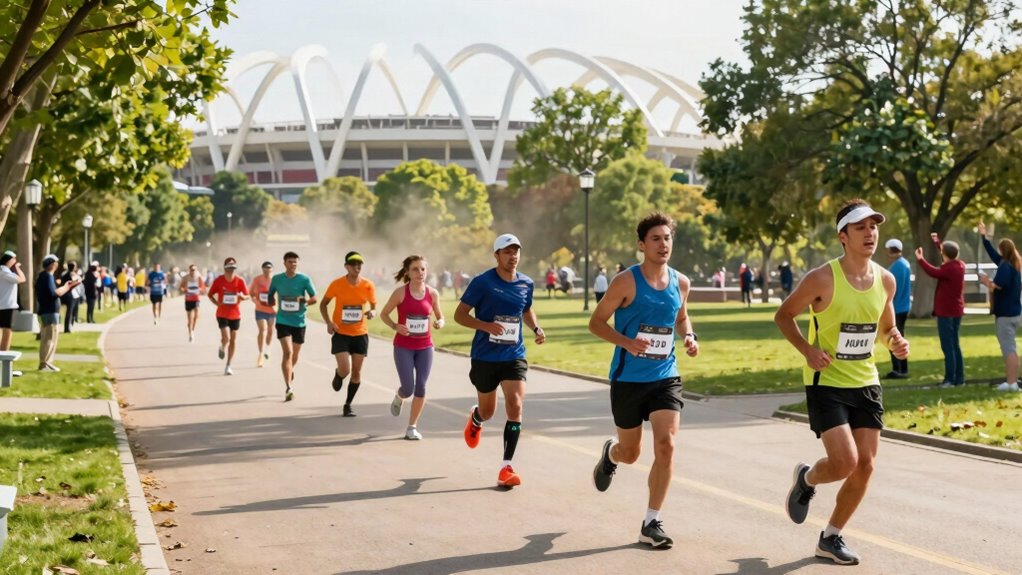
Many marathons finish in stadiums or parks because these venues boost the race’s appeal and make logistics easier. They offer scenic, spacious settings that create a dramatic and memorable finish for participants and spectators alike. These locations support post-race celebrations and foster a lively, energetic atmosphere. Their accessibility and infrastructure help manage large crowds smoothly, ensuring a safe and enjoyable event. Keep exploring to discover how these spots turn races into vibrant city celebrations.

Get workout gear delivered free with Prime
- Fast, free delivery on millions of items
- Prime Video, Amazon Music and more included
- Member-only deals all year
Key Takeaways
- Stadiums and parks provide scenic, memorable finish areas that enhance the race experience for participants and spectators.
- These venues support large crowds with existing infrastructure like parking and public transport, easing logistics.
- Open spaces facilitate post-race celebrations, ceremonies, and social gatherings, creating a festive atmosphere.
- The central, accessible locations improve spectator engagement and foster community participation.
- Finishing in well-planned venues ensures safety, organization, and a lively environment that elevates the event’s overall appeal.
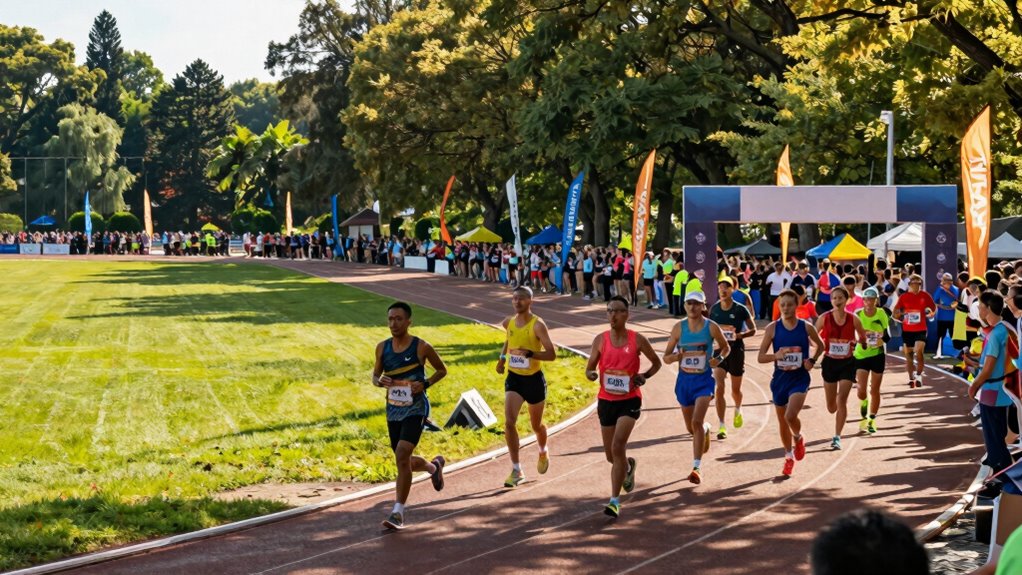
Many marathons now choose to finish their races in stadiums or parks, creating a dramatic and memorable ending for runners and spectators alike. This trend isn’t just about aesthetics; it’s a strategic move rooted in thoughtful urban planning and the desire to boost spectator engagement. When organizers select these scenic, spacious venues, they’re intentionally shaping the entire race experience—making it more accessible, festive, and engaging for everyone involved. Urban planning plays a key role in this decision. By choosing stadiums or parks as finish lines, race organizers leverage existing infrastructure that’s designed to handle large crowds comfortably and efficiently. These areas typically have ample parking, public transportation access, and facilities like restrooms and medical stations, which are essential for the safety and convenience of runners and spectators. This thoughtful placement reduces congestion and logistical headaches, allowing the event to flow smoothly and ensuring that spectators can cheer on their loved ones without navigating chaotic city streets. It transforms a simple race into a well-orchestrated event that seamlessly integrates into the city’s fabric. Additionally, such venues often offer a central location, making it easier for spectators to gather and participate. The use of well-planned venues also aligns with urban development strategies, promoting sustainable and organized event layouts. The integration of these venues within the urban environment enhances event accessibility for a diverse range of participants and viewers. Spectator engagement is another critical reason behind finishing in stadiums or parks. These venues naturally create a lively, communal atmosphere that heightens the race’s excitement. As runners approach the final stretch, spectators gather in large numbers, creating an electric environment filled with cheers, music, and celebration. The open space of parks or the grand stands of stadiums give spectators a perfect vantage point to cheer loudly and witness the finish line in all its glory. This shared energy motivates runners and makes the event more memorable for everyone. It’s not just about crossing the finish line; it’s about experiencing the collective joy of achievement and community spirit. Furthermore, ending races in these settings allows organizers to host post-race festivities easily. The open nature of parks and stadiums provides room for award ceremonies, live entertainment, food stalls, and social gatherings, turning the conclusion of the race into a festival. This encourages more spectators to stay longer, increasing engagement and making the event a highlight in the city’s event calendar. Runners and their families can celebrate together, knowing the venue supports a festive, inclusive atmosphere that leaves a lasting impression. In essence, finishing marathons in stadiums or parks isn’t accidental. It’s a deliberate strategy that combines smart urban planning with a focus on spectator engagement. It creates an environment where everyone—runners, spectators, and organizers—benefits from a more organized, lively, and memorable event.
As an affiliate, we earn on qualifying purchases.
Frequently Asked Questions
How Do Marathon Routes Impact Runner Performance?
Your marathon route directly impacts your performance through course difficulty and weather conditions. A flatter, smoother course lets you conserve energy, while hills or rough terrain challenge your stamina. Weather conditions like heat, rain, or wind can slow you down or cause dehydration. Planning for these factors helps you prepare better, so you can maintain a steady pace and finish strong, regardless of the route’s challenges.
Are There Safety Concerns in Stadium or Park Finishes?
Yes, there are safety concerns in stadium or park finishes. You should consider crowd safety, as large groups can lead to congestion or panic if not managed well. Emergency access is vital; organizers need clear pathways for medical responders in case of emergencies. Proper planning ensures runners and spectators stay safe, reducing risks of injuries or accidents during the finish line.
How Do Spectators Enhance the Marathon Experience?
You feel energized as cheering crowds surround you, their voices echoing like a wave of encouragement. Spectators, with banners and smiles, elevate your spirit amid scenic views that inspire perseverance. Their cheers create a vibrant atmosphere that pushes you forward, transforming a grueling race into a celebration of resilience. You thrive on their support, making the marathon a memorable journey filled with camaraderie, motivation, and breathtaking sights.
What Are the Logistical Challenges of Stadium or Park Finishes?
You face logistical challenges like managing spectator congestion and route planning when setting up stadium or park finishes. You must coordinate crowd control to prevent bottlenecks, guaranteeing runners and spectators stay safe. Precise route planning is essential to accommodate large crowds, provide clear directions, and avoid congestion points. Efficiently organizing these elements helps create a smooth, enjoyable experience for everyone and ensures the marathon ends safely and successfully.
Do Finishes in Stadiums or Parks Affect Race Atmosphere?
Finishing in stadiums or parks is like lighting a spark, igniting vibrant energy. You’ll feel the roar of spectator energy fueling your final push, transforming the race into a shared celebration. The crowd’s engagement creates an electrifying atmosphere, motivating you to reach your best. These lively venues amplify the race’s excitement, turning the finish line into a memorable moment, where you’re surrounded by cheers that lift your spirit and push you forward.
Conclusion
So, next time you cross that marathon finish line in a stadium or park, remember it’s more than just a scenic spot. Some say it’s to symbolize triumph and community, but others believe it’s tradition rooted in ancient festivities. Whatever the reason, finishing in a lively, open space boosts your spirit and makes the moment unforgettable. It’s a celebration of your effort, wrapped in an environment that energizes and inspires you to go even further.
Fall Picks
fall essentials
As an affiliate, we earn on qualifying purchases.