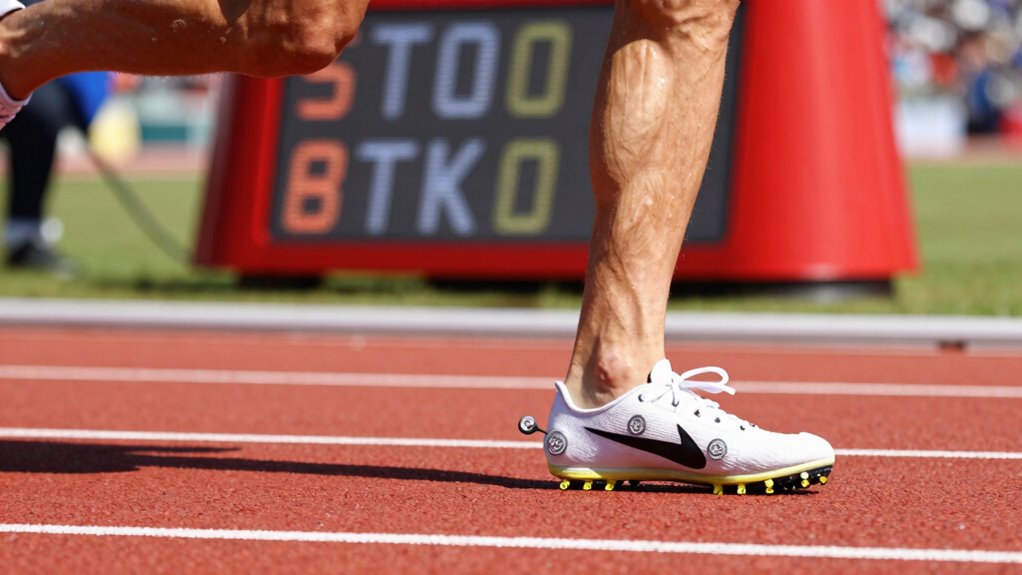

Timing chips have changed personal bests from static records into dynamic, measurable goals. They give you real-time split times and precise race data, allowing you to adjust your strategy mid-race and stay motivated. Instead of a single number, your PB becomes part of a continuous improvement journey, encouraging you to focus on pacing and progress. Keep exploring how this technology reshapes your running experience and sets new standards for achievement.

Get workout gear delivered free with Prime
- Fast, free delivery on millions of items
- Prime Video, Amazon Music and more included
- Member-only deals all year
Key Takeaways
- Timing chips enable detailed split times, transforming PBs into continuous, measurable benchmarks rather than just final race results.
- They provide real-time feedback, motivating runners to push harder and improve their personal bests during the race.
- Chips make PBs more dynamic, emphasizing incremental progress and ongoing performance rather than a single achievement.
- Accurate data from chips enhances race strategy, encouraging athletes to set data-driven, achievable goals for improvement.
- The technology fosters a mindset of continuous self-improvement, shifting PBs from static records to evolving performance indicators.
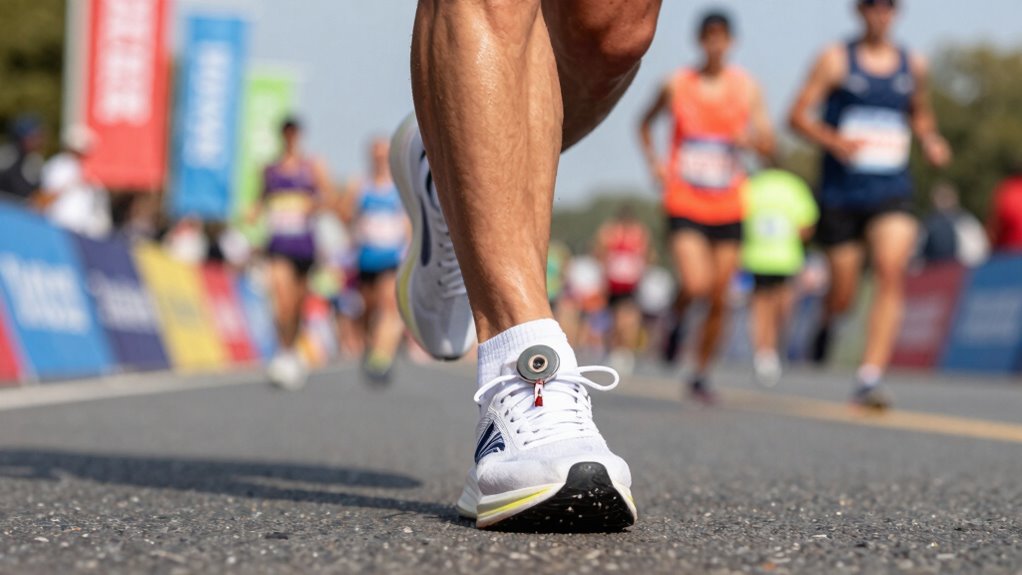
Timing chips have revolutionized how runners track their personal bests, providing precise and instant race data. No longer do you have to rely solely on finish times announced at the end of a race or guesswork about your pace. With timing chips, every stride you take during a race is recorded accurately, giving you real-time feedback that can influence your race strategy. Knowing your split times mid-race allows you to adjust your effort, whether that means speeding up or holding back, ultimately helping you execute a more calculated and effective race plan. This immediate data transforms how you approach each race, making your personal bests more than just a final number—they become a dynamic target you can aim for throughout the course.
Timing chips provide real-time race data, allowing runners to adjust effort and turn personal bests into dynamic, achievable goals.
The impact of timing chips extends beyond just tracking your pace; they also boost athlete motivation. When you see your split times update on a device or watch, it’s a powerful motivator. You can push yourself harder if you’re ahead of your expected pace or rally to catch up if you’re falling behind. This instant feedback fosters a sense of control and engagement, encouraging you to stay focused and committed from start to finish. Knowing that your performance is being precisely measured keeps you accountable and motivated to improve. It shifts the race from a simple finish time to a series of achievable goals, each split encouraging you to give your best effort at every mile or kilometer.
Timing chips have also changed what it means to set a personal best. Previously, a PB was just a number, often compared to previous race results with some uncertainty. Now, it’s an ongoing, measurable achievement—your latest split times, your overall pace, your ability to adapt your race strategy in real-time. This nuanced view means that even if you don’t win or place highly, you can still celebrate progress, because every race becomes a chance to beat your previous bests on a split-by-split basis. The technology encourages a mindset focused on continuous improvement, where your personal best isn’t just a single milestone but an evolving benchmark. Understanding the technology behind timing chips helps athletes appreciate the accuracy and reliability of the data they rely on for performance analysis.
In essence, timing chips have given runners a new level of insight into their performance. They make race strategy more flexible and athlete motivation more immediate. Whether you’re chasing a new PB or simply trying to improve your consistency, these tiny devices help you understand your capabilities better and push yourself further. They turn every race into a data-driven challenge, transforming personal bests from static achievements into dynamic milestones within your ongoing running journey. This technology has truly reshaped how athletes approach racing and self-improvement.
Products Worth Considering

Garmin Forerunner 55 GPS Running Watch, Black

Garmin Forerunner® 165 Running Smartwatch 43mm Black

Garmin Venu 4 GPS Fitness Smartwatch, 45 mm, Black Silicone
As an affiliate, we earn on qualifying purchases.
Frequently Asked Questions
How Do Timing Chips Work During a Race?
You wear the timing chip on your shoe or bib, and during the race, it works by recording your start and finish times. The chip’s placement guarantees course accuracy, as it communicates with sensors at the start and finish lines. When you cross these points, the chip transmits data, accurately capturing your race time. This system eliminates guesswork, giving you precise results based on your actual race performance.
Can Timing Chips Be Reused for Multiple Events?
Timing chips are like trusty tools that you can reuse, provided they’re durable enough to withstand multiple races. Usually, chip durability allows for reuse, making them a sustainable choice. Many races participate in recycling programs to collect used chips, ensuring they don’t end up in landfills. So, you can often reuse your timing chip for several events, saving money and helping the environment in the process.
Do Timing Chips Affect Race Results or Rankings?
Timing chips don’t directly affect race results or rankings; they simply record your finish time accurately. However, because race technology like timing chips guarantees precise timing, your personal bests are more reliably measured. Accurate data helps you track progress and compare performances over different events. So, while chips don’t change your rankings, they provide the essential technology that guarantees your personal bests are correctly recorded and recognized.
What Materials Are Typically Used for Timing Chips?
Timing chips are usually made from durable materials like plastic or silicone, ensuring they withstand rough conditions. Notably, over 90% of wearable technology used in races incorporates these materials for chip durability. These materials allow the chips to stay attached during the entire race, providing accurate results. Their flexibility and robustness are essential since they need to endure sweat, mud, and impact, making them reliable for precise race timing.
Are Timing Chips Mandatory for Official Race Timings?
Timing chips aren’t always mandatory for official race timings, but they’re highly recommended for smooth race day logistics and accurate participant identification. Using chips guarantees precise timing, reduces manual errors, and streamlines the process for organizers. If you want reliable results and efficient race management, wearing a timing chip is beneficial, especially in large events where quick participant identification and accurate timing are vital for fair competition.
Conclusion
Just like a lighthouse guiding ships safely to harbor, timing chips illuminate your true pace, revealing whether your personal best is real or just a mirage. They’ve transformed running from a simple race into a precise dance with time, where every second counts. So next time you race, remember—these tiny devices don’t just track your steps; they redefine your journey, turning fleeting moments into lasting achievements. Embrace the chip, and let your true potential shine.