
TL;DR

Get workout gear delivered free — and shop member deals
- Fast, free delivery on millions of items
- Access to Prime Big Deal Days deals on October 6–7
- Prime Video, Amazon Music and more included
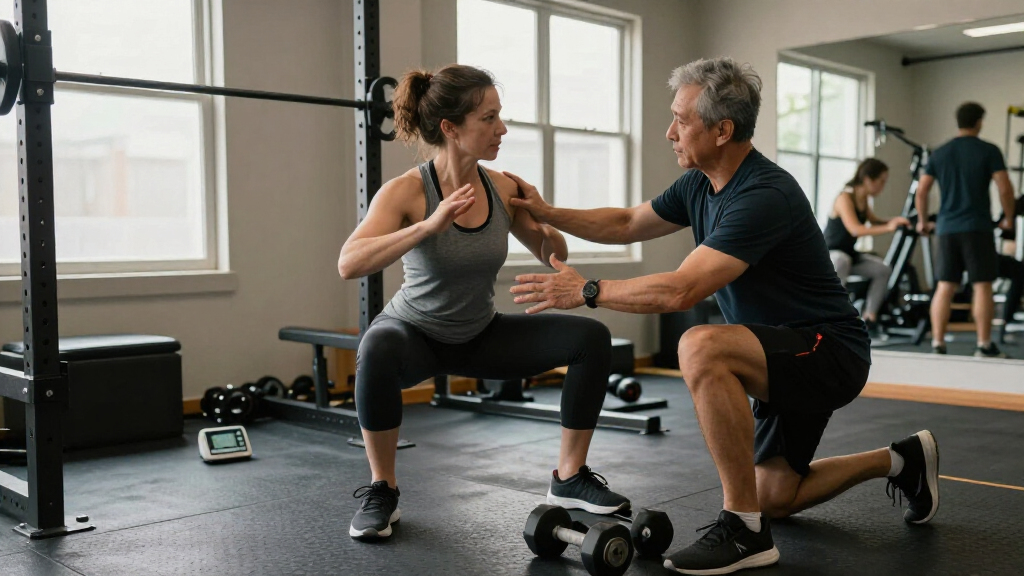
Personal trainer and Pilates instructor Jill Brown says people in their 40s and 50s may find familiar workouts produce less progress as daily movement changes and the body adapts to repeated exercise. She recommends gradually adding workout time, increasing intensity, or introducing a different type of exercise. These are her coaching suggestions, not evidence that age alone makes workouts ineffective.
Personal trainer and Pilates instructor Jill Brown says people in their 40s and 50s may find that familiar workouts no longer produce the same results, often alongside lower daily movement and changes in routine. In a Fit&Well report, she recommends gradually adjusting exercise volume, intensity, or type rather than assuming age alone explains stalled progress.
Brown told Fit&Well that she hears from people who have followed the same exercise routine for years and then begin gaining weight in midlife. She says a common contributor is a reduction in daily calorie expenditure, often because people move less as their work, responsibilities, or lifestyle change. Hormones may also play a part, she said, but the report does not quantify their effect or establish a single explanation for weight changes.
Repeated workouts can also become less challenging as the body adapts, according to Brown. If a session that once felt demanding now feels comfortable, she says the routine may no longer offer enough new stimulus to sustain the same progress. Her suggestions include adding 10 to 15 minutes to a session, adding one weekly workout, or increasing everyday movement with more steps or a longer walk.
For people with limited time, Brown suggests making a session harder by using heavier weights, adding faster intervals to a walking workout, or completing more repetitions. She advises changing volume or intensity one at a time, allowing the body to adjust before adding another challenge. Another option is to vary the exercise, such as adding kettlebells, suspension training, or cardio to a dumbbell-based strength routine.
Making Midlife Training More Adaptable
Brown’s advice matters to readers who feel that a long-standing routine has stopped helping them meet their goals. It offers practical ways to review training without treating age as a reason to give up exercise or making a sudden, sweeping change. Small adjustments can make a routine more challenging while leaving room to observe how the body responds.
The report also distinguishes exercise from total daily movement. Someone may keep scheduled workouts unchanged while walking less during the rest of the day; that difference could affect overall energy use, Brown says. Her suggestions are general coaching guidance, not a diagnosis or a guarantee of weight loss. Individual results can vary, and pain, health conditions, or recovery needs may call for tailored advice.
adjustable kettlebells for home workouts
As an affiliate, we earn on qualifying purchases.
As an affiliate, we earn on qualifying purchases.
How Familiar Routines Can Plateau
The report focuses on two explanations Brown gives for a perceived midlife slowdown: less movement outside workouts and adaptation to repeated training. It does not claim that everyone’s metabolism changes in the same way at 40 or 50. Brown describes cases she encounters as a trainer and instructor, rather than presenting population-wide research or measurements.
Her proposed changes cover three parts of a routine: the amount of exercise, how hard each session feels, and the exercises themselves. The report recommends gradual adjustment rather than increasing duration and intensity together. That distinction is relevant because a sudden jump in training demands may be harder to sustain; Brown’s stated approach is to give the body time to adapt before adding more.
“Your body adapts to the workouts that you do, so if you don’t change your workouts regularly, you’ll stop seeing progress.”
— Jill Brown, as quoted by Fit&Well
What the Report Does Not Establish
The report does not supply a publication date, underlying study, or measurements showing how much calorie burn or exercise progress changes with age. Brown says hormones can contribute, but the source gives no detail on which hormonal changes, how often they matter, or how they compare with changes in daily movement. It is also unclear whether the people she describes had other changes in diet, health, sleep, or activity.
The recommendations are not individualized training plans. The source does not specify how often to increase weights, what level of intensity is appropriate, or how to adapt the suggestions for injuries or medical conditions. It also does not promise that changing a routine will reverse weight gain or produce a particular fitness outcome.
Adjusting Training One Step at a Time
Brown’s guidance is to start with one manageable change: add a little time, increase everyday walking, make one session more challenging, or try a new exercise. After allowing time to adapt, people can judge whether the change feels sustainable and whether it is helping their goals. The report offers no specific follow-up schedule or later assessment of results.
Anyone with a health condition, persistent pain, or uncertainty about safe training intensity can seek guidance from a qualified health professional or exercise specialist. The next step for readers is to assess whether their routine still feels challenging and whether their movement outside formal workouts has changed, rather than making several major adjustments at once.
Key Questions
Why might a familiar workout feel less effective in midlife?
Brown says daily movement may decline as lifestyle changes, and the body may adapt to repeated workouts. The report does not establish that age alone causes a drop in results.
What changes does Jill Brown suggest?
She suggests adding 10 to 15 minutes to a workout, adding a weekly session, increasing everyday steps, raising the challenge of a session, or trying a different type of exercise.
Should people increase workout time and intensity at once?
No. Brown advises changing volume or intensity separately and letting the body adjust before adding another challenge.
Does changing workouts guarantee weight loss?
No. The report presents Brown’s suggestions as general training advice and does not promise weight loss or a specific result. Individual outcomes vary.
Source: rss
Fall Picks
fall essentials
As an affiliate, we earn on qualifying purchases.