TL;DR
Fit&Well published a beginner-friendly, four-pose yoga flow created by Yogalina Studios founder and teacher Alina Boyett. The sequence is presented as gentle recovery movement for the legs, hips, back and shoulders; it is not evidence that the poses treat injuries or guarantee improved flexibility.
Fit&Well has published a four-movement yoga flow created by Alina Boyett, founder of UK-based Yogalina Studios, for people looking for gentle movement after exercise or a day spent sitting. The beginner-oriented sequence uses restorative poses, a forward fold and a seated twist, and can be done at home without equipment, according to the report.

Get workout gear delivered free with Prime
- Fast, free delivery on millions of items
- Prime Video, Amazon Music and more included
- Member-only deals all year
Boyett said the routine is intended to address areas that can feel tense after activity, including the legs, hips, spine and shoulders. It consists of waterfall pose with the legs resting up a wall, child’s pose, a relaxed standing forward fold and a seated spinal twist. The report provides suggested breathing counts or holds for each position rather than a timed workout.
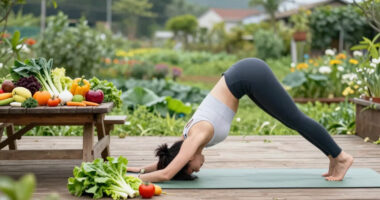
In waterfall pose, practitioners lie on their backs near a wall and rest their legs upward, bending the knees if needed. Child’s pose begins on hands and knees, with the hips moving toward the heels and the arms extended forward. For the ragdoll variation, participants stand with softened knees, fold forward from the hips and let the upper body hang. The final movement is a gentle seated rotation to each side.
Boyett advises moving slowly and within a comfortable range, and says not to force a stretch or push through pain. The source also recommends professional guidance before trying the sequence for people with an injury or relevant medical condition. These are general exercise instructions from the report, not individualized medical advice.
A Lower-Intensity Option for Recovery
The report’s practical focus is the distinction between training and recovery: Boyett argues that taking time to slow down can be part of a consistent exercise routine. The sequence offers readers a short, equipment-free option for gentle movement, whether after a workout, a run or prolonged sitting. It does not require advanced yoga experience, though comfort and ability will vary from person to person.
For readers considering the flow, the main takeaway is its low-pressure approach rather than a promise of a specific result. The poses involve stretching and controlled movement, but the source provides no clinical evidence or measured outcomes showing that this particular routine releases muscle tension or increases flexibility. Any benefit should be understood as Boyett’s rationale for the sequence, not a guaranteed effect.
Products Worth Considering

Oura Ring 4 Smart Ring, Silver, Size 8

Garmin Forerunner 165 GPS Running Smartwatch, 43 mm, Black

Oura Ring 5 Smart Ring, Silver, Size 7
As an affiliate, we earn on qualifying purchases.
Why the Sequence Includes Four Poses
Boyett told Fit&Well that recovery deserves attention alongside exercise intensity and volume. She described recovery not as inactivity, but as giving the body what it needs. Her sequence combines resting positions with gentle movement, and she says its intended focus is on body areas commonly affected by exercise or extended sitting.
The reported holds are brief: three to five breaths for waterfall pose and child’s pose; two sets of three to five breaths for the ragdoll fold; and two sets of two to three breaths per side for the seated twist. Yogalina teacher Misha Clarke demonstrates the sequence in a video referenced by the original report. The source does not report a formal trial, a comparison with other recovery methods or measured flexibility changes.
Evidence and Individual Suitability
The source does not give a publication date, research findings or data testing whether the sequence improves flexibility, reduces muscle soreness or changes recovery outcomes. Boyett’s descriptions of how the poses may feel are expert commentary in the report, not measured results. It is also unclear how long the full routine takes, beyond the breath counts listed for individual poses.
People’s mobility, comfort and health circumstances differ. The report advises people with injuries or relevant medical conditions to seek professional guidance, but does not define which conditions might make particular poses unsuitable. Readers should stop if a movement causes pain and adapt or skip positions that do not feel comfortable.
How Readers Can Approach the Flow
The Fit&Well report presents the flow as a home routine readers can try at their own pace, following the listed setup and breath counts. There is no announced follow-up study, scheduled update or further development in the supplied material. Anyone who chooses to try it can keep the movements gentle, use support such as a wall for waterfall pose and avoid forcing range of motion.
People managing an injury or medical condition should consult an appropriate health professional before beginning. The report’s advice is to treat the sequence as optional recovery movement, not a substitute for individualized care or a requirement for making progress with exercise.
Key Questions
What does the beginner yoga flow include?
It includes waterfall pose, child’s pose, a ragdoll forward fold and a seated spinal twist. The report gives brief breath-based holds for each movement.
Do I need equipment or yoga experience?
The sequence is described as requiring no equipment or previous yoga experience. A wall is used to support the legs in waterfall pose, and participants can keep their knees bent where needed.
Does the routine have proven flexibility benefits?
The source does not provide research or measured results showing that this specific sequence increases flexibility or treats muscle tension. Those aims are presented as the teacher’s rationale for the movements, not guaranteed outcomes.
Is the flow suitable for someone with an injury?
Boyett advises people with an injury or relevant medical condition to seek professional guidance before trying it. The report also says not to force a stretch or push through pain.
Source: fitandwell.com