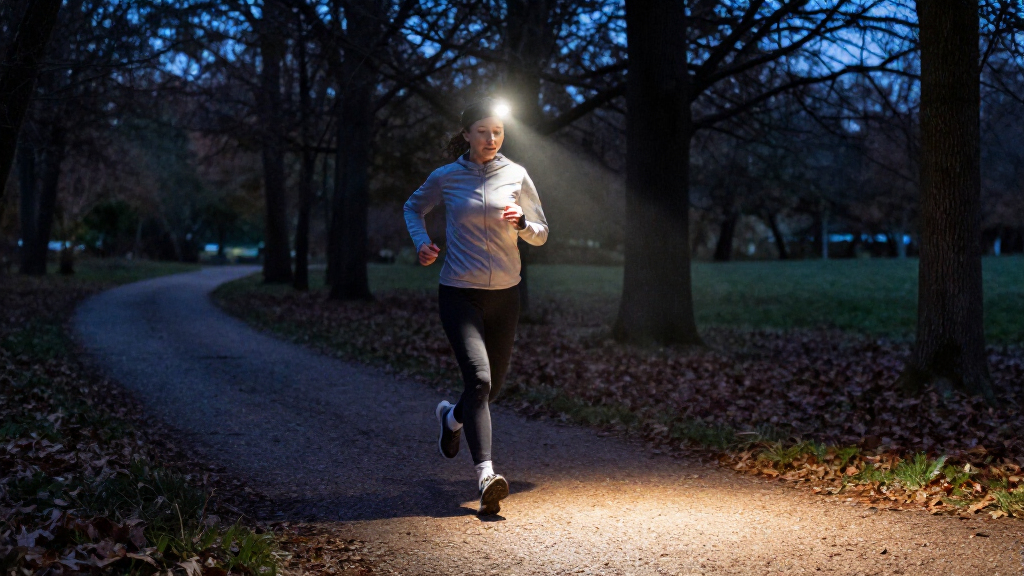

For most runners, I’d start with the Nitecore NU25 UL: its 400-lumen output, USB-C charging, and lightweight design make it the strongest all-around fit for regular night runs. The Black Diamond Cosmo 350 is a better match if you prefer replaceable AAA batteries, while the Lepro 300-Lumen offers a simpler, lower-output option for casual routes. The main tradeoffs are brightness versus battery life, a secure running fit versus bulk, and rechargeable convenience versus easy battery replacement. Wide-beam models and motion-sensor two-packs offer different strengths, but extra features do not automatically make a headlamp more comfortable on a run. Read on for the full breakdown and help matching a light to your routes and habits.

Get workout gear delivered free with Prime
- Fast, free delivery on millions of items
- Prime Video, Amazon Music and more included
- Member-only deals all year
Complete the kit


Key Takeaways
- The Nitecore NU25 UL leads for regular running because its light weight, USB-C charging, and 400-lumen output balance trail visibility with a compact setup.
- The Black Diamond Cosmo 350 is the standout for battery flexibility: AAA power suits runners who want to carry spare batteries instead of relying on charging access.
- Wide-beam and motion-sensor options prioritize convenience and peripheral coverage, but their added features may mean more bulk than a runner needs.
- Two-packs from GearLight, LHKNL, Blukar, BIAT, and Avlxt favor shared use or backup lighting; runners should compare each unit’s fit and controls rather than assume a pair means better running performance.
- Output alone does not settle the choice: the Foxelli MX20B’s 165 lumens may suit modest routes, while brighter options make more sense when terrain, pace, or darkness calls for more reach.
| GearLight S500 LED Headlamps, 2-Pack, Battery Powered, 7 Modes with Red Light | 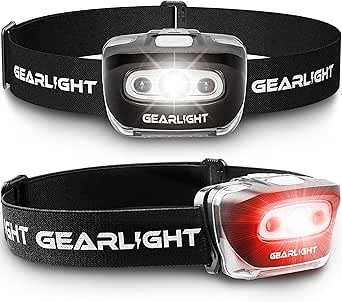 | Best Battery-Powered Value | Pack quantity: 2 headlamps | Maximum brightness: 200 lumens | Lighting modes: 7, including red light and strobe | VIEW LATEST PRICE | See Our Full Breakdown |
| LHKNL Rechargeable LED Headlamps, 2-Pack |  | Best for Hands-Free Switching | Pack size: 2 headlamps | White brightness: 1200 lumens | Lighting modes: 8; white and red lighting | VIEW LATEST PRICE | See Our Full Breakdown |
| Blukar Rechargeable LED Headlamp, 2-Pack | 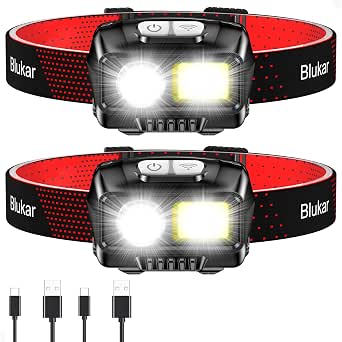 | Best for Adjustable Brightness | Pack size: 2 headlamps | Maximum brightness: 2000 lumens | Lighting modes: 8 | VIEW LATEST PRICE | See Our Full Breakdown |
| Rechargeable LED Headlamp, 1500 Lumens, 230° Wide Beam |  | Best for Broad Peripheral Coverage | Maximum brightness: 1500 lumens | Beam angle: 230 degrees | Lighting modes: 3: high, low, and strobe | VIEW LATEST PRICE | See Our Full Breakdown |
| BIAT Rechargeable LED Headlamps with 230° Wide Beam and Motion Sensor, 2-Pack |  | Best Wide-Beam Two-Pack | Quantity: 2 headlamps | Light sources: COB and XPE LEDs | Brightness: 350 lumens | VIEW LATEST PRICE | See Our Full Breakdown |
| DanForce Bold-S USB Rechargeable LED Headlamp with Red Light |  | Best for a High-Power Beam | Maximum brightness: Up to 1,080 lumens | Light modes: 4 | Secondary light: Red light | VIEW LATEST PRICE | See Our Full Breakdown |
| Foxelli MX20B LED Headlamp, 165 Lumens, IPX5 Water Resistant |  | Best for Beginners | Brightness: 165 lumens | Beam distance: 165 feet | Lighting modes: 7; white and red, including SOS and strobe | VIEW LATEST PRICE | See Our Full Breakdown |
| Black Diamond Cosmo 350 Headlamp, AAA-Powered, BD Graphite |  | Best for Wet-Weather Confidence | Maximum brightness: 350 lumens | Lighting modes: Dimming, strobe, red night vision | Power: 3 AAA batteries or compatible BD 1500 Li-ion battery | VIEW LATEST PRICE | See Our Full Breakdown |
| LHKNL Rechargeable LED Headlamp, 2-Pack |  | Best Two-Pack for Shared Use | Pack size: 2 headlamps | Maximum light output: 1,000 lumens | Lighting modes: 8 | VIEW LATEST PRICE | See Our Full Breakdown |
| Nitecore NU25 UL 400-Lumen USB-C Rechargeable Headlamp |  | Best Lightweight Running Pick | Maximum brightness: 400 lumens | Maximum beam distance: 144 yards | Weight: 1.6 ounces | VIEW LATEST PRICE | See Our Full Breakdown |
| Avlxt 2-Pack Rechargeable LED Headlamps with Motion Sensor |  | Best for Shared Gear and Wide Close-Range Visibility | Pack quantity: 2 | Maximum brightness: 350 lumens | Beam angle: 230° | VIEW LATEST PRICE | See Our Full Breakdown |
| Lepro Rechargeable LED Headlamp, 300 Lumens, IPX4 Waterproof, 5 Modes |  | Best for Long Runs and Red-Light Options | Maximum brightness: 300 lumens | Beam distance: Up to 500 feet | Light modes: 5: white high, white low, white strobe, red steady, red flash | VIEW LATEST PRICE | See Our Full Breakdown |
| running headlamps for night running | Water resistance | Lighting modes | Weight | Maximum brightness |
|---|---|---|---|---|
| GearLight S500 LED Headlamps | Water resistant; described for rain, not submersion | 7, including red light and strobe | Approximately 3 oz with batteries | 200 lumens |
| LHKNL Rechargeable LED Headlam | IPX4 | 8; white and red lighting | 1.87 oz | — |
| Blukar Rechargeable LED Headla | IPX5 | 8 | — | 2000 lumens |
| Rechargeable LED Headlamp | IPX6 | 3: high, low, and strobe | 270 g | 1500 lumens |
| BIAT Rechargeable LED Headlamp | IPX4 | 6 | 2.47 oz | — |
| DanForce Bold-S USB Rechargeab | IP54 | — | 8.8 ounces | Up to 1,080 lumens |
| Foxelli MX20B LED Headlamp | — | 7; white and red, including SOS and strobe | 3.2 ounces with batteries | — |
| Black Diamond Cosmo 350 Headla | IP67; up to 1 meter for 30 minutes | Dimming, strobe, red night vision | — | 350 lumens |
| LHKNL Rechargeable LED Headlam | IPX4 | 8 | 1.76 ounces | — |
| Nitecore NU25 UL 400-Lumen USB | IP66 | — | 1.6 ounces | 400 lumens |
| Avlxt 2-Pack Rechargeable LED | IPX4 | 5: COB high, COB low, XPE high, XPE low, strobe | — | 350 lumens |
| Lepro Rechargeable LED Headlam | IPX4 | — | 2.86 ounces | 300 lumens |
More Details on Our Top Picks
GearLight S500 LED Headlamps, 2-Pack, Battery Powered, 7 Modes with Red Light
The GearLight S500 two-pack suits runners who want a simple spare headlamp ready without waiting for a recharge. Its 200-lumen output is better matched to familiar routes and close-to-medium-range visibility than to fast running on dark, open trails. Seven modes, including red light, give it more flexibility than a basic single-beam lamp, and the 45-degree tilt helps aim the light at the path. Compared with the rechargeable LHKNL two-pack, GearLight avoids charging logistics but relies on AAA batteries that are not included. Its listed 10-hour runtime is useful for shorter outings, though battery replacement becomes an ongoing chore. The light weight and washable band are practical, while water resistance is for rain rather than submersion.
Pros:- Two headlamps make it practical to keep a spare or equip a running partner
- Seven modes include red light and strobe
- 45-degree tilt lets runners direct the beam toward the ground
- Adjustable, washable headband and approximately 3-ounce weight support comfortable routine use
Cons:- Each lamp needs three AAA batteries, which are not included
- 200 lumens is modest for fast running on unlit trails
- Rain-oriented water resistance does not cover submersion
Best for: Runners who want two lightweight backup or shared-use lamps for short runs on familiar, moderately lit routes
Not ideal for: Trail runners who need a brighter beam for speed or remote routes, or anyone who prefers USB charging over carrying spare AAA batteries
- Pack quantity:2 headlamps
- Maximum brightness:200 lumens
- Lighting modes:7, including red light and strobe
- Power:3 AAA batteries per headlamp; batteries not included
- Listed runtime:10 hours
- Adjustable tilt:45 degrees
- Weight:Approximately 3 oz with batteries
- Water resistance:Water resistant; described for rain, not submersion
Our verdict“Choose the GearLight S500 for an inexpensive-to-run-with spare pair and short, familiar routes, but pick a brighter rechargeable model for darker trails.”
LHKNL Rechargeable LED Headlamps, 2-Pack
The LHKNL two-pack puts its motion sensor at the center of the experience: runners can switch modes with a hand wave rather than reaching for a small button. That can be handy at a stop or when handling gear, though the sensor is not a substitute for a dependable, easy-to-find control while running. Its rechargeable design avoids the GearLight S500’s disposable AAA routine, and the 60-degree pivot gives more aiming range than GearLight’s 45-degree adjustment. The listed 1200-lumen white output is a substantial step up from the S500’s 200 lumens, but the stated 4–10-hour battery life makes charge planning relevant on longer outings. IPX4 protection suits rain or snow, not immersion, and this pair is a better fit for everyday routes than runners seeking a carefully specified long-distance light.
Pros:- Motion sensor allows hands-free switching
- Two rechargeable headlamps avoid disposable-battery changes
- Eight modes include white and red light
- 60-degree pivot offers flexible beam aiming
Cons:- Listed battery life of 4–10 hours may require charging between longer outings
- IPX4 protection is not for submersion
- Motion sensing may be less convenient than direct button control when quick adjustments are needed
Best for: Runners who value rechargeable convenience and want hands-free mode switching for short-to-moderate outings or pre-run tasks
Not ideal for: Ultrarunners and runners on long, remote routes who need a clearly specified long runtime or protection beyond rain and splashes
- Pack size:2 headlamps
- White brightness:1200 lumens
- Lighting modes:8; white and red lighting
- Battery:Built-in 1500 mAh lithium-ion polymer
- Listed battery life:4–10 hours
- Head pivot:60 degrees
- Weight:1.87 oz
- Water resistance:IPX4
- Motion sensor:Yes
Our verdict“Pick the LHKNL pair if rechargeable operation and gesture switching matter more than a long, clearly defined runtime.”
Blukar Rechargeable LED Headlamp, 2-Pack
The Blukar rechargeable two-pack stands out for runners who want to tune brightness rather than choose only preset levels. Its stepless control spans 100% to 30%, while XPG and COB LEDs and eight modes offer more lighting combinations than the three-mode 230-degree headlamp in this lineup. USB-C charging and IPX5 resistance also give it a more trail-oriented spec mix than the rain-focused IPX4 LHKNL pair. The tradeoff is that the advertised 2000 lumens and 30-hour runtime lack stated conditions, so I would not treat either figure as a guarantee of sustained high-output running light. Its 45-degree tilt provides less aiming range than LHKNL’s 60 degrees, and the listed weight figures are inconsistent. This is a flexible two-lamp option, but buyers should prioritize its controls and charging format over headline numbers.
Pros:- Stepless brightness adjustment provides more control than fixed brightness levels
- USB-C charging is convenient for routine recharging
- Eight modes include white, red, and red strobe options
- IPX5 rating offers more water protection than the IPX4 LHKNL and BIAT models
Cons:- The 30-hour runtime listing does not specify operating conditions
- Brightness adjustment is limited to 100%–30%, with no lower setting stated
- Weight information is inconsistent in the supplied specifications
Best for: Runners who want fine brightness adjustment, USB-C charging, and a two-lamp set for regular routes with changing light conditions
Not ideal for: Runners choosing primarily by verified high-output runtime, or those who need a more clearly stated weight and performance profile
- Pack size:2 headlamps
- Maximum brightness:2000 lumens
- Lighting modes:8
- Brightness adjustment:Stepless, 100% to 30%
- Light sources:XPG and COB LEDs
- Battery and charging:1200 mAh lithium polymer; USB-C
- Listed runtime:30 hours; conditions not specified
- Water resistance:IPX5
- Lamp tilt:45 degrees
Our verdict“Choose Blukar for adjustable output and USB-C convenience, but do not base a long-run plan on its unqualified runtime claim.”
Rechargeable LED Headlamp, 1500 Lumens, 230° Wide Beam
This 230-degree wide-beam headlamp is the lineup’s broadest-coverage choice, lighting a wide field without requiring as much head movement as a narrower beam. That can help on uneven paths, but a wide flood is not automatically the best fit for spotting distant trail features; the Blukar’s XPG and COB setup offers a different combination of lighting modes and adjustable brightness. This model adds a red rear light that can operate with the front light, a useful visibility feature for road running. Its 5000 mAh battery and USB-C charging look appealing, and IPX6 is a stronger water-resistance claim than the IPX4 ratings on LHKNL and BIAT. However, the runtime listings conflict, and the battery data also mentions two AA batteries despite describing a rechargeable lithium-ion pack. Those inconsistencies make it harder to plan dependable long runs.
Pros:- 230-degree beam provides broad peripheral illumination
- Front white light and rear red light can operate together
- USB-C charging and a listed 5000 mAh battery
- IPX6 rating is higher than the IPX4 protection listed for LHKNL and BIAT
Cons:- Battery runtime figures conflict across the supplied specifications
- Battery information also lists two AA batteries, conflicting with the rechargeable lithium-ion description
- At 270 g, it is substantially heavier than the listed 1.87-ounce LHKNL headlamp
Best for: Road and path runners who prioritize a broad field of view and a rear red light for visibility to others
Not ideal for: Runners who need reliable battery-life planning or a lightweight, uncomplicated setup for long trail outings
- Maximum brightness:1500 lumens
- Beam angle:230 degrees
- Lighting modes:3: high, low, and strobe
- Battery capacity:5000 mAh listed
- Charging:USB-C
- Battery life:Conflicting listings: up to 12 hours on low, 6 hours on high, and also 9 hours
- Water resistance:IPX6
- Weight:270 g
- Front and rear lights:White front light and red tail light; can operate simultaneously
Our verdict“Choose this model for wide peripheral coverage and a rear light, but skip it if consistent battery specifications and a light running fit are priorities.”
BIAT Rechargeable LED Headlamps with 230° Wide Beam and Motion Sensor, 2-Pack
The BIAT two-pack combines a 230-degree COB flood with a separate XPE spotlight, giving runners a choice between nearby peripheral coverage and a more focused beam. That makes it more adaptable than the single broad-beam approach of the rechargeable 230-degree headlamp, though its stated 350-lumen output is more modest than the Blukar’s advertised 2000 lumens. For familiar routes where broad near-field light matters more than maximum reach, the balance may be sensible. The motion sensor can switch modes without touching the lamp, but it requires a hand wave within 10 cm, so it may take practice when moving. IPX4 protection is suitable for splashes and ordinary wet weather, not submersion. With two rechargeable lamps in the pack, it suits shared use, but runners should not mistake the wide beam for a guarantee of strong distant visibility.
Pros:- 230-degree COB beam and separate XPE spotlight offer both broad and focused lighting
- Two headlamps provide a spare or shared-use option
- Motion-sensor mode enables hands-free switching
- Lightweight 2.47-ounce design with adjustable elastic band
Cons:- 350-lumen output is lower than the listed brightness of the Blukar and LHKNL models
- Motion sensor requires a hand wave within 10 cm
- IPX4 protection is not for submersion
Best for: Pairs of runners or runners who want a rechargeable spare and prefer wide near-field coverage with a separate focused spotlight
Not ideal for: Fast trail runners who need stronger distant illumination, or anyone who wants higher water protection than IPX4
- Quantity:2 headlamps
- Light sources:COB and XPE LEDs
- Brightness:350 lumens
- Beam angle:230 degrees
- Lighting modes:6
- Power:Rechargeable lithium-ion battery; 3.7 V
- Motion sensor range:Within 10 cm
- Water resistance:IPX4
- Weight:2.47 oz
Our verdict“Choose BIAT for a lightweight rechargeable pair with broad near-field coverage, not for maximum trail distance or heavy-rain exposure.”
DanForce Bold-S USB Rechargeable LED Headlamp with Red Light
The DanForce Bold-S puts a high stated output and a zoomable beam ahead of low weight: its maximum is 1,080 lumens, with four modes and a red light for preserving night vision. That makes it a better fit for runners who also want a versatile lamp for camp or work than the more run-focused, lighter Nitecore NU25 UL. The tradeoff is substantial for running: at 8.8 ounces, it weighs far more than the Nitecore’s 1.6 ounces, which may feel cumbersome over longer outings. It includes a rechargeable battery and USB-C cable, but the listed runtime is not provided, so I can’t gauge how long it will sustain its brightest setting. Its water resistance is described as IP54, not submersion protection, and the warranty is only 90 days.
Pros:- Up to 1,080 lumens with four modes and a zoomable beam.
- Red light and a rear safety light add options for low-light use.
- Rechargeable battery and USB-C cable are included.
- Aluminum construction and an adjustable headband.
Cons:- At 8.8 ounces, it is much heavier than the Nitecore NU25 UL for running.
- No runtime figure is provided, making battery planning difficult.
- IP54 water resistance and a 90-day warranty offer limited reassurance for frequent use in wet conditions.
Best for: Runners who want a powerful, adjustable beam for mixed outdoor use and are comfortable with a heavier headlamp.
Not ideal for: Distance runners prioritizing a light, low-bulk setup or anyone needing a published runtime and stronger wet-weather protection.
- Maximum brightness:Up to 1,080 lumens
- Light modes:4
- Secondary light:Red light
- Beam angle:90 degrees
- Power:Included 3.7 V lithium-ion polymer battery; USB charging
- Water resistance:IP54
- Weight:8.8 ounces
- Included components:Headlamp, headband, carry bag, Type-C cable
Our verdict“Choose the DanForce Bold-S if beam power and adjustability matter more to you than a lightweight fit for long runs.”
Foxelli MX20B LED Headlamp, 165 Lumens, IPX5 Water Resistant
The Foxelli MX20B keeps the setup simple for runners who prefer replaceable batteries to charging: three AAA cells are included, and the stated runtime reaches 45 hours. Its 3.2-ounce weight is notably easier to wear than the DanForce Bold-S, though its 165-lumen maximum and 165-foot beam distance are modest beside that model’s much higher claimed output. A tiltable body helps aim the beam toward the path, while seven white and red modes include SOS and strobe. IPX5 protection covers spray and splashes, not submersion. The main compromise is brightness: this is better suited to familiar routes and steady, easy runs than fast running on dark trails where a stronger beam can reveal obstacles sooner.
Pros:- Lightweight at 3.2 ounces with batteries.
- Three AAA batteries are included, with a stated runtime of up to 45 hours.
- Seven modes include white and red light, SOS, and strobe.
- 45-degree tilt helps direct light toward the route.
Cons:- The 165-lumen maximum is modest compared with the DanForce Bold-S.
- Requires disposable AAA batteries rather than USB recharging.
- IPX5 protects against spray and splashes but not submersion.
Best for: New night runners on familiar roads or paths who want a lightweight, battery-powered lamp with included AAA batteries.
Not ideal for: Trail runners moving quickly in very dark conditions or runners who want USB-rechargeable power and a brighter beam.
- Brightness:165 lumens
- Beam distance:165 feet
- Lighting modes:7; white and red, including SOS and strobe
- Beam angle:45 degrees
- Tilt:45-degree adjustable body
- Runtime:Up to 45 hours
- Power:3 AAA alkaline batteries; included
- Weight:3.2 ounces with batteries
Our verdict“Pick the Foxelli MX20B for straightforward, lightweight running on well-known routes, not demanding dark trails.”
Black Diamond Cosmo 350 Headlamp, AAA-Powered, BD Graphite
For runners whose routes regularly bring heavy rain or muddy conditions, the Black Diamond Cosmo 350 stands apart with an IP67 rating: it is specified to withstand submersion up to 1 meter for 30 minutes. That protection is a stronger fit for exposed outings than the Foxelli MX20B, whose IPX5 rating covers spray and splashes. At up to 350 lumens, the Cosmo also offers more headroom than the Foxelli’s 165-lumen output, though it falls well short of the DanForce Bold-S’s stated maximum. Dimming, strobe, and red night-vision modes give it useful flexibility. It runs on included AAA batteries, with a compatible rechargeable battery available separately; that optional pack adds flexibility but not a rechargeable setup out of the box.
Pros:- IP67 rating specifies protection during submersion up to 1 meter for 30 minutes.
- Up to 350 lumens offers more output than the Foxelli MX20B.
- Dimming, strobe, and red night-vision modes support varied conditions.
- Can use three AAA batteries or a compatible BD 1500 rechargeable battery.
Cons:- The rechargeable BD 1500 battery is not included.
- Maximum output is lower than the DanForce Bold-S’s stated 1,080 lumens.
- The product instructions call for thorough drying after use in wet conditions.
Best for: Runners who train in sustained wet weather and want stronger water protection with moderate output.
Not ideal for: Buyers seeking an included rechargeable battery, a particularly lightweight lamp, or the brightest beam in this group.
- Maximum brightness:350 lumens
- Lighting modes:Dimming, strobe, red night vision
- Power:3 AAA batteries or compatible BD 1500 Li-ion battery
- Batteries included:3 AAA
- Water resistance:IP67; up to 1 meter for 30 minutes
- Material:Polycarbonate
- Dimensions:4 × 3 × 2 inches
- Warranty:3 years
Our verdict“Choose the Cosmo 350 if wet-weather protection matters more than rechargeable power being included.”
LHKNL Rechargeable LED Headlamp, 2-Pack
This LHKNL two-pack gives runners a spare lamp or a second headlamp to share, while keeping each unit light at 1.76 ounces. The 60-degree adjustable lamp head helps aim illumination down toward the route, and motion-sensor control can switch the light on or off without searching for a button mid-run. Its eight modes include white and red options, and the stated output reaches 1,000 lumens. Compared with the Nitecore NU25 UL, it offers more units and a motion sensor, but the Nitecore is lighter and has a stated maximum runtime of up to 45 hours; this LHKNL is listed at just 4–10 hours per charge. IPX4 is suitable for splashes and wet weather, not immersion, so it is less suited to prolonged downpours than the IP67 Cosmo 350.
Pros:- Two rechargeable headlamps provide a spare or shared-use option.
- Lightweight at 1.76 ounces per headlamp.
- Motion-sensor mode and eight lighting modes, including white and red.
- 60-degree adjustable lamp head helps direct the beam.
Cons:- The stated 4–10-hour runtime is shorter than the Nitecore NU25 UL’s stated maximum.
- IPX4 protection is for splashes and wet weather, not immersion.
- The 1,000-lumen maximum is a stated peak, and the supplied data does not specify runtime at that output.
Best for: Running partners, households, or solo runners who want a spare rechargeable lamp and value motion-sensor controls.
Not ideal for: Runners needing long outings between charges or dependable protection against heavy rain and immersion.
- Pack size:2 headlamps
- Maximum light output:1,000 lumens
- Lighting modes:8
- Battery:Included 1,500 mAh lithium-ion polymer
- Runtime:4–10 hours
- Water resistance:IPX4
- Weight:1.76 ounces
- Lamp head adjustment:60 degrees
Our verdict“Choose this LHKNL two-pack for shared use and convenient controls, but not for long runs between charges.”
Nitecore NU25 UL 400-Lumen USB-C Rechargeable Headlamp
The Nitecore NU25 UL is the most running-focused choice here if low weight matters: at 1.6 ounces, it is lighter than the LHKNL headlamp and dramatically lighter than the DanForce Bold-S. Its 400-lumen maximum and 144-yard beam distance provide more stated reach than the Foxelli MX20B, while warm, natural, and cool white options let runners choose the character of the light. Red light, SOS, and beacon modes add utility beyond the route. USB-C charging takes just over an hour, and the stated maximum battery life is up to 45 hours, though actual runtime varies by mode. Unlike the Foxelli, it cannot fall back on replaceable AAA batteries when depleted, and its plastic construction may appeal less to buyers seeking a more rugged-feeling metal lamp.
Pros:- At 1.6 ounces, it is lighter than the other rechargeable options in this group.
- 400-lumen maximum and 144-yard beam distance exceed the Foxelli MX20B’s listed output and reach.
- USB-C charging is specified at just over an hour.
- IP66 water resistance, impact resistance up to 1 meter, and multiple white and red modes.
Cons:- Rechargeable battery cannot be swapped for AAA cells as with the Foxelli MX20B.
- The up-to-45-hour figure varies by mode, and another listed runtime figure is 2 hours.
- Maximum brightness is lower than the DanForce Bold-S’s stated 1,080 lumens.
Best for: Runners who prioritize a minimal-feeling headlamp, USB-C charging, and multiple white-light choices for regular night runs.
Not ideal for: Runners who want replaceable batteries for backup or a high-output lamp for especially dark, fast trail running.
- Maximum brightness:400 lumens
- Maximum beam distance:144 yards
- Weight:1.6 ounces
- Light modes:Warm, natural, and cool white; red, SOS, and beacon
- Battery life:Up to 45 hours; varies by mode
- Charging:USB-C; just over 1 hour
- Water resistance:IP66
- Impact resistance:Up to 1 meter
Our verdict“Choose the NU25 UL if a very light, rechargeable headlamp matters more than replaceable-battery backup or peak output.”
Avlxt 2-Pack Rechargeable LED Headlamps with Motion Sensor
The Avlxt two-pack suits runners who want a broad pool of nearby light and a spare headlamp for a partner or backup kit. Its 230° beam spreads light across more of the path than a conventional forward-facing beam, while the side spotlight offers a more focused option. Hand-wave controls can make switching modes easier when your hands are cold or occupied, though they may be less predictable than a physical button while running. Compared with the Lepro Rechargeable LED Headlamp, Avlxt prioritizes wide coverage and a second unit over a much longer listed runtime; its 3–8 hours varies by mode. The IPX4 rating handles splashes, not immersion or sustained heavy rain, so this is a better fit for shorter outings in fair or mildly wet conditions.
Pros:- Two headlamps provide a spare or a second unit for a running partner.
- 230° wide beam helps illuminate a broad area close to the runner.
- Hand-wave control and five modes offer flexible operation.
- Rechargeable 1200 mAh battery has a listed 3–8-hour runtime.
Cons:- Runtime varies substantially with the selected lighting mode.
- IPX4 water resistance is not intended for submersion or sustained heavy rain.
- The wide beam favors nearby coverage over the specified long-distance beam reach offered by the Lepro.
Best for: Runners who want two rechargeable headlamps for shared use, backups, or broad visibility on familiar routes.
Not ideal for: Runners planning long night outings or frequent runs in heavy rain, because runtime is mode-dependent and IPX4 protection is limited to splashes.
- Pack quantity:2
- Maximum brightness:350 lumens
- Beam angle:230°
- Lighting modes:5: COB high, COB low, XPE high, XPE low, strobe
- Battery:1200 mAh rechargeable lithium-ion
- Listed runtime:3–8 hours
- Water resistance:IPX4
- Headband:Adjustable elastic
Our verdict“Choose Avlxt if you value a two-headlamp set and broad close-range light more than extended runtime or stronger rain protection.”
Lepro Rechargeable LED Headlamp, 300 Lumens, IPX4 Waterproof, 5 Modes
The Lepro Rechargeable LED Headlamp is the stronger match for runners who put runtime ahead of maximum brightness: its listed up to 30 hours is far longer than the Avlxt’s 3–8-hour range, though actual endurance depends on the mode. Three white-light settings cover ordinary path lighting, while steady and flashing red modes give runners alternatives when they want to preserve night vision or be more visible. The light tilts up to 45 degrees, helping direct the beam toward the ground without changing the headband position. At 2.86 ounces, it is lightweight, but its 300-lumen maximum is lower than Avlxt’s 350 lumens and it lacks Avlxt’s broad 230° beam. Its IPX4 protection suits sweat and splashes, not submersion, and the included USB-C cable does not come with a charging adapter.
Pros:- Listed runtime of up to 30 hours supports extended use between charges.
- Red steady and flashing modes add options beyond white-light running.
- 45-degree adjustable light angle helps aim the beam toward the route.
- Weight of 2.86 ounces and a sweat-resistant adjustable headband suit running.
Cons:- Maximum brightness of 300 lumens is lower than the Avlxt’s 350 lumens.
- IPX4 water resistance does not cover submersion or sustained heavy rain.
- USB-C charging cable is included, but the charging adapter is not.
Best for: Runners seeking a lightweight rechargeable headlamp for long outings, with red modes and an adjustable beam angle.
Not ideal for: Runners who want the widest possible near-field beam, a two-unit pack, or a charging adapter included in the box.
- Maximum brightness:300 lumens
- Beam distance:Up to 500 feet
- Light modes:5: white high, white low, white strobe, red steady, red flash
- Listed runtime:Up to 30 hours
- Weight:2.86 ounces
- Light angle:Adjustable up to 45 degrees
- Water resistance:IPX4
- Charging:USB; USB-C cable included, adapter not included
Our verdict“Pick the Lepro for its long listed runtime, red modes, and light weight, but choose Avlxt if a wider beam and two headlamps matter more.”
How We Picked
I ranked these headlamps for the needs of night running, not general household or camping use. The main factors were practical output and beam coverage, likely comfort and stability while moving, power-source convenience, weather protection, and how easily a runner can operate the light without distraction. I also weighed whether a feature—such as a red light, motion sensor, or wide beam—offers a real running benefit or adds complexity and bulk.
The NU25 UL ranks first for its compact rechargeable design and useful output. The Cosmo 350 follows for runners who value replaceable batteries, while the Lepro and Foxelli suit simpler, less demanding use. Two-packs and wide-beam models remain appealing for shared use, backups, or broad close-range illumination, but they rank behind the leading single-run options when fit, straightforward use, and running-specific balance matter most. Similar product names do not guarantee identical features, so I distinguish the LHKNL two-pack from its separate single-model listing rather than treating them as one item.
Factors to Consider When Choosing Running Headlamps For Night Running
Choosing among running headlamps is less about chasing the biggest lumen figure and more about matching light, fit, and power to the places you run. These broader checks can help you avoid buying a capable light that feels awkward or unreliable once you leave the driveway.
Match Beam Shape to Your Route
A concentrated beam helps reveal what lies farther down a dark path, while a broad beam can make nearby footing and peripheral obstacles easier to see. Road runners on lit streets may need less reach than trail runners dealing with roots, turns, or uneven ground. Wide-beam designs can be useful at close range, but broad coverage does not always provide the distance view needed at speed. If your routes vary, look for a headlamp with usable modes rather than relying on one maximum setting. A single high-output mode can drain power faster than necessary and may feel harsh on familiar paths. Think about where you need to see first, then compare output claims in that context.
Prioritize Stability and Comfort Over Extra Features
A headlamp that shifts with each stride can distract more than a small difference in brightness helps. The band should sit securely without requiring uncomfortable tension, and the lamp should not feel front-heavy as the run goes on. Hair, hats, glasses, and winter layers can all change how a strap fits, so consider what you usually wear outdoors. Motion sensing and touch controls may be convenient, yet they can be less predictable than a simple button when you are moving or wearing gloves. A feature is useful only if you can operate it quickly without breaking your rhythm. If possible, favor a return policy that lets you check fit during a short run.
Choose Power Around Your Running Routine
USB-rechargeable lights suit runners who already charge gear between outings and want to avoid buying disposable batteries. A replaceable-battery model can be more reassuring on long trips or when access to charging is limited, especially if you carry spares. Do not assume that a high lumen rating means a headlamp will hold that output for an entire run; brighter settings often use more power. Check the manufacturer’s runtime information for the mode you expect to use, not just the maximum setting. For frequent training, a consistent charging routine may matter more than a theoretical long runtime. For travel or emergency use, battery availability may matter more than charging convenience.
Treat Water Resistance as Route Protection, Not a Guarantee
Rain, sweat, and damp storage are routine challenges for a running light, but water-resistance labels describe specific levels of protection rather than permission to submerge a headlamp. Match the stated rating to the conditions you normally face, and check how the charging port is protected. A sealed charging cover can be easy to overlook after a recharge, yet an open port can leave the unit more exposed. Runners in wet climates should favor a model with clearly stated protection over one whose listing gives little detail. Dry the light and band after wet runs to limit wear and odor. If you run in severe weather, carry a backup light rather than relying on a single electronic device.
Use Red Light and Sensors for the Right Job
Red light can be handy for preserving night vision during a pause or for close tasks, but it is not a substitute for a forward-facing beam that helps you see the route. Motion sensors can save a hand movement when switching modes, though accidental activation or inconsistent response can be annoying mid-run. Before choosing these extras, ask whether they solve a problem you actually encounter. More modes can also make controls harder to learn, especially when you need to switch settings quickly. A straightforward control layout is often a better running feature than a long mode list. Keep the mode you use most easy to reach.
Plan for Visibility to Other People
A headlamp mainly helps you see; it does not always make you easy for drivers, cyclists, or other runners to identify. On roads, pair forward illumination with reflective clothing or a rear-facing light when conditions call for it. Aim the beam down enough to light the ground without shining directly into another person’s eyes. A brighter setting is not automatically safer if it causes glare or shortens battery life unnecessarily. On shared paths, use a lower mode when practical and raise it only where darkness or terrain demands more. Visibility is a system: headlamp, clothing, positioning, and route choice all play a part.
Frequently Asked Questions
Is 165 lumens enough for running after dark?
It can be enough for a familiar route with streetlights or for slower runs on relatively even ground, which makes the Foxelli MX20B a plausible fit for modest lighting needs. On unlit trails, faster descents, or routes with uneven footing, a brighter light or a beam with more reach can give you more time to react. Published lumen figures do not describe beam shape or how well the light maintains output, so they are only one part of the decision. Consider the darkest section of your usual route rather than its average lighting. If that section is demanding, choose more capability than you need on the easy stretches.
Should I choose a rechargeable headlamp or one that uses AAA batteries?
Rechargeable models are convenient for regular training when you can charge the light between runs, and USB-C can reduce the number of different cables you carry. The AAA-powered Black Diamond Cosmo 350 makes more sense if you want to swap in spare batteries away from a charging source. Either type can disappoint if you ignore runtime at the mode you actually use. Frequent runners may find charging simpler, while travelers or runners on extended outings may prefer replaceable cells. Choose based on your charging habits and backup plan, not on the power source alone.
Are two-pack headlamps a good choice if I only run with one light?
A two-pack can still be useful if you want a spare in a car, a second light for a running partner, or a backup for home emergencies. It does not automatically mean either headlamp is a better fit for running than a single compact model. Compare weight, strap stability, controls, charging needs, and weather protection for each unit. If you will use only one, the spare’s value depends on whether you have a real use for it. A single well-matched light may be a better choice if comfort and simplicity are your priorities.
Do motion-sensor controls help while running, or are regular buttons better?
Motion sensors can make switching a light on or off easier when your hands are occupied, but they add another control system to learn. Gloves, rain, or quick gestures can affect how convenient a sensor feels in practice, and accidental changes can distract you. Physical buttons are often easier to use deliberately, though small controls may be awkward with gloves. If you choose a sensor-equipped model, check whether it can be disabled and whether the regular controls remain easy to reach. For most runners, dependable operation matters more than touch-free switching.
Can one headlamp work for both road running and unlit trails?
One headlamp can serve both, but the compromise depends on the trail’s darkness and technical demands. A moderate-output light may be comfortable on roads yet leave too little reach for a fast, rocky descent. A powerful beam can handle trails, though it may be more than you need on a lit street and can require more frequent charging. Look for practical mode choices and a beam that lets you adjust coverage without a confusing control sequence. If your trail runs are frequent or remote, a dedicated backup light is a sensible addition.
Conclusion
For most regular night runners, I recommend the Nitecore NU25 UL as the best overall balance of compact design, rechargeable convenience, and useful output. The best value depends on whether you can use a pair: GearLight, LHKNL, and Blukar offer two-unit formats, while the simpler Lepro is a straightforward pick for less demanding runs. For a premium-style feature set among these options, the NU25 UL stands apart for its USB-C charging and lightweight focus; runners who value replaceable power should choose the Black Diamond Cosmo 350 instead. The Lepro is best for beginners who want a less complicated, lower-output light for familiar routes. Choose the BIAT or Avlxt if motion sensing and broad close-range coverage matter more than a compact feel, and consider the Foxelli MX20B for simpler, modest-lighting use. Match your final choice to the darkest route you run, how securely it fits, and how you plan to keep it powered.