Choosing the right trail running packs requires balancing hydration capacity, storage volume, and fit stability. My top recommendation is the Salomon Cross 4 for its precise, race-ready fit and lightweight construction, while the Nathan TrailMix 7L offers superior versatility for longer distances. The main tradeoff in this category lies between minimal weight and maximum storage; many budget options feel bulky or bounce excessively during high-intensity movement. Readers should continue reading to understand which pack suits their specific terrain and distance requirements.

Get workout gear delivered free with Prime
- Fast, free delivery on millions of items
- Prime Video, Amazon Music and more included
- Member-only deals all year
Complete the kit


Key Takeaways
- The Salomon Cross 4 distinguishes itself with a body-hugging fit that eliminates bounce, a feature often missing in budget alternatives like the KUYOU.
- Hydration integration varies widely; the Nathan TrailMix includes a dedicated bladder system, whereas many competitors require separate soft flasks or hydration compatibility.
- Weight penalties increase sharply with storage volume; the Teton Oasis offers massive capacity but is unsuitable for technical trail running due to its hiking-oriented bulk.
- Budget vests like the XBT and Zelvot prioritize low cost but often suffer from poor strap adjustability and limited pocket organization.
- Fit is the primary differentiator; premium packs offer gender-specific sizing and sternum adjustments that prevent chafing on long runs, unlike unisex one-size-fits-all models.




| trail running pack | Material |
|---|---|
| Nathan TrailMix 7L Hydration R | Moisture-wicking mesh |
| KUYOU Running Vest for Women & | Breathable mesh fabric |
| N NEVO RHINO Hydration Backpac | Ripstop nylon |
| XBT Hydration Pack with 2L Wat | Nylon fabric and breathable mesh padding |
| Sahara Sailor Running Vest for | Breathable, micro-perforated fabric |
| N NEVO RHINO 12L Hydration Bac | — |
| Teton Oasis/Trailrunner Hydrat | Not specified |
| BECOJADDE 5L/6L Lightweight Hy | Nylon and breathable stretch fabric |
| Salomon Cross 4 Trail Running | — |
| Nathan TrailMix 7L Running Ves | Mesh |
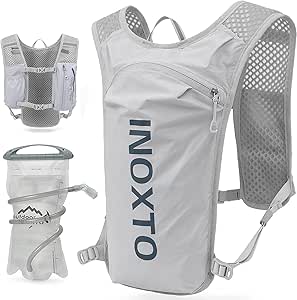
| INOXTO Running Hydration Vest | Polyester |
| Zelvot Running Hydration Vest | 900D Oxford fabric and polyester |
| IX INOXTO Running Hydration Ve | Polyester |
More Details on Our Top Picks
Nathan TrailMix 7L Hydration Running Vest with 2L Bladder
The Nathan TrailMix 7L is the most balanced choice here for runners who want room for layers and essentials without stepping up to a larger backpack. Its 7-liter capacity gives it more carrying space than the XBT’s compact vest setup, while the included 2-liter bladder provides a ready-to-run hydration system. Moisture-wicking mesh and a stated no-bounce, chafe-free design address two common sources of discomfort on longer outings; adjustable straps help dial in the fit, and reflective details add visibility in dim conditions. The tradeoff is that the bladder holds less than the vest’s total capacity, so extra storage does not mean extra water. Runners who prefer front-mounted soft flasks may find the Sahara Sailor’s format more convenient. I’d choose this for varied trail runs, but not if minimum carry weight or flask access is the priority.
Pros:- 7-liter pack capacity leaves room for essentials beyond the bladder
- Moisture-wicking mesh is suited to sweaty, warm-weather runs
- Adjustable straps and a no-bounce, chafe-free design target stable wear
- Includes a 2-liter bladder and reflective details
Cons:- The included bladder’s 2-liter volume is smaller than the vest’s total storage capacity
- At 0.36 kg, it is heavier than the listed 5-ounce XBT pack
- The supplied details mention a stash pocket but do not specify multiple pocket locations
Best for: Trail runners who want a versatile vest with space for extra layers and a 2-liter bladder for moderate-length outings.
Not ideal for: Runners who want front-mounted soft flasks for quick sipping, or those who need more than 2 liters of included water capacity.
- Capacity:7 liters
- Bladder volume:2 liters
- Weight:0.36 kg
- Dimensions:15 in W × 16 in H
- Material:Moisture-wicking mesh
- Fit:Adjustable straps
- Pocket:Stash pocket
- Visibility:Reflective details
Our verdict“Choose the Nathan TrailMix 7L if you want a balanced running vest with useful cargo room and a bladder included.”
KUYOU Running Vest for Women & Men, Lightweight Hydration Backpack with 2L Water Bladder
The KUYOU stands out for runners who want adjustability across the shoulders, chest, and waist, rather than relying on a simpler strap setup. That flexibility can help tailor the fit over different layers and body shapes. It also includes a 2-liter BPA-free bladder, a high-flow bite valve, reflective strips, and an emergency whistle, giving it more specified safety and hydration details than the Nathan TrailMix 7L listing. Multiple storage compartments add organization, though the provided data does not state an overall pack capacity or weight, making it harder to judge how it will carry against the more clearly sized N NEVO RHINO 12-liter pack. The listed concern about support during very high-intensity activity also matters: this is a versatile recreational option, not the strongest match for aggressive, fast-moving runs. I’d shortlist it for mixed-activity use, but runners who prioritize known cargo volume should compare its fit and storage carefully.
Pros:- Shoulder, chest, and waist straps allow several fit adjustments
- Includes a 2-liter BPA-free bladder with a high-flow bite valve
- Reflective strips and an emergency whistle add practical safety features
- Multiple compartments provide space to separate essentials
Cons:- The supplied specifications do not state total pack capacity or weight
- May provide insufficient support for very high-intensity activities
- Color options are not specified in the product data
Best for: Runners and hikers who want a 2-liter bladder, several adjustment points, and basic safety extras for varied outdoor outings.
Not ideal for: High-intensity trail runners who need specified stability support, or buyers who require a stated pack capacity and weight before choosing.
- Water capacity:2 liters
- Bladder:Food-grade, BPA-free water bladder
- Valve:High-flow bite valve
- Material:Breathable mesh fabric
- Shoulder adjustment:Adjustable
- Chest adjustment:Adjustable
- Waist adjustment:Adjustable
- Safety features:Reflective strips and emergency whistle
Our verdict“Pick the KUYOU if fit adjustment and safety extras matter more to you than a clearly stated pack volume.”
N NEVO RHINO Hydration Backpack, Lightweight Water Backpack for Hiking, Cycling, Running, Trail Rave
For runners who carry more than water and a few small essentials, the N NEVO RHINO offers the biggest stated cargo capacity in this group: 12 liters. That extra room separates it from the Nathan TrailMix 7L, which is a more compact vest-style choice, and makes this pack more suitable for outings that call for additional clothing or gear. Its 275 g ripstop nylon build is light relative to that capacity, while the included 2-liter BPA-free bladder has a wide 2-inch fill opening and a high-flow push-pull valve to simplify filling and drinking. The larger pack format is not a free upgrade for every trail runner: it may feel like unnecessary volume on short, fast runs, and the product data warns that the design is not suited to bulky items or larger replacement bladders. I’d favor it for longer outings with a varied load, not for a minimal race-day setup.
Pros:- 12-liter capacity offers substantially more stated storage than the 7-liter Nathan TrailMix
- Listed weight is 275 g
- Includes a 2-liter BPA-free bladder with a high-flow push-pull valve
- Two-inch fill opening makes bladder filling and cleaning access more convenient
Cons:- Its larger capacity may be excessive for short, fast trail runs
- Product details say it may not fit larger hydration bladders
- Minimal design may not accommodate bulky items well
Best for: Trail runners and hikers who need 12 liters of storage for extra clothing and essentials while keeping the pack itself light.
Not ideal for: Runners seeking a compact, race-focused vest or anyone planning to carry bulky gear or a larger-than-2-liter bladder.
- Capacity:12 liters
- Weight:275 g
- Material:Ripstop nylon
- Bladder:2-liter BPA-free hydration bladder
- Dimensions:14.57 × 16.93 in
- Bite valve:High-flow push-pull silicone
- Fill opening:2 in
- Storage:Multiple compartments
Our verdict“Choose the N NEVO RHINO when you need more cargo room than a compact running vest provides without a heavy listed pack weight.”
XBT Hydration Pack with 2L Water Bladder – Lightweight Running Vest for Men & Women
The XBT is the lightest clearly specified option in this batch at 5 ounces, making it a sensible choice for runners who want to keep carried weight down. Its adjustable shoulder straps and waist belt help secure the load, while multiple compartments, a front elastic drawcord, and side compression straps give small essentials places to go. Compared with the 7-liter Nathan TrailMix, the XBT is presented as a simpler, lighter hydration vest rather than a pack with a stated cargo capacity; its listed 2 liters describe the bladder, not total storage. Reflective strips and an emergency whistle are useful additions, but the one-size fit may not suit very petite or tall runners, and no extra hydration option is specified. I’d pick it for short-to-moderate runs where low weight matters more than carrying extra layers or a larger water supply.
Pros:- Listed weight of 5 ounces makes it the lightest specified option in this batch
- Adjustable shoulder straps and waist belt help secure the pack
- Multiple compartments, front elastic drawcord, and side compression straps support organization
- Includes reflective strips and an emergency whistle
Cons:- The 2-liter bladder may not provide enough water for longer or hotter outings
- One-size fit may not suit very petite or very tall runners
- No total pack capacity or additional hydration option is specified
Best for: Runners who prioritize a very light, adjustable vest with a 2-liter bladder for shorter or moderate trail outings.
Not ideal for: Runners who need a stated large cargo capacity, more than 2 liters of water, or a fit tailored to very petite or tall body types.
- Bladder capacity:2 liters
- Weight:5 oz
- Material:Nylon fabric and breathable mesh padding
- Fit adjustment:Adjustable shoulder straps and waist belt
- Compartments:Water bladder, main storage, front elastic drawcord, and side compression straps
- Reflective features:Yes
- Emergency whistle:Yes
Our verdict“Choose the XBT if low listed weight and basic storage matter more than a larger stated pack capacity.”
Sahara Sailor Running Vest for Women and Men, 2PCS 500ml Soft Flasks, Adjustable, Lightweight Breathable Hydration Backpack
Unlike the bladder-based Nathan TrailMix 7L and XBT, the Sahara Sailor arrives with two 500 ml soft flasks, putting 1 liter of water within reach across the front of the vest. That setup suits runners who prefer to sip without reaching for a hose, though it carries less water than the 2-liter bladder included with those alternatives. Its multiple elastic, zippered, and layered pockets make it easier to separate gels and small essentials, while the listed S, M, and L size ranges give buyers more fit guidance than the XBT’s one-size description. The vest’s dual elastic fit and breathable, micro-perforated fabric are aimed at a close, ventilated feel. The tradeoffs are its lower included water volume and stated size ranges, which may leave runners outside those measurements without a suitable fit. I’d choose it for shorter runs where front access matters most.
Pros:- Two included 500 ml soft flasks provide front-access hydration
- Multiple elastic, zippered, and layered pockets help organize small essentials
- S, M, and L ranges offer more fit guidance than the XBT’s one-size listing
- Breathable, micro-perforated fabric and dual elastic fit support a close-wearing design
Cons:- The two flasks provide 1 liter total, less than the 2-liter bladders included with the Nathan TrailMix and XBT
- Listed size ranges may not fit runners outside the specified measurements
- Color options are not specified in the product data
Best for: Trail runners who prefer front-mounted soft flasks, quick access to gels, and a vest with several stated size ranges.
Not ideal for: Runners who need more than 1 liter of included water or whose body measurements fall outside the listed S, M, and L ranges.
- Included hydration:2 × 500 ml soft flasks
- Total flask capacity:1 liter
- Material:Breathable, micro-perforated fabric
- Fit:Dual elastic fit with adjustable straps
- Pockets:Multiple elastic, zippered, and layered pockets
- Size S:27–37 in
- Size M:32–42 in
- Size L:40–50 in
Our verdict“Pick the Sahara Sailor for shorter runs if front-mounted soft flasks and organized pocket access suit you better than a larger bladder.”
N NEVO RHINO 12L Hydration Backpack with 2L Water Bladder
I’d choose this pack when a run calls for more than the essentials. Its 12-liter capacity leaves room for an extra layer and other supplies, while the included 2-liter bladder handles hydration without requiring a separate purchase. Compared with the Salomon Cross 4, it offers substantially more storage, but its backpack format is less suited to runners who want a compact vest with front flask access. The 8.5-ounce listed weight is light for its capacity, and a breathable mesh back and adjustable straps support a closer fit. Still, the specified strap ranges may not accommodate every body shape, and 12 liters can feel like excess for short, fast outings. I’d pick it for gear-heavy trail days, not minimal runs.
Pros:- 12-liter capacity offers more room for layers and supplies than the Salomon Cross 4
- Includes a 2-liter BPA-free, food-grade PEVA bladder
- Listed weight is 8.5 ounces
- Four pockets and adjustable straps help organize and secure the load
Cons:- Larger pack format may feel excessive for short, fast runs
- Specified shoulder and chest strap adjustment ranges may not fit every runner
- Offers less capacity than larger hiking packs for bulky loads
Best for: Trail runners who carry an extra layer, snacks, and small essentials alongside water on longer outings
Not ideal for: Runners seeking a snug, low-volume vest for short efforts or front-mounted soft-flask access
- Capacity:12 L
- Pack weight:8.5 oz
- Water bladder capacity:2 L
- Bladder material:BPA-free, food-grade PEVA
- Pack material:PU-coated nylon
- Dimensions:11.8 in W × 16.5 in H
- Pockets:4
- Shoulder strap adjustment:19–34 in
Our verdict“Choose this N NEVO RHINO when you need more carrying room than a compact vest provides and are comfortable with a backpack-style fit.”
Teton Oasis/Trailrunner Hydration Backpack – Lightweight Water Pack with 2L/3L Bladder for Hiking, Running, Cycling, Biking 18L/22L Sizes
Among these options, the Teton Oasis/Trailrunner is the one I’d shortlist for runners who need substantial room for supplies, with 18L and 22L sizes and a choice of 2L or 3L bladder. That capacity is a sharp contrast with the 4-liter Salomon Cross 4: Teton has more space for layers and trip gear, while Salomon is a more natural match for a pared-down run. A rain cover adds useful weather protection, and adjustable straps plus multiple compartments support varied loads. The tradeoff is that the supplied details don’t specify the pack’s material or weight, so it’s harder to judge durability and how much bulk it adds while running. I’d reserve it for routes where carrying capacity matters more than a minimalist vest feel.
Pros:- 18L and 22L sizes provide far more storage than the Salomon Cross 4
- Choice of 2L or 3L hydration bladder capacity
- Rain cover adds protection in wet conditions
- Adjustable straps and multiple compartments support varied loads
Cons:- Pack weight is not specified, making running-load comparisons difficult
- Material details are not provided
- Large capacities may feel bulky for fast, short trail runs
Best for: Trail runners and hikers carrying extra clothing, food, or equipment on long outings or changing-weather routes
Not ideal for: Runners prioritizing a light, close-fitting pack for short runs, especially those who want a clearly stated pack weight
- Capacity options:18 L or 22 L
- Hydration bladder options:2 L or 3 L
- Rain cover:Included
- Fit:Adjustable straps
- Storage:Multiple compartments
- Material:Not specified
- Pack weight:Not specified
- Size options:18 L and 22 L
Our verdict“Pick the Teton when a long outing demands ample storage and weather coverage, rather than the compact carry of a running vest.”
BECOJADDE 5L/6L Lightweight Hydration Running Vest
The BECOJADDE stands out for runners who want a vest-style fit with eight pockets to keep snacks, a phone, and small gear sorted. Its 5L or 6L capacity sits between the Salomon Cross 4’s minimalist storage and the Nathan TrailMix 7L’s larger volume, giving buyers room to choose how much they carry. Adjustable chest and dual waist straps, plus a tube clip, are aimed at keeping the load secure while moving. Hydration is less straightforward: bladder or soft-bottle inclusion depends on the selected configuration, so buyers need to check which version they’re choosing. At 0.48 lb for the 5L vest, it is not as light as the Salomon’s listed 224 g. I’d favor it for organized training runs, but not for anyone wanting one unambiguous included hydration setup.
Pros:- Eight pockets divide small items and running supplies
- Adjustable chest and dual waist straps help secure the vest
- Quick-drying fabric and ventilated mesh back support airflow
- Configuration options include a bladder or two soft bottles
Cons:- Hydration vessels are included only with certain configurations
- The listed 5L vest weight is heavier than the Salomon Cross 4’s 224 g
- Capacity and dimensions vary by selected version
Best for: Runners who want several accessible pockets and the choice of a bladder or soft-bottle setup for training
Not ideal for: Buyers who want a very light pack or need hydration vessels guaranteed in every configuration
- Capacity options:5 L or 6 L
- 5L vest dimensions:14 × 11 in
- 6L vest dimensions:16.5 × 11.4 in
- Vest weight:5L: 0.48 lb; 6L: 0.54 lb
- Hydration options:1.5L or 2L bladder, or two 500 mL soft bottles, depending on configuration
- Material:Nylon and breathable stretch fabric
- Pockets:8
- Straps:Adjustable chest and dual waist straps
Our verdict“Choose the BECOJADDE if pocket organization and hydration-system choice matter more than the lightest possible vest.”
Salomon Cross 4 Trail Running Pack, 4L Hydration Vest
I’d point runners who want the least pack among these options toward the Salomon Cross 4. Its 4-liter vest design keeps the carrying plan focused on hydration and essentials, unlike the 12-liter N NEVO RHINO or the Teton’s much larger formats. The listed 224 g weight and adjustable shoulder, chest, and waist straps suit runners who want a close-fitting setup rather than a traditional backpack. For water, it offers two front pockets sized for 500 ml soft flasks and compatibility with a 1.5-liter bladder. The catch is that soft flasks aren’t included, so the front-pocket option requires separate gear, and the limited storage won’t suit routes requiring extra clothing or larger supplies. This is the lineup’s clear minimalist choice, not its all-day cargo carrier.
Pros:- Compact 4-liter capacity favors a pared-down running setup
- Listed weight is 224 g
- Two front pockets fit 500 ml soft flasks
- Compatible with a 1.5-liter hydration bladder and has adjustable straps
Cons:- Limited storage compared with the Nathan TrailMix 7L and N NEVO RHINO 12L
- 500 ml soft flasks are not included
- Bladder is compatible but not listed as included
Best for: Runners doing shorter, faster trail outings with a small essentials load and a preference for a compact vest
Not ideal for: Runners carrying extra layers or bulky supplies, or buyers who expect soft flasks to come included
- Capacity:4 L
- Item weight:224 g
- Hydration bladder capacity:Compatible with 1.5 L
- Soft flask pockets:2; fits 500 ml flasks
- Soft flasks:Not included
- Straps:Adjustable shoulder, chest, and waist straps
- Color:Black
- Sport type:Running
Our verdict“Choose the Salomon Cross 4 for a light, compact carry when your route and gear list don’t call for much storage.”
Nathan TrailMix 7L Running Vest for Men & Women, Hydration Pack with 2L Bladder
The Nathan TrailMix 7L is a practical middle ground: more room than the Salomon Cross 4, without the 12-liter backpack-style capacity of the N NEVO RHINO. Its 7-liter storage and included 2-liter bladder suit runners who want space for everyday trail essentials without moving to a large pack. At 7 oz without the bladder, it has a low listed base weight; the total rises to 11 oz when filled with the bladder. The mesh construction and adjustable straps support a running-focused fit, while reflective details add visibility. The listed two pockets offer less compartmentalization than the BECOJADDE’s eight, and the product notes say the fit runs small, so sizing deserves attention. I’d choose it for a straightforward bladder-based setup, not for flask users expecting bottles in the front pockets.
Pros:- 7-liter capacity offers more storage than the Salomon Cross 4 while staying below a 12-liter pack
- Includes a 2-liter hydration bladder
- Listed weight is 7 oz without the bladder
- Mesh construction, adjustable straps, and reflective elements support running use
Cons:- Fit is described as slightly small, and sizing up is recommended
- Two listed pockets provide less organization than the BECOJADDE’s eight
- Bottles for the front pockets are not included
Best for: Runners seeking a moderate-capacity vest with an included 2-liter bladder for regular trail outings
Not ideal for: Runners who need many separate storage pockets, a roomier fit without sizing up, or included front bottles
- Storage capacity:7 L
- Hydration bladder volume:2 L
- Weight without bladder:7 oz
- Weight with bladder:11 oz
- Material:Mesh
- Number of pockets:2
- Color:Charcoal Grey
- Item dimensions:15 in W × 2 in H
Our verdict“Pick the Nathan TrailMix 7L for a moderate-volume running vest with a bladder included, provided you check the fit before choosing a size.”
INOXTO Running Hydration Vest Backpack – Lightweight Insulated Pack with 1.5L Water Bladder
This vest stands out for its ultra-lightweight 140g frame, making it ideal for runners who hate feeling burdened by gear. Compared to the Zelvot Running Hydration Vest, which weighs significantly more at 650g, the INOXTO offers a near-naked feel that appeals to speed-focused athletes. However, this minimalism comes with a tradeoff: the 1.5L capacity is modest, requiring more frequent refills on long trails than higher-capacity options like the Nathan TrailMix. The ventilated mesh design keeps your back cool, a critical feature for hot-weather running, but the side pockets only fit small 250ml bottles, limiting hydration flexibility. If you prioritize speed and breathability over carrying extra layers or snacks, this pack delivers. It is less suitable for those who need to carry substantial emergency gear or extra water without stopping.
Pros:- Ultra-lightweight at only 140g reduces fatigue
- Ventilated mesh keeps the back cool during intense effort
- Multiple front pockets offer easy access to essentials
Cons:- Limited 1.5L water capacity may require frequent refills
- Side pockets only fit small 250ml bottles
- Not suitable for children under 12 years old
Best for: Speed-focused trail runners who prioritize weight savings and ventilation over maximum storage capacity.
Not ideal for: Long-distance ultra runners who need more than 2L of water capacity or space for extra layers.
- Weight:140 g
- Water Bladder Capacity:1.5 liters
- Dimensions:5.9″ W x 13.77″ H
- Material:Polyester
- Pocket Count:4
- Colors:Light gray, dark blue
- Brand:INOXTO
Our verdict“This pack is the best choice for runners who want the lightest possible hydration solution for short to medium trails.”
Zelvot Running Hydration Vest with 2L Water Bladder
The Zelvot vest offers a robust 2-liter bladder and substantial storage, making it a practical choice for longer outings where hydration reliability matters. Unlike the INOXTO Running Hydration Vest, which is featherlight, the Zelvot weighs 0.65 kg, providing a more substantial feel that some runners prefer for stability over speed. It features waterproof front pockets and large rear compartments, ideal for storing electronics and extra layers securely. While the 900D Oxford fabric adds durability, it also contributes to the heavier weight compared to lighter mesh alternatives. The high-flow bite valve is a welcome feature for quick sips without slowing down. This pack suits runners who need more capacity and durability than the ultra-minimalist options, but it may feel too bulky for fast-paced, short-distance runs where every gram counts.
Pros:- 2-liter bladder provides ample hydration for long runs
- Waterproof front pockets protect electronics from rain and sweat
- Durable 900D Oxford fabric resists abrasion
Cons:- Heavier at 0.65 kg compared to lighter mesh vests
- Limited sizing options (only XS/S and M/L groups)
- Included holster may not fit all phone cases
Best for: Runners who need reliable 2L hydration and durable, waterproof storage for longer trail runs.
Not ideal for: Lightweight purists who find a 650g pack too heavy for fast-paced running.
- Weight:0.65 kg
- Water Bladder Capacity:2 liters
- Material:900D Oxford fabric and polyester
- Chest Fit Range:XS/S: 25–35 in; M/L: 29–41 in
- Storage:3 front zippered pockets and 2 large rear pockets
- Bladder Material:Food-grade, BPA- and PVC-free
- Warranty:2 years
Our verdict“This vest is the best value for runners who prioritize hydration capacity and durability over minimal weight.”
IX INOXTO Running Hydration Vest with 1.5L Water Bladder
This model strikes a balance between capacity and weight, including a 1.5L bladder and two 250ml soft flasks for flexible hydration. Compared to the Zelvot Running Hydration Vest, the IX INOXTO is lighter at 190g, making it more approachable for new trail runners who aren’t ready for heavier packs. The stretch mesh back and adjustable straps help minimize bounce, a common complaint among beginners. However, the conflicting weight and dimension data in the listing can be confusing, and the actual capacity is closer to 1.5L of water plus small gear, rather than the advertised 3L pack volume. It is a solid entry-level option that offers more storage versatility than the basic INOXTO model, but it lacks the premium fit and finish of higher-end vests like the Salomon Cross 4.
Pros:- Includes both a 1.5L bladder and soft flasks for hydration flexibility
- Stretch mesh back enhances comfort and reduces bounce
- Adjustable chest and waist straps improve stability
Cons:- Conflicting weight and dimension measurements in the listing
- Actual capacity is lower than the advertised 3L pack volume
- Shorter three-month warranty compared to competitors
Best for: Beginner trail runners who want a balanced pack with flexible hydration options and moderate weight.
Not ideal for: Experienced runners who need precise fit adjustments and verified, consistent product specifications.
- Weight:190 g (manufacturer description)
- Water Bladder Capacity:1.5 liters
- Included Bottles:2 x 250 ml soft flasks
- Material:Polyester
- Dimensions:7.87 in W x 14.96 in H
- Pocket Count:8
- Warranty:Three months
- Color:Grey
Our verdict“This vest is a great starter pack for beginners who want flexible hydration without committing to a heavy or expensive system.”

How We Picked
I evaluated these packs based on three core criteria: stability during movement, hydration accessibility, and storage organization. Stability was prioritized because bouncing gear ruins running form; packs with rigid sternum straps and hip belts scored higher than those relying on simple elastic cords. I also examined how easily water bottles or bladders could be accessed without stopping, favoring designs with front-facing flask pockets over rear-mounted compartments.
Beyond performance, I assessed build quality and material breathability. Packs using mesh-lined back panels ranked higher than those with solid nylon, as heat buildup is a common complaint in cheaper models. Finally, I filtered for durability, ensuring that zippers and buckles could withstand repeated use in muddy or dusty conditions. This ranking logic prioritizes the runner’s experience on the trail over raw feature lists.
Factors to Consider When Choosing Trail Running Packs
Selecting a trail running pack involves more than just picking a liter capacity. The right choice depends on your running style, terrain, and how much gear you actually need to carry. Here are the key factors to weigh before making a purchase.
Hydration System Type: Bladder vs. Soft Flasks
Most runners debate between integrated bladders and front-mounted soft flasks. Bladders offer higher capacity and hands-free drinking, ideal for long, isolated trails where you don’t want to slow down. However, they can be harder to clean and may slosh if not fully filled. Soft flasks, often held in front pockets, allow for easier refills at aid stations and quicker access to water without breaking stride. If you run shorter loops or prefer carrying electrolyte mixes separately, flasks provide better flexibility. Consider your typical run length; under 10 miles, flasks are usually sufficient, while ultra-distance runners often lean toward bladders for volume.
Fit and Stability Mechanisms
A pack that bounces is a pack you will abandon after one run. Look for models with adjustable sternum straps and, for larger capacities, a hip belt. The sternum strap prevents the shoulder straps from sliding outward, while the hip belt transfers weight from your shoulders to your hips, reducing fatigue on descents. Budget packs often lack a hip belt or use poorly padded straps, leading to shoulder strain. If you have a slender frame, prioritize brands offering gender-specific sizing, as unisex designs may gap at the chest or press uncomfortably against the ribs. A secure fit is non-negotiable for technical terrain.
Storage Volume and Gear Organization
It is easy to overbuy capacity. A 5L to 7L pack is sufficient for most day runs, holding a jacket, phone, fuel, and water. Larger packs (10L+) are geared toward multi-day hikes or ultra-marathons requiring extensive safety gear. The key is pocket layout; you need quick-access pockets for gels and phones without digging through a main compartment. Poorly designed pockets lead to fumbling while running. Evaluate whether the main compartment is accessible from the side or top; side access is superior for running as it allows you to retrieve items without removing the pack. Avoid packs with too many small, shallow pockets that cause items to fall out on rough trails.
Material Breathability and Weather Resistance
Trail running generates significant heat, so back panel ventilation is critical. Look for packs with 3D mesh or air-channel designs that allow airflow between your back and the pack. Solid nylon panels trap sweat, leading to discomfort and chafing. Conversely, if you run in rainy or muddy conditions, water-resistant materials protect your electronics and extra layers. Many lightweight vests sacrifice weather protection for breathability, so match the material to your climate. If you run in mixed conditions, consider a pack with a included rain cover or a highly water-repellent fabric. Remember that durability often correlates with heavier, less breathable fabrics, so weigh the tradeoff carefully.
Weight and Packability When Empty
The weight of an empty pack matters significantly over long distances. A lightweight vest (under 200g without water) feels like a second skin, whereas heavier models can add unnecessary load. Packability is also important; can the pack fold down small when not in use? This is useful for travel or if you only use the pack occasionally. Some minimalist options are designed to disappear on your body, which is ideal for speed-focused runners. However, lighter packs often have thinner padding and fewer features. If you prioritize comfort and storage over speed, a slightly heavier pack with robust padding may serve you better. Assess your typical run intensity to decide if every gram counts.
Frequently Asked Questions
Do I really need a hydration pack for trail running?
For road running, you can often carry a handheld bottle, but trail running presents unique challenges. Uneven terrain requires both hands for balance and pole use, making handhelds impractical. A hydration pack keeps your hands free and distributes weight evenly across your back, preventing muscle imbalances. Additionally, trails often lack water sources, so carrying enough fluid for 2-3 hours is a safety requirement. If you run on technical trails or in remote areas, a pack is not just a convenience but a necessary piece of safety gear.
How much water should a trail running pack hold?
Most trail runners carry between 500ml and 1.5L of water, depending on the distance and heat. A standard vest holds two 500ml soft flasks in the front, which is sufficient for a 10-15 mile run in moderate weather. For longer distances or hot climates, you may need a bladder or additional rear storage for extra flasks. Overloading with water adds unnecessary weight; it is better to plan routes with refill points or carry just enough water to reach the next source. Start with 1L capacity and adjust based on your sweat rate and local weather conditions.
What is the difference between a running vest and a hydration backpack?
A running vest is form-fitting, lightweight, and designed to move with your body, minimizing bounce. It typically features front pockets for quick access to nutrition and water. A hydration backpack is often bulkier, resembling a traditional hiking pack with a larger main compartment. While hiking packs offer more storage, they frequently bounce during running and lack the ergonomic strap adjustments needed for high-intensity movement. For serious trail running, vests are superior for stability and speed. Reserve backpacks for slow-paced trail hikes or ultra-events where carrying extensive gear outweighs the need for agility.
Can I use a trail running pack for gym workouts or road running?
While possible, it is not ideal. Trail running packs are engineered for outdoor stability, with straps and materials that may feel restrictive in a gym setting. The hydration focus means they often lack the secure, padded compartments needed for laptops or heavy gym gear. Road runners typically prefer lighter, simpler vests or handhelds since they have easy access to water fountains and bathrooms. However, if you run outdoors in variable weather, a versatile vest can serve both purposes. Just be aware that the aggressive fit designed for mountain trails might feel tight or uncomfortable during static exercises like weightlifting.
How do I clean and maintain my trail running pack?
Hygiene is critical because sweat and bacteria accumulate quickly in synthetic fabrics. Hand wash the pack with mild soap and warm water after every few uses, paying attention to the back panel and pockets. Never machine wash unless the manufacturer explicitly states it is safe, as agitation can damage zippers and waterproof coatings. For hydration bladders, use a specialized cleaning kit with a brush to scrub the interior and air dry completely to prevent mold growth. Store the pack in a cool, dry place away from direct sunlight to preserve the elasticity of the straps and the integrity of the waterproof materials.
Conclusion
Choosing the right trail running packs comes down to matching the product’s design to your specific running habits. For the best overall performance, the Salomon Cross 4 remains the gold standard due to its unmatched fit and lightweight feel. If you need maximum versatility for longer distances, the Nathan TrailMix 7L provides excellent storage and hydration integration. For those on a budget, the XBT Hydration Pack offers decent functionality, though you may compromise on long-term durability and comfort. Beginners should start with a 5L-7L vest like the BECOJADDE to learn what storage they actually need before investing in premium models. Ultimately, prioritize fit over features; a pack that stays put is worth more than one with extra pockets that bounces off your back.