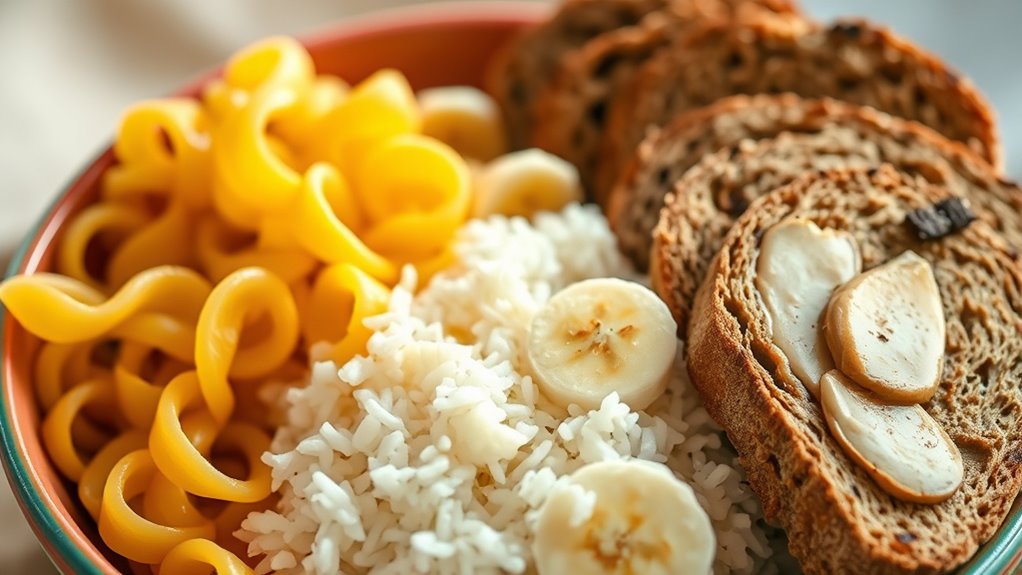

Carbo-loading is a strategic way to boost your glycogen stores before endurance events, helping you perform at your best. You should begin 3 to 4 days before the race, gradually shifting your diet to include more easily digestible carbs like pasta, rice, and fruits. Spread out your intake in small meals and stay well-hydrated for maximum benefit. If you want to uncover specific tips and timing, you’ll find useful insights ahead.
Key Takeaways
- Carbo-loading is a strategy to increase glycogen stores in muscles for enhanced athletic performance.
- It begins 3 to 4 days before the event, gradually shifting diet to mainly carbohydrates.
- Focus on easily digestible carb sources like pasta, rice, potatoes, and fruits to provide sustained energy.
- Spread carbohydrate intake across multiple small meals and ensure proper hydration for optimal glycogen storage.
- Proper planning and timing help maximize energy reserves, improving endurance and performance during competition.
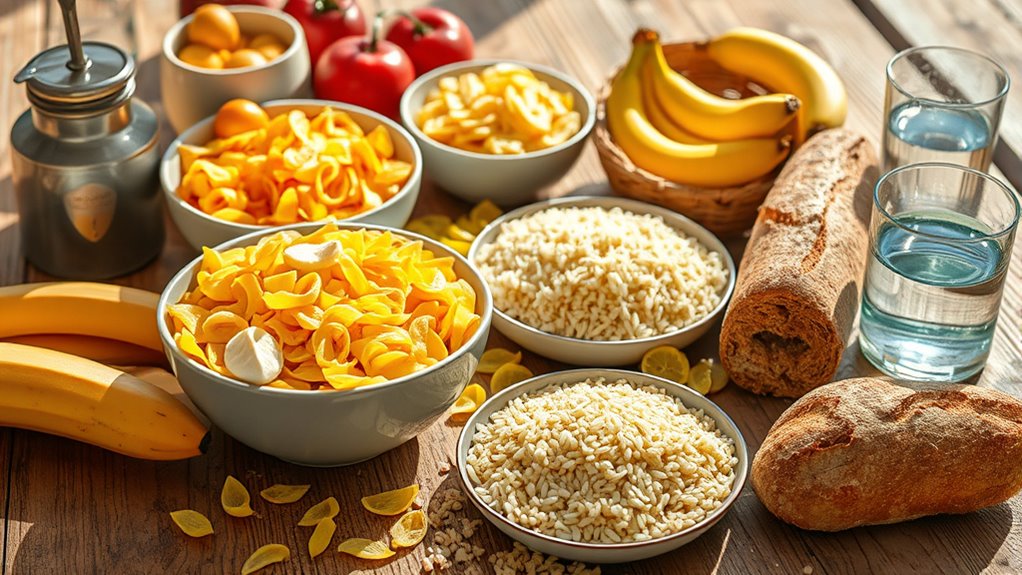
Have you ever wondered how athletes manage to boost their energy just before a big race? The secret often lies in a strategic approach called carbo-loading. This technique involves optimizing your carbohydrate intake to maximize glycogen stores in your muscles, giving you the energy boost needed for peak performance. But it’s not just about eating more carbs; it’s about understanding nutrition timing and choosing the right carbohydrate sources. When you plan your carbo-loading, timing is essential. You need to start increasing your carbohydrate consumption a few days before your event—usually 3 to 4 days prior—so your muscles can store enough glycogen. During this period, it’s necessary to gradually shift your diet from higher fat and protein to mainly carbs, ensuring your body adapts well. The goal is to maximize glycogen stores without feeling overly bloated or sluggish.
As for carbohydrate sources, you want to focus on those that are easily digestible and provide sustained energy. Good options include white bread, pasta, rice, potatoes, and cereals, which are rich in simple and complex carbs that your body can convert quickly into usable energy. Fruits like bananas and berries also make excellent additions, providing natural sugars along with essential nutrients. Avoid high-fat and high-fiber foods during your carb-loading phase, as these can cause gastrointestinal discomfort or slow digestion, hindering your ability to consume enough carbs comfortably. Additionally, understanding field‑of‑view and imaging‑scale concepts can help you better plan your nutritional approach, ensuring your body’s energy stores align with your activity demands.
Nutrition timing plays a significant role in how effectively you utilize your carbohydrate sources. In the days leading up to your event, aim to consume a larger proportion of your calories from carbs, spreading your intake across several small meals rather than large, infrequent ones. This helps your body absorb and store glycogen more efficiently. On the day before the race, keep your meals carbohydrate-rich but light enough to prevent any feeling of fullness or sluggishness. It’s also wise to hydrate well, as glycogen storage is enhanced with proper fluid intake.
In essence, successful carbo-loading hinges on your ability to synchronize nutrition timing with smart choices of carbohydrate sources. When you plan ahead and select easily digestible carbs, you’re giving your muscles the fuel they need to perform at their best. Remember, it’s about creating a strategic, balanced approach that prepares your body to store maximum glycogen and sustain energy throughout your race. With the right planning, you’ll feel energized, ready, and confident to take on your challenge.

Funny Running Carbo Loading Eat Pasta Carbohydrates Carbs T-Shirt
Message says: Carbo Loading. Design features a large plate of spaghetti.
As an affiliate, we earn on qualifying purchases.
As an affiliate, we earn on qualifying purchases.
Frequently Asked Questions
Can Carbo-Loading Help Non-Endurance Athletes?
Carbo-loading can benefit non-endurance athletes by improving energy levels and recovery, especially before intense workouts or competitions. You should focus on carbohydrate timing, eating carbs at strategic times to maximize glycogen stores. Incorporate diet diversity to make sure you get essential nutrients and avoid over-reliance on simple carbs. This approach helps you perform better and recover faster, even if you’re not an endurance athlete.
Are There Risks Associated With Excessive Carbohydrate Intake?
You might think a carb overload boosts your energy, but excessive carbohydrate intake can pose health concerns. When you consume too many carbs, it stresses your digestive system and may lead to weight gain or insulin issues. These risks highlight that moderation is key. Overdoing it with carbs isn’t just a harmless mistake; it can impact your overall health and athletic performance. Always balance your intake to avoid unnecessary health concerns.
How Does Hydration Impact Carbo-Loading Effectiveness?
Hydration levels considerably impact your carbo-loading effectiveness. When you’re well-hydrated, your muscles store glycogen more efficiently, boosting energy. Proper hydration also helps maintain electrolyte balance, preventing cramps and fatigue during intense activity. Dehydration, on the other hand, reduces glycogen storage and hampers performance. To maximize benefits, drink plenty of fluids, especially electrolyte-rich beverages, in the days leading up to your event, ensuring your hydration levels are ideal.
Should Vegetarians or Vegans Adjust Their Carb Sources?
If you’re vegetarian or vegan, you should modify your carb sources to prioritize plant-based carbs like grains, legumes, and fruits. Incorporate protein pairing with these carbs, such as hummus with pita or beans with rice, to guarantee balanced energy. This approach helps optimize glycogen stores while providing essential nutrients. By focusing on diverse, nutrient-dense plant foods, you support effective carbo-loading tailored to your dietary choices.
How Do Individual Differences Affect Carbo-Loading Results?
Think of yourself as a modern-day explorer, steering through metabolic variability. Your individual differences, like metabolic rate and dietary restrictions, influence how effectively you carb-load. If you have unique needs, such as vegetarian or vegan diets, you might need to customize your carb sources for ideal results. You’re not a one-size-fits-all traveler; understanding your body’s responses ensures you maximize glycogen stores for peak performance.

50 Strong Sports Water Bottles 6-Pack – Reusable 22 oz BPA-Free Plastic Bottles with Pull Top Cap – Made in USA – Top Rack Dishwasher Safe – Fits Most Bike Cages Brand – Clear
Durable & BPA-Free: 22 oz reusable sports water bottles made of easy-squeeze polyethylene; top rack dishwasher safe for…
As an affiliate, we earn on qualifying purchases.
As an affiliate, we earn on qualifying purchases.
Conclusion
Now that you understand the essence of carbo-loading, think of your glycogen stores as a hidden treasure chest waiting to be filled. When you nourish your body with the right carbs at the right time, you’re revealing a powerful reserve for your race. Remember, this stash fuels your journey, turning effort into achievement. Embrace the process, and let your energy shine like a beacon, guiding you smoothly across the finish line.

Honey Stinger Organic Fruit Smoothie Energy Gel | Gluten Free & Caffeine Free | for Exercise, Running and Performance | Sports Nutrition for Home & Gym, Pre and Mid Workout | 12 Pack, 13.2 Ounce
DELICIOUS A classic fruit blend in a 12ct box. These grab-and-go energy gels are made for quick, sustained…
As an affiliate, we earn on qualifying purchases.
As an affiliate, we earn on qualifying purchases.

CLIF BAR – Energy Protein Bars – Crunchy Peanut Butter – Made with Organic Oats – Energy Bars – Non-GMO – (15 Pack)
PEANUT BUTTER PERFECTION: Includes one 15-pack box of Crunchy Peanut Butter energy bars made with crunchy peanuts and…
As an affiliate, we earn on qualifying purchases.
As an affiliate, we earn on qualifying purchases.