
To safely prepare for summer races in two weeks, gradually expose yourself to heat by starting with short sessions and increasing time and intensity, while monitoring how your body responds. Stay well-hydrated with electrolytes, wear breathable clothing, and rest as needed to prevent overheating. Keep an eye on signs of fatigue or dehydration and adjust accordingly. Continuing will provide more detailed steps to help you conquer heat and perform your best.

Get workout gear delivered free — and shop member deals
- Fast, free delivery on millions of items
- Access to Prime Big Deal Days deals on October 6–7
- Prime Video, Amazon Music and more included
Key Takeaways
- Start with short, moderate heat exposure sessions and gradually increase duration over two weeks.
- Incorporate rest days and monitor body responses to prevent heat illness.
- Stay well-hydrated with electrolytes, sipping fluids regularly and avoiding overhydration.
- Wear lightweight, breathable clothing to enhance cooling and reduce fluid loss.
- Adjust exercise intensity based on individual heat tolerance and signs of overheating for safety.
electrolyte hydration tablets for athletes
As an affiliate, we earn on qualifying purchases.
As an affiliate, we earn on qualifying purchases.
Understanding the Benefits of Heat Adaptation

Understanding the benefits of heat adaptation is essential if you plan to train or work in hot environments. When your body adapts, you’ll notice an improved sweat response, which helps cool your core temperature more efficiently. As your sweat glands become more active, you’ll sweat sooner and more effectively, preventing overheating. This improved thermoregulatory response is a key factor in maintaining thermal balance during exertion. This improved sweating response is a key factor in maintaining thermal balance during exertion. Enhanced thermoregulation helps your body to better manage heat stress, reducing the risk of heat-related illnesses. Over time, your circulatory system also becomes more efficient at delivering blood to the skin for cooling. These adaptations enhance your endurance and safety in the heat, allowing you to perform better and recover faster. Developing a proper heat response means you can face hot conditions with greater confidence and resilience. Embracing calm and clarity through gradual acclimation helps you approach heat challenges with a steady mind and purpose.
Assessing Your Current Fitness and Heat Tolerance

Before starting a heat acclimation program, it’s important to evaluate your current fitness level and how well your body tolerates heat. Consider your climate comfort—do you feel comfortable in hot conditions, or do you experience early fatigue or excessive sweating? Your sweat response reveals much about your heat tolerance; an efficient response helps cool your body, while delayed or minimal sweating can signal the need for cautious progression. Assess how quickly your heart rate rises during exercise in your typical environment, and note any signs of overheating or dehydration. Understanding these factors helps you tailor your approach safely. Recognizing where you stand with your fitness and heat response ensures you avoid overexertion and set realistic goals for effective heat adaptation. Understanding your body’s responses is essential for a safe and successful acclimation process. Additionally, being aware of your headphone compatibility ensures your safety and comfort during outdoor training sessions.
Designing a Safe and Effective Acclimation Schedule
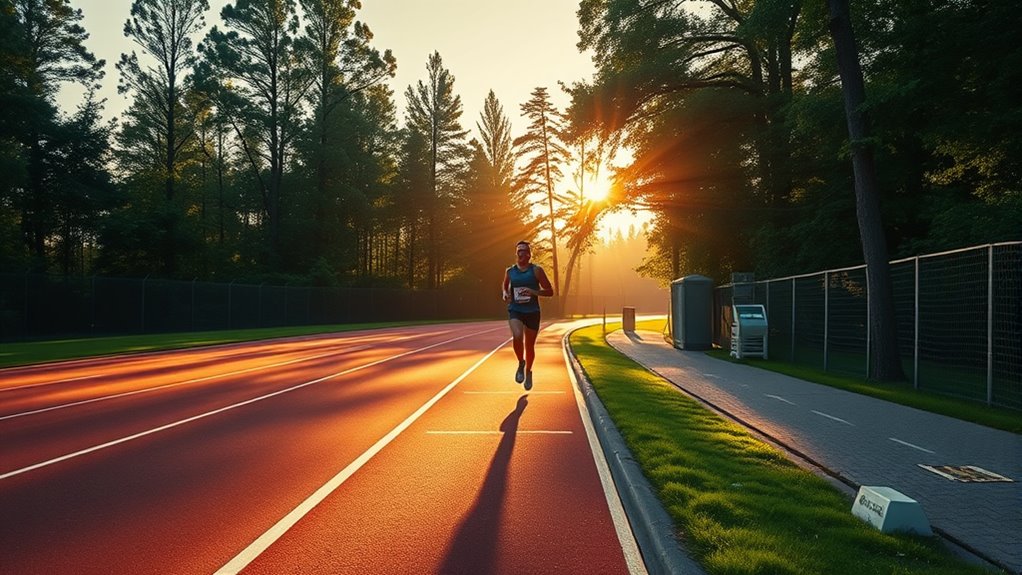
Creating a safe and effective heat acclimation schedule requires careful planning to gradually expose your body to higher temperatures without risking overexertion. To optimize climate adaptation, start with shorter sessions in the heat, increasing duration and intensity gradually over two weeks. Prioritize safety precautions by monitoring your body’s responses and avoiding extreme conditions early on. Incorporate rest days to allow recovery and prevent heat-related illnesses. Keep workouts moderate, focusing on familiar activities that can be easily adjusted if you feel unwell. Consistency is key, but listen to your body and don’t push past discomfort. A well-structured plan balances exposure and safety, ensuring your body adapts efficiently while minimizing risks during summer races.
Hydration Strategies During Heat Training
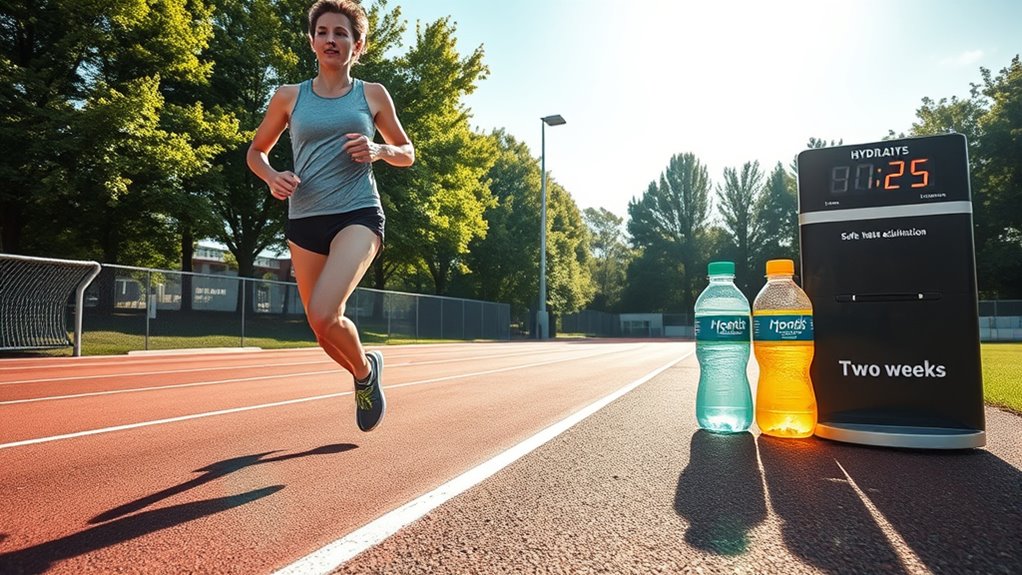
Staying properly hydrated is essential when training in the heat, as dehydration can impair performance and increase the risk of heat-related illnesses. To maintain electrolyte balance, drink fluids with electrolytes—such as sports drinks—especially after intense sessions. Avoid overhydration, which can lead to hyponatremia, by listening to your body’s thirst cues. Your clothing choices also play a role; wear lightweight, breathable fabrics that wick away sweat to help keep you cool and reduce fluid loss. Carry water with you during training and sip regularly, rather than gulping large amounts at once. Remember, consistent hydration supports ideal performance and safety during heat training, enabling your body to adapt more effectively to higher temperatures.
Monitoring Your Body’s Responses and Adjusting Intensity

Monitoring how your body responds during heat training is essential for safe and effective adaptation. By paying attention to signs like core temperature and electrolyte balance, you can prevent overexertion or heat illness. Keep an eye on how you feel during workouts—dizziness, excessive sweating, or muscle cramps may indicate you need to slow down. Use a thermometer to check your core temperature periodically, ensuring it stays within safe limits. Adjust your intensity based on these cues to avoid overheating. Also, rehydrate and replenish electrolytes as needed to maintain balance. Be aware that AI safety measures are crucial to prevent risks associated with heat stress and other health concerns. Incorporating proper hydration strategies can further support your body’s adaptation process. Regularly monitoring your body temperature and adjusting your exercise intensity accordingly can significantly reduce the risk of heat-related issues during training. Additionally, understanding your personal heat tolerance helps tailor safe training practices.
Tips for Safely Completing Your Heat Training Program

To complete your heat training safely, it’s important to follow a structured approach that prioritizes your well-being. Focus on hydration monitoring to prevent dehydration and adjust your exercise scheduling to avoid peak heat times. Incorporate lighter workouts early in the day or late afternoon when temperatures are cooler. Rest periods are essential—listen to your body and don’t push through discomfort. Use the following table as a guide:
| Tip | Action |
|---|---|
| Hydration Monitoring | Drink water regularly and replace electrolytes |
| Exercise Scheduling | Exercise during cooler parts of the day |
| Gradual Intensity | Increase workout intensity slowly |
| Rest and Recovery | Schedule regular breaks and rest days |
| Weather Awareness | Check heat index and avoid extreme conditions |
Additionally, understanding the importance of personalized care plans can help you tailor your heat acclimation process to your specific needs, ensuring a safer and more effective training experience. Following these tips helps you stay safe and effective during your heat acclimation process.
Frequently Asked Questions
Can Heat Acclimation Improve Performance in Cold Weather?
While heat acclimation mainly boosts your performance in hot conditions, it can indirectly benefit cold weather performance too. By enhancing your overall cardiovascular efficiency and endurance, you may find winter training benefits, like better cold weather resilience and recovery. However, don’t expect significant improvements in cold environments from heat acclimation alone. Focus on specialized winter training to optimize your cold weather performance, but remember, physiological adaptations differ between heat and cold.
Is There a Risk of Heatstroke During Acclimation?
You might worry about heatstroke during acclimation, but with proper hydration strategies, you considerably reduce that risk. While heat injury is a concern, gradually increasing exposure helps your body adapt safely. Staying well-hydrated, listening to your body, and avoiding intense workouts during peak heat protect you from dangers. Follow a structured plan, and you’ll build heat tolerance without risking heatstroke, ensuring you’re ready for summer races.
How Does Age Affect Heat Adaptation?
Age-related changes can impact your ability to adapt to heat, as older adults often experience reduced sweat gland function and cardiovascular efficiency. Hormonal influences, like decreased estrogen or testosterone, also affect thermoregulation. These factors mean you might need a longer or more gradual acclimation process to safely conform to summer heat. Listening to your body and consulting a healthcare professional can help ensure safe heat adaptation, especially as you age.
Can Heat Training Be Combined With Altitude Training?
Imagine blending two powerful forces—the fiery embrace of heat training and the lofty challenge of altitude. You can combine heat training with altitude synergy to boost your endurance, but it’s a delicate dance. Gradually introduce both, respecting your body’s limits. Timing and careful planning help prevent overtraining, ensuring your system adapts smoothly. With patience, this dynamic duo can elevate your performance, making you more resilient in both hot and high environments.
What Are Signs of Overtraining During Heat Acclimation?
During heat acclimation, watch for signs of overtraining like persistent fatigue symptoms despite proper hydration strategies. You might notice decreased performance, excessive muscle soreness, or irritability. If you feel overly tired or your recovery takes longer than usual, it’s a sign to reduce intensity and prioritize rest. Staying alert to these symptoms helps prevent burnout and guarantees safe adaptation, especially when training in hot conditions.
Conclusion
By following this safe heat acclimation plan, you’re preparing your body like a seasoned explorer ready to conquer summer’s fiery challenges. Think of your training as forging a resilient shield against the heat’s harsh rays, making races feel like a walk in a cool breeze. Trust your body’s signals, stay hydrated, and adjust as needed. With patience and persistence, you’ll turn the summer sun into a mere backdrop, not a barrier, on race day.
Halloween Picks
halloween
As an affiliate, we earn on qualifying purchases.