TL;DR
A Fit&Well report presents five exercises a personal trainer in their 40s recommends for working hip mobility, strength and balance. The routine uses a stable chair or low step and optional dumbbells; the report advises stopping and seeking professional advice if hip pain persists, worsens or affects daily activities.
Fit&Well has published a five-exercise routine from a personal trainer in their 40s, who recommends the moves to work hip mobility, strength and balance. The report presents the circuit as a warm-up, finisher or standalone workout, while advising readers with persistent or worsening hip pain to speak with a healthcare professional.
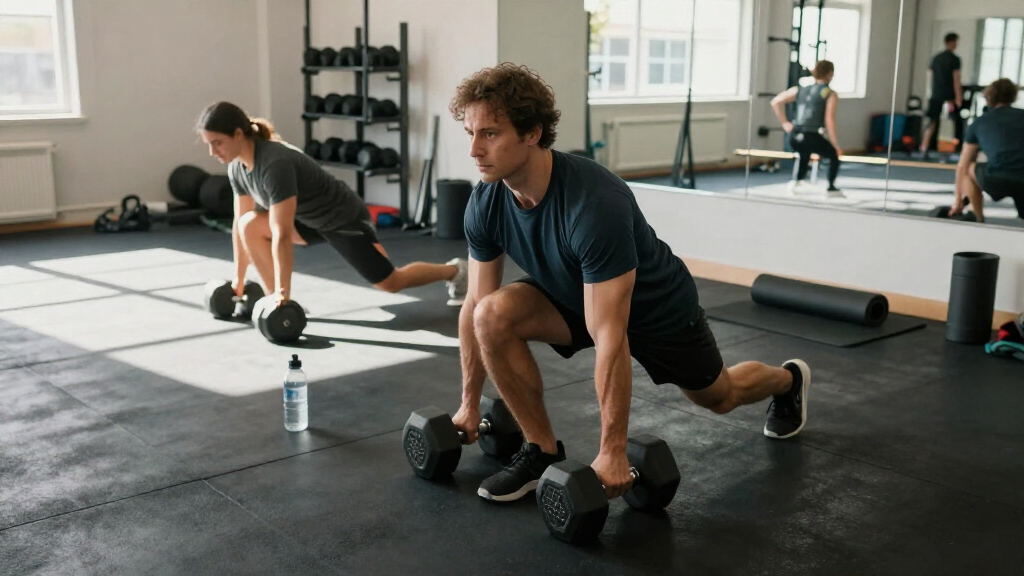
The routine comprises a plank walkout, chair heel tap, dumbbell lateral lunge, dumbbell reverse lunge and glute bridge march. It calls for a pair of dumbbells and a stable chair or low step; the lunges can also be done without weights. The trainer recommends beginning with one round and building toward three at a comfortable pace. For a warm-up, the report suggests completing one round without weights.
The exercises work different movements and muscle groups. The walkout moves the hips as the participant folds forward and returns to standing, while the plank position challenges the core. The chair heel tap involves lifting one foot onto a seat and tapping different parts of it, requiring balance on the other leg. The lateral lunge adds side-to-side movement, and the reverse lunge works the front leg while the rear leg steps back.
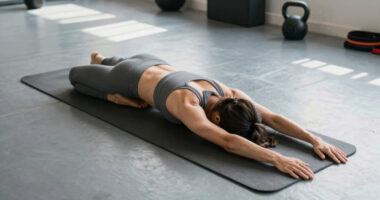
In the glute bridge march, a participant lifts their hips while lying on their back, then raises one knee at a time without letting the pelvis tilt. The report gives a general format of one to three sets, around 30 seconds of work and 30 seconds of rest; the chair heel tap and lateral lunge are specified as 30 seconds per side. It does not provide a reader-specific assessment or say that the routine prevents or treats a medical condition.
How the Routine Targets Hip Movement
The five moves combine forward, backward and sideways hip movement with balance and strength work. That variety is the trainer’s stated rationale for including them: the lateral lunge, for example, adds a sideways step, while the reverse lunge moves the rear hip into extension. The routine may give readers a structured set of movements to try, but the source does not report clinical evidence that these exercises make hips “younger” or establish a guaranteed benefit.
The report also connects the advice to experiences in the trainer’s classes and with personal training clients. It says some women in their 40s and older have reported hip stiffness, and notes that hormonal changes around menopause may contribute to muscle and joint discomfort. These are contextual observations and possible contributors, not a diagnosis of the individuals described or proof that menopause or sitting caused their symptoms.
The Class Behind the Advice
The trainer’s account begins with a circuit class held the previous week. Participants struggled with a chair heel-tap exercise that involved extending a leg and moving the heel across a seat. The trainer said several women found it difficult to raise their legs high enough because their hips felt stiff; men in the class found it easier, according to the report. The source provides no participant numbers, measurements or independent assessment of the exercise.
The trainer says they hear similar concerns from female clients in their 40s and beyond. The report mentions menopause-related hormonal changes and long periods of sitting as factors that can contribute to discomfort or stiffness. It gives no publication date, study findings or broader data on how common these experiences are. The article is therefore a trainer’s practical recommendation based on reported class and client experiences.
“If your hip pain persists, gets worse or affects your everyday activities, speak to a healthcare professional.”
— Fit&Well report
What the Report Does Not Establish
The source does not identify the trainer by name, give the article’s publication date or cite research evaluating this specific circuit. It also does not say how much participants should increase weights or difficulty, or how the exercises should be adapted for particular injuries, health conditions or levels of fitness. The account of stiffness is based on the trainer’s experience with a class and clients, not a representative survey.
The headline’s phrase “keep their hips feeling young” is the trainer’s framing; the report does not define that phrase or show that the routine reverses age-related changes. It is also unclear whether the people who struggled with the chair exercise had an underlying condition. The source does not establish that sitting or menopause was the cause of any individual’s symptoms.
How Readers Can Approach the Circuit
The report gives readers a suggested starting structure: try one round at a comfortable pace, then build toward three if appropriate. It describes the routine as suitable for a warm-up without weights, a finisher or a standalone circuit. Its instructions also include modifications: bend the knees as needed during the plank walkout, use a lower chair or hold a stable support for the heel tap, and avoid an overly wide step in the lateral lunge if stiff.
There is no announced follow-up, study or scheduled update attached to the report. Readers who try the exercises can follow the source’s advice to seek guidance from a healthcare professional if hip pain persists, worsens or interferes with everyday activities. The report does not set a timetable for expected results.
Key Questions
Which five exercises does the trainer recommend?
The routine lists plank walkouts, chair heel taps, dumbbell lateral lunges, dumbbell reverse lunges and glute bridge marches.
What equipment does the routine call for?
The report suggests a pair of dumbbells and a stable chair or low step. It says the lunges can be performed without weights.
How many rounds should someone do?
The trainer recommends starting with one round and building toward three rounds at a comfortable pace. The report does not give individualized guidance on progression.
What should someone do if hip pain continues?
The source advises speaking with a healthcare professional if pain persists, gets worse or affects everyday activities.
Source: rss