To protect your back while rowing, focus on maintaining a strong, engaged core and sequencing your movements correctly. Initiate with a powerful leg drive, then lean back slightly from the hips before pulling the handle toward your chest. Keep your arms relaxed and shoulders down, avoiding overreaching or collapsing your lower back. Proper setup, combined with controlled, fluid movements, helps prevent strain. Keep these cues in mind, and you’ll find ways to guarantee your technique stays safe and effective.
Key Takeaways
- Focus on leg drive first to generate power and reduce strain on your back.
- Maintain a strong core to support your lumbar spine during each stroke.
- Keep the back engaged and aligned, avoiding overreaching or excessive leaning.
- Use a controlled, fluid sequence: legs, hips, then arms to protect your lower back.
- Proper equipment setup and posture minimize lumbar load and enhance safe rowing for runners.
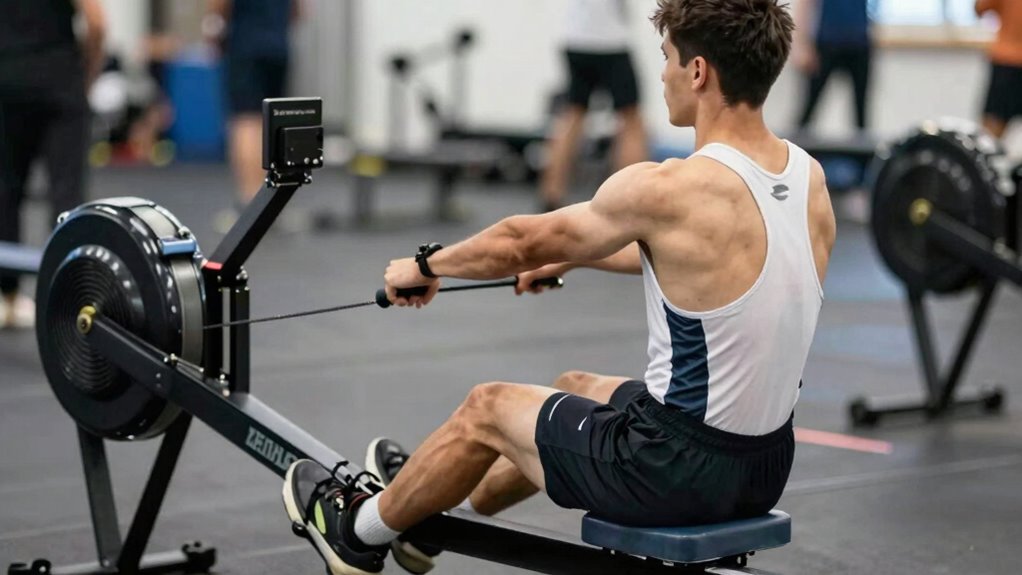
Have you ever considered adding rowing to your training routine? It’s a fantastic way to build strength, improve endurance, and reduce injury risk for runners. But to get the most out of rowing and protect your back, you need to focus on proper technique. A key aspect is understanding how arm positioning and leg drive work together to create a smooth, safe motion. When you set up for a row, keep your arms straight but relaxed, with your shoulders down and back. Your grip should be firm but not tight, allowing your arms to work efficiently without unnecessary tension. As you initiate each stroke, remember that your arms are primarily responsible for pulling, but they shouldn’t do all the work. Instead, your power should come from your legs and hips, which are the strongest muscles involved in rowing.
The leg drive is the foundation of an effective and safe rowing stroke. As you push off the footplates, focus on driving through your heels, straightening your legs fully while keeping your core engaged. This leg action propels your body backward and generates the force needed to move the handle. The moment your legs reach full extension, your torso begins to lean back slightly, and your arms pull the handle toward your lower chest. It’s essential to keep this sequence fluid and controlled. Using your legs to generate the primary force not only makes your stroke more powerful but also minimizes the strain on your back. If you rely too much on your arms or lean back excessively during the pull, you risk overloading your lumbar spine, which can lead to injury. Incorporating proper equipment setup can further enhance your safety and efficiency.
Throughout the movement, maintain a strong core to support your lower back. The core acts as the stabilizer, ensuring that your hips and back stay aligned and protected. When you finish each stroke, your arms should be extended forward, your torso leaning slightly forward from the hips, but without overreaching or collapsing your lower back. The key is to keep this sequence consistent—drive with your legs, lean back slightly from the hips, then pull with your arms—so that your back remains safe and your energy efficiently transfers from your legs through your arms. By paying close attention to arm positioning and making sure your leg drive is powerful and controlled, you’ll maximize your rowing benefits while safeguarding your back, making it an excellent cross-training tool for runners.

Sunny Health & Fitness SF-RW1205 Rowing Machine Rower
【Progressive Resistance Levels】Elevate your rowing experience with 12 adjustable resistance levels, catering to everyone from beginners to advanced…
As an affiliate, we earn on qualifying purchases.
As an affiliate, we earn on qualifying purchases.
Frequently Asked Questions
Can Rowing Replace Running as My Primary Workout?
Yes, rowing can replace running as your primary workout, offering excellent cross-training benefits that boost overall strength and cardiovascular fitness. It’s low-impact, reducing injury risks, especially with proper injury prevention strategies like proper technique and gradual intensity increases. However, combining rowing with running can provide thorough training, preventing overuse injuries and maintaining your running-specific muscles. Listen to your body and balance both for ideal performance and health.
What Equipment Is Needed for Safe Rowing Practice?
To practice rowing safely, you need some equipment basics like a quality rowing machine or boat, proper footwear, and adjustable foot straps. Safety gear such as a life jacket and a towel help protect you during workouts. Make sure your rowing equipment is well-maintained and set up correctly to prevent injuries. Always wear appropriate clothing and stay aware of your form to guarantee a safe and effective rowing session.
How Often Should Runners Incorporate Rowing Into Their Training?
Think of rowing as a steady heartbeat in your training rhythm. You should incorporate it 2-3 times weekly to maximize cross-training benefits and injury prevention strategies. This balance keeps your muscles engaged without overloading your joints. By making rowing a consistent part of your routine, you strengthen your core, improve endurance, and reduce injury risk—helping you run stronger and longer with every step you take.
Are There Specific Rowing Techniques for Different Running Distances?
Yes, there are distance-specific rowing techniques for runners. For short sprints, focus on powerful, explosive strokes with quick recovery to build speed. For longer distances, adapt your technique to emphasize endurance, maintaining a steady, smooth rhythm and conserving energy. Adjust your technique by modifying stroke length and intensity based on distance. This guarantees you target the right muscles and protect your back while optimizing your training for different running events.
How Long Does It Take to See Back Pain Improvements From Rowing?
Think of your back as a delicate garden that needs careful tending. You’ll likely notice improvements in back pain within 4 to 6 weeks of consistent rowing, as muscle engagement strengthens supporting muscles and prevents injuries. Keep focusing on proper technique and injury prevention, and you’ll see your discomfort fade like morning fog. Stay committed, and your back’s resilience will grow, turning pain into power.
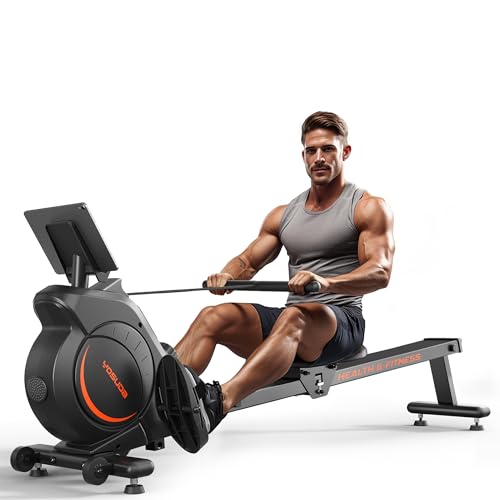
YOSUDA Magnetic Rowing Machine 350 LB Weight Capacity – Rower Machine for Home Use with LCD Monitor, Tablet Holder and Comfortable Seat Cushion-New Version
Choose YOSUDA: Design and produce top-quality exercise machines for home use for over 20 years. YOSUDA has been…
As an affiliate, we earn on qualifying purchases.
As an affiliate, we earn on qualifying purchases.
Conclusion
By focusing on maintaining proper form, engaging your core, and keeping your back straight, you protect your body and improve your performance. Remember to stay mindful of your technique, breathe steadily, and listen to your body. Consistently practicing these cues helps prevent injuries, boost endurance, and enhance your running. Keep these principles at the forefront, and you’ll find yourself stronger, healthier, and more confident every time you hit the track or the water.
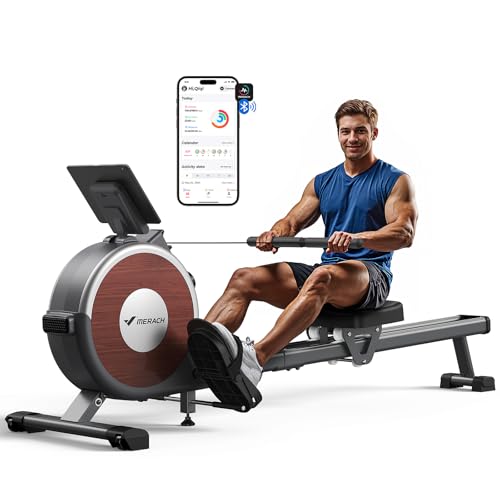
Merach Rowing Machine, Magnetic Rower Machine for Home, 16 Levels of Quiet Resistance, Dual Slide Rail with Max 350lb Weight Capacity, App Compatible with LCD Monitor, Q1S
MERACH APP: Our App offers various courses and programmed exercises for you, Taking the courses can bring your…
As an affiliate, we earn on qualifying purchases.
As an affiliate, we earn on qualifying purchases.

Rowing Machine Feet Straps for Concept 2 Rower – Foot Strap Replacement, Compatible with Models D & E – 2 Pack
High-Quality Replacement: Rowing machine foot straps, compatible with Concept 2 rower straps. Designed to be compatible with various…
As an affiliate, we earn on qualifying purchases.
As an affiliate, we earn on qualifying purchases.