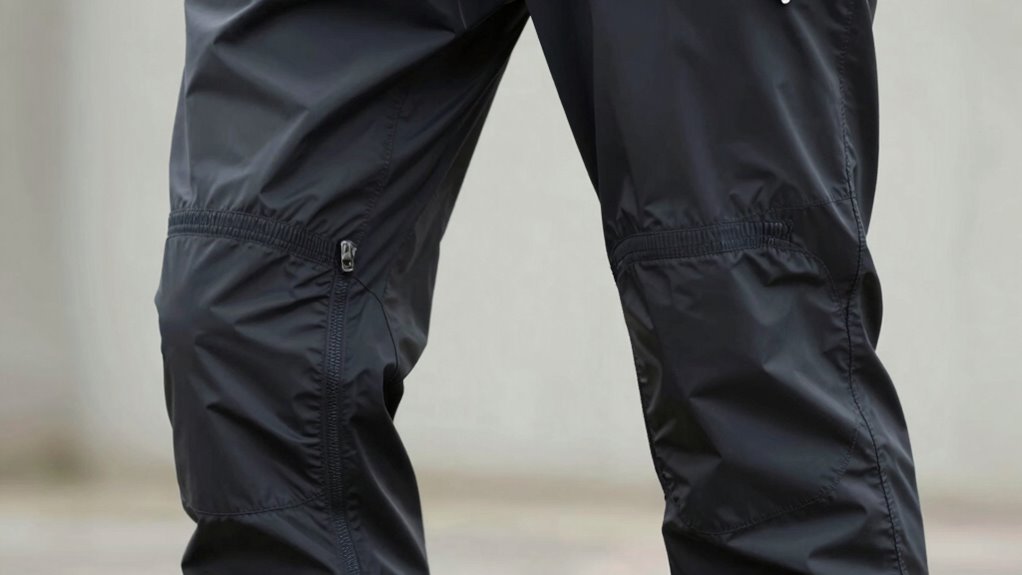

To prevent ‘swoosh’ chafe while running in rain pants, make sure they fit snugly but not too tight. A proper fit keeps the fabric securely in place, reducing excess flapping and rubbing against your skin. Look for pants that stay close without restricting movement or causing discomfort. Achieving the right fit can make all the difference in comfort and performance—so stay tuned to learn how to fine-tune your rain pants for the best run.

Get workout gear delivered free with Prime
- Fast, free delivery on millions of items
- Prime Video, Amazon Music and more included
- Member-only deals all year
Key Takeaways
- A snug but not tight fit minimizes fabric flapping that causes ‘swoosh’ noise and chafing during running.
- Properly fitted rain pants prevent excess fabric from rubbing against skin, reducing chafe and irritation.
- An athletic, tailored fit maintains fabric close to the body, enhancing comfort and reducing movement noise.
- Adjustable waistbands and cuffs help achieve a secure fit, preventing unwanted movement and chafing.
- Selecting rain pants with a close, streamlined fit ensures optimal performance without sacrificing breathability or waterproofing.
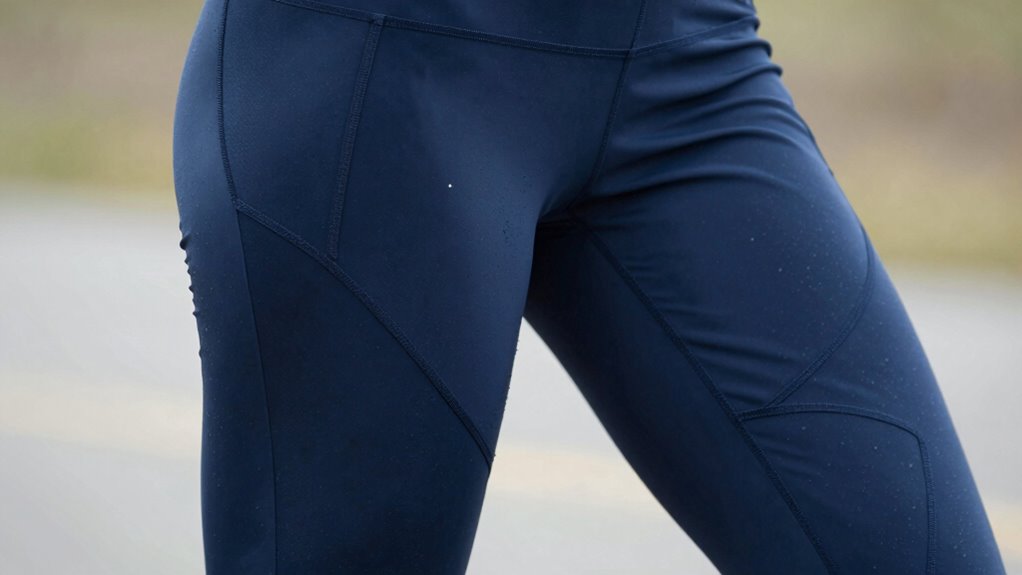
When rain threatens your run, having the right pair of rain pants can make all the difference. You need gear that keeps you dry without sacrificing comfort, and that starts with understanding what makes a good pair of rain pants. The key is in the fabric breathability and waterproof technology used in their construction. Breathability ensures sweat and moisture from your body escape, preventing that clammy, sticky feeling even in wet conditions. Waterproof technology, on the other hand, keeps rain from seeping through, so you stay dry from the outside in. When choosing rain pants for running, look for materials that strike a perfect balance: lightweight, flexible, and capable of handling the elements without adding bulk. These features allow you to move freely, maintain your pace, and enjoy your run despite the weather.
The fabric breathability is especially vital because it directly impacts your comfort. If your rain pants trap sweat inside, you’ll feel damp and uncomfortable, which can distract you from your run or cause chafing. Modern fabrics designed for athletic gear incorporate tiny pores or membrane layers that allow moisture vapor to escape while blocking water from penetrating. This means you won’t have to stop and change clothes or cut your run short due to discomfort. When combined with advanced waterproof technology, these fabrics create a protective barrier that resists rain while allowing your body’s moisture to vent out. This synergy is what keeps you dry and comfortable during a downpour. Additionally, choosing rain pants with proper fit helps prevent chafe and reduces noise caused by fabric flapping as you move.
As an affiliate, we earn on qualifying purchases.
Frequently Asked Questions
How Do Rain Pants Affect Running Performance?
Rain pants can enhance your running performance by keeping you dry and comfortable, which helps maintain your pace. Their material durability ensures they withstand tough conditions without tearing, while fit adjustment features prevent chafing and restrict unwanted movement. When you choose rain pants with a proper fit and durable material, you’ll stay focused on your run, avoiding distractions and discomfort that could slow you down or interrupt your stride.
Are Waterproof Rain Pants Breathable Enough for Long Runs?
It’s a coincidence that many waterproof rain pants now feature advanced fabric technology that enhances breathability, so you won’t feel stuffy during long runs. These pants are designed to manage moisture while keeping water out, addressing common breathability concerns. With the right fit and fabric, you can stay comfortable and dry, even on extended runs, making waterproof rain pants a practical choice for enduring weather conditions.
What Is the Best Way to Clean Rain Running Pants?
To clean your rain running pants, hand wash them in cold water with a gentle detergent to preserve fabric durability and prevent color fading. Avoid fabric softeners and bleach, as they can damage the material. After washing, hang them to air dry away from direct sunlight. This method keeps your rain pants in top shape, ensuring they stay waterproof and vibrant for many runs ahead.
Can Rain Pants Be Worn Over Regular Running Gear?
You can absolutely wear rain pants over your regular running gear—think of it as a superhero cape for your legs! Use layering strategies to stay comfortable, choosing rain pant materials that are lightweight and breathable. This way, you get waterproof protection without sacrificing mobility or comfort. Just make sure your rain pants fit well over your usual gear, so you don’t feel restricted or bulky during your run.
How Do I Choose the Right Size for Rain Running Pants?
To choose the right size for rain running pants, focus on size selection that allows a comfortable, snug fit without being restrictive. Measure your waist and hips accurately, then consult the sizing chart. Look for pants with adjustable features, like drawstrings or elastic waistbands, for fit adjustments. Try them on if possible, ensuring they move with you and prevent chafing, especially during activity.
Conclusion
Choosing the right rain pants for running isn’t just about staying dry; it’s about comfort that lasts mile after mile. When your fit prevents chafe, you focus on the road, not irritation. Like a gentle rain that refreshes, the perfect fit refreshes your run, making wet days feel less like obstacles and more like opportunities. So, gear up with the right fit, and turn soggy setbacks into smooth strides—because every run deserves comfort, rain or shine.
Fall Picks
fall essentials
As an affiliate, we earn on qualifying purchases.