
The most important running safety habit isn’t relying on gadgets, but staying aware of your environment and planning ahead. Always hydrate properly and choose routes that are safe, well-lit, and familiar. Be mindful of weather conditions and hazards like traffic or construction. Use landmarks for navigation and avoid isolated areas. Developing these habits keeps you safe and confident, far more than any device ever could. Keep going, and you’ll discover how these simple routines make a difference.

Get workout gear delivered free with Prime
- Fast, free delivery on millions of items
- Prime Video, Amazon Music and more included
- Member-only deals all year
Key Takeaways
- Prioritizing environmental and hazard awareness ensures safety over reliance on gadgets.
- Planning safe routes and staying alert helps prevent accidents more effectively than gadgets.
- Listening to your body signals and hydration needs promotes safety beyond technological tools.
- Maintaining routine safety checks, like weather and terrain assessment, is more impactful than gadget dependence.
- Developing mindfulness and situational awareness fosters safer running habits than solely relying on devices.
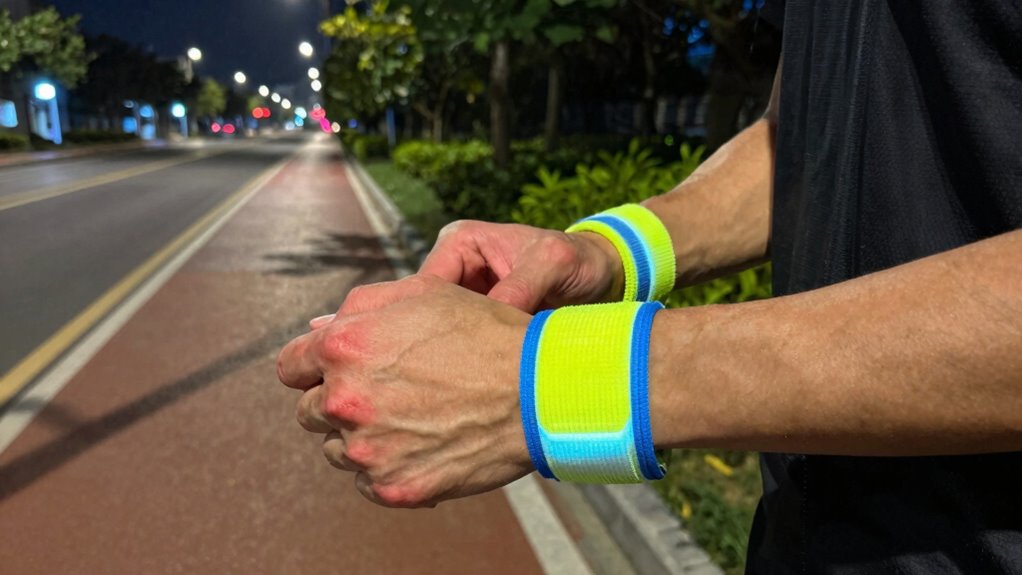
Developing a running safety habit is essential to guarantee you stay healthy and injury-free while enjoying your runs. While gadgets and tech can be helpful, the foundation of safe running lies in simple, deliberate habits you build into your routine. One of the most critical aspects is hydration awareness. You need to listen to your body and stay mindful of your hydration levels, especially during longer runs or hot weather. Carrying a water bottle or planning routes that pass water fountains can help you maintain proper hydration. Ignoring thirst or signs of dehydration can lead to fatigue, cramps, or worse, heat exhaustion. By making hydration awareness a priority, you protect your health and assure you can run comfortably and safely. Incorporating sustainable living practices into your routine, such as choosing eco-friendly water bottles, can also support environmental conservation efforts while keeping you hydrated.
Prioritize hydration and listen to your body to stay safe and enjoy your runs.
Equally important is route planning. Before you head out, take a moment to choose a safe, well-lit route that suits your pace and skill level. Avoid isolated areas or routes with heavy traffic, and consider running where there are other people around, especially if you’re out early in the morning or late at night. Planning your route in advance helps you avoid surprises and guarantee you know where you’re headed. Also, familiarize yourself with the area, noting landmarks or familiar points you can use as reference. When you plan your route, think about potential hazards, such as uneven sidewalks, construction zones, or areas with poor visibility. This foresight minimizes risks and keeps your run predictable and controlled. Additionally, awareness of surroundings is crucial for identifying potential dangers and staying alert during your run. It’s also beneficial to understand the local environment, including weather patterns and terrain, to better prepare for your run and adapt your safety habits accordingly. Being aware of changing weather conditions can help you adjust your clothing or plan for unexpected rain or wind. Developing a mindful running routine that includes checking the weather forecast before heading out can further enhance your safety.
eco-friendly water bottle for runners
As an affiliate, we earn on qualifying purchases.
As an affiliate, we earn on qualifying purchases.
Frequently Asked Questions
How Can Runners Stay Motivated to Maintain Safety Habits?
To stay motivated, remind yourself that safety gear and visibility techniques protect you and make running more enjoyable. Set small, achievable goals for incorporating safety habits into your routine. Celebrate your progress, and find running buddies who prioritize safety too. Keep your gear ready and visible, so it becomes second nature. When you see how these habits keep you safe, you’ll stay motivated to maintain them and enjoy your runs worry-free.
What Are Common Mistakes Beginners Make in Running Safety?
As a beginner, you often overlook safety gear like reflective clothing, which boosts visibility during early morning or evening runs. You might also neglect visibility tips, such as running against traffic and choosing well-lit routes. Avoid these mistakes by investing in proper safety gear and practicing visibility tips. These simple steps help protect you, making your runs safer and more enjoyable without relying solely on gadgets.
How Does Running Safety Differ in Urban Versus Rural Areas?
In urban areas, running safety hinges on avoiding the chaos of traffic and poorly lit streets, so you rely on urban lighting to see and be seen. In rural zones, it’s about noticing distant rural signage and staying alert for unpredictable animals or uneven terrain. Your approach shifts from bright city lights to cautious awareness of natural surroundings, making safety adaptable whether you’re dodging cars or wildlife.
Are There Specific Safety Habits for Early Morning Runners?
Before your early morning run, do a quick pre-run checklist to guarantee safety. Wear visibility gear like reflective vests or lights to stay seen in low light. Keep your phone charged and share your route with someone. Stick to well-lit paths, and stay alert for cars or cyclists. These habits help you stay safe and visible, making your early runs more enjoyable without relying solely on gadgets.
How Can Runners Recover From Safety-Related Accidents?
If you experience a safety-related accident, stay calm and assess your injuries. Use your emergency preparedness skills by calling for help if needed, and guarantee your phone or emergency whistle is accessible. Wear reflective gear to stay visible and signal for assistance. Once safe, seek medical attention promptly. Regularly practicing safety routines and carrying essential gear will help you recover quickly and prevent future incidents.
Conclusion
But here’s the twist: the real safety habit isn’t what you carry or wear—it’s your awareness. As you lace up tomorrow, remember that staying alert, trusting your instincts, and adapting to your surroundings can make all the difference. One moment of distraction could change everything. So, will you rely on gadgets, or will you embrace the habit that keeps you truly safe? The choice is yours—and the next run could be your safest yet.
Fall Picks
fall essentials
As an affiliate, we earn on qualifying purchases.