
TL;DR
Fit&Well reports that Jill Brown, a 59-year-old trainer with degenerative disc disease, does five physical therapy-based core exercises each week. Her routine includes weighted bird dogs, dead bugs, side planks, clamshells and bear-pose shoulder taps; her experience is personal, not evidence that the moves prevent surgery or suit everyone.
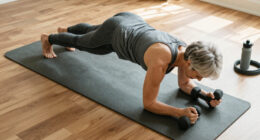
Jill Brown, a 59-year-old personal trainer, Pilates instructor and board-certified health and wellness coach, says she does five core exercises every week to build stability while managing degenerative disc disease. In an interview with Fit&Well, Brown described a routine based on physical therapy exercises, including weighted bird dogs, dead bugs and side planks; her account is personal and does not establish that the exercises prevent spinal fusion or are appropriate for every person with back problems.

Get workout gear delivered free with Prime
- Fast, free delivery on millions of items
- Prime Video, Amazon Music and more included
- Member-only deals all year
Brown told Fit&Well she was diagnosed with degenerative disc disease at age 35. She said she aims to build core strength and stability in an effort to put off spinal fusion. The report does not provide a clinical assessment of her condition or say that exercise will prevent the need for surgery.
Her five weekly movements are a weighted bird dog, a dead bug pressing against a Pilates ring or small ball, a side plank with a leg lift, a banded clamshell and a bear-pose shoulder tap. Brown said the exercises are physical therapy-based and that she varies them. Some build on fundamental movements, so Fit&Well advises mastering the basic versions before attempting the progressions.
For the bird dog, Brown uses light dumbbells of about 3 to 5 pounds and emphasizes lifting and lowering the opposite arm and leg together. In the dead bug, a ring or ball is held between one arm and the opposite knee to create gentle resistance while the other arm and leg extend. The remaining exercises focus on controlled hip, trunk and shoulder movement: raising the top leg in a side plank, opening the knees against a resistance band while lying on one side, and tapping opposite shoulders from a hands-and-knees position with the knees lifted slightly off the floor.
A Personal Routine for Spinal Stability
Brown’s account offers readers a concrete example of how one trainer incorporates core and hip-strengthening movements into her week while living with a diagnosed spinal condition. The exercises emphasize controlled movement and stability, rather than high-impact activity, and several can be adjusted by changing resistance or modifying the position.
The limits of the report matter as much as the exercise list. Brown’s experience does not show that these movements treat degenerative disc disease, correct spinal problems or avert surgery. People with back pain or a diagnosed condition can have different needs, and a movement that feels manageable for one person may aggravate symptoms for another. The exercises are best read as one individual’s routine, not a prescribed treatment plan.
Products Worth Considering

BowFlex Results Series SelectTech Adjustable Dumbbells, Pair

Levoit Core 400S-P Smart Air Purifier for Large Rooms

BowFlex Results Series 552 SelectTech Adjustable Dumbbell
As an affiliate, we earn on qualifying purchases.
How Brown Built Her Weekly Routine
Brown told Fit&Well her diagnosis came at age 35 and that the condition worsens with age, describing her motivation for prioritizing core strength. She said she has done clamshells for more than 25 years and connected them to a hip problem she says she was born with. These are her statements about her health history; the report does not include medical records or independent verification.
The routine combines movements commonly presented as progressions from basic core exercises. Fit&Well notes that two are related to the McGill Big 3, a group of core exercises, but the article does not identify which two in the supplied material. Brown also said she uses variations to keep the exercises interesting. The source gives examples of technique and resistance, but does not specify how many sets or repetitions she completes, how long the sessions take or the exact weekly schedule.
“I was diagnosed with degenerative disc disease at 35, which only gets worse with age.”
— Jill Brown, speaking to Fit&Well
What the Exercise Report Does Not Show
The article does not say whether Brown’s routine has changed her symptoms, slowed her condition or altered the likelihood or timing of spinal fusion. It gives no clinical trial results, outcome measurements or medical guidance specific to her case. It also does not provide a full program: sets, repetitions, frequency for each move and rest periods are not specified.
It remains unclear whether the exercises are suitable for readers with particular diagnoses, pain levels or mobility limitations. Brown’s quotations describe her experience and technique, not a guarantee of safety or benefit for others. Anyone with a spinal condition, persistent pain or a history of injury should seek individualized advice from a qualified health professional before starting or changing an exercise routine.
How Readers Can Use the Report
Fit&Well’s report presents Brown’s exercise choices but does not announce a study, clinical recommendation or scheduled follow-up. Readers who want to try similar movements should first learn the basic versions, use controlled ranges of motion and stop if an exercise causes pain or new symptoms. A physical therapist or other qualified clinician can advise whether a movement should be modified or avoided for a specific condition.
The next step for anyone considering the routine is individual guidance, not assuming that Brown’s weekly practice will produce the same outcome for others. The report provides no further information about Brown’s treatment plan or whether spinal fusion is currently planned.
Key Questions
Which five exercises does Jill Brown do each week?
According to Fit&Well, Brown’s routine includes a weighted bird dog, a dead bug using a Pilates ring or ball, a side plank with a leg lift, a banded clamshell and a bear-pose shoulder tap.
Why does Brown say she does these exercises?
Brown told Fit&Well she has degenerative disc disease and wants to build core strength and stability. She described putting off spinal fusion as her goal, but the report does not show that the exercises prevent surgery.
How heavy are the dumbbells in Brown’s bird dog?
Brown said she uses light dumbbells weighing about 3 to 5 pounds. She emphasized raising and lowering the opposite arm and leg at the same time.
Are these exercises suitable for everyone with back pain?
The report does not establish that they are. People with back pain or a diagnosed spinal condition should get advice from a qualified clinician or physical therapist before starting or changing an exercise program.
Source: fitandwell.com