
You can strengthen your feet without any weird tools by practicing simple exercises like barefoot walking, toe curls, and picking up small objects with your toes. Standing on one foot and doing ankle circles also boost balance and flexibility. Focus on natural movements that activate small foot muscles and improve biomechanics. These easy, equipment-free activities can be done anywhere and with consistency, leading to healthier, stronger feet—keep exploring to discover even more effective techniques for better foot health.

Get workout gear delivered free with Prime
- Fast, free delivery on millions of items
- Prime Video, Amazon Music and more included
- Member-only deals all year
Key Takeaways
- Practice barefoot walking and toe spreading on flat, clean surfaces daily.
- Perform toe curls and grasp small objects like marbles with your toes.
- Engage in single-leg stands and balance exercises without shoes.
- Include ankle circles and heel-to-toe walks to improve flexibility and coordination.
- Consistently incorporate these exercises to strengthen foot muscles naturally.
Your feet often bear the brunt of daily activities, yet they’re frequently overlooked when it comes to strengthening exercises. Understanding foot biomechanics is key to improving foot strength and function. When you focus on how your feet move and support your body, you can develop exercises that target the muscles involved in stability, balance, and propulsion. One of the simplest ways to do this is through barefoot exercises, which allow your feet to move naturally without the restriction of shoes. These exercises help activate small muscles often neglected in regular footwear, promoting better foot health and overall biomechanics.
Barefoot exercises activate small foot muscles, enhancing stability, balance, and overall foot health naturally.
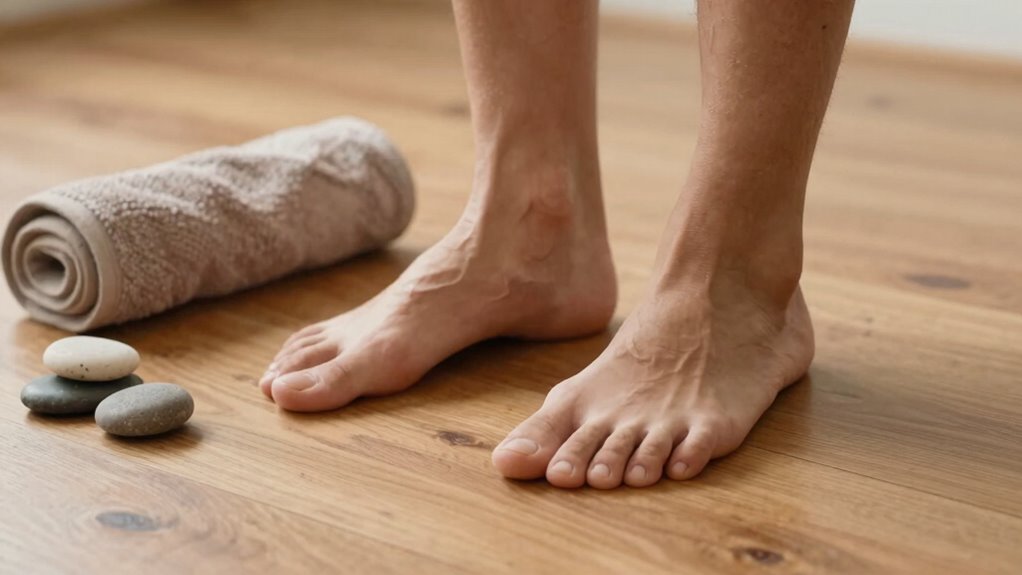
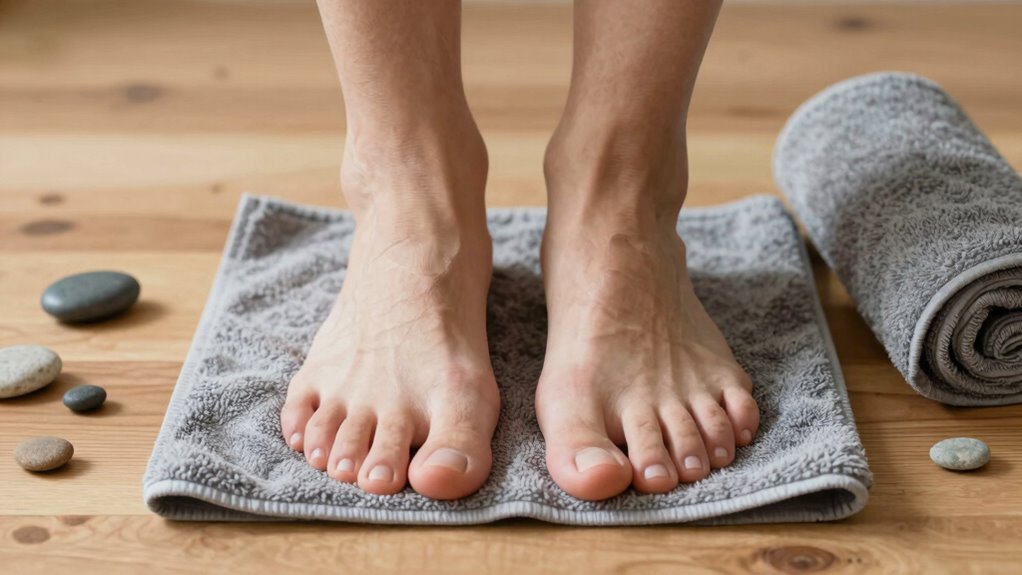
Starting with barefoot exercises is straightforward. Find a flat, clean space where you can comfortably stand or sit. Begin by just walking barefoot for a few minutes each day, paying close attention to how your feet feel and move. As you walk, notice the way your toes spread and grip the surface beneath you. This helps strengthen the intrinsic muscles of your feet, which are vital for maintaining arch support and stability. You can also perform toe curls by sitting down and digging your toes into the floor, then releasing. Repeat this several times to enhance toe strength and improve foot biomechanics.
Another effective barefoot exercise involves picking up small objects with your toes. Place marbles, towels, or small balls on the floor and try to grasp or move them with your toes. This activity not only boosts toe dexterity but also strengthens the muscles responsible for gripping and stabilization. Standing on one foot without shoes challenges your balance and proprioception, engaging muscles that aren’t typically activated in regular standing. Hold this position for 30 seconds to a minute, then switch feet, gradually increasing the duration as your strength improves.
You can also incorporate simple dynamic movements, such as ankle circles or heel-to-toe walks, to promote flexibility and coordination. These exercises reinforce the natural mechanics of your foot and ankle, reducing the risk of injuries and improving gait. Additionally, understanding foot biomechanics can help you choose better footwear and prevent common foot problems. Remember, consistency is key. Regularly engaging in barefoot exercises helps retrain your foot muscles to work in harmony, leading to better foot biomechanics over time. Without the need for fancy tools or equipment, these natural movements empower you to strengthen your feet effectively, enhancing overall stability, balance, and comfort in everyday life.
As an affiliate, we earn on qualifying purchases.
Frequently Asked Questions
Can Foot Strengthening Prevent Future Injuries?
Yes, foot strengthening can prevent future injuries by improving ankle stability and overall foot support. When your feet are stronger, you’re less likely to stumble or strain your ankles during activities. Focus on exercises that enhance muscle balance, and choose supportive footwear choices that complement your strength efforts. Building foot strength creates a solid foundation, reducing the risk of sprains, strains, and other injuries over time.
How Long Does It Take to See Results?
Results roll in gradually, typically within 3 to 6 weeks of consistent effort. You’ll notice improvements in ankle mobility and toe flexibility as you dedicate time to simple, sustained exercises. Keep practicing regularly, and you’ll build better balance, stability, and strength. Patience pays off—your feet will thank you as they become stronger, more flexible, and prepared to prevent future injuries. Stay committed, and results will follow.
Are There Any Risks Involved?
Yes, there are some risks involved if you don’t pay attention to your footwear choices and daily routines. Overdoing certain exercises can lead to strain or injury, especially if your shoes lack proper support. To minimize risks, choose supportive footwear and gradually incorporate foot-strengthening activities into your routine. Listen to your body, and if you experience pain, stop and consult a professional. Proper care helps prevent setbacks and injuries.
Can Foot Exercises Help With Flat Feet?
Did you know nearly 30% of adults have flat feet? Yes, foot exercises can help with flat feet by strengthening the arches. Incorporate arch support exercises and toe stretches regularly to improve foot stability and reduce discomfort. These simple, effective moves help build the muscles that support your arches, potentially alleviating flat foot symptoms. Consistency is key, so make these exercises part of your daily routine for the best results.
Should I Consult a Professional Before Starting?
Yes, you should consult a professional before starting foot exercises. Seeking professional guidance guarantees you get a personalized assessment, which helps identify your specific needs and prevents injury. A healthcare provider or physical therapist can recommend safe, effective exercises tailored to your foot condition. This personalized approach not only improves results but also gives you peace of mind, making sure you’re strengthening your feet correctly and safely.
Conclusion
Now that you know how to strengthen your feet without weird tools, imagine your feet as tiny superheroes, bravely tackling daily obstacles—no gadgets needed. With strong arches and nimble toes, you’ll glide through life like a ninja on a mission, leaving flimsy feet in the dust. So, skip the bizarre contraptions and embrace simple exercises; your feet will thank you, and you’ll walk through life with the confidence of a well-armed, barefoot adventurer.
Halloween Picks
halloween
As an affiliate, we earn on qualifying purchases.