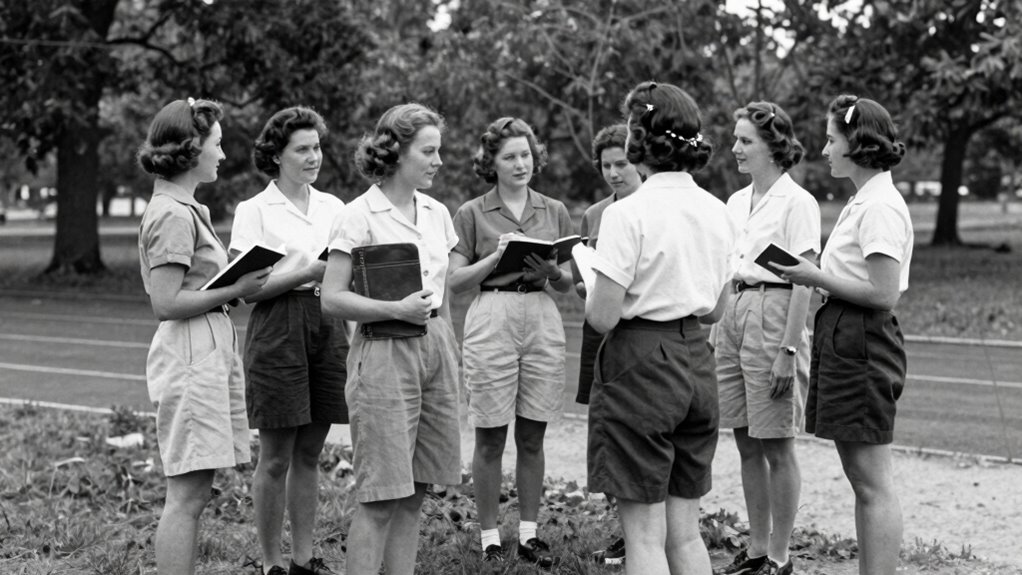

Women’s running clubs have a rich, hidden history of empowering women and challenging societal norms. These groups provided safe spaces for women to connect, compete, and fight for gender equality when mainstream sports excluded them. They nurtured pioneers and broke stereotypes about women’s physical and athletic abilities. Their efforts sparked social change, inspiring future generations. To discover more about this powerful legacy and the obstacles overcome, keep exploring this remarkable story.

Get workout gear delivered free with Prime
- Fast, free delivery on millions of items
- Prime Video, Amazon Music and more included
- Member-only deals all year
Key Takeaways
- Women’s running clubs provided crucial safe spaces for female athletes to train, compete, and advocate amid societal restrictions.
- They operated secretly or faced resistance, organizing their own races and events due to exclusion from mainstream sports.
- These clubs served as incubators for pioneering female athletes, challenging gender stereotypes and demonstrating athletic excellence.
- Women’s running clubs contributed to broader social change, promoting gender equality and inspiring women’s participation in sports.
- Their legacy laid the groundwork for modern inclusive sports, highlighting the importance of grassroots efforts in social progress.
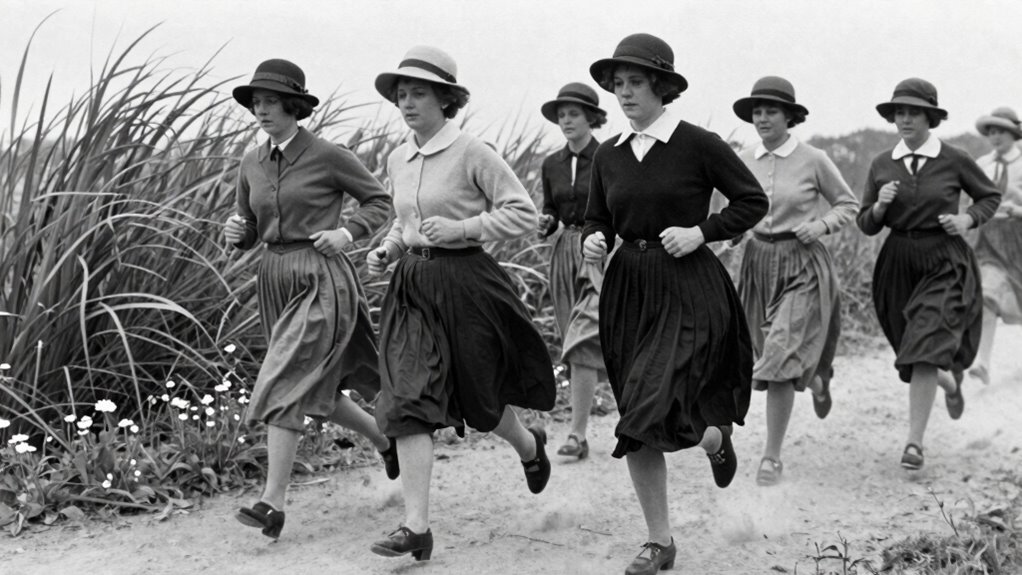
Women’s running clubs have played an essential role in shaping the history of female athletics, offering women a space to connect, compete, and challenge societal norms. These clubs didn’t just serve as places to run; they became platforms for advocating gender equality and celebrating athletic achievements. In a time when women’s sports often faced skepticism and outright opposition, these groups provided a crucial refuge for women to pursue their passion for running without restrictions.
Women’s running clubs fostered connection, challenged norms, and championed gender equality in athletics through passion and perseverance.
As you explore the history of women’s running clubs, you’ll see how they often operated in secrecy or faced resistance from mainstream sports organizations. Early on, societal expectations limited women’s participation in athletic events, branding them as unfeminine or unnecessary. Yet, women’s clubs pushed against these stereotypes, organizing their own races and training groups. Their athletic achievements, often overlooked in mainstream sports history, demonstrated that women could excel physically and competitively. These accomplishments challenged the prevailing notions of gender roles, slowly shifting public perceptions about women’s capabilities.
You may not realize that many pioneering women runners started their journeys in these clubs, which became incubators for future champions. They fostered a sense of camaraderie and empowerment, encouraging women to break barriers and aim for excellence. Through dedicated training and collective effort, these clubs helped women set records and win medals, proving that athletic success wasn’t reserved for men. Their victories became symbols of progress, fueling the ongoing fight for gender equality in sports. Recognizing these efforts highlights the importance of women’s sports as a catalyst for social change.
Women’s running clubs also played an important role in sparking broader social change. They served as safe spaces where women could challenge traditional gender expectations and advocate for their rights, both within sports and beyond. These clubs often organized events that highlighted the importance of women’s participation in athletics, inspiring others to join and fight for equal opportunities. In doing so, they contributed to a cultural shift that gradually embraced women’s athletic achievements as legitimate and worthy of recognition.
Furthermore, many of these clubs operated at a time when women’s participation in sports was often discouraged or marginalized by mainstream organizations, making their efforts even more significant. In essence, the history of women’s running clubs is intertwined with the larger story of women’s rights and gender equality. Their efforts laid the groundwork for today’s inclusive and diverse athletic landscape. By celebrating athletic achievements and breaking down societal barriers, these clubs helped shape a future where women’s sports are respected and valued. Their legacy reminds you that progress often begins with small, courageous steps—steps taken on the running tracks and in the hearts of women determined to claim their space.
As an affiliate, we earn on qualifying purchases.
Frequently Asked Questions
How Did Women’s Running Clubs Influence Gender Equality Movements?
Women’s running clubs challenged gender stereotypes and societal perceptions by proving women could be strong, active, and independent. When you join or learn about these clubs, you see how they fostered camaraderie and confidence, breaking down barriers that limited women’s roles. Their visibility and achievements pushed society to rethink gender norms, fueling broader gender equality movements and inspiring women everywhere to pursue their passions without fear of judgment.
Who Were the Founding Members of the Earliest Women’s Running Clubs?
You’re curious about the earliest women’s running clubs, right? Back then, pioneers like Annette Kellerman and Alice Milliat founded these groups, often facing sponsorship challenges that threatened their growth. Despite this, they fostered club membership diversity, uniting women from different backgrounds. Their passion and resilience laid the groundwork for future generations, proving that determination can overcome obstacles and inspire change in sports and society alike.
What Challenges Did Women’s Running Clubs Face During Their Inception?
You face societal resistance and access barriers when women’s running clubs first formed. Many communities viewed women running as inappropriate or unfeminine, discouraging participation. Limited access to safe spaces and proper attire further hindered involvement. Despite these challenges, women persisted, forming supportive groups that challenged norms, gradually gaining acceptance. Their resilience helped break down barriers, paving the way for broader acceptance of women’s athletic pursuits.
How Have Women’s Running Clubs Evolved Globally Over Time?
Like rivers carving new paths, women’s running clubs have flowed globally, transforming over time. You see, historical milestones marked their rise, breaking barriers and inspiring change. Cultural impacts ripple outward, empowering women and fostering community. Today, these clubs thrive across continents, celebrating strength and solidarity. As you lace up, realize you’re part of a dynamic movement that’s reshaped perceptions, proving that every step forward echoes through history’s landscape.
Are There Notable Women’s Running Clubs That Still Operate Today?
Yes, many notable women’s running clubs still operate today, challenging gender stereotypes and fostering athletic solidarity. You can join groups like the New York Pioneer Women’s Running Club or the Black Girls Run, which empower women and promote inclusivity. These clubs continue to break barriers, encouraging women of all backgrounds to run together, build confidence, and challenge societal norms around gender and athletics.
Conclusion
As you explore the history of women’s running clubs, it’s inspiring to see how they’ve empowered women for over a century. Did you know that in 1928, only 4% of female athletes competed in the Olympics? Today, women’s participation in running continues to grow, proving that these clubs helped break barriers and foster a community of strength and resilience. Keep running, and remember—you’re part of a legacy that’s paved the way for future generations.
Halloween Picks
halloween
As an affiliate, we earn on qualifying purchases.