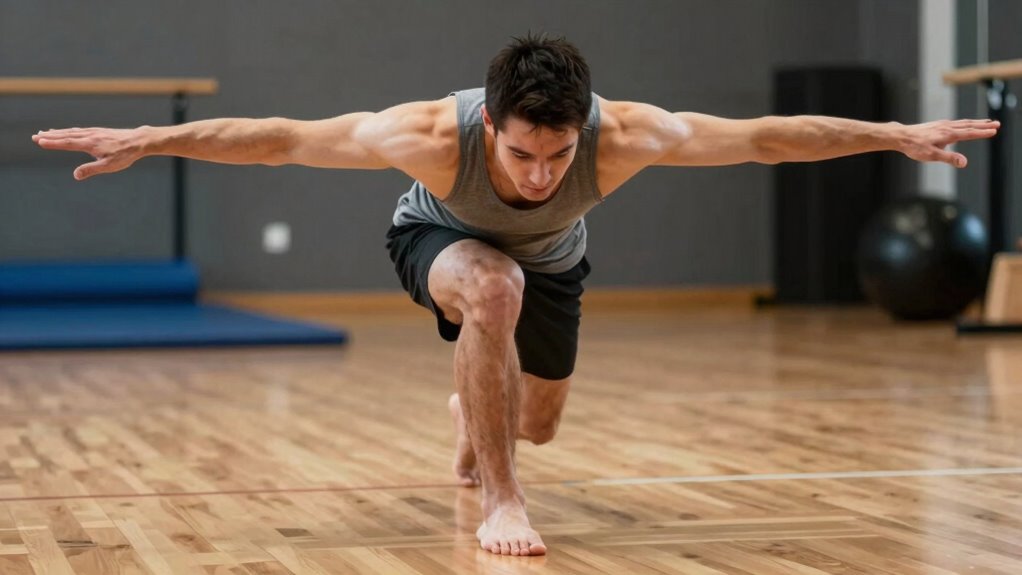

The single-leg balance test reveals useful weaknesses in your stability, core strength, and proprioception. If you wobble or struggle to hold your position, it indicates areas needing improvement. This simple test uncovers balance control issues that could affect your posture, athletic performance, or risk of falling. Strengthening your core and sharpening proprioception can help. Keep exploring to discover how to enhance your stability and prevent injuries more effectively.

Get workout gear delivered free — and shop member deals
- Fast, free delivery on millions of items
- Access to Prime Big Deal Days deals on October 6–7
- Prime Video, Amazon Music and more included
Key Takeaways
- The single-leg stance test highlights deficits in balance, core stability, and proprioception by observing wobbling or difficulty maintaining posture.
- It reveals weaknesses in neuromuscular control and sensory integration critical for maintaining upright stability.
- Variations like eyes closed or unstable surfaces intensify challenges, exposing specific proprioceptive or core weaknesses.
- Performance inconsistencies can pinpoint areas needing targeted balance or core strengthening exercises.
- The test’s simplicity allows quick identification of functional balance issues affecting daily activities or athletic performance.

The Single-Leg Balance Test is a simple yet effective way to assess your stability and coordination. When you perform this test, you’re not just checking how long you can stand on one leg; you’re also revealing essential insights into your overall balance control. Your ability to maintain position depends heavily on core stability, which provides the foundation for steady movement, and proprioception, your body’s awareness of its position in space. If you struggle to hold the pose or wobble excessively, it indicates areas where your balance system could use some work, especially in these key areas.
The Single-Leg Balance Test reveals insights into core stability and proprioception for better balance and coordination.
Core stability plays a fundamental role in maintaining your equilibrium. When your core muscles—located in your abdomen, back, and pelvis—are strong and engaged, they help keep your spine aligned and your body balanced. During the test, if your core isn’t active or stable, you’ll likely find it difficult to stay upright, especially as fatigue sets in. Strengthening your core not only improves your ability to perform the test but also translates to better posture, reduced injury risk, and enhanced athletic performance. Core stability acts as the sturdy trunk that supports all your movements, so neglecting it leaves your balance vulnerable.
Proprioception enhancement is equally essential. This sense allows you to feel where your limbs are without looking, enabling quick adjustments to maintain your balance. When you wobble or lose control during the test, it often signals a deficiency in proprioception. Improving this sense involves exercises that challenge your body’s awareness—like standing on uneven surfaces or closing your eyes while balancing. These activities sharpen your proprioceptive feedback, making your movements more precise and your balance more resilient. The better your proprioception, the more efficiently your body reacts to changes and perturbations, keeping you upright under various conditions. Additionally, body awareness is a key component that can be improved alongside proprioception. Incorporating sensory training exercises can further enhance your body’s natural ability to stabilize itself. Engaging in neuroplasticity exercises may also accelerate the development of these skills, leading to faster improvements in balance. Improving your sensory input can lead to quicker corrective responses and increased stability during unpredictable situations. Developing a heightened neuromuscular control is also crucial for maintaining long-term balance and preventing falls.
As an affiliate, we earn on qualifying purchases.
Frequently Asked Questions
How Often Should I Perform the Single-Leg Balance Test?
You should perform the single-leg balance test about once a week as part of your balance training routine. Regular testing helps identify weaknesses, allowing you to improve stability and prevent injuries. Consistent practice enhances your balance and strengthens supporting muscles, making injury prevention more effective. Keep track of your progress, and adjust the frequency if you notice significant improvements or need extra focus on specific areas.
Are There Any Safety Precautions to Consider During the Test?
Yes, there are safety precautions you should take during the test. Always wear appropriate safety gear, like supportive shoes, to prevent falls. Conduct the test on a non-slip surface and have a sturdy object nearby for balance support if needed. If you have any medical concerns or feel unsteady, seek medical supervision before attempting the test. These precautions help minimize risks and guarantee your safety throughout the process.
Can This Test Identify Specific Muscle Weaknesses?
Did you know that the single-leg balance test can identify muscle weaknesses with about 80% accuracy? It’s a great way to assess muscle activation and stability. By challenging your balance, it reveals which specific muscles may be underperforming, helping you target your training more effectively. So yes, this test can pinpoint particular muscle weaknesses, making it valuable for personalized stability assessments and injury prevention strategies.
Is This Test Suitable for All Age Groups?
Yes, this test is suitable for most age groups, but you should consider age considerations and physical limitations. Younger adults typically perform better, while older individuals might need modifications to prevent falls or strain. If you have physical limitations or balance issues, consult a healthcare professional before attempting the test. Adjustments like holding onto a support or reducing the duration can make it safer and more effective for everyone.
How Can I Improve My Single-Leg Balance?
Imagine you’re stepping into a dojo of balance, ready to master your skills. To improve your single-leg balance, face balance challenges daily, like standing on one foot while brushing your teeth. Focus on muscle engagement, especially in your core and stabilizers, and gradually increase duration. Practice slowly, maintain focus, and incorporate exercises like yoga or balance drills to build strength and confidence. Consistency is key to enhancing your stability.
Conclusion
Don’t let fear of failure hold you back. The single-leg balance test isn’t just about stability—it’s a powerful tool to uncover hidden weaknesses that could lead to injury or setbacks. Embrace the challenge, knowing that recognizing these gaps gives you the chance to improve and stay resilient. Every small step toward better balance is a step toward a stronger, more confident version of yourself. You owe it to your body to see what you’re truly capable of.
Fall Picks
fall essentials
As an affiliate, we earn on qualifying purchases.