The Hong Kong Marathon course tests your endurance with tunnels, flyovers, and steep hills. You’ll need to pace yourself wisely, slowing down before tunnels and pushing harder on open sections afterward. Incorporate hill runs and interval training into your prep to handle elevation changes confidently. Stay flexible with your pace as fatigue sets in, and use mental toughness to conquer tricky climbs. Keep going, and you’ll discover more tips for success on this challenging course.
Key Takeaways
- The Hong Kong Marathon course features tunnels, flyovers, and steep hills requiring strategic pacing and endurance.
- Training should include hill runs, interval training, and mileage progression to handle elevation changes effectively.
- Race strategies involve adjusting pace in tunnels and overflyovers, conserving energy for steep climbs.
- Navigating obstacles demands mental resilience, with slowing down before tunnels and accelerating afterward.
- Proper preparation, including muscle strengthening and flexible pacing plans, is essential for tackling course challenges.
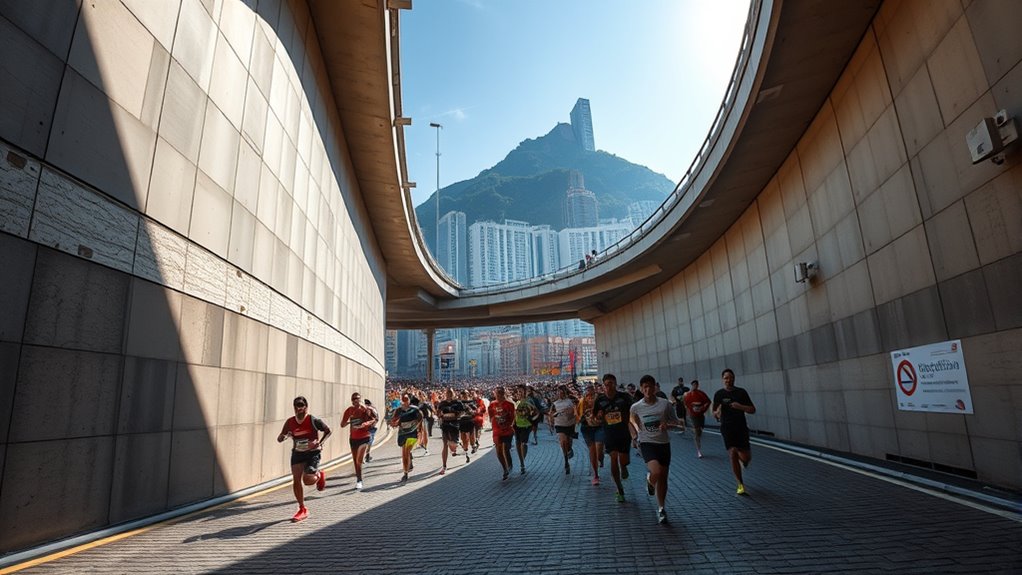
Have you ever wondered what makes the Hong Kong Marathon a must-see event for runners worldwide? It’s not just the vibrant cityscape or the festive atmosphere; it’s the challenge itself. The course takes you through tunnels, over flyovers, and up steep hills, demanding more than just endurance — it tests your race day strategies and marathon training tips. Proper preparation is key to conquering this unique route, so understanding how to approach these obstacles can make all the difference in your performance.
The Hong Kong Marathon challenges runners with tunnels, flyovers, and steep hills, testing endurance and strategy.
When you train for this marathon, focus on building strength and endurance to handle the city’s varied terrain. Incorporate hill runs and interval training into your routine to simulate the inclines you’ll face. These hills aren’t just minor slopes; some are steep enough to require steady pacing and mental resilience. Your marathon training tips should emphasize gradual progression to avoid injury, especially since the course’s elevation changes can tax your muscles differently than flat courses. Strengthening your leg muscles and core will also improve stability and reduce fatigue during those challenging uphill sections.
On race day, your strategies must adapt to the course’s demands. Because the route includes tunnels and flyovers, it’s *important* to maintain a consistent pace and be prepared for sudden changes in elevation. Approaching tunnels, for example, you’ll want to slow down slightly to adjust to the darker environment and the change in air quality, then accelerate once you’re back in open space. Overflyovers, which can be long and steep, require you to conserve energy early on, so you have enough strength for the climbs later in the race. Keep in mind that the unpredictable Hong Kong weather can also influence your race day plan, so stay hydrated and dress appropriately.
Another key race day strategy is to stay mentally focused and flexible. The course’s tunnels and hills can be intimidating, but breaking the race into smaller segments helps you stay motivated. Use your training to develop a pacing plan that accounts for these obstacles, and don’t be afraid to adjust if you’re feeling fatigued. Remember, the Hong Kong Marathon isn’t just about finishing; it’s about conquering the course’s unique features with confidence. Combining solid marathon training tips with smart race day strategies will help you navigate the tunnels, flyovers, and hills successfully, making your marathon experience memorable and rewarding.
Frequently Asked Questions
What Is the Total Elevation Gain of the Marathon Route?
You’ll face approximately 300 meters of elevation gain on the Hong Kong Marathon route. The route’s topography presents elevation challenges, with steep hills and sharp inclines that test your endurance. Orienteering through tunnels and flyovers, you’ll encounter significant elevation changes that demand strategic pacing. Prepare for these elevation challenges by training on hilly terrain beforehand, so you can maintain your pace and conserve energy throughout the course.
How Do Runners Navigate the Tunnel Sections Safely?
You should stay alert when traversing tunnel sections by maintaining steady pacing techniques and reducing your speed. Use hydration strategies to stay hydrated, as tunnels can cause dehydration or disorientation. Focus on your footing, avoid sudden movements, and keep your head up to stay aware of surroundings. If necessary, slow down slightly to guarantee safety, and trust your training to handle the challenging sections confidently.
Are There Any Water Stations Inside the Tunnels?
Imagine running through a hidden underground river—yes, there are water stations inside the tunnels. These stations are carefully placed, part of the water station logistics, to make certain you stay hydrated without breaking your stride. Tunnel hydration strategies include grabbing water quickly and pacing yourself, so you don’t miss out. Stay alert, and take advantage of these stations to keep your energy flowing smoothly through every twist and turn.
What Are the Best Training Tips for Hills and Flyovers?
To excel in hill running and flyover techniques, focus on strong leg muscles and maintain a steady pace. Practice uphill runs regularly to build endurance, and when approaching flyovers, lean slightly forward and shorten your stride for better control. Use your arms to propel upward, and stay relaxed to conserve energy. Incorporate interval training to improve your power and speed, making challenging sections feel more manageable on race day.
How Does the Route Change in Adverse Weather Conditions?
In adverse weather, you should stay alert for marathon route adjustments that prioritize safety. Expect rerouted sections around flooded tunnels or slippery flyovers, and be prepared for potential delays. Your safety comes first, so listen for official updates and follow marshals’ instructions. Adjust your pace accordingly, and keep a close eye on weather alerts to make certain you navigate the course safely despite challenging conditions.
Conclusion
So, next time you sign up for the Hong Kong Marathon, remember it’s not just a race—it’s an obstacle course with tunnels, flyovers, and hills that double as a sightseeing tour. Who needs a gym when you can get your cardio while climbing stairs and dodging traffic? Embrace the chaos, chase the skyline, and maybe, just maybe, you’ll finish with a story worth telling—preferably one that involves a few laughs and a lot of sweat.