
When you volunteer at a race, you can expect to assist with event logistics, guide runners, and manage aid stations. You’ll learn about race coordination, safety procedures, and how to handle unexpected situations. Wearing comfortable clothing and staying alert is essential. Your involvement helps create a positive experience for participants. By staying attentive and proactive, you’ll gain valuable skills that support successful race day operations—if you stick around, you’ll discover even more ways to contribute.
Key Takeaways
- Volunteers will be assigned specific roles like guiding runners, managing aid stations, or setting up the course.
- Expect to learn race logistics, including the schedule, course layout, and safety procedures.
- Proper preparation involves wearing weather-appropriate clothing, bringing essentials, and understanding emergency protocols.
- Active participation requires attentiveness to safety, crowd control, and supporting runners and spectators professionally.
- Volunteering offers the opportunity to gain event organization skills and contribute to a positive race experience for all participants.
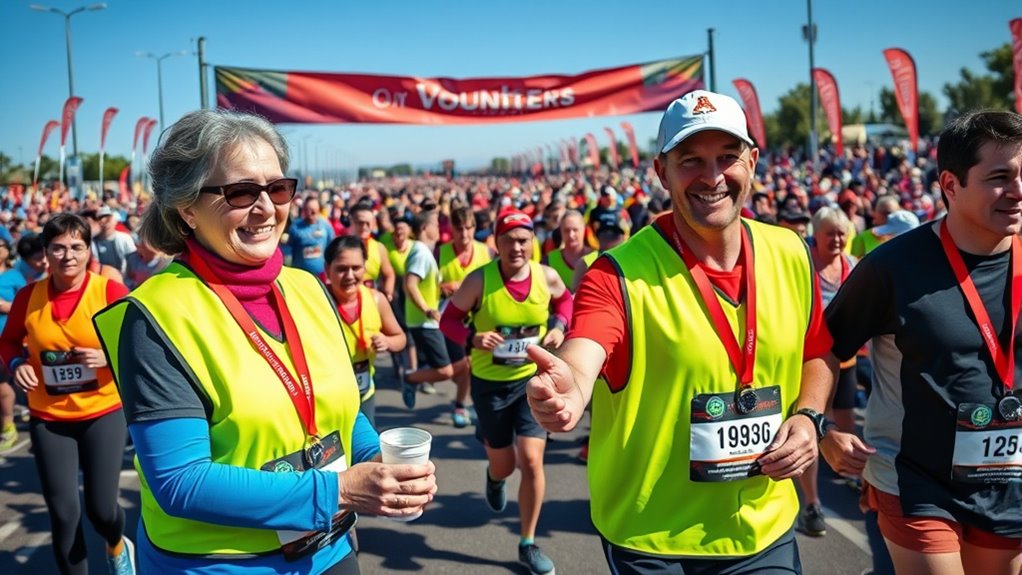
Ever wondered how races run smoothly and participants stay motivated? The key lies in meticulous planning and the dedication of volunteers like you. When you sign up to volunteer at a race, you become an essential part of the race day logistics that guarantee everything unfolds seamlessly. From setting up the course to guiding runners and managing aid stations, your efforts keep the event organized and efficient. But before the race starts, it’s important to understand some volunteer safety tips to assure your experience is safe and rewarding.
Volunteering ensures race success through careful planning and your dedicated support.
First, familiarize yourself with the race day logistics. This includes understanding your assigned role, the location you’ll be stationed at, and the schedule. Knowing where supplies are stored, how to communicate with coordinators, and the layout of the course helps you respond quickly to any situation that arises. It’s also wise to arrive early so you can get oriented, set up, and address any last-minute adjustments. Effective coordination minimizes confusion and keeps the race running on time, which benefits runners and spectators alike.
While focusing on race day logistics, don’t forget volunteer safety tips. Your safety should always come first. Wear comfortable, weather-appropriate clothing, and bring essentials like sunscreen, water, and a hat if needed. Make sure you understand emergency procedures and know how to contact medical personnel if someone needs assistance. Staying vigilant for hazards like uneven terrain, traffic, or crowd congestion helps prevent accidents. It’s also vital to communicate clearly and politely with runners and spectators, especially if they seem confused or distressed. Maintaining a calm, professional demeanor can help diffuse tense situations and keep everyone safe.
Throughout the event, staying hydrated and taking short breaks when possible helps maintain your energy levels. Keep a first aid kit handy and know how to use basic supplies in case of minor injuries. If you’re operating at a water station, ensure bottles are filled and handed out efficiently, and remind runners to stay hydrated. If you’re directing traffic or managing crowd flow, be alert to any signs of distress or unsafe behavior. Your attentiveness can prevent major issues and contribute to a positive race day experience for all involved. Additionally, understanding juice detox principles can help you stay energized and healthy during long volunteer shifts by maintaining proper hydration and nutrition.

Safety and Trauma Supplies Hi-Viz All-in-One DOT OSHA Compliant Kit with Kidde 5 BC Fire Extinguisher Model FA5G
*Bag Color May Vary
As an affiliate, we earn on qualifying purchases.
As an affiliate, we earn on qualifying purchases.
Frequently Asked Questions
What Should I Wear for Volunteering at a Race?
For race day attire, wear comfortable, moisture-wicking clothing suitable for the weather. Check the forecast beforehand and dress in layers if needed, so you can adjust as temperatures change. Wear sturdy, supportive shoes because you’ll be on your feet most of the time. Don’t forget a hat or sunglasses if it’s sunny, and bring rain gear if rain is forecasted. Staying comfortable helps you stay focused and energetic throughout your volunteer shift.
Are There Age Restrictions for Race Volunteers?
Most races have age restrictions for volunteers, typically requiring volunteers to be at least 16 or 18 years old, depending on the event. These age restrictions guarantee volunteer eligibility and safety. If you’re under the minimum age, some races might offer opportunities like helping with family-friendly activities or volunteering alongside a parent or guardian. Always check the specific race’s volunteer guidelines to confirm age restrictions and eligibility requirements before signing up.
How Early Should I Arrive Before My Shift?
You should arrive at least an hour before your shift to make certain you’re prepared. Bring your race day essentials like comfortable clothing, a water bottle, and any volunteer checklists provided. Arriving early gives you time to check in, get any last-minute instructions, and familiarize yourself with your duties. Punctuality helps the race run smoothly, and being prepared ensures you’re ready to assist participants and enjoy the experience.
Will I Receive Training Before Volunteering?
Think of your training as the map guiding you through race day responsibilities. Yes, you’ll receive training from volunteer coordination teams before you start, ensuring you’re confident in your role. This preparation helps everything run smoothly, just like gears fitting perfectly in a machine. Expect clear instructions, so you’re ready to support runners and keep the event organized. The training empowers you to make a positive impact, making race day a success for everyone involved.
Can I Volunteer if I Have Previous Racing Experience?
Yes, your previous racing experience can be a huge advantage when volunteering, as it gives you valuable race knowledge that benefits the event. Your familiarity with race dynamics helps you understand participant needs and event flow. Volunteering offers benefits like gaining new skills, connecting with fellow racers, and contributing to the community. Your experience enhances the overall event, making it more enjoyable for everyone involved.

Race Car Birthday Party Water Bottle Labels, Let's Go Racing Racecar Stickers for Water Bottles – 20 Count
20 STICKERS: black, white, and red race car water bottle labels made to match race car birthday decorations.
As an affiliate, we earn on qualifying purchases.
As an affiliate, we earn on qualifying purchases.
Conclusion
Volunteering at a race isn’t just about helping others; it’s about discovering new strengths and connections you didn’t know you had. As you cheer on runners and share in their triumphs, you might realize that your own journey mirrors theirs—full of effort, perseverance, and unexpected rewards. Sometimes, the most meaningful moments happen when you least expect it, reminding you that in giving to others, you often find something truly valuable within yourself.

100Pcs Durable Anti-Wind Flag Clips Easy Install Plastic Garden Banner Fixing Clamps Weather Resistant
Convenient Cable System: Scan Ids Or Use Keys Via The Included Cable Without Removing The Id Holder From…
As an affiliate, we earn on qualifying purchases.
As an affiliate, we earn on qualifying purchases.

First Aid Only 91248 OSHA-Compliant First Aid Kit, All-Purpose 50-Person Emergency First Aid Kit for Business, Worksite, Home, and Car, 260 Pieces
OSHA-Compliant Emergency Kit: Includes supplies including bandages, gauze, butterfly closures, burn cream packets, antibiotic ointment, BZK antiseptic towelettes,…
As an affiliate, we earn on qualifying purchases.
As an affiliate, we earn on qualifying purchases.