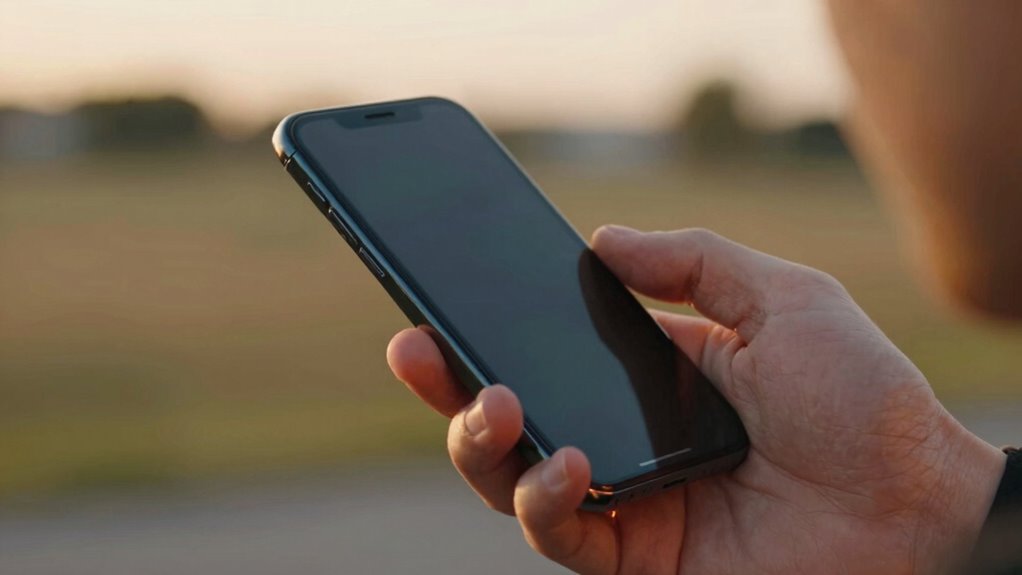

To guarantee stable audio while recording, grip your phone securely with both hands. Keep your fingers clear of the microphone to prevent muffled sound. Position the phone close to your subject and tilt it slightly towards the sound source. For extra stability, rest your elbows against your body or a nearby surface. If you’re recording for long periods, consider using a tripod or stabilizer. There’s plenty more to explore for improving your audio quality.

Get workout gear delivered free with Prime
- Fast, free delivery on millions of items
- Prime Video, Amazon Music and more included
- Member-only deals all year
Key Takeaways
- Use a proper grip by holding the phone with both hands to enhance stability and reduce noise interference.
- Keep your fingers clear of the microphone to avoid muffled audio and conduct test recordings to find the optimal grip.
- Position the phone at an angle towards the sound source to effectively capture audio and minimize background noise.
- Maintain stability by keeping elbows close to your body and stabilizing against a wall or sturdy surface when possible.
- Utilize equipment like tripods or stabilizers for extended sessions to ensure consistent audio quality and reduce movement risks.
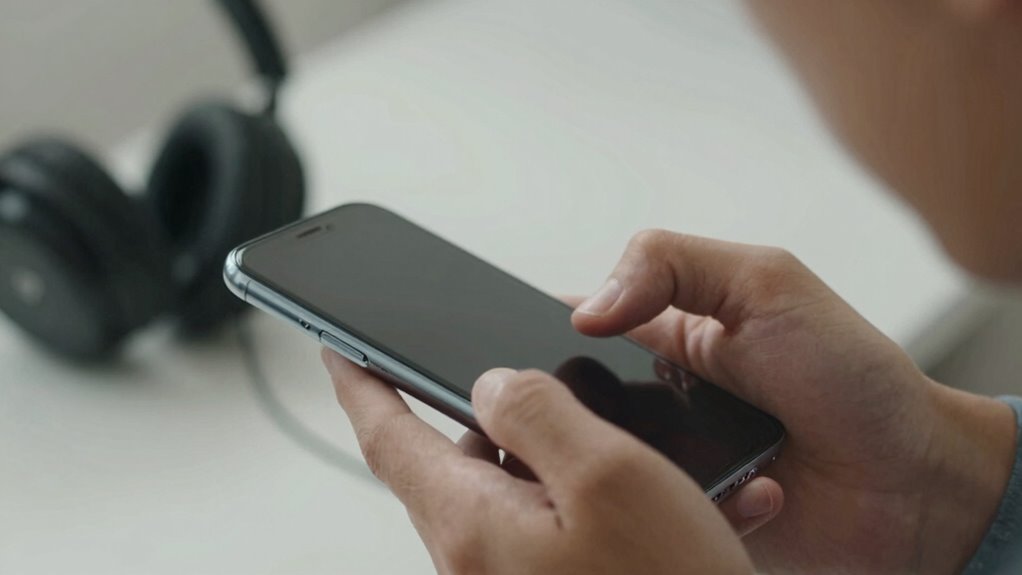
When you’re capturing audio on your phone, how you hold it can make a big difference. It’s not just about pressing record; your grip plays an essential role in the quality of your sound. If you want clear, stable audio, you need to adopt effective phone grip techniques. Start by holding your phone with both hands. This adds stability and reduces the chance of unwanted noise from your fingers brushing against the microphone. Use your dominant hand to support the side, while your other hand cradles the bottom. This way, you can minimize any movement that could disrupt your recording.
Next, keep your fingers away from the microphone. It’s easy to accidentally cover it, leading to muffled audio. If you’re unsure where the mic is located, do a quick test recording while moving your hands around. This helps you identify the sweet spot where your grip won’t interfere. Speaking of tests, always do a sound check before your main recording. This gives you a chance to adjust your grip and position, ensuring ideal audio quality.
Keep your fingers clear of the microphone to avoid muffled audio. Always conduct a sound check to ensure optimal recording quality.
Another important aspect of your grip is how you position your phone. Tilt the device slightly towards the sound source, whether it’s a person speaking or ambient noise you want to capture. This angle helps your phone pick up sound more effectively. You should also consider your environment. If you’re in a crowded place, hold your phone closer to the subject to drown out background noise. This is one of those audio recording tips that can really make a difference.
When you’re standing, keep your elbows close to your body for added stability. This reduces the chance of your arms getting tired and the phone shaking during the recording. If you’re walking, try to stay as still as possible, or wait for a moment when you can stabilize yourself against a wall or a sturdy surface. Additionally, understanding the microphone placement on your device can help you optimize your grip for better sound capture. Being aware of the smart home technology in your environment, such as smart speakers or noise-canceling setups, can also help you better plan your recordings.
Lastly, don’t underestimate the value of using a tripod or a stabilizer if you’re recording for an extended period. It frees your hands and allows for consistent audio capture without the risk of unintentional movement. By applying these phone grip techniques, you’ll elevate your audio recordings from average to professional. So next time you press that record button, remember how essential your grip can be for achieving the best sound.
As an affiliate, we earn on qualifying purchases.
Frequently Asked Questions
Does Phone Case Material Affect Audio Stability?
Yes, the phone case material can affect audio stability. If you choose a case with a dense, heavy material, it might muffle sound or create vibrations that distort audio quality. On the other hand, a well-designed, lightweight case can enhance sound clarity. Consider the case design and how its material impacts audio. You want to guarantee that it protects your phone without compromising your listening experience.
Can External Microphones Improve Audio Stability?
Think of your audio as a delicate dance; external microphones can definitely enhance its stability. By using an external mic, you’re placing your recording device closer to the sound source, which markedly improves clarity. Proper microphone placement is key; it reduces background noise and captures your voice with precision. So, if you want your audio recording to resonate beautifully, investing in an external microphone can make all the difference.
What’s the Best Phone Orientation for Recording?
For recording, the best phone orientation depends on your content. If you’re capturing a video for social media, portrait mode works well, as it fits the platform’s format. However, landscape mode‘s ideal for cinematic shots or interviews, providing a wider field of view. Whichever you choose, keep your grip steady to minimize shakes. Experiment with both orientations to see which fits your style and enhances your audio quality.
How Does Wind Affect Audio Quality Outdoors?
Wind can greatly degrade audio quality outdoors by introducing wind noise and causing audio interference. When you’re recording, environmental factors like strong gusts can create unwanted sounds that overpower your voice or music. To combat this, use windshields or foam covers on your microphone and choose sheltered locations when possible. Experimenting with different recording techniques can also help minimize the impact of wind, ensuring your audio remains clear and professional.
Are There Apps to Enhance Audio Stability?
Absolutely, there are plenty of audio enhancement apps that can work wonders for you! Think of them as your personal sound engineers, ready to fine-tune your recordings. Apps like Dolby On and Wavelet offer fantastic noise reduction tools, ensuring your audio remains crisp and clear. They help cut out unwanted background noise, so you can focus on the sound that truly matters. Give them a try, and elevate your audio game to the next level!
Conclusion
To summarize, carrying your phone the right way is like holding a delicate bird—steady and mindful. By keeping it close to your body, using both hands, and avoiding sudden movements, you’ll guarantee that your audio remains crisp and clear. Experiment with different grips and angles to find what works best for you. With a little practice, you’ll be capturing stable sound as effortlessly as a seasoned pro. Happy recording!
Halloween Picks
halloween
As an affiliate, we earn on qualifying purchases.