
Gym flooring’s thickness, density, and noise control play key roles in creating a safe workout space. Thicker mats absorb more impact and cushion falls, making high-intensity workouts safer. Higher-density rubber offers better durability and reduces noise from heavy weights and jumps. Combining the right thickness and density helps manage sound while protecting your floors and equipment. Want to know how to choose the perfect type for your gym setup? Keep exploring for expert tips.
Key Takeaways
- Thicker rubber flooring offers better impact absorption and fall cushioning, ideal for high-impact exercises.
- Higher-density rubber provides increased durability, stability, and long-term impact resistance for heavy gym use.
- Rubber flooring naturally reduces noise from weights and jumping, with thicker and denser options enhancing sound mitigation.
- Selection depends on activity level, with thicker and denser mats suited for intense workouts, lighter options for casual use.
- Proper installation and material choice are essential for maximizing impact protection, noise control, and overall gym safety.
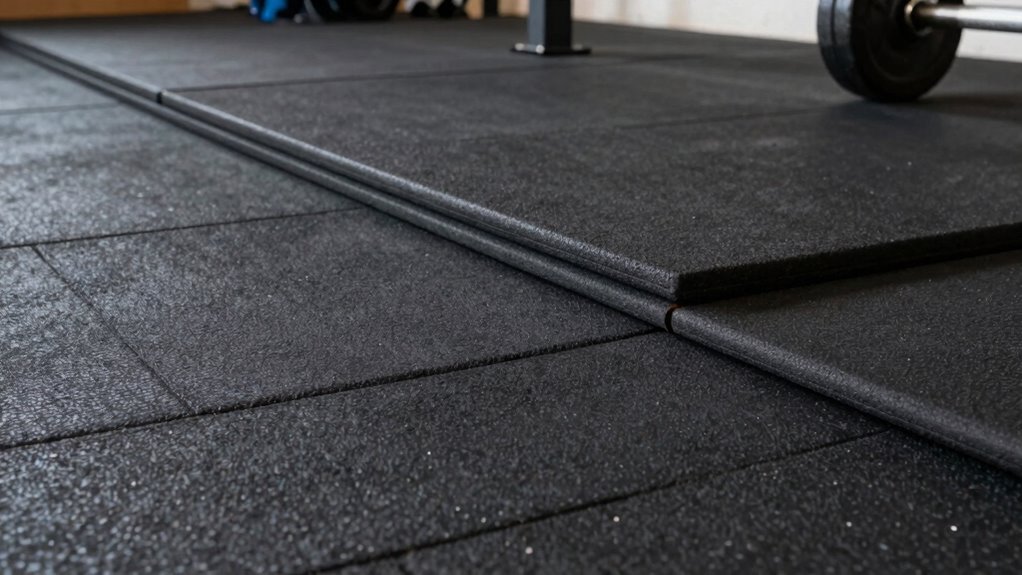
Are you selecting the right gym flooring to guarantee safety, durability, and comfort? If so, understanding the importance of factors like thickness, density, and noise control can help you make an informed decision. One of the most popular options for gym flooring is rubber flooring, prized for its impact resistance and resilience. Rubber flooring absorbs shock effectively, making it ideal for areas where heavy weights are dropped or high-impact activities take place. Its impact resistance helps protect both your floors and your equipment, reducing maintenance costs and preventing damage over time.
Choosing rubber flooring boosts safety, durability, and impact resistance for high-impact gym activities.
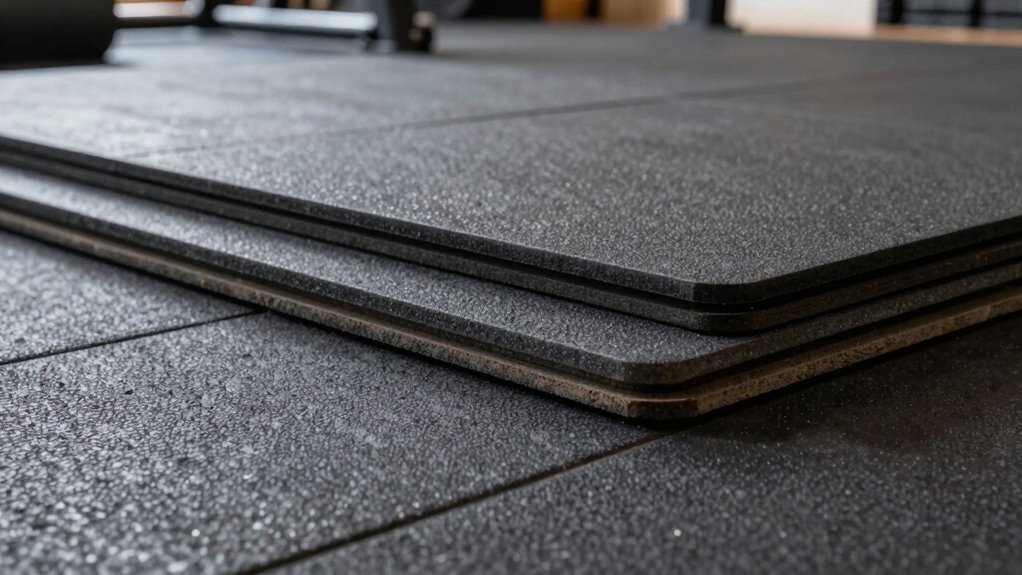
When considering rubber flooring, thickness plays a crucial role. Thicker mats or tiles generally provide better impact absorption, which is essential for high-intensity workouts. For example, a thicker rubber flooring (around 1/2 inch to 1 inch) can cushion falls and heavy impacts more effectively than thinner options. However, thicker flooring might be slightly more expensive and harder to install, so you should balance your needs with your budget. Thinner rubber options work well in areas with lighter activity, offering enough durability without excessive cost or bulk. The key is to choose a thickness that matches your gym’s specific demands—thicker for weightlifting zones, thinner for stretching or cardio areas.
Density is another critical factor influencing the performance of your gym flooring. Higher-density rubber provides increased durability and impact resistance, meaning it can withstand frequent use and heavy equipment without breaking down. Dense rubber flooring also offers a more stable surface underfoot, which can improve safety during exercises. If your gym experiences a high volume of activity or hosts intense training sessions, opting for higher-density rubber ensures your flooring maintains its integrity over time. Conversely, lower-density options might be suitable for light-use spaces, but they tend to wear out faster and offer less impact resistance.
Noise control is often overlooked but is vital for creating a comfortable workout environment. Rubber flooring naturally dampens sound, especially when it’s thicker and denser. This helps minimize the noise generated from dropping weights, running, or jumping, which can be disruptive to others in your facility or neighboring spaces. The right thickness and density will maximize noise reduction, making your gym more pleasant for everyone. Keep in mind that adding underlayments or padding beneath your rubber flooring can further enhance noise control, especially if you’re working in a shared building or apartment complex. Proper installation and material selection also play a significant role in achieving optimal noise mitigation.

SUPERJARE 1" Extra-Thick Rubber Top Exercise Mat, Puzzle Gym Flooring for Home Gym, Gym Mat for Workout Equipment, Interlocking Floor Tiles with EVA Foam, 12 Pcs 48 Sq Ft, Black/Grey
【1 Inch Thicken Gym Floor Mat】Upgrade to 1 inch thickness! Superior floor protection. Built with a high-density EVA…
As an affiliate, we earn on qualifying purchases.
As an affiliate, we earn on qualifying purchases.
Frequently Asked Questions
How Often Should Gym Flooring Be Replaced?
You should replace your gym flooring based on wear and tear assessment, typically every 5 to 10 years. Regularly inspect for signs like cracks, tears, or uneven surfaces, which indicate it’s time for floor replacement. The frequency depends on usage intensity and flooring material. If you notice persistent damage affecting safety or performance, don’t wait—replace it sooner to maintain a safe, effective workout environment.
Are There Eco-Friendly Gym Flooring Options?
Yes, there are eco-friendly gym flooring options available. You can choose flooring made from sustainable materials like recycled rubber, cork, or bamboo, which minimize environmental impact. These eco-friendly options not only support sustainability but also provide durability and noise absorption. By selecting sustainable options, you contribute to a healthier planet while maintaining a functional and resilient gym space. Always check for certifications to confirm your flooring truly uses eco-friendly materials.
Can Gym Flooring Be Customized With Logos?
Ever thought about turning your gym flooring into a branding opportunity? Yes, you can customize gym flooring with logos! Many suppliers offer custom logo options, allowing you to showcase your brand right on the floor. This not only enhances your gym’s aesthetic but also reinforces your brand identity. With various materials and design choices available, customizing your gym flooring is an effective way to make a memorable impression and boost your gym’s professional look.
How Does Flooring Affect Workout Safety?
Your gym flooring plays a vital role in workout safety by reducing the impact on injury prevention. It provides slip resistance features that keep you stable during exercises, preventing slips and falls. A well-designed floor absorbs shock from high-impact activities, protecting your joints. By choosing flooring with the right thickness and density, you guarantee a safer workout environment, minimizing risks and boosting your confidence during every session.
What Maintenance Is Needed for Gym Flooring?
You should regularly perform cleaning routines to keep your gym flooring in top shape. Sweep or vacuum daily to remove debris, and mop with mild cleaners weekly. Keep an eye on wear and tear, addressing any damage promptly to prevent further issues. By maintaining a consistent cleaning routine and monitoring for signs of deterioration, you prolong the lifespan of your flooring and ensure a safe workout environment.

GymCope Large Exercise Mat for Home Workout,12‘x6’/10'x6'/9'x6'/8'x6'/7'x5'/6'x4' (7mm) Extra Thick Workout Mat, High-Density Gym Mat for Cardio, Jump Rope, MMA, Weights (Shoe-Friendly)
Large & Professional to Level Up Your Home Gym: 6 sizes for choice to meet your fitness needs…
As an affiliate, we earn on qualifying purchases.
As an affiliate, we earn on qualifying purchases.
Conclusion
Now that you know the ins and outs of gym flooring—the thickness, density, and noise control—you’re ready to make a smart choice. But the real question is, which flooring will truly transform your space and keep it quiet and safe? The answer isn’t as simple as it seems. Stay tuned, because uncovering the perfect gym flooring might just surprise you. Ready to discover the secret to a better workout environment? The next step awaits.

SUPERJARE 0.56'' Thick 12 Pcs 48 Sq Ft Rubber Top Exercise Equipment Mats, High Density EVA Foam Mats with Rubber Top, Interlocking Gym Flooring for Home Gym, Protective Workout Mat, Black/Grey
【Upgraded Dual-Layer Design.】A high-density EVA foam base combined with a sturdy EPDM rubber top. This construction can bear…
As an affiliate, we earn on qualifying purchases.
As an affiliate, we earn on qualifying purchases.

ProsourceFit Puzzle Exercise Mat ½ in, EVA Interlocking Foam Floor Tiles for Home Gym, Water-Resistant Mats Workout Equipment, Floor Padding for Kids, Black, 24 in x 24 in x ½ in, 48 Sq Ft – 12 Tiles
PROTECTIVE GYM FLOOR MAT: Durable, non-skid gym flooring for home gym that covers and protects your floor or…
As an affiliate, we earn on qualifying purchases.
As an affiliate, we earn on qualifying purchases.