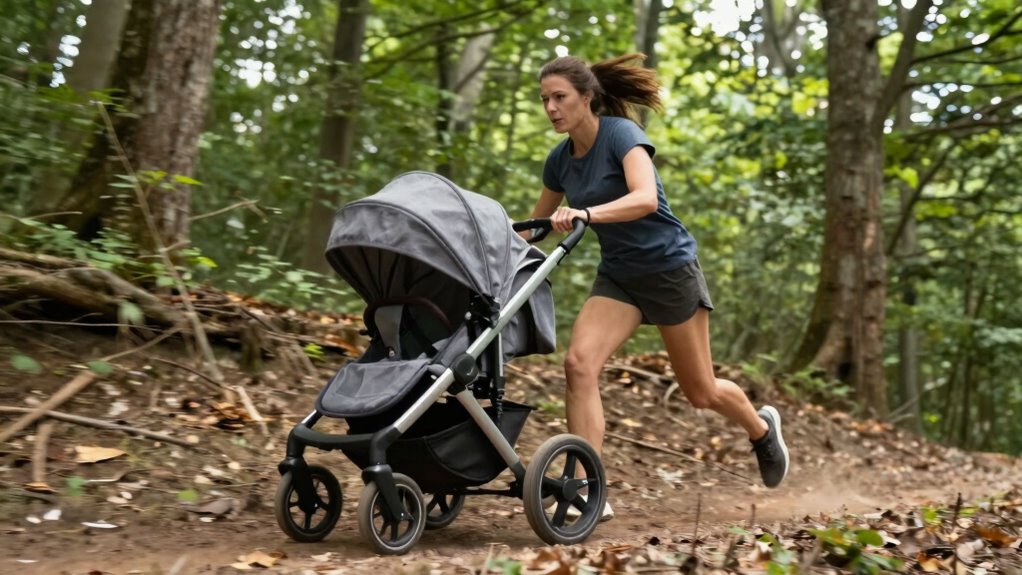

When running downhill with a stroller, don’t rely solely on the brakes to control your speed. Braking abruptly or applying too much pressure can cause a loss of control or accidents. Instead, Evans use gentle, steady pressure and engage the foot or hand brakes gradually to slow down safely. Proper technique, gear checks, and environmental awareness matter. Keep these tips in mind, and you’ll stay safer while enjoying your run—more important safety strategies await if you continue exploring this topic.
Key Takeaways
- Avoid relying solely on stroller brakes; use gentle, controlled pressure and engage them early to prevent abrupt stops.
- Test brake responsiveness beforehand to understand how much pressure is needed for safe, gradual deceleration.
- Maintain a firm but relaxed grip on the handlebar, leaning slightly back to help control downhill speed.
- Reduce running speed before hitting downhill slopes and avoid steep or uneven terrain.
- Ensure stroller and safety straps are secure, and check brakes and tires to prevent unexpected control loss.
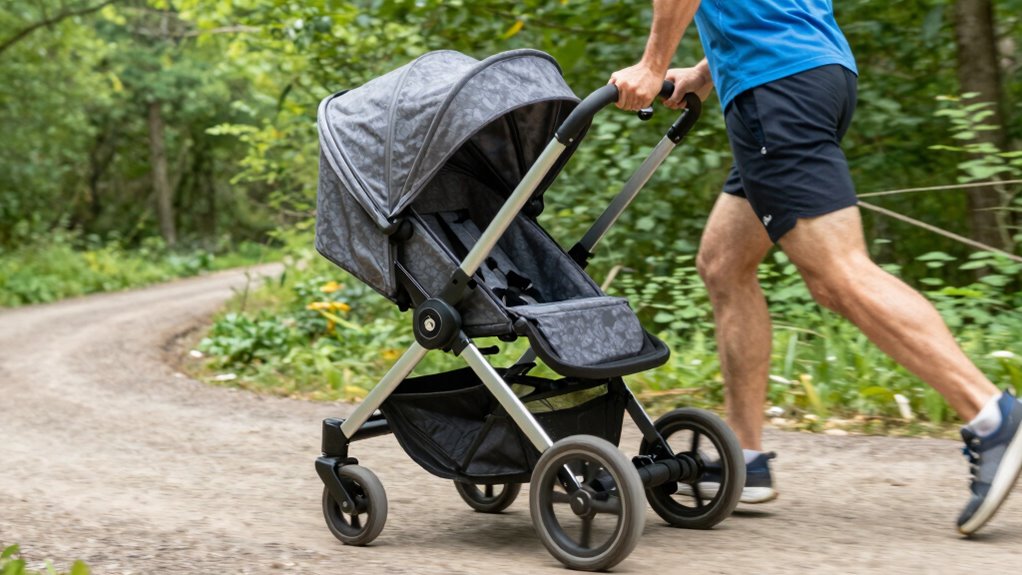
When running downhill with a stroller, many parents mistakenly rely solely on the stroller’s brakes, thinking they’ll prevent speed and maintain control. While brakes are indispensable, they shouldn’t be your only safety measure. Relying exclusively on them can lead to sudden stops that might jolt your child or cause you to lose control. Instead, understanding proper braking techniques and safety precautions can help you navigate downhill slopes smoothly and safely.
Relying only on stroller brakes can cause sudden stops; master proper techniques and safety measures instead.
First, it’s important to master braking techniques that distribute control evenly. Instead of slamming the brakes at the first hint of speed, gently apply steady pressure when necessary. If your stroller has hand brakes, use them cautiously, squeezing gradually rather than grabbing abruptly. For foot brakes, engage them early and release when you feel the speed decrease. This way, you avoid sudden deceleration that could jerk the stroller or destabilize your grip. Remember, controlled braking is about anticipation and finesse, not just reaction. Always test and get comfortable with how your stroller responds to different braking pressures before heading downhill at full speed.
Alongside proper braking techniques, safety precautions are crucial. Before starting your run, ensure your stroller is in good working condition, with brakes that function correctly. Check the tires, especially if you’re on uneven terrain, and make sure the harnesses and safety straps are secure. When you hit a downhill, reduce your running speed beforehand — don’t wait until you’re racing downhill to slow down. Use your body to maintain balance; lean slightly back to counteract the forward momentum and keep your center of gravity low. Keep a firm grip on the stroller’s handlebar, but avoid gripping too tightly, which can tire your hands or cause unnecessary tension.
Additionally, be aware of your surroundings. Avoid steep slopes or unpredictable terrain that could increase your risk of losing control. Always run on designated paths or smoother surfaces when possible. Wearing appropriate footwear with good grip can also make a difference, preventing slips that could compromise your safety. And, most importantly, keep your child in a secure, properly adjusted harness at all times. Never ignore the importance of safety precautions, even if you’re experienced at downhill running with a stroller. Moreover, consider energy-efficient braking techniques that can help reduce wear on your stroller’s components and promote sustainable practices during your outdoor activities.

Baby Stroller, 2-in-1 Reversible Toddler Seat with Lie-Flat Mode, Foldable Infant Stroller with Canopy, One Button Brake, Adjustable Handle, Newborn Pushchair (Black B)
2-IN-1 CONVERTIBLE STROLLER: This baby stroller can switch between basket mode and seated mode. The footrest provides additional…
As an affiliate, we earn on qualifying purchases.
As an affiliate, we earn on qualifying purchases.
Frequently Asked Questions
How Can I Tell if My Stroller’s Brakes Are Properly Adjusted?
You can tell if your stroller’s brakes are properly adjusted by testing their responsiveness. Engage the brake and try to move the stroller slightly; it should stay stationary without excessive force. Regular brake maintenance is essential, so check for smooth operation and firm engagement. If the brakes feel loose or too tight, adjust the brake mechanism accordingly. Proper brake adjustment guarantees safety and effective stopping, especially on downhill slopes.
Are There Specific Downhill Terrains to Avoid With a Stroller?
You should definitely steer clear of steep descents and loose gravel when pushing your stroller downhill. These terrains can suddenly become tricky, making control difficult and risking your child’s safety. Imagine your wheels slipping or losing momentum just when you need stability the most. So, always scout your route beforehand, avoid risky slopes, and choose smoother paths to keep your downhill adventures safe and enjoyable.
What Are the Signs of Brake Failure During a Run?
If you notice brake squealing or an uneven brake response while running, stop immediately. These signs indicate brake failure or that your brakes aren’t functioning properly. You might feel a lack of stopping power or hear unusual noises. Don’t ignore these signals—inspect your brakes before continuing. Regular maintenance and prompt repairs ensure your stroller’s brakes stay reliable, keeping you and your child safe during your run.
How Often Should I Inspect My Stroller’s Braking System?
Imagine you’re living in the era of dial-up internet—stroller brake inspections need regular updates too. You should inspect your stroller’s braking system before every run and perform brake adjustment frequency monthly, especially if you notice decreased responsiveness. Consistent braking maintenance guarantees safety on steep descents. Always check for wear, proper tension, and smooth operation to avoid surprises. Regular inspections help you stay confident and in control during your runs.
Can Using the Brakes Too Much Damage the Stroller?
Yes, brake overuse can damage your stroller. Constantly relying on the brakes, especially during downhill runs, puts stress on the brake system and other components. This can lead to premature wear, reduced braking efficiency, or even mechanical failure. To avoid stroller damage, use brakes only when necessary, and try to control your speed with your body and steering. Regular inspections help make sure your stroller stays in good shape for safe outings.

6 Pack Reflective Bands for Strollers High Visibility Elastic Reflective Gear Safety Reflectors Stroller Identifier for Baby Stroller Accessories Walking at Night Cycling and Running
【High Quality】Stroller identifier Reflectors is Made Of High Quality Fabric And Super Bright Reflective Silver Strip with elastic…
As an affiliate, we earn on qualifying purchases.
As an affiliate, we earn on qualifying purchases.
Conclusion
So, next time you hit the downhill with your running stroller, remember to resist the urge to slam on the brakes. After all, the biggest mistake isn’t going too fast—it’s stopping too hard and risking a tumble. Ironically, your sudden brake might just turn a smooth downhill into a chaotic crash. So, stay calm, keep your hands light, and enjoy the ride. Sometimes, the best way to go downhill is simply to let gravity do its thing.
stroller safety straps and harnesses
As an affiliate, we earn on qualifying purchases.
As an affiliate, we earn on qualifying purchases.
stroller brake testing tools
As an affiliate, we earn on qualifying purchases.
As an affiliate, we earn on qualifying purchases.