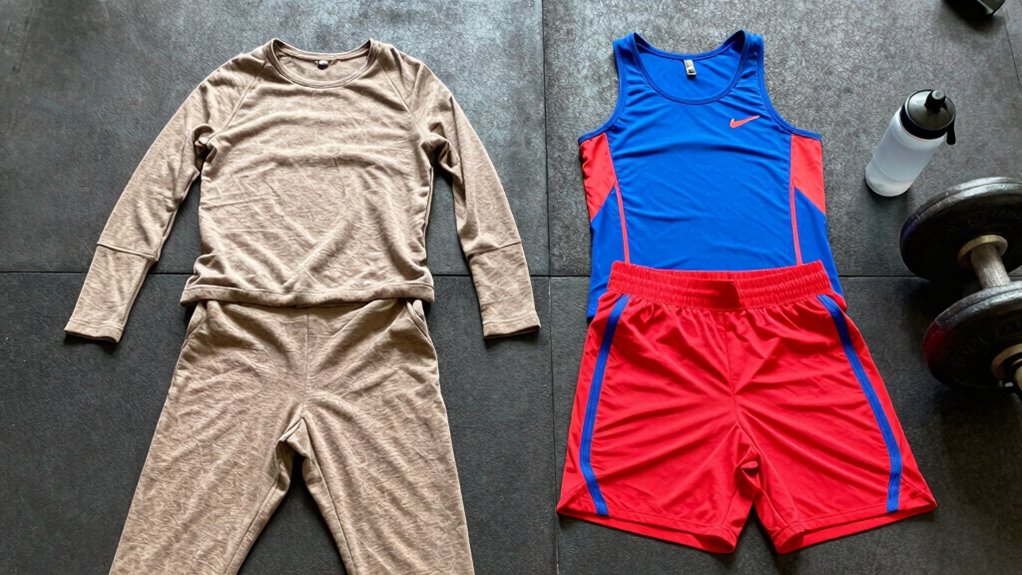

When you’re training repeatedly, choosing between Merino wool and synthetics boils down to your priorities. Merino offers excellent temperature regulation and natural odor resistance, making it great for multiple wears. Synthetics, on the other hand, dry quickly and are more durable, perfect for intense sessions. If you want comfort and less washing, go for Merino. But if you need something tough and quick-drying, synthetics might be the better choice. Discover which option suits your needs best.

Get workout gear delivered free with Prime
- Fast, free delivery on millions of items
- Prime Video, Amazon Music and more included
- Member-only deals all year
Key Takeaways
- Merino wool offers superior odor resistance, allowing multiple wears before washing, making it ideal for repeated training days.
- Synthetic fabrics dry quickly and prevent clinginess, enhancing comfort during intense or prolonged workouts.
- Merino wool regulates temperature effectively, providing comfort in varying conditions during training sessions.
- Synthetics maintain their shape and color better over time, making them durable choices for frequent use.
- Training goals and activity intensity should guide your fabric choice, balancing comfort and practicality.
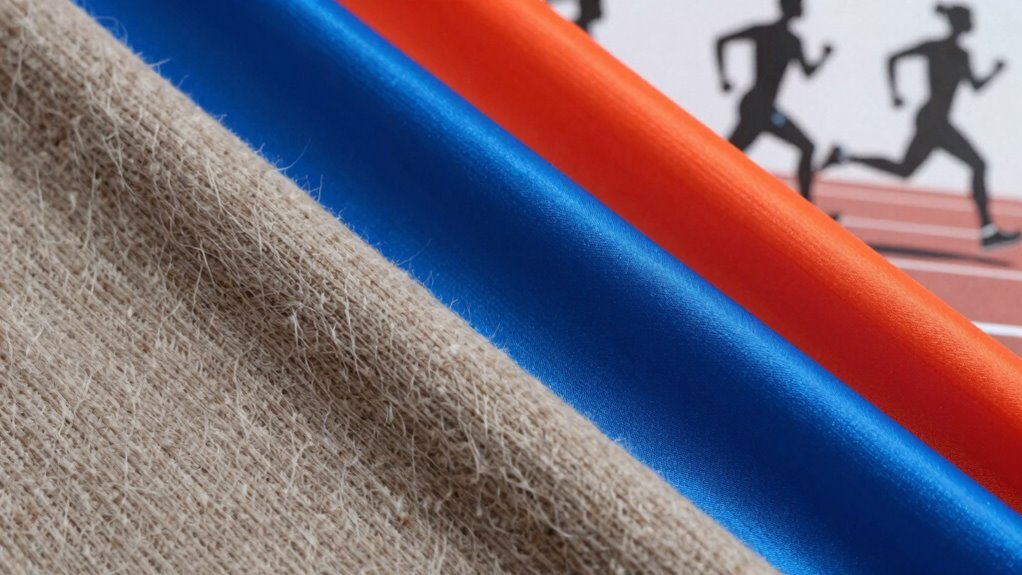
When you’re gearing up for training, choosing the right fabric can make all the difference. You might find yourself torn between Merino wool and synthetic materials, especially when you have repeated training days ahead. Both options have their pros and cons, but understanding the breathability factors and moisture management capabilities can help you make an informed choice.
Merino wool is known for its natural breathability. When you wear it, you’ll notice how well it regulates temperature, keeping you comfortable in various conditions. It wicks moisture away from your skin, which is essential during intense workouts. Unlike synthetic options, Merino can absorb a significant amount of moisture without feeling damp. This means even if you sweat, you won’t feel like you’re drenched, allowing you to focus solely on your training. Additionally, Merino’s natural fiber structure helps it to regulate moisture more effectively than many synthetic fabrics. Its antimicrobial properties also contribute to its odor resistance, making it a practical choice for multiple wearings.
On the flip side, synthetic fabrics like polyester or nylon also shine in moisture management. They’re engineered to wick sweat away quickly, which can be a game-changer during high-intensity sessions. If you’re pushing hard during your workouts, you’ll appreciate how these materials dry rapidly, preventing that heavy, clingy feeling. However, they can sometimes trap heat, especially during less intense activities. This could lead to discomfort if you’re training for extended periods. Proper ventilation features incorporated into synthetic designs can help mitigate this issue.
When it comes to odor management, Merino wool has the upper hand. Thanks to its natural properties, it resists odor buildup, meaning you can wear it multiple times before needing to wash it. This can be a lifesaver on back-to-back training days. Synthetic fabrics, while they perform well initially, may start to smell after a few workouts, which isn’t ideal if you’re aiming for consistency in your training routine. Regular washing can help maintain freshness, though.
Durability is another important factor to take into account. Synthetic materials tend to be more resilient to wear and tear, making them a solid choice if you’re frequently hitting rugged terrains or engaging in high-impact training. They often hold their shape and color longer than Merino, which can be more delicate. However, with proper care, Merino wool can last quite a while, especially if you’re using it for less intense activities. Being mindful of washing and storage can extend its lifespan.
Ultimately, the choice between Merino and synthetic fabrics boils down to your specific needs. If you prioritize comfort, temperature regulation, and odor resistance, Merino might be your best bet. But if rapid drying and durability are more important, you might lean towards synthetics. Whatever you choose, just make sure it aligns with your training goals for a more enjoyable experience. Understanding fabric properties can help you select the best gear for your repeated training days.
As an affiliate, we earn on qualifying purchases.
Frequently Asked Questions
How Do I Care for Merino Wool Garments?
To care for your merino wool garments, use gentle washing techniques. Hand wash them in cold water or use a delicate cycle in your machine with a wool-specific detergent. Avoid fabric softeners. For drying methods, lay your garments flat on a towel to absorb excess water, then reshape and air dry away from direct sunlight. Don’t hang them, as this can cause stretching. Following these steps helps maintain their quality and longevity.
Are Synthetic Fabrics Environmentally Friendly?
Synthetic fabrics aren’t always environmentally friendly, but it depends on how they’re made and disposed of. Some brands focus on sustainability practices, using recycled materials and reducing waste in production. You can look for items made from recycled polyester or those that participate in recycling initiatives. By supporting these brands, you help promote a more sustainable fashion industry. Always consider how your choices impact the environment, even with synthetic options.
Can Merino Wool Cause Allergic Reactions?
Yes, Merino wool can cause allergic reactions in some people, though it’s rare. If you’re sensitive to wool, you might experience allergy symptoms like itching, redness, or rashes. However, many enjoy the Merino benefits, such as moisture-wicking and temperature regulation, without any issues. If you’re unsure, it’s a good idea to test a small piece first to see how your skin reacts before committing to a full garment.
How Do Temperatures Affect Fabric Performance?
Temperature’s like a conductor, orchestrating how fabrics perform. In heat, you’ll find breathability becomes essential; materials that trap moisture can leave you feeling like you’re wrapped in a sauna. Conversely, in cold, fabrics need insulation to keep you warm while still allowing some airflow. The temperature effects on fabric can truly make or break your comfort during training, so choose wisely to keep your body in harmony with the elements.
What Are the Costs of Merino Vs Synthetic Options?
When you compare costs, merino wool tends to be pricier upfront due to its natural properties and durability. However, you might find it lasts longer than synthetic options, which can save you money in the long run. Synthetic fabrics are often cheaper but may wear out faster. Consider your training frequency and budget; investing in durable material like merino could be worth it if you train regularly.
Conclusion
When you’re out there, pushing your limits day after day, the choice between Merino and synthetic can feel like destiny. You might find that Merino wraps you in warmth and breathability, almost like a comforting hug on a tough day. Yet, synthetic fibers often dry quickly, keeping you lightweight and agile. Coincidentally, your training journey mirrors this choice—finding balance between comfort and performance, just as you balance grit and grace in every stride.
Halloween Picks
halloween
As an affiliate, we earn on qualifying purchases.