To retire your shoes by feel, pay attention to how they make your feet feel during and after use. If you notice diminished cushioning, discomfort, or fatigue, it’s time for a replacement. Watch for changes in support, especially if your shoes feel flat or lack bounce. Inspect them regularly for signs of wear, like faded traction—these indicate they may be past their prime. Keep tuning into your body, and you’ll discover more insights on maintaining foot health.

Get workout gear delivered free — and shop member deals
- Fast, free delivery on millions of items
- Access to Prime Big Deal Days deals on October 6–7
- Prime Video, Amazon Music and more included
Key Takeaways
- Regularly assess cushioning; a flat feeling indicates it’s time for new shoes.
- Pay attention to discomfort or fatigue during activities as signals for replacement.
- Observe wear patterns on soles; faded traction suggests diminished performance.
- Listen to your body; any signs of pain or discomfort warrant shoe retirement.
- Evaluate shoe support; if it feels inadequate, consider investing in new footwear.
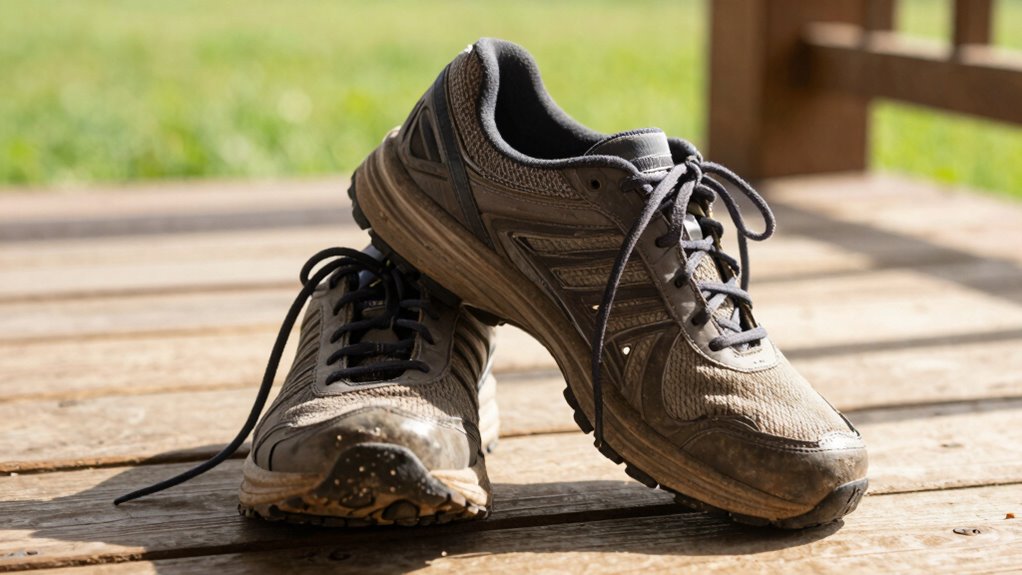
When you notice that your favorite shoes aren’t providing the comfort they once did, it’s time to reflect on retiring them. Shoe comfort is a vital aspect of your overall foot health, and ignoring signs of wear can lead to discomfort or even injury. As you put miles on your shoes, they develop specific wear patterns, which can affect how they perform. If you find yourself adjusting how you walk or run, it might signal a performance decline that can’t be ignored.
Start by paying attention to how the cushioning feels. You might notice that the bounce is diminishing or that the support isn’t as strong as it used to be. These cushioning changes can stem from the materials breaking down over time. If your shoes used to feel like they were hugging your feet but now feel flat, it’s a strong indication they’re past their prime. Personal preference plays a role here; if you once loved how they felt, but that’s no longer the case, it’s wise to think about a replacement.
Pay attention to your shoes’ cushioning; if they feel flat and lack support, it may be time for a replacement.
Next, evaluate the impact of terrain on your shoes. Have you been wearing them on rough trails or smooth pavement? Different terrains can accelerate wear, and if you’re doing more off-road activities, your shoes might not be equipped to handle the strain. If you’ve noticed that the traction has faded, or the grip isn’t what it used to be, that’s another sign that it’s time for a change. Seasonal adjustments also matter; if you’re shifting from winter to summer, your old shoes might not provide the right support for the change in activities. Regularly inspecting shoe wear patterns can help you determine the optimal time to replace your footwear before discomfort sets in. Additionally, understanding how wear and tear impacts shoe performance can help you make more informed decisions. Recognizing how footwear longevity relates to ongoing foot health can motivate timely replacements and prevent injuries.
Lastly, trust your instincts. If you’re feeling discomfort or fatigue after wearing your shoes, listen to your body. It knows when something isn’t right. Investing in a new pair might feel like a hassle, but it’s worth it for your foot health and overall performance. The right shoes can make a noticeable difference in how you feel during your activities. Remember, foot health is crucial for safe and healthy aging, and keeping your footwear in good condition plays a significant role.
shoe cushioning replacement insoles
As an affiliate, we earn on qualifying purchases.
As an affiliate, we earn on qualifying purchases.
Frequently Asked Questions
How Often Should I Check My Shoes for Wear?
You should check your shoes for wear at least every couple of weeks. During your shoe inspection, look for signs of uneven wear patterns, which can indicate how your foot strikes the ground. If you notice significant changes, it’s time to contemplate retiring them. Regular wear pattern analysis helps guarantee you’re not putting your feet at risk, so trust your instincts and don’t hesitate to replace them when they feel off.
Can I Extend the Life of My Running Shoes?
Yes, you can extend the life of your running shoes! Start with some shoe maintenance tips, like cleaning them regularly and storing them in a cool, dry place. Rotate between pairs to avoid excessive wear. Pay attention to shoe cushioning importance; when it starts to break down, it affects your comfort and performance. If you notice reduced support, consider replacing them sooner rather than later to keep your runs enjoyable and injury-free.
What Signs Indicate My Shoes Are Still Good?
To determine if your shoes are still good, perform a visual inspection. Check for significant tread wear; if the pattern’s faded, it’s time to contemplate retiring them. Assess the cushioning integrity by pressing down on it—if it feels flat or lacks bounce, they’re losing support. Finally, inspect the upper condition for tears or looseness. If all these aspects look solid, your shoes might still have some life left in them!
Is It Okay to Mix Different Shoe Types?
Yes, it’s perfectly okay to mix different shoe types! Doing so can enhance your performance impact, as each shoe is designed for specific terrains and activities. For instance, trail shoes offer better grip on rugged paths, while road runners excel on pavement. By alternating between them, you can also maintain your comfort level, reducing the risk of injury. Just be mindful of each shoe’s terrain suitability to get the best out of your runs!
How Do Weather Conditions Affect Shoe Wear?
Weather conditions considerably affect shoe wear. Rain and snow can lead to faster deterioration, especially if your shoes aren’t waterproof. The heat of summer can also degrade materials, making them less supportive. Seasonal impacts like salt from winter roads can corrode shoe components. Pay attention to how your shoes feel in different weather; if they’re losing grip or comfort, it’s time to reflect on retiring them, regardless of mileage.
Conclusion
In the end, listening to your shoes can be like tuning into a trusted friend’s advice; they’ll tell you when it’s time to retire. Don’t solely rely on mileage numbers—feel the cushioning, assess the grip, and notice how your body responds. Embrace the art of intuition, allowing your senses to guide you toward the right moment for a fresh pair. After all, a good run starts with the right shoes, and only you can decipher when it’s time to let go.
Halloween Picks
halloween
As an affiliate, we earn on qualifying purchases.