
Running belts fit snugly around your waist, offering quick access to essentials with minimal restriction, making them ideal for short, minimalist runs. Vests distribute weight evenly across your torso and provide more stability, especially with multiple pockets for gear and hydration. While belts are less bulky and first choice for quick, lightweight outings, vests serve longer distances and carry more gear comfortably. To find out which suits your needs best, check out more insights below.
Key Takeaways
- Running belts fit snugly around the waist, offering minimal restriction and quick access to essentials during short runs.
- Vests distribute weight evenly across the torso, providing a more stable fit for longer or trail runs.
- Belts are less bulky and more breathable, ideal for minimalist runners or hot weather conditions.
- Vests tend to be more compressive and snug to prevent bouncing, suitable for carrying larger gear over extended distances.
- Overall fit depends on run duration and gear needs, with belts favoring simplicity and vests prioritizing capacity and stability.

When it comes to carrying essentials during a run, choosing between running belts and vests can make a big difference in comfort and convenience. Your decision largely depends on your hydration options and storage capacity needs. Running belts typically offer a streamlined way to carry small items like gels, keys, and phones, but their storage capacity is limited. They often come with one or two small pouches or pockets, which are perfect if you only need to stash a few essentials. If staying hydrated is a priority, many running belts feature loops or flasks that slide into the waistband, providing quick access without bouncing around. However, their hydration options are usually restricted to small bottles or soft flasks, making them less ideal for long runs where larger hydration capacity is necessary.
Running belts offer quick access and minimal storage, perfect for short runs and minimalist gear.
On the other hand, vests are designed to carry more gear and often include multiple pockets and compartments. Their increased storage capacity allows you to pack extra layers, nutrition, or larger hydration containers without sacrificing comfort. If you’re planning a marathon or a trail run that lasts several hours, a vest can be a game-changer. Many vests also come with hydration reservoirs, allowing you to carry significant amounts of water or sports drinks. These reservoirs are usually integrated into the vest, providing continuous hydration without the need for handheld bottles. The fit of vests tends to be more snug and compressive, which helps prevent bouncing and chafing, especially when fully loaded. Additionally, some vests are designed with lightweight materials to enhance comfort on long-distance runs.
Comfort and fit play essential roles when deciding between the two. Running belts sit snugly around your waist, and because they’re smaller, they tend to be less restrictive. They’re ideal for shorter runs or when you prefer a minimalist approach. Vests, however, distribute weight more evenly across your torso, which can reduce fatigue during longer efforts. Some vests are adjustable, allowing you to customize the fit for comfort, but they can feel bulkier or warmer, especially in hot weather.
Ultimately, your choice hinges on how much you need to carry, your hydration preferences, and how you prioritize comfort. If you prefer simplicity and quick access, a running belt with hydration options might be best. If you need to carry more gear and want ample hydration capacity, a vest offers more versatility. Both options serve different purposes, so understanding your specific needs guarantees you select the gear that keeps you comfortable and well-fueled during every run.

AiRunTech Hydration Running Belt with Bottles Zero Bounce Design for Running, Triathlon, Marathon, 10K, 5K, Trail Fit for Most Smartphones(2 * 10OZ bottle)
ANTI-SLIP TECHNOLOGY FOR ULTIMATE FIT AND FRICTION-FREE COMFORT : AiRunTech Upgraded run belt hook&loop tape's in place nicely…
As an affiliate, we earn on qualifying purchases.
As an affiliate, we earn on qualifying purchases.
Frequently Asked Questions
Which Option Is Better for Long-Distance Runners?
For long-distance running, vests often outperform belts because they carry hydration packs and provide better weight distribution. You stay well-hydrated and comfortable without bouncing, thanks to the secure fit. Plus, many vests come with reflective gear, keeping you visible during early morning or late-night runs. Belts are lighter but may not hold enough water or gear for extended distances. Choose a vest for longer runs to stay energized and safe.
How Do Running Belts and Vests Impact Breathability?
Running belts typically offer better breathability because they are lightweight and sit snugly around your waist, allowing air flow and reducing heat buildup. Vests, on the other hand, can impact breathability due to their larger storage capacity and added weight, which might trap heat. Choose a belt if you prioritize ventilation, but go for a vest if you need more storage without sacrificing too much breathability.
Are There Any Safety Considerations for Nighttime Runners?
You should always keep safety in mind during nighttime runs. Wearing reflective gear and visibility accessories helps you stand out in low light, making it easier for drivers and others to notice you. Opt for bright colors or reflective strips on your running vest or belt, and consider additional lights if needed. These small steps create a more secure environment, ensuring you enjoy your run while staying visible and protected.
Can I Wear Both a Belt and Vest Together?
Yes, you can wear both a belt and vest together, but consider your fashion statement and aesthetic appeal. Pairing them can create a functional, layered look, especially if the belt adds a pop of color or style. Make sure they fit well and don’t restrict movement. This combo not only boosts safety with added visibility but also allows you to personalize your running gear for a unique, stylish appearance.
How Do Weather Conditions Influence Choice Between Belt and Vest?
Weather conditions dramatically influence your choice between a belt or vest. As temperatures drop, you’ll need gear with weather adaptability for seasonal comfort, making a vest ideal for layering and warmth. Conversely, in hot or humid weather, a lightweight running belt keeps essentials close without overheating. So, stay alert to the forecast, and choose your gear to optimize comfort and performance, no matter the weather’s mood.
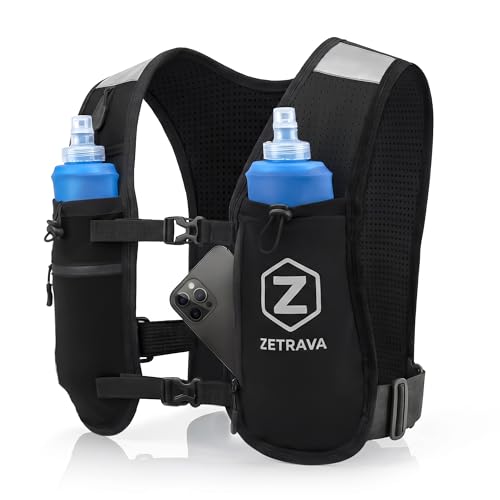
Adjustable Running Vest for Men Women – Running Hydration Vest with Two 500ml Bottles & Reflective Strips, Multiple Pockets & Bounce-Free Fit – Runners Vest for Marathon, Hiking & Cycling – Black
𝐇𝐲𝐝𝐫𝐚𝐭𝐢𝐨𝐧 & 𝐏𝐡𝐨𝐧𝐞 𝐀𝐜𝐜𝐞𝐬𝐬: Stay fully hydrated and connected with Zetrava running hydration vest, which includes two 500ml…
As an affiliate, we earn on qualifying purchases.
As an affiliate, we earn on qualifying purchases.
Conclusion
Think of running belts and vests as your trusty sidekicks on the trail. The belt is like a lightweight, agile squirrel, darting effortlessly to carry your essentials without slowing you down. The vest, on the other hand, is a steady, dependable bear, offering ample space and support for longer adventures. Choose your companion wisely—what fits your stride and style will make every run feel like a walk in the woods.
![Slim Running Belt Fanny Pack for Men Women, Running Phone Holder Runners Pouch Waist Pack for Workout, Money Belt, Running Gear Accessories [Fits ALL Phones]](https://m.media-amazon.com/images/I/21U040mVu2L._SL500_.jpg)
Slim Running Belt Fanny Pack for Men Women, Running Phone Holder Runners Pouch Waist Pack for Workout, Money Belt, Running Gear Accessories [Fits ALL Phones]
[FITS All CELL PHONE] The expandable pocket suitable all kinds of phone, carry your everyday essentials. Slim, comfortable…
As an affiliate, we earn on qualifying purchases.
As an affiliate, we earn on qualifying purchases.

Lightweight Running Vest for Women and Men Hydration Backpack Pack with 1.5L Water Bladder Bag Running Gear Accessories for Hiking Trail Cycling Marathon (Black)
【Ultra-Lightweight and Breathable Comfort】 Weighing just 160 grams (5.6 oz), this running vest is the perfect companion for…
As an affiliate, we earn on qualifying purchases.
As an affiliate, we earn on qualifying purchases.